These mythical creatures were never meant to be seen…
These mythical creatures were never meant to be seen…
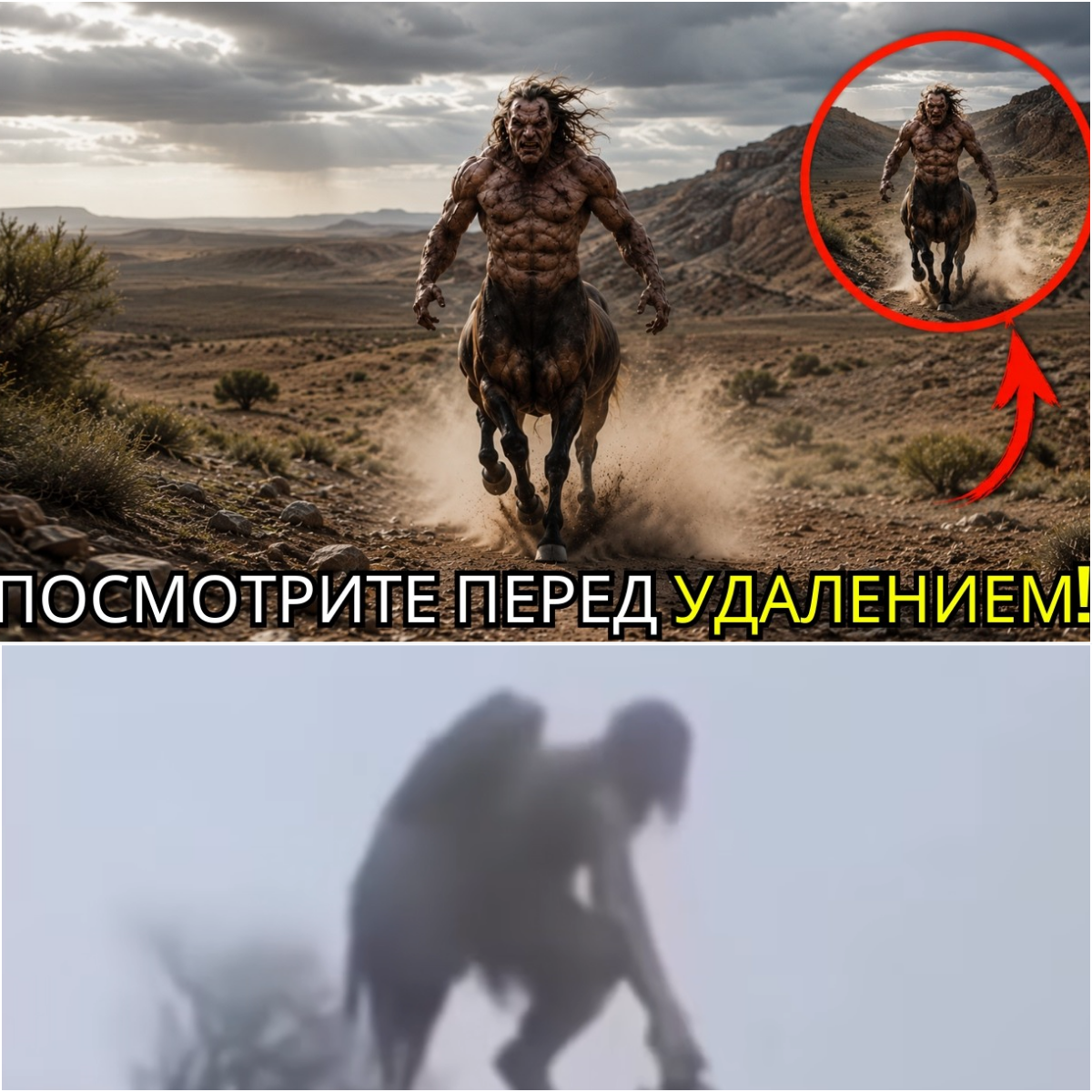
On a lonely road in Texas, a driver raised a cellphone toward something impossible. The figure appeared to walk upright, yet its body resembled a horse. Hundreds of miles away, a woman in a car claimed to see a wolf standing on two legs beside an empty highway. In the forests of Canada, hunters still whisper about towering figures among the trees. In the waters off distant coastlines, fishermen continue to describe shapes that seem almost human.
In an age of satellites, artificial intelligence and constant surveillance, humanity is somehow still haunted by monsters.
The modern world was supposed to eliminate mystery. Every pocket contains a camera. Every location can be mapped. Every strange event can be uploaded, analyzed and debated within minutes. Yet the internet has become flooded with videos, photographs and eyewitness accounts that refuse to disappear. Some are obvious hoaxes. Others are digital art. Many remain unresolved.
And perhaps that is precisely why they fascinate us.
For centuries, every civilization has told stories about creatures living just beyond the edges of human understanding. Ancient Europeans feared forest spirits. Indigenous cultures described supernatural guardians. Mariners spoke of sea beings. Rural communities warned of creatures that appeared at night along roads and rivers.
Today those legends have simply migrated onto smartphones.
The modern cryptid era thrives on uncertainty. A grainy video recorded in Texas may show what appears to be a centaur-like figure moving along a rural road. Another recording from a mountainous region depicts a large winged silhouette perched atop a rocky cliff, its shape resembling the ancient guardian figures found in mythology.
Skeptics immediately point toward digital manipulation, costume effects or visual distortion. Believers argue that some details are too complex to fake. The result is an endless debate that fuels millions of views and countless discussions online.
One of the most common themes in these sightings is the appearance of humanoid creatures. Videos frequently depict figures that appear partially human yet possess distinctly animal features: wolves standing upright, reptilian beings moving through roadside vegetation, or towering creatures with elongated limbs.
These images often trigger powerful psychological reactions because they occupy an uncomfortable space between familiarity and alienness. The human mind recognizes aspects of itself while simultaneously detecting something profoundly wrong.
Psychologists refer to this phenomenon as the “uncanny valley” — the discomfort experienced when something appears almost human but not entirely. Many of the creatures that dominate internet folklore fit precisely within this category.
Consider the enduring legend of the werewolf. Reports from North America continue to describe tall canine figures standing on two legs along isolated highways. One widely circulated account involved a mother driving with her child along a deserted road when she allegedly encountered a wolf-like creature staring toward her vehicle.
Whether real or imagined, such stories endure because they tap into ancient fears. Roads represent transition. Darkness limits vision. Isolation heightens anxiety. Under those conditions, the mind becomes especially sensitive to potential threats.
The same pattern appears in reports of the Chupacabra. First emerging in Latin America during the 1990s, the creature became associated with livestock deaths and strange animal attacks. Descriptions varied dramatically: some witnesses reported reptilian features, while others described a hairless canine.
Despite extensive investigations, no scientific evidence has confirmed the existence of the creature. Yet sightings continue.
Cryptozoology, the study of animals whose existence remains unproven, exists at the intersection of folklore, biology and cultural belief. Bigfoot, the Loch Ness Monster, the Jersey Devil and countless regional legends persist not because evidence is overwhelming, but because uncertainty remains.
The Jersey Devil, allegedly inhabiting the forests of New Jersey, represents one of America’s oldest cryptid legends. Described as a winged creature with hooves and a terrifying scream, it has appeared in local folklore for centuries. Modern videos occasionally revive the legend, often showing dark shapes moving through rural landscapes.
Likewise, reports of Bigfoot continue to emerge from heavily forested regions. Trail cameras, night-vision recordings and eyewitness accounts regularly appear online. Although no definitive evidence has convinced the scientific community, belief remains remarkably resilient.
Yet not every frightening image represents a genuine mystery.
Some of the most widely shared creature videos in recent years have been revealed as digital artwork. Images of insects covered with dozens of moving eyes, glowing crystal-like animals or impossible hybrid species often originate from skilled digital artists.
These creations exploit deeply rooted human instincts.
Humans evolved to detect eyes, faces and movement as potential signs of danger. When artists multiply eyes or distort anatomy, the brain’s threat-detection systems become activated. Even when viewers know an image is artificial, the emotional reaction remains.
In many ways, today’s digital artists perform the same role once held by storytellers and tribal elders. Ancient communities warned children about spirits in the forest. Modern creators produce unsettling imagery that spreads through social media.
The technology changes, but the emotional response remains remarkably similar.
Meanwhile, some of the most fascinating stories involve not monsters but unfamiliar cultures.
In the remote islands of Vanuatu, ceremonial dances covered in white body paint have circulated online under sensational headlines suggesting “mysterious tribes” or “unknown rituals.” In reality, these traditions often carry deep spiritual and historical significance.
Among the Hamar people of Ethiopia, young men participate in ceremonies involving cattle and symbolic headpieces. In South Sudan, members of the Mundari community cover themselves with ash derived from cattle dung, which serves practical purposes as insect repellent and sun protection.
In the Congo Basin, the Baka people use music as both social communication and cultural identity. Their polyphonic singing traditions have fascinated researchers for decades.
What appears strange from one cultural perspective may represent centuries of accumulated knowledge from another.
The internet frequently collapses these distinctions. Sacred rituals become “creepy videos.” Traditional practices become “mysteries.” Indigenous cultures become sources of viral content.
Yet beneath both cryptid stories and cultural misunderstandings lies the same question: why are humans so attracted to the unknown?
Part of the answer may be biological. Human survival depended upon recognizing threats that others missed. Strange sounds in the darkness, unfamiliar footprints or unusual behavior demanded attention.
Another explanation may be psychological. Mystery provides meaning in an increasingly predictable world. In highly technological societies, where algorithms organize daily life and satellites map every corner of Earth, uncertainty becomes strangely appealing.
Monsters restore possibility.
The popularity of supernatural content reflects this desire. Videos involving mysterious creatures routinely attract millions of viewers. Online communities analyze frame-by-frame footage, compare witness statements and search for explanations.
Some participants genuinely believe they are documenting unknown species. Others enjoy the suspense regardless of authenticity.
Both groups contribute to a modern folklore ecosystem.
Religion often enters these discussions as well. Many narratives surrounding unexplained creatures eventually shift toward spiritual questions. Some interpret unknown beings as supernatural entities. Others see them as reminders of humanity’s limited understanding.
Throughout history, encounters with the unknown have frequently inspired both fear and faith.
For some people, mysteries reinforce religious belief by emphasizing the vastness of creation and the limits of human knowledge. For others, unexplained phenomena simply highlight how much remains undiscovered.
Science, meanwhile, operates differently. Extraordinary claims require extraordinary evidence. Videos alone rarely satisfy scientific standards because images can be altered, misunderstood or taken out of context.
Lighting conditions, perspective, environmental factors and psychological expectations all influence perception. Numerous investigations into famous sightings eventually reveal misidentified animals, optical illusions or deliberate hoaxes.
Yet science itself does not eliminate wonder.
The deep oceans remain largely unexplored. Vast regions of rainforest continue to yield new species. Unknown organisms are discovered every year. The possibility that nature still contains surprises remains entirely plausible.
What science rejects is not mystery itself, but conclusions unsupported by evidence.
Perhaps the enduring popularity of cryptids reveals less about hidden creatures and more about humanity.
We are storytelling animals.
We create legends around forests, mountains and oceans because landscapes become more meaningful when inhabited by mystery. We imagine guardians, monsters and spirits because they help us express fears that are otherwise difficult to describe.
A giant creature in the woods may symbolize isolation. A winged figure on a mountain may represent impending change. A shadow on a rooftop may embody anxiety itself.
Modern technology has not eliminated these impulses.
Instead, it has amplified them.
Today, a strange figure recorded on a cellphone can reach millions of people within hours. Every unexplained image becomes part of a global campfire conversation. Comments replace oral storytelling. Social media replaces village folklore.
And still, the essential question remains unchanged.
What if something is out there?
Perhaps the true mystery is not whether centaurs walk in Texas, whether winged beings perch upon mountains or whether giant creatures roam forgotten forests.
The real mystery may be why humans continue searching for them.
Despite our scientific achievements, our digital networks and our endless streams of information, we remain creatures of wonder. We still look into darkness and imagine eyes looking back. We still tell stories about things beyond the edge of the firelight.
And perhaps that instinct is not a weakness.
It may be one of the oldest parts of being human.
The world has become smaller, brighter and more connected than ever before. Yet somewhere between the glow of smartphone screens and the shadows of distant forests, mystery survives.
The monsters may never be found.
But the search itself appears immortal.