These Aliens Were Locked Away For Years!
These Aliens Were Locked Away For Years!
The object did not move like an airplane.
A passenger pressed his face against an aircraft window high above the clouds and watched a metallic shape accelerate, stop, and change direction in ways that seemed to defy the rules of flight. The video would later spread across the internet, joining thousands of other clips, testimonies, and alleged government leaks that have helped transform one of America’s oldest mysteries into one of its most discussed modern questions.
For decades, UFO stories occupied the fringes of popular culture. Today, they appear in congressional hearings, military reports, scientific discussions, and nightly news broadcasts. Whether the answer lies in secret technology, misidentified phenomena, or something far more extraordinary, the question that once belonged to science fiction now sits much closer to the center of American life.
The modern UFO era is built upon a contradiction.
Humanity possesses more cameras than at any point in history. Satellites monitor the planet. Military radar systems track objects across oceans and continents. Smartphones record nearly every unusual event. Yet despite unprecedented surveillance capabilities, certainty remains elusive.
Instead of producing answers, the digital age has created even more questions.
Every week, videos appear online showing glowing spheres, silent triangular craft, strange lights over cities, or alleged encounters with humanoid beings. Some are quickly debunked. Others remain unexplained. Many occupy the vast gray area between fact and fiction.
For millions of Americans, the mystery no longer revolves around whether unidentified objects exist. The debate centers on what those objects might be.
The roots of this fascination stretch back generations.
In the Nevada desert, Area 51 became the most famous secret facility in the world without ever appearing on most maps. Originally associated with advanced aircraft testing, the remote base gradually evolved into something far larger within the public imagination.
Stories emerged of crashed spacecraft, recovered technology, and nonhuman occupants transported to hidden laboratories. The alleged crash near Kingman, Arizona, in the early 1950s became one of several incidents cited by UFO researchers who argued that the United States government had recovered materials not made by human hands.
No publicly available evidence has conclusively confirmed such claims.
Yet secrecy itself often fuels speculation.
Military installations exist specifically to conceal sensitive information. Experimental aircraft, classified technology, and intelligence operations frequently remain hidden for decades. In that environment, conspiracy theories can thrive alongside legitimate secrecy.
Area 51 became a symbol not because people knew what happened there, but because they did not.
The belief that governments may possess hidden knowledge received renewed attention through the actions of Scottish computer administrator Gary McKinnon.
During the early 2000s, McKinnon claimed he accessed American military and government computer systems searching for evidence of UFO programs. He later stated that he discovered references to “non-terrestrial officers” and information suggesting the existence of secret space programs.
Authorities charged him with unauthorized access to government computers, though the alleged extraterrestrial evidence has never been independently verified.
Supporters view McKinnon as a whistleblower.
Critics argue that his claims lack documentation.
Regardless, his story illustrates how deeply the search for hidden information has become connected to modern UFO culture.
The fascination extends far beyond government secrecy.
Some of the most widely discussed stories involve alleged encounters with living beings.
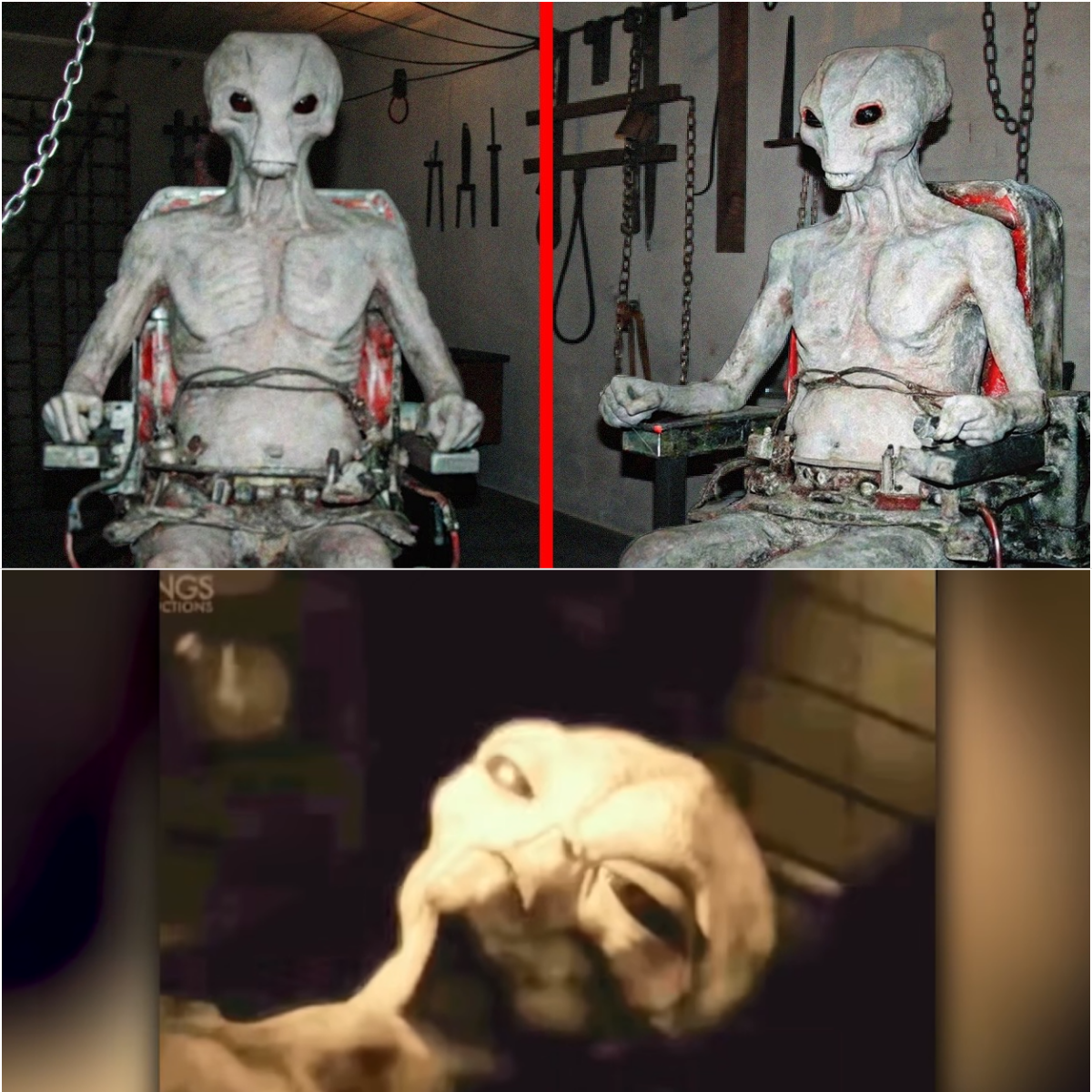
Videos showing restrained gray humanoids, supposed alien interrogations, and mysterious medical examinations have circulated for decades. One particularly famous recording allegedly shows a gray alien being questioned inside a dimly lit room.
The footage remains controversial.
Some researchers argue it represents an elaborate hoax. Others believe it may document something extraordinary. Its grainy quality and uncertain origins make definitive conclusions impossible.
What is undeniable is the image’s cultural power.
Large black eyes. Thin bodies. Oversized heads.
The so-called gray alien has become one of the most recognizable figures in modern mythology.
Interestingly, reports from different countries often describe remarkably similar beings. Witnesses in North America, Europe, South America, and Asia frequently report entities sharing comparable features.
Psychologists suggest these similarities may result from cultural influence. Movies, television programs, books, and media coverage have established a recognizable extraterrestrial archetype.
Believers counter that the consistency itself may represent evidence.
The debate continues.
Perhaps the most remarkable aspect of contemporary UFO culture is how often it intersects with the military.
Stories involving fighter jets, radar operators, pilots, and naval personnel carry particular weight because of the witnesses involved. Trained observers accustomed to identifying aircraft are generally considered more reliable than casual observers.
Reports describing unidentified objects traveling alongside military aircraft have become especially compelling.
Some witnesses describe objects moving silently at extraordinary speeds. Others report sudden acceleration, impossible turns, or flight characteristics beyond known technology.
In several cases, the objects reportedly appeared to travel in coordination with conventional aircraft.
Whether these incidents involve advanced human technology, sensor errors, or something entirely different remains uncertain.
The ocean has emerged as another focal point.
Naval personnel have repeatedly described unusual lights, submerged objects, and unexplained phenomena occurring above and below the water’s surface.
One particularly intriguing case involved reports of blue lights beneath the ocean. Observers described glowing objects moving underwater, leading to speculation ranging from unknown marine life to nonhuman intelligence.
The sea remains among the least explored environments on Earth.
Large portions of the ocean floor remain unmapped. New species continue to be discovered regularly. The possibility that unknown phenomena might exist in such environments appeals to both scientists and UFO enthusiasts.
Antarctica occupies a similar role in the public imagination.
Remote, frozen, and largely inaccessible, the continent has become fertile ground for extraordinary theories. Stories describing hidden structures beneath the ice, ancient ruins, and underground facilities circulate widely online.
A former military operator claimed his team encountered an enormous octagonal structure buried beneath Antarctic ice. According to the story, the interior remained warm despite the surrounding conditions.
No evidence has verified these claims.
Nevertheless, Antarctica’s isolation encourages speculation.
Human beings have always projected mysteries onto the world’s least accessible places.
The Arctic.
The deep ocean.
Remote mountains.
And now, Antarctica.
The sky itself has provided no shortage of mysteries.
In June 2024, residents of Miami reportedly observed a glowing orb that changed brightness and appeared to illuminate the surrounding area. Similar sightings have occurred across the United States for decades.
Some become identified as atmospheric phenomena, rockets, satellites, or weather events.
Others remain unexplained.
Astronomy has also contributed its own mysteries.
The interstellar object known as Oumuamua passed through our solar system in 2017, becoming the first known visitor from another star system.
Its unusual shape and behavior generated considerable scientific interest. While most astronomers favor natural explanations, a small number of researchers suggested the possibility that the object might represent artificial technology.
No evidence supports that conclusion.
Yet the discussion demonstrated how scientific curiosity can intersect with broader public fascination regarding extraterrestrial intelligence.
The search for alien life has moved from science fiction toward legitimate scientific inquiry.
NASA missions examine Mars for evidence of ancient microbial life. Space telescopes search for habitable planets. Researchers analyze signals from distant stars.
The question is no longer whether life elsewhere is possible.
Most scientists consider it highly probable.
The question is whether intelligent civilizations exist and whether humanity might someday encounter them.
Ancient history adds another dimension to the discussion.
Ancient astronaut theories argue that extraterrestrial visitors influenced early civilizations. Proponents point to unusual artifacts, monumental architecture, and religious texts describing beings descending from the heavens.
Examples frequently cited include Mesoamerican artifacts, Egyptian traditions, and biblical stories such as the Ark of the Covenant.
Mainstream archaeologists reject these interpretations.
They emphasize the ingenuity and achievements of ancient peoples themselves.
Yet the popularity of ancient astronaut theories reflects a broader desire to connect humanity’s distant past with the possibility of intelligent life elsewhere.
The internet has dramatically accelerated these discussions.
A video recorded in a backyard can reach millions within hours.
A mysterious figure beneath a bridge.
A strange shape on a rooftop.
An unusual light in the woods.
Each clip becomes part of a growing archive of alleged encounters.
Many are almost certainly hoaxes.
Some involve computer-generated imagery.
Others represent misidentified animals, shadows, or optical illusions.
But the volume of material ensures that uncertainty remains.
For every debunked video, another appears.
This constant flow of images creates an unusual cultural environment.
Believers see accumulating evidence.
Skeptics see accumulating misinformation.
Both often examine the same footage while reaching entirely different conclusions.
Meanwhile, science continues searching.
The discovery of thousands of exoplanets has transformed astronomy. Worlds resembling Earth appear increasingly common. The ingredients for life seem widespread throughout the universe.
Given the immense number of stars and planets, many scientists argue that intelligent life elsewhere is statistically likely.
Yet another problem emerges.
If extraterrestrial civilizations are common, where are they?
This question, known as the Fermi Paradox, has generated countless explanations.
Perhaps intelligent civilizations destroy themselves.
Perhaps interstellar travel is impossible.
Perhaps advanced civilizations avoid contact.
Or perhaps humanity has simply not recognized the evidence.
This final possibility lies at the center of modern UFO culture.
Supporters argue that governments, military organizations, and scientific institutions possess information they have not disclosed.
Critics argue that extraordinary claims require extraordinary evidence.
Both sides agree on one point.
Humanity still lacks definitive answers.
The emotional appeal of the UFO mystery may ultimately transcend evidence itself.
For centuries, people looked at the stars and wondered whether anyone looked back.
The modern world has solved many ancient mysteries. We understand diseases that once terrified civilizations. We map distant galaxies. We communicate instantly across continents.
Yet the question of whether humanity is alone remains unanswered.
Perhaps that uncertainty explains the enduring power of these stories.
A glowing orb over Miami.
An unidentified object beside an airplane.
A strange signal from space.
An unusual figure caught on camera.
Each offers a possibility.
Not proof.
Not certainty.
Only possibility.
And possibility has always been enough to capture the human imagination.
The truth may eventually prove far less dramatic than the stories suggest. Many sightings may receive ordinary explanations. Secret military programs may account for some observations. Human psychology may explain others.
But the universe itself remains unimaginably vast.
Billions of stars.
Trillions of planets.
Distances so large that human language struggles to describe them.
Somewhere within that enormity, the possibility remains that humanity is not alone.
Whether the answers lie in government archives, distant star systems, future scientific discoveries, or phenomena we have yet to understand, one reality has become increasingly clear.
The UFO question is no longer simply about flying objects.
It is about humanity’s place in the universe.
And until that question receives an answer, people will continue looking upward, cameras in hand, wondering whether something is looking back.