The Scariest Videos People Caught At Home
The Scariest Videos People Caught At Home
In the age of the ubiquitous smartphone, our relationship with the unknown has undergone a radical, digital transformation. Where ghost stories once relied on the flickering embers of a campfire or the yellowed pages of Victorian literature, today’s supernatural encounters are broadcast in crisp high-definition, complete with time stamps, compression artifacts, and the breathless commentary of ordinary people trapped in extraordinary situations. Across the globe, a growing subculture of digital creators and accidental witnesses are turning their homes into real-time laboratories of the paranormal, transforming deep-seated human terror into the internet’s most viral commodity.
The Architecture of Digital Dread
For decades, the standard vocabulary of horror was dictated by Hollywood. Directors used sweeping orchestral swells, meticulously timed jump scares, and expensive practical effects to engineer a sense of dread. But in the contemporary media landscape, a new and far more unsettling aesthetic has taken root. It is the aesthetic of the raw, unedited cell phone video—characterized by shaky camera movements, erratic autofocus, and the sudden, jarring illumination of a phone flash in a pitch-black room.
This shift in how we consume the terrifying is not accidental; it is a direct reflection of our cultural environment. In a world where every waking moment is documented, live-streamed, or uploaded to social media, the ultimate proof of reality is no longer a polished documentary but a chaotic, firsthand video. When a creator pulls out their phone to record a strange noise in the middle of the night, they are engaging in a modern ritual of validation. The camera acts as both a shield against the dark and a silent witness to events that defy conventional logic.
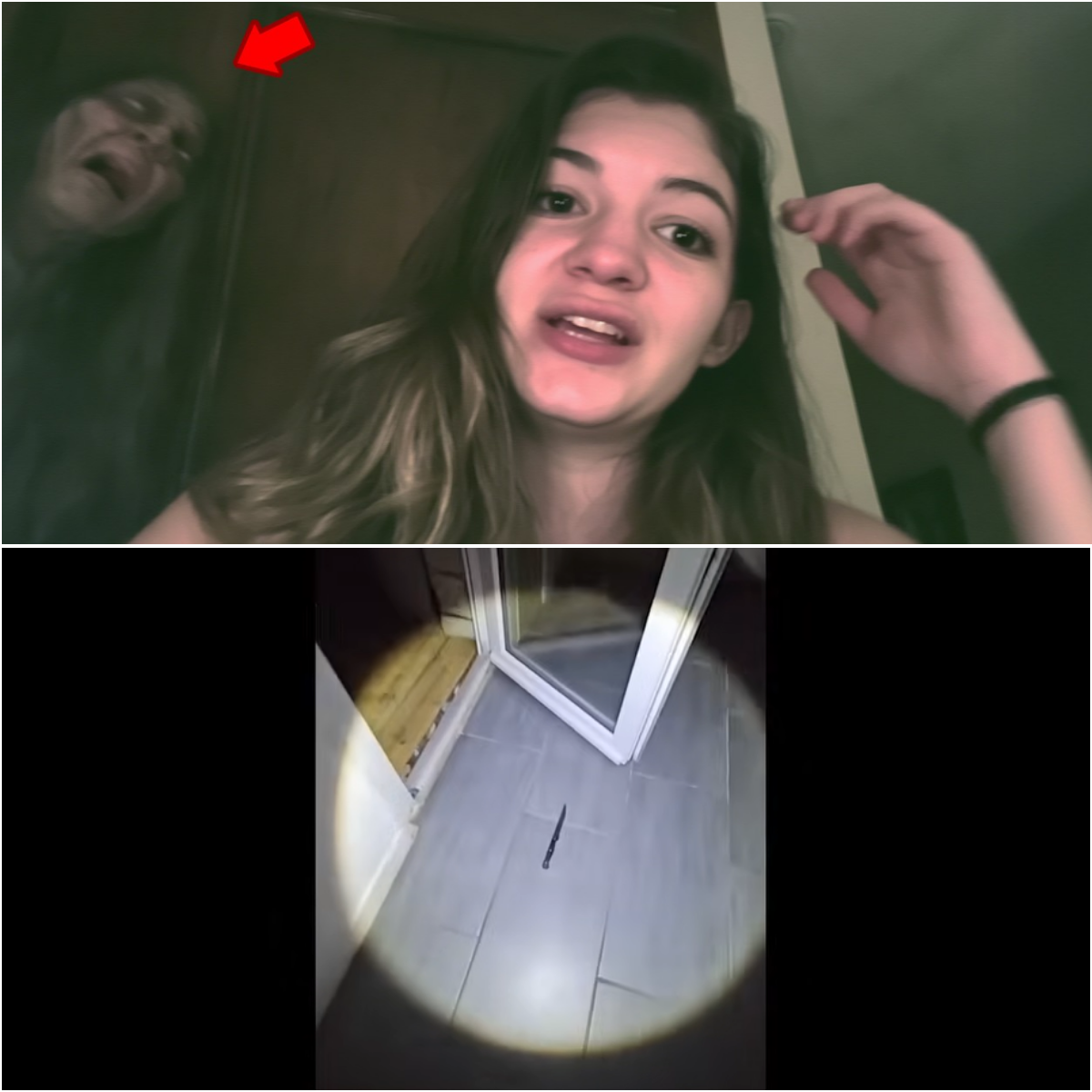
Consider the baseline scenario that plays out across thousands of viral videos every day. A home is supposed to be the ultimate sanctuary—the one place where the external anxieties of the world can be locked outside. Yet, when the security of that space is violated from within, the psychological toll on the occupant is profound. The internet doesn’t just watch these videos for the cheap thrill of a potential scare; it watches because it recognizes the fundamental vulnerability of being trapped in a space that has suddenly turned hostile.
Shadows in the Cradle
The manifestation of this domestic terror often begins with the most vulnerable members of a household. Across countless digital archives, some of the most enduringly disturbing footage involves the spaces we set aside for children. The modern nursery, equipped with high-tech baby monitors, infrared night-vision cameras, and motion sensors, has inadvertently become a primary theater for the bizarre.
In one widely discussed case, a mother’s routine check on her sleeping infant transformed into a prolonged documentation of the inexplicable. The incident began not with a dramatic clatter, but with a subtle deviation from the norm: an object in the daughter’s bedroom—a toy or a small piece of electronic equipment—was found standing perfectly upright, active and turned on, in a corner of the room that the child could not possibly reach. The child herself remained dead asleep, entirely oblivious to the strange geometry unfolding around her cradle.
[Camera Activates] ---> [Object Moves/Stands Upright] ---> [Infrared Brightening] ---> [Shadow Fades into Wall]
When investigators and online analysts later brightened the digital footage, the underlying reality of the encounter shifted from a strange household anomaly to something far more sinister. In the enhanced frames, a distinct, dark shadow figure could be seen seemingly elongated against the nursery wall, moving with an unnatural fluidity before completely disappearing into the structure on the left. To this day, the family maintains that no rational explanation—be it structural shifting, stray headlights from the street, or electronic malfunction—can account for the physical placement of the object or the independent silhouette captured by the lens.
The terror of such a moment lies not just in the visual of a shadow, but in the total subversion of maternal protection. A mother can lock the doors and set the house alarm, but when the intrusive element appears to occupy the very air of a child’s bedroom, the boundaries of safety cease to exist.
The Sublet and the Shadow
For others, the encounter with the unexplained begins with a change of address. The act of moving into a new apartment carries its own inherent anxieties—the adjustment to unfamiliar ambient noises, the settling of older floorboards, the strange shadows cast by streetlamps through unfamiliar window panes. But for one young man, the transition into a new living space quickly escalated into a frantic campaign to preserve his own sanity.
Within days of signing his lease, the tenant began experiencing a series of escalating disturbances that defied the typical behavioral patterns of an old building. At first, the activity was subtle enough to be dismissed as the product of exhaustion or stress: a door left slightly ajar, the faint sound of footsteps when the apartment was otherwise empty. Hoping to prove to his skeptical friends and family that he wasn’t merely imagining things, he began keeping his phone camera close at hand, documenting his nightly routine.
[New Apartment Lease] ---> [Subtle Activity Begins] ---> [Nightly Recordings] ---> [Direct Entity Manifestation]
The initial recordings were remarkably mundane, capturing only the quiet, tense atmosphere of an apartment waiting for something to happen. But as the nights progressed, the atmospheric pressure within the unit seemed to shift. The phenomenon grew bolder, graduating from passive noise to active manifestation. On one catastrophic night, the camera captured what many viewers later described as a dense, semi-corporeal entity taking shape in the hallway.
The climax of the footage remains a subject of intense debate across paranormal forums. The dark mass did not merely linger at the edges of the frame; it actively acknowledged the presence of the camera, rushing straight toward the tenant with a sudden, violent velocity that caused the recording to cut out. Online analysts have speculated that a malicious, perhaps even demonic, presence had taken hold of the apartment, remaining bound to the physical location and feeding directly off the terror of whoever happened to occupy the lease.
Letters from the Argentine Underground
The phenomenon is by no means isolated to American suburbs or metropolitan apartments. In Argentina, a woman named Tati became the focus of an international digital investigation after she began uploading raw footage of her daily routine in a home that was gradually being overtaken by an unseen force.
Tati’s videos were compelling precisely because they lacked the theatrical setup of traditional ghost hunting. She was not exploring an abandoned asylum or conducting a seance; she was simply filming her life, cooking, and navigating her home when the camera began catching unexpected anomalies. The haunting of Tati’s residence followed a classic, textbook escalation pattern, beginning with small auditory disturbances before moving toward physical confrontation.
[Passive Haunting] ---> [The Doorbell Phenomenon] ---> [The Uninvited Guest] ---> [The Trashed Kitchen]
The turning point in Tati’s documentation occurred during an episode that seasoned paranormal researchers view as a critical error in judgment. Late one evening, her front doorbell began to ring. It wasn’t the single, polite chime of a late-night delivery, but a frantic, rhythmic, and highly insistent pounding that echoed through the house. When she checked her windows and security angles, the porch was completely empty. Yet the ringing continued, vibrating through the wood of the front door.
In the lore of the supernatural, there is a strict, historical rule regarding the threshold of a home: if you hear an anonymous knock or a phantom ring with no visible source, you must never open the door. To do so is to cross a metaphysical line, transforming a passive external nuisance into an explicit invitation. Terrified, lonely, and desperate for the noise to stop, Tati turned the lock and opened the door to the empty night.
The consequences were immediate. That very night, after setting up a static camera facing her bed to monitor her sleep, the morning review revealed a deeply disturbing sight: a tall, amorphous dark shape standing perfectly still at the edge of her mattress, hovering over her sleeping form in absolute silence for several minutes before dissolving into the darkness.
Days later, the entity’s presence shifted from silent surveillance to violent rage. Tati was drawn to her kitchen by the sound of glass shattering and heavy wood splintering. When she entered the room with her camera rolling, she found the entire space completely torn apart—cabinets thrown open, dishes smashed across the tile floor, and furniture upended as if a whirlwind had passed through the small room.
But it was the audio track of that recording that sent chills down the spines of millions of viewers. Right in the middle of the destruction, amidst the quiet ruin of the kitchen, the microphone captured a clear, distinct, and mocking laugh. Tati was entirely alone in the house when the footage was recorded, leaving viewers with the terrifying conclusion that whatever she had invited through her front door was not only fully conscious of her fear, but actively deriving amusement from it.
Reflections of the Displaced
The concept of the threshold is not limited to doorways; it extends to the very surfaces we use to examine ourselves. In the case of an isolated man named Luis, the haunting of his domestic space became inextricably linked to the reflective surfaces of his home, transforming his mirrors into psychological trapdoors.
Luis’s ordeal began in a manner identical to Tati’s—with an anonymous, aggressive knocking on his front door after dark that yielded no physical visitor upon inspection. But unlike others who sought immediate flight, Luis was a man who had already isolated himself from the outside world. He chose to stay, resolving to keep his composure, maintain his calm, and document every single occurrence with meticulous accuracy.
[Threshold Violated] ---> [The Mirror Tracking] ---> [The Phantom Footsteps] ---> [The Vehicle Intrusion]
For a time, his discipline held. But the entity trailing him through the house was not content with simple noises. During a routine walk through his hallway, Luis’s phone camera caught a distortion in the large mirror lining the wall. The reflection did not match the physical layout of the room behind him; instead, a shadowy figure appeared to be walking parallel to him within the glass, tracking his movements step for step. Moments later, Luis gasped on camera, claiming he felt a distinct, freezing pressure touch his shoulder, accompanied by a low, gravelly audio anomaly that many interpreted as a voice commanding him to get out.
The activity soon took on a terrifying, physical consistency. After a brief two-week period of absolute silence—a deceptive lull that often leads victims to believe the crisis has passed—Luis noticed a strange visual pattern beneath the crack of his closed bedroom door. In the narrow gap between the wood and the carpet, the hallway light distinctly revealed a pair of shadow feet standing perfectly still.
This was not the shadow of someone walking past or pausing briefly in transition. The feet remained rooted to the spot for hours, waiting patiently on the other side of the barrier. Paranormal theories suggest that when an entity lacks the energy to manifest a complete, three-dimensional form in our reality, it will often project itself in fragments and pieces—a hand, a face in a reflection, or a pair of feet waiting outside a door.
The final violation of Luis’s security occurred when he attempted to abandon the house entirely. Walking out to his car early one morning, thinking the exterior world might offer a reprieve, he looked through the driver’s side window only to discover a dark, human-shaped mass sitting silently in the passenger seat, waiting for him to turn the ignition. By attempting to engage with the phenomenon, by filming it and treating it as a challenge to be documented, Luis had inadvertently allowed the presence to latch onto his life, proving that the digital lens can sometimes act as a beacon rather than a shield.
The Cries of the Appalachian Ridge
While urban and suburban hauntings are defined by confinement, the terrors of the wilderness rely on a vast, isolating scale. In the deep, heavily forested valleys of the Appalachian Mountains—a region steeped in centuries of folklore, missing persons cases, and unsettling sightings—the line between ancient myth and modern digital documentation has become increasingly blurred.
The region became the focus of intense scrutiny when a young couple booked a stay at a specialized, horror-themed Airbnb designed to cater to fans of the macabre. The setting was intentionally isolated, with no neighbors or emergency services for miles around. What was intended to be a weekend of simulated fear turned into a genuine survival situation in the middle of the night when the couple was awakened by a sound that shattered the quiet of the mountain ridge.
It was a scream—high-pitched, resonant, and entirely unclassifiable. In the video recorded by the couple from the cabin’s porch, the distant local dogs can be heard barking frantically, their instincts triggered by a sound that grew steadily louder over a five-minute interval. The audio track captured a vocalization that sounded eerily human, yet possessed a lung capacity and structural resonance that no human being could replicate. It sounded like a woman in distress, mixed with the guttural cry of a predatory animal.
[Appalachian Airbnb Stay] ---> [Unclassifiable Ridge Scream] ---> [Shadow Figure on Review] ---> [The Offering Bone]
Terrified by the sheer proximity of the cry, the couple abandoned their reservation in the middle of the night, driving home in the dark. The true horror of their stay, however, was only discovered the next morning when they reviewed the footage of their exit. In the background of the porch video, illuminated briefly by the vehicle’s headlights, a tall, gaunt, dark figure could be seen moving through the trees directly behind them—a detail they had completely missed in their panic to escape.
The story took an even more bizarre turn weeks later when a second, completely unrelated guest rented the exact same cabin. She, too, reported hearing strange, deer-like cries in the night. But during a daytime walk down the steep wooden steps leading to the nearby river, she stumbled across a sight that disrupted the narrative of a simple wild animal.
Two heavy wooden chairs, which had not been there the previous afternoon, had been arranged in a deliberate formation facing the water. Atop one of the chairs sat a large, cleanly stripped animal bone. To local historians and folklorists, the arrangement bore all the hallmarks of an intentional offering or a structural warning left by a terrestrial entity. Many online commentators immediately pointed to the regional legend of the Wendigo—a malevolent, winter-born spirit said to stalk the high ridges of the eastern woods, mimicking human cries to lure travelers into the brush. Whether the incident was an elaborate, highly coordinated setup by the property owners or a genuine encounter with an ancient regional apex predator remains one of the internet’s most polarizing mysteries.
The Odor of the Chisel
Perhaps the most claustrophobic account of a household item introducing chaos into a home involves a collector who purchased an antique African mask at a local yard sale. The item had sat in storage for nearly a year before the owner finally decided to display it on the wall of his upper landing. Almost immediately, the atmosphere of the house decayed.
In a video recorded on November 18, intended to show the craftsmanship of the artifact to an online community of collectors, the owner noted several peculiar physical properties of the mask. It bore deep, distinct chisel marks where it had been hollowed out with primitive tools, and it emitted a persistent, heavy odor that he described as a mixture of burnt wood and musty, subterranean earth.
[Mask Displayed on Wall] ---> [The Displaced Landing Light] ---> [The Silhouette in the Glass] ---> [The Chaos Below]
As the owner turned the camera to show the back of the mask, the internal tracking of the house erupted. A series of sharp, rhythmic tapping noises began to echo from the floor above. Determined to prove to his viewers that he was entirely alone in the house with his cat, Loki, the man began a tense, room-by-room sweep of the property. He explained to the camera that he had purposely removed the lightbulb from the landing fixture because the electrical currents in that section of the house had begun to malfunction catastrophically since the mask’s installation.
As he reached the top of the stairs, the phone’s light swept across a window facing the back garden. There, pressed flat against the exterior glass of the second story, was the distinct, pale silhouette of a human form. The velocity with which the owner retreated down the stairs captured the raw, unpolished instinct of human self-preservation.
Hoping to establish an objective record of the events, he installed a static surveillance camera in the front room. The resulting footage provided some of the most compelling evidence of independent object displacement ever recorded: a heavy storage unit lid shifting several inches on its own accord, followed immediately by a distinct, elongated shadow passing across the edge of a framed photograph on the opposite wall.
The haunting reached its terrifying crescendo the following evening. Awakened by a continuous, violent smashing sound from the ground floor, the owner descended into the darkness with his phone hand shaking. He found his living room and kitchen in a state of absolute chaos—books torn from shelves, furniture moved across the doorways, and household items strewn across the carpet.
As he turned to run back up the stairs to secure himself in his bedroom, the microphone captured a sound that has become a defining characteristic of modern digital hauntings: the rapid, heavy sound of bare feet racing up the wooden steps directly behind him, closing the distance just as the video cuts to black. The creator is currently debating whether to destroy the mask or attempt an exorcism of the property, but until the artifact is removed, the home remains an active zone of psychological warfare.
The Verified Nightmare
What are we to make of these digital artifacts? In every instance, skeptics will point to the possibility of digital hoaxes, clever video editing, fishing lines, and the undeniable drive for internet celebrity. And in many cases, they are undoubtedly correct; the digital marketplace rewards terror, and where there is profit, there will always be artifice.
But to dismiss the entire phenomenon as a collection of parlor tricks is to miss the deeper, more profound cultural reality of what these videos represent. These recordings are the modern equivalent of the journals left behind by early pioneers—documents of human beings reaching the edge of their known world and encountering something that refuses to be categorized by modern science.
The terror of the modern haunting is its absolute democratization. It suggests that the supernatural is no longer confined to gothic mansions or ancient burial grounds. It can manifest in a rented apartment in New York, a quiet home in Argentina, or a vacation rental in the mountains. And as long as we continue to carry cameras in our pockets, we will continue to press record, staring into the digital screen in the hope of catching a glimpse of the things that watch us from the dark.