Terrifying Camera Captures That You Won’t Believe Were Filmed!
Terrifying Camera Captures That You Won’t Believe Were Filmed!
In the quiet hours after midnight, when the physical world contracts to the glow of a smartphone screen, millions of Americans voluntarily step into a digital wilderness where the rules of reality no longer apply. It begins with a grainy snippet of closed-circuit television footage or a flickering trail-camera frame: a pale, long-limbed shape darting behind an oak tree in the Appalachians, or a dark, featureless silhouette slipping through the stands of an empty soccer stadium. These fragments of digital dread, flashing across social media algorithms and late-night video countdowns, have quietly constructed a new, borderless mythology—one where ancient folklore, internet urban legends, and the anxieties of a hyper-surveillance society collide.
For generations, the boundaries of human fear were well-defined by the campfire and the edge of the woods. Every region had its resident terror: the Jersey Devil in the pine barrens, the hairy giants of the Pacific Northwest, or the skinwalkers of Navajo lore. These monsters required a specific geography; they belonged to the places that maps had not yet fully conquered. But in the twenty-first century, a strange paradox has emerged. As the world has become entirely mapped, tracked, and illuminated by high-definition lenses, our monsters have not vanished. Instead, they have migrated into the machinery designed to expose them.
The modern digital cryptid does not hide from the camera; it is born from it. The contemporary landscape of online horror is populated by an eerie pantheon of entities—referred to variously by internet subcultures as “The Rake,” “Skinwalkers,” “Goblins,” or “Ghouls”—that manifest almost exclusively through the lenses of security systems, dash-cams, and consumer-grade wildlife trackers. To witness these videos is to participate in a collective, algorithmic ritual. From a lone night-shift worker escaping a four-legged anomaly in a vacant warehouse to an family on an Indian highway stopped by an unrecognizable silhouette, these clips speak a universal language of modern isolation. They offer a unsettling reminder that despite our technological mastery, we remain deeply, unshakeably afraid of the dark.
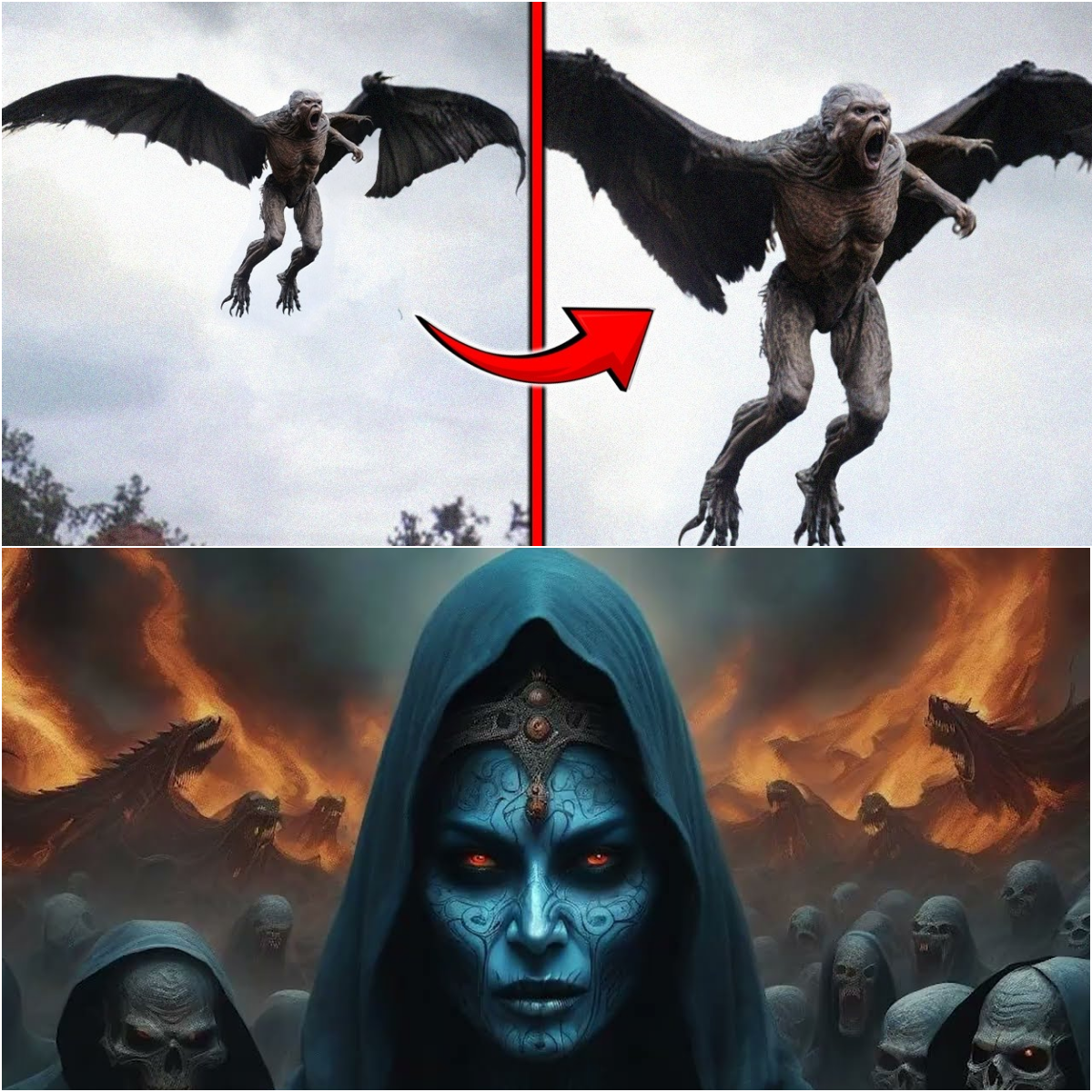
The Architecture of Digital Dread
To understand the profound hold these images have on the American psyche, one must examine the specific aesthetic of modern digital folklore. In decades past, evidence of the supernatural was defined by the grand, sweeping theatricality of Hollywood or the deliberate, staged hoaxes of the mid-century print media. Today, the currency of terror is low-fidelity authenticity. The most viral videos are almost entirely devoid of cinematic lighting or orchestral build-ups. Instead, they rely on the cold, indifferent eye of the automated camera.
Consider the typical setting of a viral cryptid encounter: a suburban backyard in Dallas, an abandoned mine shaft in Russia, or a desolate stretch of road in rural Thailand. In these spaces, human presence is incidental. The cameras are left running to protect property, monitor wildlife, or document mundane routines. When an anomaly does appear—a pale, hairless humanoid crawling on all fours, or a towering, faceless figure with spindly limbs—the horror stems from the camera’s total lack of reaction. The security lens does not blink, gasp, or run away. It continues its steady, robotic panning, capturing a nightmare with the same flat neutrality it would use to record a stray cat or a passing delivery truck.
This aesthetic functions as a brilliant subversion of the “uncanny valley”—the psychological phenomenon where an artificial copy of a human form triggers an instinctual sense of revulsion. By embedding digital fabrications or optical illusions within the mundane framework of daily surveillance, creators of this content bypass the viewer’s natural skepticism. A crisp, high-definition monster looks like a special effect; a blurry, overexposed entity caught in the infrared glare of a 15-second backyard clip looks like a terrifying secret.
Furthermore, this medium reflects a deep-seated cultural anxiety about the very technology we use to secure our lives. We have surrounded our homes with ring cameras, trail logs, and smart sensors to banish the unknown. Yet, when these devices catch something unexplainable—a pixelated shadow running through a crowd, or a distorted reflection in an old cave—the illusion of safety shatters. The tools built to defend our boundaries become the very windows through which the outer darkness peers back at us.
The New Pantheon: From Creepypasta to Modern Myth
Perhaps the most fascinating aspect of this digital folklore is how quickly fictional creations transcend their origins to become accepted realities within the public consciousness. The most prominent example of this evolution is “The Rake,” a creature that features heavily in modern viral sightings, including recent trail-camera footage from the summer of 2024.
To trace the lineage of The Rake is to look directly into the engine of internet myth-making. The creature did not emerge from ancient tribal traditions or centuries-old regional ghost stories. It was conceived in 2005 on an internet imageboard, where users collaborated to create a brand-new urban legend. They drafted fictional journal entries, historical accounts, and suicide notes detailing encounters with a pale, hairless humanoid that crouched at the foot of victims’ beds, staring with hollow eyes.
Within two decades, this collaborative writing project has transformed into a living myth. Today, individuals across the American heartland, from the deep woods of the Pacific Northwest to the rolling hills of the Appalachians, report genuine terror after spotting what they believe to be The Rake on their private properties. When a trail camera captures a deer carcass or an oddly shaped tree stump in the moonlight, the interpretation is no longer framed by traditional wilderness folklore. It is viewed through the lens of the internet.
A similar transformation has occurred with the concept of the “Skinwalker.” Originally a sacred and deeply feared element of traditional Navajo cosmology—representing a harmful witch capable of transforming into or disguising themselves as an animal—the term has been co-opted by global internet culture. Online, “Skinwalker” has become a catch-all designation for any creature that looks almost, but not quite, right. A stray dog with a severe case of mange walking on its hind legs in an Argentinian parking lot, or a person exhibiting erratic behavior near a Malaysian hospital, is instantly labeled as a skinwalker by millions of commenters.
This flattening of cultural context reveals a fundamental truth about internet folklore: the algorithm demands standardization. The complex, localized spiritual traditions of the past are constantly being distilled into easily searchable, universally recognized keywords. In the digital space, the specific history of a monster matters less than its ability to function as a visual jump-scare.
The Global Economy of Fear
While these narratives find a particularly receptive audience in the United States—a nation with a long history of wilderness anxiety and a deep-seated obsession with private property security—the digital cryptid phenomenon is inherently international. The videos that dominate American feeds are a chaotic, borderless mosaic of global anxieties.
In a single scrolling session, an American viewer might leap from a clip of a massive, spider-like entity scaling a apartment building in post-industrial Russia to an underwater recording of fishermen pulling a bizarre, serpentine creature from a hidden tunnel in Thailand. Shortly after, they might watch a grainy 1987 archival tape allegedly depicting a multi-limbed, scorpion-like beast peering into the mouth of an active volcano.
This borderless exchange of horror highlights a shared global language of vulnerability. Whether it is a “mega-parasite” discovered in a cave system—where viewers immediately debate whether industrial pollution or radiation mutations created the beast—or an impossibly bright light radiating from a deep subterranean fissure, these stories tap into universal anxieties about the natural world striking back against human overreach.
When we watch a video of a family in India turning their car around because a silent, unidentifiable figure has blocked the road, the fear is completely independent of language or geography. It is the primal dread of the journey interrupted, the sudden realization that the infrastructure of civilization—the asphalt, the headlights, the combustion engine—is insufficient protection against the ancient things that wait just beyond the shoulder of the highway.
The international nature of these clips also creates a unique form of digital tourism. Viewers can safely experience the claustrophobia of a dilapidated Russian mine shaft or the oppressive humidity of a South American jungle from the comfort of their suburban living rooms. The internet has turned the entire planet into a singular, haunted forest, where every corner might hide a wood imp, a ghoul, or an extraterrestrial traveler left behind by its fleet.
Why We Need the Monsters
It is easy to dismiss the entire ecosystem of online monster videos as a collection of cheap CGI hoaxes, clever marketing campaigns, or the products of overactive imaginations. Many of the clips are indeed easily debunked by digital forensics experts who point out mismatched shadows, repetitive animation loops, or structural inconsistencies in the video files. Yet, to focus entirely on the authenticity of the footage is to miss the deeper, more compelling question: Why do we want to believe them?
We live in an era of unprecedented disenchantment. Nearly every square meter of the Earth’s surface has been photographed by satellites. The mysteries of the deep ocean and the upper atmosphere are systematically cataloged by corporate and government entities. Our daily lives are dictated by algorithms that predict our purchases, map our commutes, and curate our relationships. In such a thoroughly structured world, the human mind suffers from a subtle form of claustrophobia.
The viral cryptid represents a chaotic, thrilling rebellion against this total predictability. When a person watches a video of a faceless humanoid lurking outside a home, a part of their brain experiences a profound, ancient relief: The world is still vast. There are still secrets. There are still things that we do not understand.
In a strange way, the belief in monsters is an act of hope. It suggests that despite our best efforts to pave over the wild places of the earth, to illuminate every dark alley with a sodium-vapor streetlamp, and to track every human movement with a data point, the wildness cannot be tamed. The monster in the forest represents a universe that still possesses depth, danger, and magic—even if that magic is dark and terrifying.
Furthermore, these videos provide a strange sense of community in an increasingly atomized society. The comment sections beneath these countdowns are not just battlegrounds between skeptics and believers; they are digital town squares. Millions of strangers gather to share their own unexplainable experiences, to debate the physics of a creature’s movement, or to offer advice on how to survive an encounter in the woods. In a world where many feel isolated behind their screens, sharing a collective shudder at a terrifying piece of footage is a deeply human way to find connection.
The Light at the Edge of the Lens
As digital manipulation tools become more sophisticated, the line between reality and fabrication will continue to erode. The next generation of viral horrors will likely be generated not by amateur animators or clever practical effects artists, but by advanced artificial intelligence networks capable of producing flawless, hyper-realistic depictions of the impossible. The grainy, pixelated charm of the early 2020s trail-cam footage may soon give way to seamless, terrifyingly crisp encounters that leave absolutely no visual evidence of forgery.
Yet, no matter how much the technology evolves, the core of the phenomenon will remain unchanged. Human beings will always look out their windows into the gathering twilight and wonder what is staring back. We will continue to set up our cameras, to peer into our backyards, and to scan the tree lines during late-night drives through the country.
Our ancestors carved protective runes into their doorways and kept the hearth fires burning through the winter to keep the beasts at bay. Today, we install high-resolution security systems and check our notifications before we sleep. The tools have changed, the vocabulary has shifted from sorcery to science fiction, and the monsters have adapted to the screen. But the underlying truth remains identical: we are still the same frightened primates we have always been, sitting around a digital fire, desperately trying to see what is moving out there in the dark.