Terrifying Camera Captures That You Won’t Believe Were Filmed!
Terrifying Camera Captures That You Won’t Believe Were Filmed!
In an era of ubiquitous, ultra-high-definition surveillance, the monsters that terrify us most remain stubbornly, deliberately out of focus.
The Evolution of the Digital Monster
For generations, the boundary between folklore and reality was guarded by the physical limits of human sight. If a traveler claimed to have seen a horned beast lurking in the deep brush of a valley or a pale, hairless humanoid darting between the pines of the Appalachian trail, the story lived or died by the charisma of the teller. Today, that boundary has been entirely outsourced to the lens. The modern cryptid does not merely exist in the shadows of the woods; it lives in the compression artifacts of a digital video file, the grainy playback of a backyard closed-circuit television (CCTV) system, and the automated feeds of hunting trail cameras.
This shift has fundamentally altered the nature of contemporary mythmaking. Where classical mythology relied on oral tradition to preserve the monsters of the cultural imagination, the internet age relies on the democratization of visual media. A single, poorly lit video clip uploaded to an online forum can instantly capture the attention of millions, spawning heated debates, frame-by-frame analyses, and an entirely new vocabulary of fear. We no longer just tell ghost stories around a campfire; we dissect security footage on our laptops, looking for proof of the impossible in the pixelated dark.
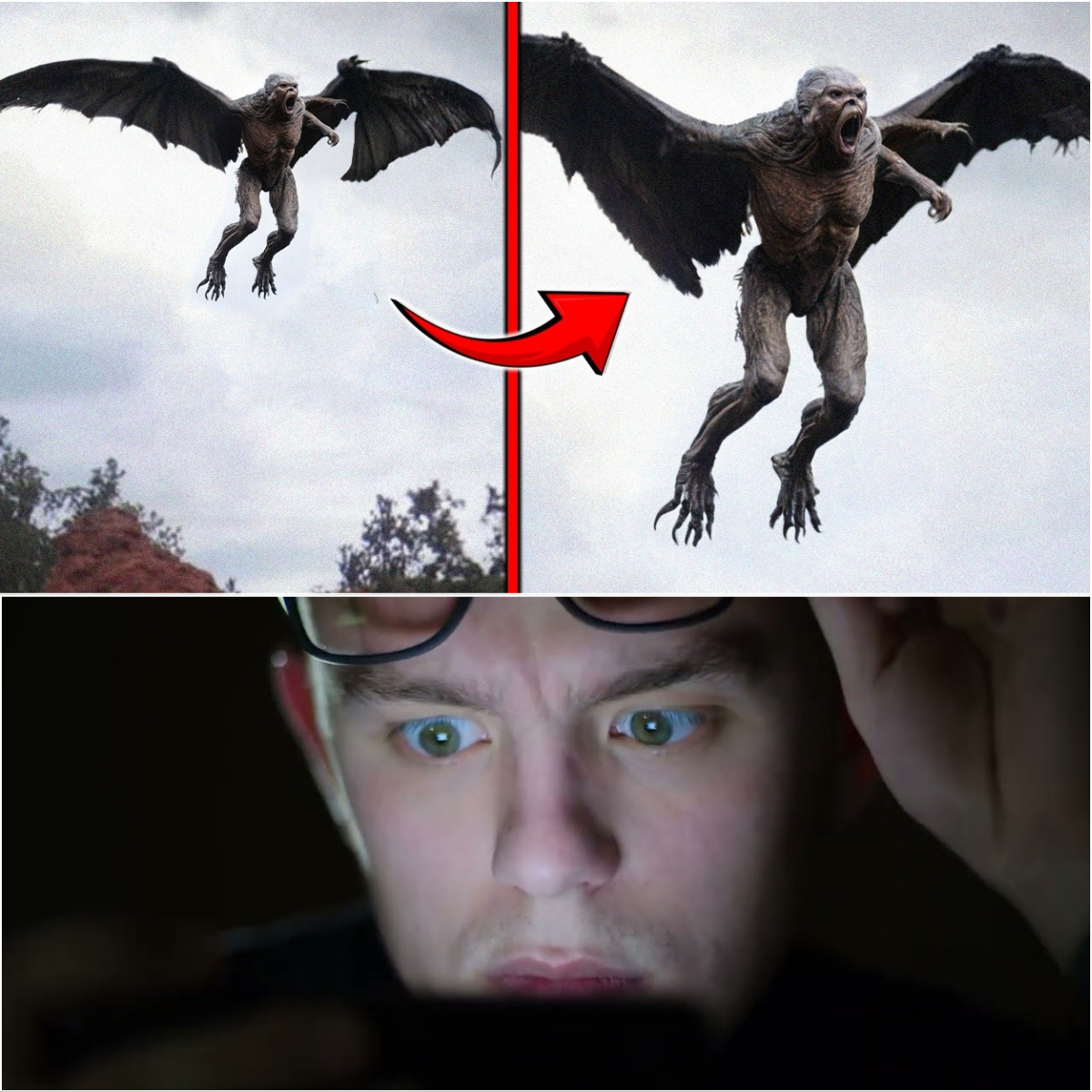
The transcriptions of these modern accounts read like a fever dream of twenty-first-century anxieties. In them, we find a dizzying array of entities: pale humanoids dubbed “the Rake” peeking from behind suburban trees, shape-shifting “skinwalkers” mimicking domestic animals in city streets, and impossible, multi-limbed horrors scuttling over the rims of active volcanoes. To a skeptic, these clips are easily dismissed as the product of cheap digital editing software, clever camera angles, or simple misidentifications of ordinary wildlife. But to dismiss them entirely as mere hoaxes is to miss a more profound cultural truth. The enduring popularity of these videos reveals a deep-seated human desire for mystery in a world that feels increasingly mapped, monitored, and thoroughly explained.
Anatomy of a Viral Hoax
To understand how these digital myths take hold, one must look at the specific narrative structures that make them so compelling to the modern observer. The classic viral monster video rarely features a clear, brightly lit view of the creature in question. Instead, the terror is built entirely on the mechanics of the frame—what the camera fails to capture, how the lens distorts movement, and how the human brain fills in the gaps.
Consider the pervasive trope of the “hospital creature” or the “office phantom,” common fixtures in the landscape of online horror. In these scenarios, the setting is intentionally mundane: a sterile, fluorescent-lit corridor, a quiet parking lot, or a deserted workplace after hours. The camera is stationary, a detached and objective observer of an ordinary environment. Suddenly, just beyond the edge of the screen or right behind an unsuspecting worker, something shifts. A figure appears on four twisted limbs, moving with an eerie, calculated precision that defies natural anatomy.
The power of these videos lies in their subversion of safety. Security cameras are installed to provide peace of mind, to document reality, and to protect us from known, human threats. When those same cameras capture something that defies explanation, the tool designed to give us control instead exposes our vulnerability. The viewer is forced into a state of cognitive dissonance; the medium tells them the footage is an unedited record of a real space, while the content of the footage insists that the laws of nature have been broken.
This formula is repeated across dozens of subgenres within the digital cryptid ecosystem. We see it in the trail-camera footage from remote forests, where a hunter’s motion-activated lens snaps a series of still images of a pale, featureless humanoid standing perfectly still behind an old-growth oak. We see it in the dashcam recordings of midnight drivers who slam on their brakes as a ghostly, leathery entity scurries across a deserted highway. In every instance, the camera acts as a reluctant witness, capturing just enough detail to spark terror but never enough to provide definitive answers.
The Psychology of the Blur
It is an irony of the technological age that as our cameras have become sharper, our monsters have become blockier. In the days of the Patterson-Gimlin film—the famous 1967 footage that came to define the popular image of Bigfoot—the fuzziness of the image was a limitation of the celluloid medium. Today, when a smartphone can capture crisp video in low light, the presence of grain, motion blur, and pixelation in a monster video is often a deliberate aesthetic choice, whether engineered by a hoaxer or created naturally by the limitations of digital sensors operating at night.
Psychologists have long recognized that the human mind is an engine for pattern recognition. Known as pareidolia, this evolutionary trait compels us to find familiar shapes—particularly faces and bodies—in random visual data. A rustling bush becomes a lunging beast; a shadow cast by a streetlight becomes a hovering specter; a trick of the light inside a dark cave transforms into an alien portal.
When we watch a viral video of an “unknown creature,” we are not merely passive consumers of media; we are active participants in its creation. The ambiguity of the image forces the brain to do the work of the special effects department. A few blurry pixels moving across a screen are shaped by our subconscious fears into a razor-toothed ghoul or a horned devil.
Furthermore, the internet has created a unique ecosystem where these interpretations can be cross-pollinated and amplified. Within hours of a video being posted, comment sections are filled with users offering their own theories, timestamped breakdowns, and historical precedents. A video shot in a rural village in Thailand showing an unusual marine creature pulled from an underwater tunnel is quickly linked by online commentators to the Typhon of ancient Greek mythology. A grainy clip of a massive, spider-like silhouette scaling a residential high-rise in Russia is debated not as a potential optical illusion or a CGI art project, but as a potential extraterrestrial visitor. The crowd-sourced nature of the internet transforms a solitary viewing experience into a collective exercise in modern mythology.
Global Horrors, Local Fears
While the internet has globalized these stories, allowing a video captured in Limpopo, South Africa, to terrify a teenager in Ohio, the myths themselves remain deeply tied to local landscapes and cultural anxieties. The American audience, in particular, has developed a profound fascination with certain archetypes that seem to speak directly to the country’s vast, untamed spaces and its complex history.
Chief among these is the “skinwalker,” a term lifted from Navajo mythology but thoroughly rewritten by the internet into a catch-all monster for the digital age. In its traditional cultural context, the skinwalker is a malevolent witch capable of transforming into or disguising themselves as an animal. On the internet, however, the skinwalker has become a creature of pure body horror—an entity that tries, and fails, to mimic the form of a dog, a deer, or a human being, resulting in a deeply unsettling, uncanny appearance.
The viral videos depicting these entities often focus on a breakdown of natural behavior: a dog that stands on its hind legs with an unnaturally human-like posture, or a creature crawling on all fours through a suburban street, moving with a slow, predatory precision that suggests it is hunting something more than just wildlife. These narratives tap into a fundamental American anxiety about the wilderness that surrounds our neatly paved suburbs. The idea that the woods outside our backyards, or even the streets of our quiet neighborhoods, are populated by things that can mimic the familiar but are entirely alien to us is a potent source of dread.
Similarly, the Appalachian Mountains have become a focal point for modern digital folklore. Known for their ancient geology, dense forests, and isolated communities, the mountains are frequently cited as the home of “the Rake”—a creature that originated as a fictional internet creepypasta but has since transitioned into the realm of alleged real-world sightings. Trail cameras in the region frequently capture images of what believers claim are these frail, sickly humanoids moving in pairs through the underbrush. The landscape itself becomes a character in these stories, an ancient, secretive place where the rules of the modern world do not apply, and where people can disappear without a trace.
The Technological Uncanny
To truly understand the grip these videos have on the public imagination, we must examine the tools used to create and distribute them. We live in an environment saturated by digital images, where artificial intelligence can generate photorealistic faces, deepfakes can manipulate historical events, and CGI can bring impossible worlds to life on our screens. Paradoxically, this saturation has bred a profound skepticism toward high-quality media, while simultaneously elevating the status of the low-quality, accidental capture.
When a Hollywood film features a beautifully rendered, multi-limbed demon emerging from a volcano, our brains immediately recognize it as fiction. The lighting is too perfect, the composition too deliberate, the textures too clean. But when we are confronted with a piece of grainy, archival footage allegedly from 1987, showing a bizarre, scorpion-like crawler with four legs and four arms scuttling near a volcanic pit, our critical faculties are bypassed in a different way. The clunky movement, the poor resolution, and the lack of cinematic presentation give the footage an aura of raw, unmediated authenticity.
This is the phenomenon of the “technological uncanny.” We have learned to trust the mistakes of our machines more than their successes. A video that is overexposed, out of focus, or abruptly cut off as the cameraman flees in terror carries a psychological weight that no multi-million-dollar special effect can replicate. The flaws in the footage become the very proof of its validity. We tell ourselves that a hoaxer would have made the monster bigger, clearer, and more dramatic; the fact that it is just a pale shape hiding behind a tree line or a fleeting shadow running through the stands of a crowded soccer match makes it feel terrifyingly real.
What Lurks Beyond the Frame
Ultimately, the phenomenon of the camera-caught monster is not a sign of a society moving backward into superstition, but rather a coping mechanism for a world that has become entirely mapped. In the twenty-first century, there are few blank spaces left on our maps. Satellites photograph every square inch of the globe, algorithms track our movements through major cities, and the natural world has been categorized, measured, and filed away.
In this hyper-rationalized reality, the digital cryptid represents a final, stubborn redoubt of the unknown. It is a reminder that despite our advanced technology, our science, and our global surveillance networks, there are still things that elude our grasp. Whether these creatures are real biological anomalies, interdimensional visitors, or simply the digital ghosts created by our own machines, they serve the same essential purpose that monsters have always served: they define the boundaries of our knowledge.
When we watch these clips, leaning in close to our screens to catch a glimpse of a faceless humanoid or a shifting shadow, we are not just looking for a scare. We are looking for reassurance that the world is still vast, mysterious, and capable of surprising us—even if that surprise comes in the form of a nightmare caught on a backyard security camera.