Security Camera Captured Something Absolutely IMPOSSIBLE!
Security Camera Captured Something Absolutely IMPOSSIBLE!
For generations, the march of human progress was supposed to act as a global disinfectant against the monsters of the night. It was an elegant, reassuring promise of the digital revolution: as high-definition smartphone cameras proliferated into every pocket, dash cams mounted to every windshield, and ring cameras guarded every suburban porch, the shadows where cryptids and folklore once thrived would finally be exposed as empty. Yet, instead of killing the monster myth, the internet age has supercharged it. Almost daily, the digital ether is flooded with shaky, pixelated testimonies, eerie trail-cam snapshots, and baffling video clips uploaded from the deep woods of Minnesota to the high cliffs of the Himalayas. We are not watching the extinction of the paranormal; we are witnessing its democratization, as a world drowning in data rediscovers a primitive, insatiable desire for the unexplained.
The Digital Campfire: How Algorithms Resurrected the Cryptid
The modern proliferation of monster sightings represents a fascinating psychological paradox. In an era where satellite imagery can pinpoint a lost car in the Sahara and artificial intelligence can map the human genome, urban legends should be obsolete. Instead, social media platforms have transformed into a sprawling, global campfire, where algorithmic recommendation engines serve as the new oral tradition.
Consider the mechanics of the classic viral “sighting.” A decades-old, grainy video supposedly smuggled out of a classified laboratory in Virginia by an anonymous researcher surfaces on a video-sharing platform. Within forty-eight hours, it bypasses traditional journalistic vetting entirely, jumping from niche forums to mainstream feeds, viewed by millions who debate its authenticity in the comments section.
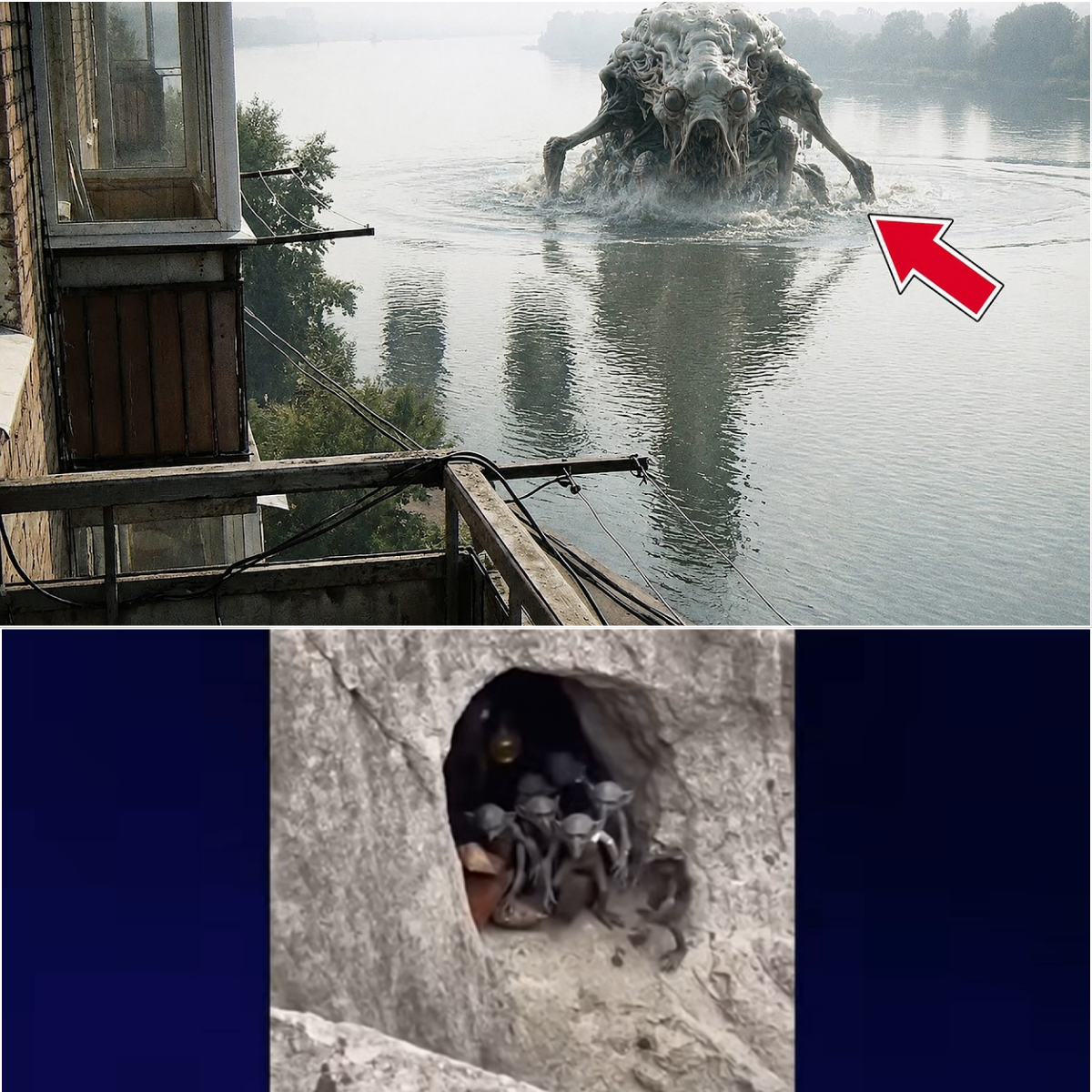
This digital ecosystem thrives on a distinct lack of context. Without independent examinations, verifiable metadata, or precise filming coordinates, these snippets of footage exist in a state of permanent ambiguity. For the skeptic, they are obvious hoaxes—the products of cheap CGI, practical effects, or sophisticated generative AI tools. But for a growing audience weary of a completely mapped, predictable world, the very lack of verification becomes proof of a cover-up, transforming a blurry silhouette into a thrilling testament to the undiscovered.
From Johannesburg to the Amazon: The Modern Anatomy of an Encounter
When analyzing the modern wave of internet-fueled monster testimonies, distinct narrative archetypes emerge, cutting across geographic borders and cultural divides. These are not just random jump-scares; they are contemporary parables that exploit the specific vulnerabilities of our high-tech lives.
The Abandoned Vehicle and the Dashboard Witness
One of the most uniquely modern sub-genres of the paranormal encounter involves the dash cam—an automated, objective observer meant to protect us from insurance fraud, which instead captures our deepest nightmares. A famous piece of viral folklore originating from a rural road outside Johannesburg, South Africa, illustrates this perfectly. According to the digital lore, police officers discovered an empty, undamaged car abandoned on a dark shoulder. The driver was completely missing.
When investigators reviewed the vehicle’s dash cam footage, they found a sequence that reads like a psychological thriller:
The Approach: A strange, pale creature—defying the anatomical categorization of any known African predator—slowly emerges from the brush behind a low hill.
The Charge: The entity creeps deliberately into the headlights before suddenly rushing the vehicle with unnatural, terrifying speed.
The Cutoff: The video feed abruptly terminates at the exact moment of impact.
The horror of this scenario relies entirely on the automated nature of the camera. The machine keeps recording after the human is gone, leaving behind a digital artifact that offers a terrifying question mark instead of closure.
The Immaterial Intruders of the Rural Homestead
Further west, in the agricultural valleys of Colombia, another classic archetype plays out: the domestic invasion. For weeks, a farming couple endured mysterious, violent thumping noises emanating from their barn in the dead of night. Every time they entered with lanterns, the sound ceased, revealing nothing but empty rafters.
When the confrontation finally occurred, the details deviated sharply from standard biological encounters. Hanging from the ceiling was a humanoid anomaly. In a panic, the farmer struck at the entity with a shovel, only for the tool to pass cleanly through its torso as if it were entirely immaterial, a localized tear in reality. The couple abandoned their livelihood for a month out of sheer psychological terror. This breed of testimony highlights a recurring theme in modern encounters: the frustration of physical human defense against anomalies that refuse to play by the laws of physics.
Folklore Rebranded: The Wendigo, the Rake, and the New American Gothic
Perhaps the most potent aspect of the internet’s monster obsession is its ability to weaponize ancient folklore, stripping traditional myths of their cultural context and turning them into viral creepypastas for an American audience hungry for the macabre.
The Corporate Mythology of the Wendigo
In the deep, snow-drenched forests of northern North America, two night-hikers recently uploaded footage of a tall, emaciated humanoid sporting massive, jagged deer antlers. The internet immediately diagnosed the entity as a Wendigo—a terrifying spirit deeply rooted in the traditional mythology of the Algonquin peoples.
[Traditional Algonquin Legend] ──> A cautionary tale against greed and cannibalism.
                                        │
                                        ▼
[Modern Digital Rebranding]    ──> A literal, antlered monster stalking hikers for clicks.
In its original indigenous context, the Wendigo was a profound, symbolic metaphor for the destructive forces of greed, selfishness, and winter starvation—a spiritual manifestation of a human turning into a monster by consuming their community. Through the lens of the internet, however, the Wendigo has been literalized, decoupled from its moral framework, and transformed into an aesthetic: a physical monster hiding in the thicket, waiting to be captured on a tourist’s smartphone.
The Urban Legends of the Canadian Woods
Similarly, a viral video filmed by a vacationing couple in a scenic, isolated region of Canada claimed to capture “The Rake.” Moving with jerky, quadrapedal, highly unnatural motions outside a dark cabin window, the pale, elongated figure looks identical to the creature manufactured on internet forums in the mid-2000s.
The fact that an entirely fictional monster created by anonymous internet users is now regularly “sighted” by real-world eyewitnesses demonstrates the terrifying power of digital feedback loops. The internet invents a monster, popularizes its traits, and suddenly, everyday citizens walking through the woods begin projecting that exact imagery onto ordinary black bears, shifting shadows, or tricks of the light.
Global Anomalies: A Catalog of Modern Terrors
The digital archive of the anomalous is inherently international, drawing on localized fears and cultural imagery from every corner of the globe to populate its terrifying menagerie.
Reported Location
Physical Characteristics
Alleged Behavior
Cultural Interpretation
Cancun, Mexico
Smooth green skin, webbed frog-like limbs, inflating throat sac
Perched on rooftops making rhythmic, bass-heavy acoustic calls
Frog-Human Hybrid / Cryptozoological Anomaly
Rajasthan, India
Elongated humanoids with hyper-flexible joints
Crawling rapidly on their stomachs in fast, jerky, synchronized movements
Industrial site entities causing mass worker resignations
Ishikari River, Japan
Bipedal humanoid with a hard, calcified turtle shell on its back
Standing motionless at the water’s edge before melting into the current
The Kappa (Traditional river spirit of Japanese folklore)
Guatemala
Humanoid torso, massive membranous leather wings, heavy curved horns
Perched on utility poles and hillsides; alleged defense via toxic secretions
The Gargoyle / Living Demon
The Biological Frontier: When Monsters Turn Out to Be Real
Amidst the ocean of hoaxes, optical illusions, and hyper-dimensional folklore, there are rare moments where the hunt for monsters intersects with genuine, baseline biology. Every so often, the creature pulled out of the woods is not a spirit or an alien, but a profound testament to nature’s capacity for mutation and survival.
In the rural province of Balochistan, a group of local hunters cornered an animal that defied their understanding of the local ecosystem. It possessed the razor-focused, heavily muscled jaws and sloping posture of a hyena, but its body was scaled down to the size of a domestic dog, covered in light fur broken by stark, painted black stripes.
Believing they had captured a cryptid, the villagers contacted wildlife biologists, who transported the stressed animal to a specialized facility. The creature’s subsequent illness and release before definitive genetic testing could occur left a frustrating gap in the record. Was it a relic population of an ancient, thought-extinct canid? A radical, localized genetic mutation of a striped hyena? Or a completely new hybrid species carving out a niche in the expanding wasteland of human development?
These biological anomalies remind us that our understanding of Earth’s zoological ledger remains fundamentally incomplete. When a construction worker in Minnesota captures a blurry video of a three-meter-tall, thick-furred white hominid that seemingly dissolves into the timber line when a bicycle passes, we are quick to laugh it off as a “Bigfoot” hoax. Yet, history shows that animals like the giant squid and the mountain gorilla were treated as hysterical myths by western science right up until the moment their carcasses were dragged onto a laboratory table.
The Paranormal Weapon: Air Forces and the High-Tech Monster Chase
As technology has evolved, the methods of encountering the unknown have shifted from accidental backyard glimpses to active, high-tech reconnaissance. Today’s monster hunters are not just armed with flashlights; they are flying commercial drones equipped with thermal imaging and high-definition lenses into areas where humans cannot safely tread.
A mountain climber traversing a remote, treacherous gorge system in North America deployed a reconnaissance drone to scout the path ahead. The panoramic video feed running to his handheld screen was suddenly interrupted by a massive, muscular figure standing on a sheer, inaccessible rock face. The entity—standing an estimated nine feet tall with sweeping, powerful shoulders covered in dirty white fur—actively swung at the low-flying drone, attempting to swat the mechanical intruder out of the sky before the climber panicked and recalled the device.
[Drone Reconnaissance] ──> Enters inaccessible mountain gorge.
                             │
                             ├──> Captures high-definition footage of 9-foot hominid.
                             │
                             └──> Entity reacts with physical aggression toward the device.
This mechanical mediation changes the dynamic of the encounter. The human is no longer in immediate physical danger, which allows for a more prolonged, calculated observation. Yet, even with a drone, the results are frustratingly consistent: a sudden burst of violence, a quick camera pan, a blurry frame, and an animal that vanishes into the geography as if it were a natural extension of the stone itself.
The Psychological Need for the Unexplained
Ultimately, the relentless surge of monster testimonies in our modern world speaks less to the biological reality of these creatures and more to the fracturing state of the human psyche in the 21st century.
We live in an era of absolute surveillance, where our movements are tracked by coordinates, our preferences are predicted by corporate code, and the physical world has been thoroughly colonized by concrete and fiber-optic cables. In this hyper-rational, hyper-monitored landscape, the belief in monsters becomes a desperate form of psychological rebellion.
To believe that a reptilian humanoid reminiscent of an ancient dinosaur still sprints across the desert highways of New Mexico, or that a blue-skinned, finned mermaid watches the shores of a secluded lake in upstate New York, is to believe that the world is still vast, mysterious, and untamed. It is a refusal to accept that the map is fully completed.
The monsters we create, share, and chase online are not just figures of terror; they are the guardians of our wonder. They remind us that despite our towering achievements, our clean data sheets, and our brilliant artificial intellects, we are still just primitive frightened creatures sitting around a campfire, staring out into a dark, vast forest, wondering what is looking back.