Real Encounters With Mythological Creatures You Won’t Believe Ever Existed
Real Encounters With Mythological Creatures You Won’t Believe Ever Existed
There was a time when monsters lived securely within the borders of human imagination, protected by the limits of our ability to document the world. For millennia, folklore was passed from mouth to mouth, sketched into the margins of medieval manuscripts, and whispered around flickering campfires—unprovable, yet fundamentally impossible to fully debunk. Today, that safe territory has seemingly dissolved under the relentless gaze of an electronic panopticon. With high-definition smartphones in every pocket, security cameras on every porch, and automated trail cams capturing the silent depths of our forests, the shadows should be empty. Yet, rather than systematically disinfecting the world of its myths, our hyper-connected digital landscape has done the opposite: it has democratized the anomalous, flooding the internet with a continuous stream of baffling, unverified video files that challenge our collective sense of absolute certainty and expose our enduring fascination with the unexplained.
The Democratization of the Nightmare: How Pixels Replaced Folklore
The contemporary proliferation of anomalous digital media represents an unexpected psychological paradox of the information age. The foundational promise of the internet was absolute clarity—a global cataloging of reality where ignorance would be eradicated by data. Instead, social media platforms and digital video archives have transformed into an infinite, algorithmic campfire, resurrecting ancient archetypes under the guise of citizen journalism.
Consider the baseline mechanics of the viral “encounter.” An anonymous user uploads a twenty-second clip captured by a home security system or a hunting camera. Within hours, the footage bypasses traditional institutional filters, leaping from obscure subreddits to mainstream multimedia feeds. Millions of viewers dissect the footage frame by frame in the comments section, filling the vacuum of context with their own deep-seated anxieties.
This digital ecosystem thrives precisely on the vulnerabilities of modern recording devices. Digital compression, lens flares, pixelation, and low-light sensor artifacts inherently generate a state of permanent ambiguity. For the hyper-rationalist, these snippets are easily dismissed as cheap CGI, sophisticated deepfakes, or ordinary wildlife viewed from an unfortunate angle. But for an audience deeply fatigued by a thoroughly mapped and predictable world, the very lack of definitive verification becomes a modern form of proof—a testament that despite our towering achievements, the world remains open to terrifying possibilities.
From Texas to Iberia: A Contemporary Catalog of the Impossible
When analyzing the modern wave of internet-fueled monster testimonies, distinct narrative categories emerge across geographic borders and cultural divides. These are no longer just regional ghost stories; they are global, digital parables that exploit the specific placement of our electronic surveillance tools.
The Centaur of the Backroads
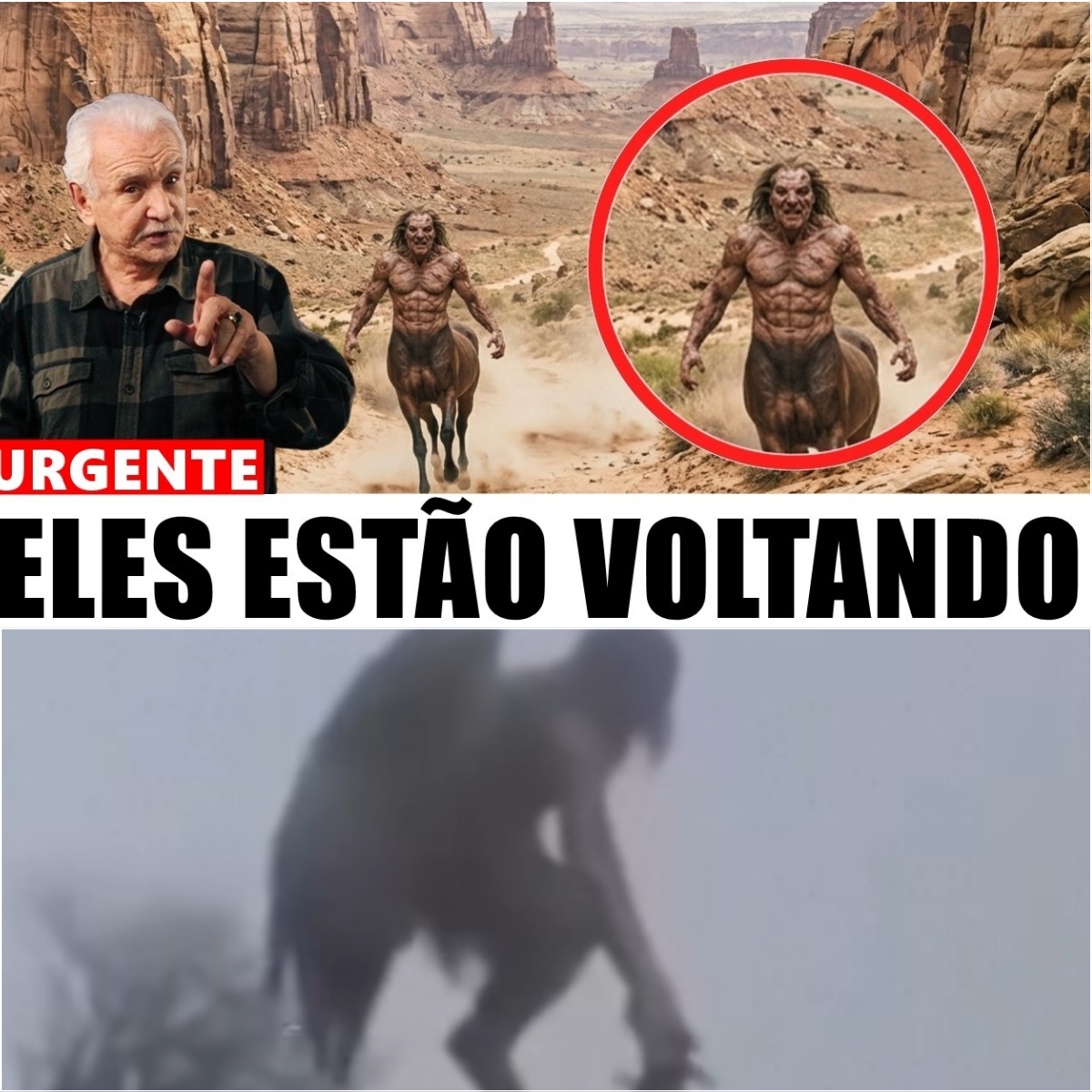
In a small, isolated rural community in Texas, local residents began sharing a series of nocturnal recordings captured after noticing an unusual pattern of movement along their county roads. The footage appeared to depict a lone man walking late at night alongside an entity that defied biological classification: a being with a recognizable human torso seamlessly joined to the powerful, quadrapedal body of a horse.
The witnesses who observed the video were struck not by a sense of chaotic panic, but by the deliberate, unhurried pace of the anomaly. The entity moved down the paved road without attempting to hide from passing headlights or residential security cameras, navigating the environment with an unsettling sense of absolute belonging. Local commentators noted that the smooth transitions of the creature’s musculature did not resemble a birth defect or a known mammalian deformity, but rather suggested an entirely separate, uncataloged species operating in the rural American dark.
The Watchers on the Mist
Further east, in the dense, fog-covered Appalachian ridges of the United States, a drone operator scouting terrain captured a stark silhouette perched precariously on a sheer rock face. The figure was undeniably humanoid, yet it possessed massive, folded structures along its back that closely mirrored the anatomy of leather wings.
The entity remained completely motionless, crouched in a tense, gargoyle-like posture that conveyed an intense aura of vigilance. While online skeptics immediately pointed toward digital manipulation or a well-placed practical joke, regional historians noted that the footage aligned perfectly with centuries-old native legends of “The Watchers”—silent, winged sentinels that traditionally manifest on the fringes of human sight immediately preceding moments of localized tragedy or massive ecological upheaval.
The Roadside Reptile
Perhaps the most visceral demonstration of everyday objects transforming into nightmares occurred along a busy highway in the American South. Drivers pulled over to inspect what initially appeared to be a large, heavy trash bag or a piece of industrial canvas abandoned on the shoulder.
As a small group of curious onlookers approached with their smartphones raised, the object began to undulate with a rhythmic, muscular pulse. Within seconds, the material uncoiled to reveal an elongated creature whose physical traits combined human skeletal architecture with a distinct, reptilian epidermis. Upon sensing the presence of the human cameras, the entity dropped flat to the earth and crawled into the drainage ditch with a hyper-flexible, rapid motion that caused the onlookers to scatter in terror. The resulting video went viral within forty-eight hours, yet no herpetologist or zoological authority could definitively align the creature’s speed and anatomy with any known species.
Global Echoes: The Rebranding of Prehistoric Terror
The international nature of modern video platforms allows localized cultural terrors to achieve global permanence in a matter of clicks. These recordings often reveal a fascinating cross-continental synchronization, as if modern cameras are capturing the exact same archetypal entities that our ancestors attempted to describe long before the invention of electricity.
In the agricultural heartlands of Mexico, farmworkers documented the capture of an aggressive, predatory animal that possessed the combined physical traits of an oversized canine and a primitive primate. The workers immediately applied a traditional label to the creature, branding it the Chupacabra—the legendary, blood-drinking scourge of Latin American livestock. According to their testimonies, the animal exhibited an unnatural intelligence, managing to escape from a reinforced containment barrel overnight without leaving a single trace of physical damage or hair behind.
Simultaneously, deep within the snow-covered wilderness of the Canadian interior, a lost hunter’s body-mounted camera recorded a towering, emaciated humanoid moving through the timber with impossible speed. The figure’s elongated limbs and visible ribcage matched the traditional descriptions of the Wendigo—the insatiable, winter-born spirit of Algonquin folklore. The recording terminated abruptly at the exact moment the entity shifted its focus from the surrounding canopy and charged directly toward the lens.
The recurring patterns across these international incidents are striking:
The Domestic Intrusion: Pale, elongated humanoids are caught by barn cameras entering rural stables, bypassing sophisticated security systems while domestic guard dogs react with intense, localized panic long before the camera’s motion sensors trigger.
The Midday Anomaly: Security guards conducting a routine, high-noon patrol across a desert sector of Portugal film a tall, bipedal creature walking across an open plain. The encounter occurs under the harsh, unyielding glare of the midday sun, stripping the phenomenon of its traditional nighttime mystique.
The River Guardian: Anglers on the Iberian Peninsula capture high-resolution footage of a massive figure standing motionless in shallow river water, its presence marked by a heavy, scaled tail that drags through the mud—an image that instantly revives ancient European folklore regarding the hidden spirits that guard freshwater boundaries.
The Innocent Eye: Children and the Absence of Fear
Among the thousands of anomalous recordings circulating through the digital archive, the most unsettling are often those where the primary witnesses are completely unbothered by the presence of the abnormal.
In a widely analyzed piece of domestic footage from a suburban home in Florida, three young children are seen playing a casual game of tag in their fenced backyard during the late afternoon. As the camera pans across the perimeter, a dark, towering silhouette steps out from behind a line of oak trees at the edge of the frame. The figure possesses the distinct physical structure of an oversized, humanoid crow—motionless, jet-black, and staring intently at the children.
[Humanoid Crow Entity] ──> Steps into the frame from the tree line.
                                │
                                ├──> Remains completely motionless for 45 seconds.
                                │
                                └──> Children continue playing without a survival response.
The terrifying aspect of the recording is not the entity’s behavior, which remains entirely passive, but the absolute lack of a survival response from the children. They continue to run, laugh, and play within twenty feet of the silhouette, completely ignoring a presence that would cause an adult observer to experience an immediate, visceral flight response.
Psychologists and folklorists who study these specific interactions suggest that children exist in a state of cognitive confidence that adults have long since surrendered. An adult has been systematically trained by civilization to fear the dark, to categorize the world into the rigid boxes of the possible and the impossible. When an adult encounters an anomaly, they experience the terror of a broken worldview. A child, conversely, still views the universe as an inherently vast, magical, and unmapped territory. They have not yet learned the cultural language of fear that causes the shadows to grow longer, allowing them to coexist with the strange in a state of calm, untroubled grace.
The Roof Shadows and the Live-Stream Panic
As technology has evolved from static recording to real-world, interactive live-streaming, the relationship between the viewer and the encounter has become terrifyingly immediate. The modern monster hunter is no longer just a passive consumer of pre-recorded footage; they are an active participant in an unfolding event.
In the mountainous regions of Colombia, rural communities have long shared accounts of an entity known as La Sombra del Tejado—the Roof Shadow. This creature is described as a hunched, long-limbed figure that crawls with a light, metallic scraping sound across the corrugated tin roofs of village homes at dusk.
This regional myth achieved immediate international relevance during a live-stream broadcast by an content creator located in a semi-rural sector of Florida. While interacting with his live audience, the creator noted a strange, rhythmic thumping sound emanating from his backyard garden. Taking his smartphone outside to investigate the disturbance for his viewers, the camera illuminated a dark, fast-moving mass that cut across the open lawn with an aggressive, predatory trajectory.
The immediate reaction of the creator was a raw, unedited panic. He retreated into his home and locked the door as his digital audience watched the feed shake, the comment section exploding with real-time speculation and collective terror. The event demonstrated the terrifying power of modern connectivity: a localized, ancient fear from the Colombian mountains was instantly translated, modernized, and experienced simultaneously by thousands of citizens sitting in the safety of their suburban living rooms.
Why the Tech-Driven World Refuses to Let Go of the Monster
Ultimately, the relentless surge of anomalous media in our modern world speaks far less to the biological reality of these creatures and far more to the fracturing state of the human soul in the twenty-first century.
We live in a world surrounded by an excess of answers. Our algorithms predict our purchases, our satellites monitor our movements, and our automated systems provide a continuous, sterile buffer against the harsh unpredictability of nature. Yet, in our rush to master the physical world, we have created an environment that is profoundly starved of wonder.
The survival of the monster myth in the age of the smartphone is an act of unconscious, psychological rebellion. To look at a blurry video of a frog-humanoid perched on a Mexican roof, an oversized wolf pacing the perimeter of a Kansas ranch, or a tiny, ancient entity peering from the mouth of an Egyptian cavern is to assert that our science has not completely conquered the dark. It is a collective manifestation of our need to believe that there are still territories where human control ends and the ancient mysteries begin.
The cameras we carry in our pockets have not killed our monsters; they have simply given them a new medium through which to haunt us. Before, they lived in the shifting fog of oral tradition; now, they endure in the permanent digital amber of video files that defy explanation. This relentless pursuit of the hidden is one of the most profoundly human traits we possess. It reminds us that even when surrounded by absolute technology, comfort, and reason, the human spirit will always choose to look out into the deep, quiet woods, staring intently into the dark, and asking what is waiting on the other side.