Most Disturbing Things Captured In Walmart and Stores!
Most Disturbing Things Captured In Walmart and Stores!
The modern American big-box store was designed as a triumph of post-war efficiency, a brightly lit sanctuary of predictable consumerism where a citizen could acquire everything from lawn care products to bulk groceries in a single, orderly trip. In recent years, however, the suburban retail floor has quietly transformed into something altogether different: a high-stakes public theater where the fractures of contemporary American society are laid bare in real-time. Under the hum of industrial fluorescent lights, the aisles have become a stage for viral meltdowns, economic desperation, and an unraveling social contract, turning the mundane act of shopping into a front-row seat to an all-out cultural show.
The Death of the Customer Service Ideal
For nearly a century, American commerce operated under a simple, foundational maxim: the customer is always right. This unwritten contract sustained decades of retail growth, fostering an environment where consumer grievances—no matter how petty—were met with institutional patience and a corporate smile. Today, that ideal has not merely decayed; it has been shattered entirely, replaced by an era of acute public confrontation that retail workers and sociologists alike are struggling to categorize.
The phenomenon popularly distilled into the cultural caricature of the “Karen” represents a profound breakdown in public behavioral norms. What was once handled via a quiet conversation at a customer service desk now regularly escalates into full-blown structural vandalism. In stores across the country, the minor inconvenience of an out-of-stock item or a denied refund is increasingly treated not as a commercial hiccup, but as an existential insult demanding a physical response.
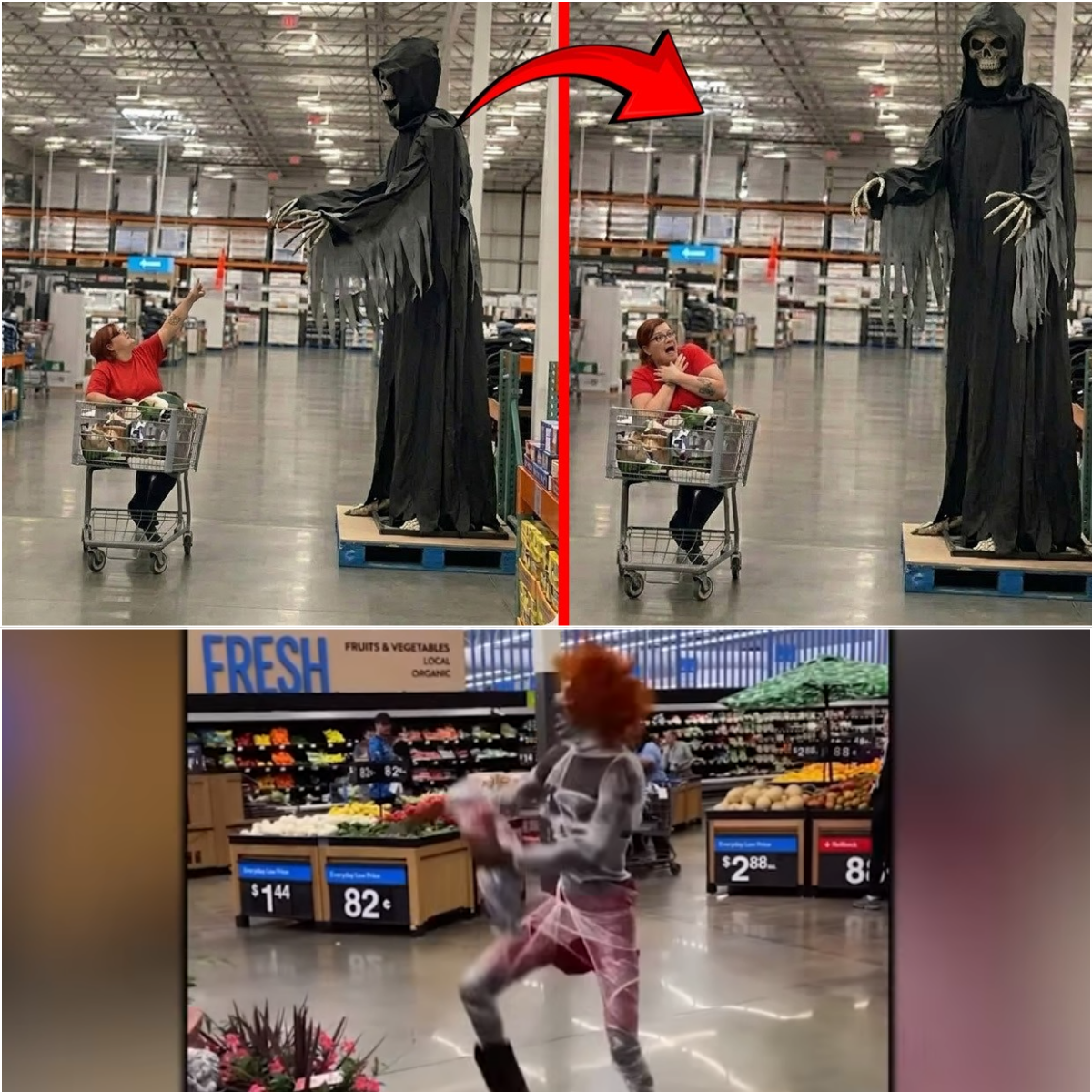
Consider the baseline mechanics of a modern retail meltdown. In one instance, a shopper, incensed by a shortage of his preferred merchandise, bypassed the verbal complaint altogether and began systematically trashing a beverage display, hurling heavy bottles at bystanders and fleeing security. In another aisle, a woman seeking a refund took to aggressively punching the point-of-sale hardware, knocking over entire shelves of product in a desperate bid to intimidate the staff into submission.
These are not isolated incidents of bad manners; they are symptomatic of a broader, systemic loss of impulse control. The consumer environment, once designed to soothe the anxieties of the middle class, has become a pressure cooker where the slightest friction triggers a state of regression, leaving low-wage retail employees to act as involuntary de-escalation experts.
The Viral Economy and the Quest for Attention
To understand the shifting landscape of the big-box store, one must look beyond pure rage and examine the digital economy that incentivizes public absurdity. The rise of short-form video platforms has turned every square foot of retail space into a potential studio backdrop, creating an environment where shock value is directly convertible into social currency.
For a specific cohort of digital creators, the corporate neutrality of a store like Walmart provides the perfect canvas for disruptive performance art. The aisles are no longer just places to buy goods; they are stages waiting for a disruption. This manifest desire for algorithmic visibility regularly produces surreal public spectacles: young men climbing commercial shelving in the toilet paper aisle to loudly broadcast their personal lives over the intercom, or pranksters attempting to dump raw eggs and yogurt onto their own heads in the middle of the grocery section, hoping to capture a brief flash of viral notoriety before being escorted out by local law enforcement.
"Rip me out the plastic. I'm acting brand new."
This sudden outburst, bellowed repeatedly by an unknown man brandishing a children’s toy during the slow hours of a suburban store, encapsulates the bizarre intersection of internet culture and physical reality. The performance is nonsensical to the bewildered shoppers in the immediate vicinity, yet it is perfectly legible to the online audience for whom it was recorded.
The physical store has become secondary to the digital broadcast. When a customer films an elderly woman demanding a refund for a hamburger with an escalating, rhythmic fury—refusing a remake and demanding hot fries along with her cash—the interaction is immediately commodified. The line between organic human behavior and staged digital content has blurred to the point of irrelevance, leaving everyday shoppers to navigate a landscape where any trip down the frozen food aisle might require them to duck out of the frame of someone else’s TikTok video.
Economic Desperation and the Fracturing of the Self
While a significant portion of big-box chaos can be attributed to entitlement or the pursuit of internet fame, a darker, more volatile undercurrent speaks directly to the economic and psychological strains facing the American interior. The mega-retailer is often the only accessible public space in a struggling community, making it an involuntary mirror for the nation’s deepest crises.
The reality of retail theft has shifted from the discrete pocketing of small luxury items to organized, brazen operations that occur in broad daylight. In stores nationwide, security cameras capture scenes that resemble flash mobs rather than traditional crimes: crowds of shoppers aggressively fighting over discounted television screens, or teams of individuals filling multiple shopping carts to the brim and engaging in a literal tug-of-war with store employees at the exit doors.
"That's a felony. New laws. Stealing is a felony."
This warning, delivered by responding officers as they ambushed a trio of shoplifters who had systematically looted nearly $1,000 worth of merchandise from consecutive storefronts, highlights the escalating legal stakes of a crumbling economic landscape. Yet, the threat of prosecution does little to deter the sheer volume of incidents. Shoplifters routinely adapt their strategies, utilizing loose clothing to conceal expensive liquor bottles, hiding high-value apparel within the folds of oversized skirts, or even invoking a reported pregnancy as an immediate moral defense when intercepted by asset protection teams at the back exit.
Beyond the financial metrics of retail shrink lies a more profound human tragedy: the intersection of public space with severe mental health crises and substance abuse. The big-box floor is frequently where the lack of an adequate social safety net becomes visible. When an unhoused man enters a facility brandishing a hammer and begins systematically destroying glass displays, forcing an immediate evacuation of both staff and customers, the motivation is rarely material gain. It is an expression of acute distress played out in the only arena left available to them.
The shocking images of a man stepping out of a public restroom to pour half a gallon of milk over his own head before fleeing, or a disoriented woman pacing the meat department while chewing on raw protein, are raw depictions of human crisis. In an earlier era, these individuals might have been intercepted by community health resources; in the modern landscape, they are recorded on smartphones, broadcast online, and digested by millions as a form of dark, ambient entertainment.
The Breakdown of the Micro-Social Contract
Every functioning society relies on thousands of silent, micro-negotiations that occur between strangers every day. We wait our turn in line; we respect personal space; we maintain an unspoken baseline of politeness to those tasked with scanning our groceries. In the contemporary retail environment, this micro-social contract is experiencing a profound, visible failure.
The checkout line, in particular, has become a flashpoint for behavioral dominance. The simple act of waiting has transformed into an arena of entitlement, where breaking the queue is no longer viewed as a breach of manners, but as a right of the assertive. In one striking sequence, a shopper bypassing the self-checkout line deliberately rammed her cart into another customer’s trolley—which contained a small child—before loudly declaring her institutional ownership of the space to the surrounding crowd.
This decay of basic civility has forced a strange, localized evolution in public defense. In the absence of immediate intervention from overwhelmed store security, everyday citizens are beginning to enforce behavioral boundaries themselves. The methods are often crude, swift, and captured in high definition:
A cashier humbles an entitled customer by refusing a bag after enduring a barrage of verbal abuse and tossed currency.
A customer delivers a sharp, physical lesson to a fellow shopper who attempted to snatch a scarce cosmetic item directly out of another person’s hand.
An elderly woman, tired of being repeatedly shoved aside by a rude, fast-moving customer, calmly hooks her cane into a retail shelf to trip the aggressor as he passes, delivering a mechanical dose of old-world discipline to the aisle.
Perhaps the most iconic manifestation of this grassroots resistance occurred when a man attempted to sprint through a store exit with a shopping cart overflowing with stolen electronics. He was stopped not by a security guard or a loss prevention specialist, but by a grandmother who fearlessly blocked his path with her own cart, reached out, and ripped the mask off his face, demanding accountability in front of a stunned concourse.
The Corporate Calculus of Survival
For the corporate entities that manage these vast retail networks, the transformation of their stores into centers of civic volatility presents an existential operational challenge. The response has been a steady, systemic militarization of the shopping experience.
Over the past decade, the physical architecture of the big-box store has quietly shifted. Aisles that once offered open access are now punctuated by locked plexiglass cases containing everyday items like razor blades, baby formula, and laundry detergent. Newly installed security gates, designed to trip or lock against unauthorized exits, stand alongside artificial intelligence-driven camera networks that analyze customer movements for signs of irregular behavior.
Yet, this technological layer cannot entirely suppress the human volatility inside the building. The corporate calculus must constantly weigh the cost of property damage against the severe liability of physical altercations. Store policies frequently instruct employees to avoid direct physical confrontation with shoplifters, a directive that often leaves staff members feeling vulnerable and exposed. When a heated argument between two employees escalates to the point of a near-brawl that spills out into the parking lot, it becomes clear that the internal stresses of the retail environment are affecting those on both sides of the register.
The big-box store was built to be an anonymous, efficient engine of distribution. It was never intended to serve as a community center, a mental health clinic, a stage for performance art, or an arena for class warfare. But by clearing out the traditional public squares of American life and replacing them with acres of asphalt and commercial roofing, we have inadvertently forced all of our cultural anxieties into a single room.
The next time you walk through the sliding glass doors of your local mega-retailer, look past the rows of consumer goods. Watch the interactions at the registers; listen to the tone of the announcements over the intercom; observe the weary posture of the employees navigating the floor. You are no longer just shopping. You are participating in a volatile, unfolding experiment in American sociology, where the price of admission is simply a receipt, and the show never stops.