Disturbing Videos No One Is Able To Debunk
Disturbing Videos No One Is Able To Debunk
In an era dominated by high-definition smartphone cameras and pervasive digital surveillance, the world should, theoretically, be shrinking away from mystery. Yet, a steady stream of anomalous footage—ranging from officially acknowledged military sensor data to grainy, late-night dashboard recordings—continues to slip through the cracks of rational explanation, capturing the global imagination. These modern ghost stories, captured in pixels rather than folklore, suggest that despite our obsession with hyper-connectivity and absolute data clearance, our collective appetite for the unexplained remains entirely insatiable.
The Pentagon’s New Normal: The Northeastern Orb
For decades, the study of unidentified flying objects was relegated to the fringes of serious journalism, dismissed as the domain of conspiracy theorists and sci-fi enthusiasts. That boundary permanently dissolved with the establishment of the Pentagon’s All-Domain Anomaly Resolution Office (AARO). In its third official batch of Unidentified Anomalous Phenomena (UAP) releases, the government detailed an incident from July 2025 that has come to be known as the “Northeastern Orb.”
According to the official declassified narrative, the encounter took place around 9:00 p.m. local time in the suburban backyard of a home in the northeastern United States. A resident returning from work observed an intensely brilliant, hovering light just 25 feet off the ground, framed against the dark silhouette of a tree line. Upon calling out their spouse, both witnessed what they described as a pair of brilliant red spheres, roughly one meter in diameter, with solid, basketball-sized cores.
Using an iPhone 14 Pro Max, the witnesses captured the objects smoothly and silently drifting westward in perfect, tethered formation before appearing to merge into a single entity and vanishing into the night sky.
What makes the Northeastern Orb case so compelling to the American public is not just the visual anomaly itself, but its source. When the Department of Defense archives and catalogs an event, it strips away the easy dismissal of “hoax” or “optical illusion.” The footage introduces an unsettling reality: even with the most sophisticated airspace surveillance networks on Earth, there are still physical anomalies operating in our skies that the highest levels of military intelligence cannot identify.
The Haunting of Digital Spaces: Clip095 and Blank Room Soup
While the Pentagon deals with concrete atmospheric anomalies, the internet has generated its own breed of psychological horror through “found footage” mysteries. These videos don’t always feature monsters; instead, they weaponize a deep-seated discomfort with the surreal and the contextless.
Consider “Clip095.mp4,” a video that surfaced on YouTube back in 2011. Characterized by a degraded, VHS-quality aesthetic, it features hidden, blinking messages and a deeply unsettling, hobbling figure adorned in stark mask designs or traditional corpse paint. It mimics the cursed-media trope made famous by late-90s horror films, leaving viewers with an intense sense of psychological dread. Because the uploader vanished shortly after posting a tiny trilogy of similarly cryptic files, the clip remains a monument to the internet’s early, uncurated wilderness—a digital artifact left behind without an author to explain its intent.
Even more famous is the legendary “Blank Room Soup” video from 2005. For nearly two decades, the terrifying clip circulated on the dark web and early video forums: a visibly distraught man sitting at a bare table, weeping as he forces himself to eat ramen noodles, while two towering, expressionless costumed mascots slowly emerge from the shadows to caress his back.
The rumors surrounding the footage were grim, with many asserting it was a clip from a snuff film where the victim was being tortured. It wasn’t until internet sleuths traced the characters to an animator named Raymond Percy that the mundane, yet stranger-than-fiction truth came to light.
Percy revealed that the costumes were part of a live performance art project in Los Angeles. Following a show, the suits were stolen from his vehicle. Weeks later, an anonymous sender mailed him the “Blank Room Soup” video. The mystery of the crying man was solved as an elaborate, unauthorized prank using stolen props, but the lingering question of who stole the suits and why they staged the terrifying dinner scene keeps the video firmly entrenched in the internet’s hall of terrors.
Hallowed Ground and Translucent Visitors
If the internet’s surreal art projects exploit our psychological anxieties, traditional ghost footage targets our historic grief. Nowhere is this more apparent than in the relentless fascination with Gettysburg, Pennsylvania.
As the site of the bloodiest battle of the American Civil War, where more than 50,000 soldiers were killed, wounded, or went missing over three brutal days in 1863, Gettysburg is historically primed for ghost lore. Decades of tourist accounts detail the sound of phantom drumbeats, echoing gunfire, and apparitions dressed in tattered Union and Confederate woolens wandering through the foggy fields of Devil’s Den or the Peach Orchard.
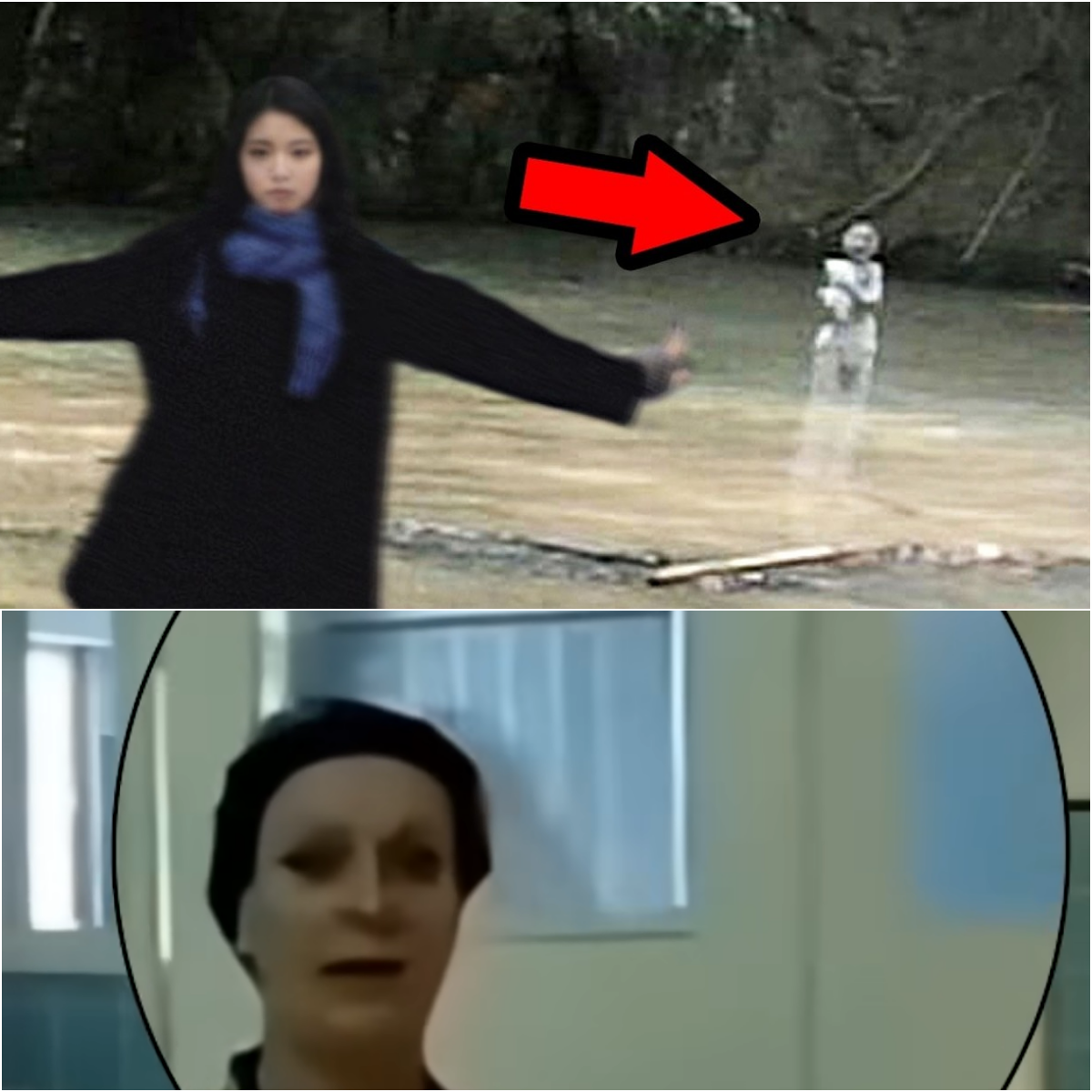
Recent tourist and security footage from the battlefield has renewed these debates. In several widely circulated clips, pale, semi-translucent, human-like shapes appear to manifest directly in the open fields, moving with a synchronized, rhythmic motion that mimics soldiers advancing under fire, before instantly dissolving into thin air.
Skeptics point to natural explanations, noting that early morning mist, condensation on camera lenses, and the refraction of headlights from nearby park roads can easily create moving, human-like silhouettes on digital sensors.
Yet, for those who view the footage through the lens of history, the technical explanations fail to satisfy. The idea that an event as traumatic as the Civil War could leave a permanent “recording” on the physical landscape—a phenomenon paranormal researchers call the “Stone Tape Theory”—remains a deeply comforting, yet terrifying explanation for a culture still processing its historical scars.
This theme of the domestic ghost extends to everyday spaces, as seen in home security footage like the “Kitchen Ghost” or a viral video taken inside a training morgue. In the kitchen footage, a bright, sweeping reflection across a refrigerator door shifts into a distinct, translucent human form that walks smoothly across the floor before fading out of frame. In the morgue video, a dark, solid shadow passes across an autopsy room window, only for the camera operator to investigate and find an entirely empty, locked suite. Whether these are clever digital edits, shadows from passing cars, or genuine anomalies, they transform the most mundane, sterile environments into spaces of profound uncertainty.
Cryptids of the Highway: Folklore in the Dashcam Era
The digitization of the globe has also altered how we interact with cultural folklore. For centuries, monsters were confined to dense forests, deep lakes, and oral traditions. Today, they are captured by dashcams and posted to TikTok.
In South America, recent roadside footage has sparked immense panic due to its resemblance to the “Patasola” of Colombian folklore. The legend traditionally describes a beautiful woman who lures loggers and hunters deep into the jungle before transforming into a one-legged, fanged monster that destroys her victims. A viral video captured by a late-night traveler depicts a small, white-gowned humanoid figure with long black hair mechanically hopping along the shoulder of a desolate rural highway, matching the physical description of the folkloric creature perfectly.
Similarly, in the American Southwest, a video uploaded to TikTok showing a group of friends spotting a “deer” at night took a terrifying turn. As their car slows down and trains a flashlight on the brush, a pale, long-limbed, spindly figure abruptly unfolds itself, rising on two legs, and lunges violently toward the vehicle before the camera cuts out. Instantly, the video was branded across social media as a “Skinwalker”—a shapeshifting witch from Navajo tradition.
Skeptics correctly point out that the abrupt camera cuts in these cryptid videos are highly convenient, suggesting carefully staged hoaxes involving actors in morph suits or CGI enhancements designed to farm views and algorithmic engagement. Others suggest a more grounded, tragic explanation: an individual suffering a severe mental health crisis wandering near a highway at night.
However, the speed with which these videos go viral demonstrates a fascinating cultural truth. When faced with a bizarre image on a dark road, the modern mind does not immediately jump to technological error; it retreats to ancient folklore. We use the myths of our ancestors to categorize the terrifying anomalies caught by our newest technologies.
Conclusion: The Endurance of the Unknown
Ultimately, the enduring power of unexplained videos lies in their ability to disrupt our sense of absolute control. We live in an era where we expect every question to be answerable via a quick search, where every square inch of the planet is mapped by satellites, and where our lives are constantly cataloged in data streams.
When a video like the Northeastern Orb or a shadowy figure in a morgue successfully resists immediate debunking, it creates a refreshing, if frightening, gap in our structured reality. It reminds us that despite our immense technological progress, the world remains vast, layered, and deeply mysterious. As long as cameras continue to roll in the dark corners of the world, we will continue to watch, hovering in the space between skepticism and belief, searching the pixels for a glimpse of the extraordinary.