Biblical Warnings Are Appearing in The Sky
Biblical Warnings Are Appearing in The Sky
BOSTON — On a quiet Tuesday evening in late May, the glass panes of security cameras across the South Carolina lowcountry began to rattle. A low, concussive thud, arriving in a distinct double-beat, rolled across three counties, triggering car alarms, sending startled dogs barking into the night, and lighting up neighborhood digital forums from Columbia to the coast. Two days later, a nearly identical shudder passed over eastern Massachusetts, accompanied by a brief, incandescent streak that dipped toward the dark waters of Cape Cod Bay. Within hours, the digital architecture of the American internet did what it was designed to do: it took a series of disparate, explainable atmospheric anomalies and wove them into a grand, unifying narrative of cosmic dread.
We are currently living through a peculiar, hyper-connected renaissance of the unexplained. Across the United States, an increasing number of citizens are looking to the night sky not with the passive curiosity of amateur stargazers, but with a deeply felt, anxious conviction that something monumental is about to break through. The rapid convergence of viral smartphone footage, military transparency regarding Unidentified Aerial Phenomena (UAPs), and a profound, post-pandemic institutional distrust has created a fertile ecosystem for modern mythmaking. What began decades ago as a fringe subculture of flying saucer enthusiasts has evolved into a mainstream cultural phenomenon—one that seamlessly blends high-tech paranoia, ancient religious prophecy, and the bleeding edge of artificial intelligence.
To walk through the current landscape of American sky-watching is to witness a society trying to read the telemetry of its own anxieties. When the U.S. Geological Survey quickly confirmed that the South Carolina boom was not seismic, the lack of an immediate, definitive explanation from local military installations did not leave a vacuum; it created an invitation. In the contemporary information age, an unexplained sound is no longer just acoustics—it is a blank canvas.
The Anatomy of an Atmospheric Shudder
The physical events that catalyzed this latest wave of public fascination are, when viewed through the lens of atmospheric science, remarkably consistent with the seasonal behavior of our planet. Late spring and early summer frequently see an uptick in both bolide activity—large, bright meteors that explode in the atmosphere—and distinct acoustic phenomena caused by thermal inversions.
A bolide entering the upper atmosphere travels at speeds well exceeding tens of thousands of miles per hour. As it encounters increasingly dense air, the immense pressure in front of the object creates a shockwave. If the meteor undergoes a sudden fragmentation—essentially exploding under the thermal and mechanical stress—it releases a massive amount of energy in a fraction of a second. To an observer on the ground, this presents as a brilliant flash followed, minutes later, by a deep, rolling sonic boom that can vibrate foundations and register on residential security networks.
Furthermore, the East Coast of the United States routinely experiences sharp atmospheric temperature inversions during the transition into summer. When a layer of warm air traps a cooler layer of air closer to the ground, it creates an acoustic ceiling. Sounds generated by high-altitude military exercises, commercial supersonic flights operating far off the coast, or even distant industrial accidents can become trapped beneath this inversion layer. Instead of dissipating harmlessly into space, the sound waves bend back toward the earth, traveling vast distances and striking communities with unexpected force.
Yet, the scientific explanation often struggles to compete with the immediacy of a shared sensory experience. When a ring camera captures the violent startle of a family pet or the distinct vibration of a porch railing, the viewer is not thinking about acoustic refraction or thermal gradients. They are experiencing a visceral disruption of their domestic security. In a world that feels increasingly volatile, a noise that shakes the home from above feels inherently ominous, an uninvited knock on the door from an uncertain universe.
The Digital Cathedral: Prophecy and the Algorithm
For a significant segment of the American population, these atmospheric disruptions are not merely curious scientific footnotes; they are theological markers. Within hours of the East Coast sonic booms, sections of Christian social media began to align the events with biblical eschatology. The “signs in the sun, moon, and stars” foretold in the Gospel of Luke or the apocalyptic trumpets of the Book of Revelation are no longer abstract metaphors read from a pulpit—they are videos uploaded to TikTok and parsed in comment sections.
This synthesis of ancient faith and digital media represents a distinct shift in how prophecy is consumed and interpreted. In the traditional rural American landscape, prophetic interpretation was largely local, mediated by small-town pastors or specific denominational literature. Today, a believer in Michigan can compare notes with a stargazer in Israel within seconds, creating a globalized, crowd-sourced interpretation of the sky.
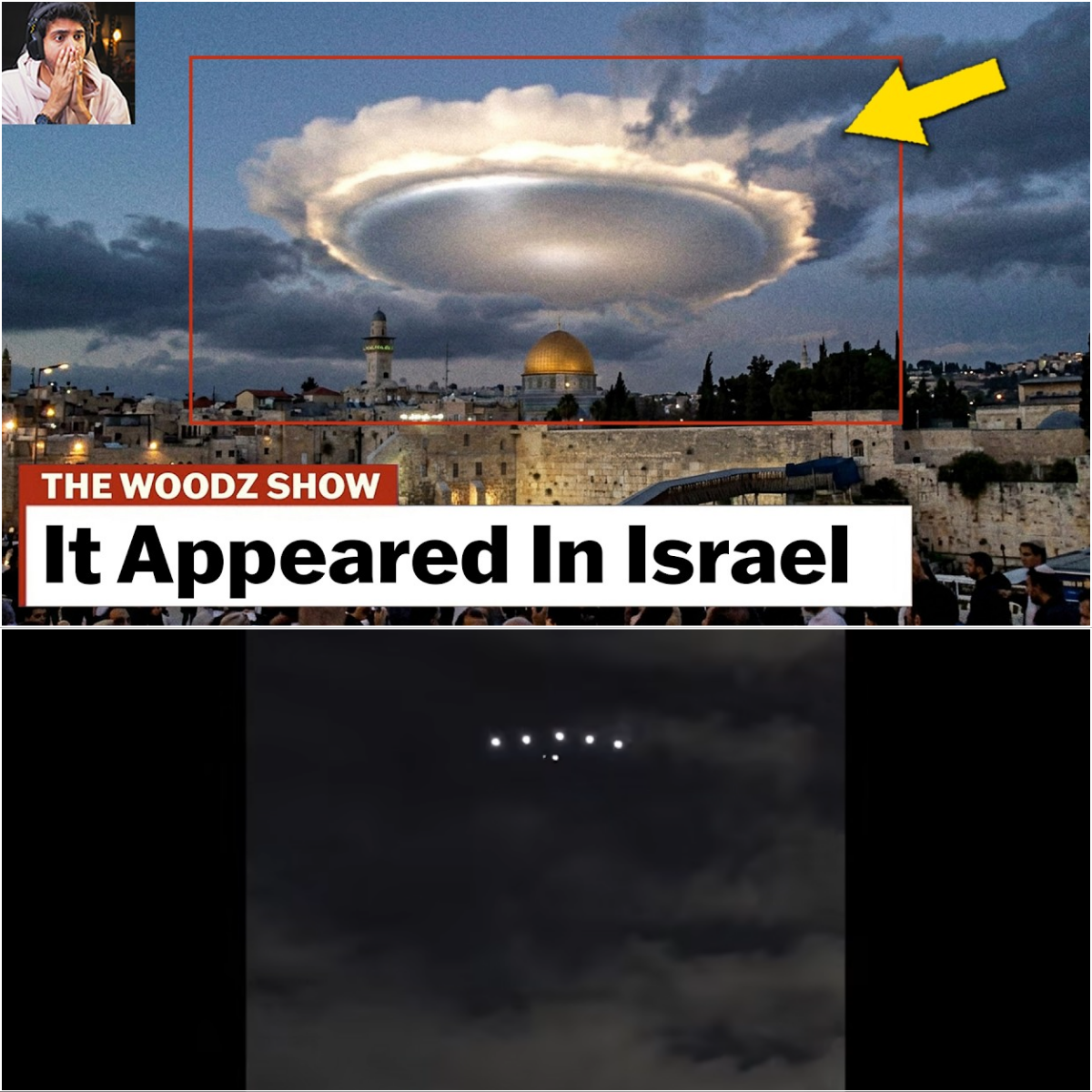
When smartphone cameras capture erratic lights or stars that appear to shift trajectory against the backdrop of the night, the digital commentary quickly bypasses conventional explanations like satellite trains or atmospheric distortion. Instead, talk turns to the “Watchers”—the enigmatic spiritual beings detailed in the apocryphal Book of Enoch—or the preparatory stirrings of the Second Coming.
This perspective views the modern world as a place of profound spiritual warfare, where the veil between the material and the metaphysical is wearing thin. The government’s silence or perceived hesitation to explain these phenomena is not interpreted as bureaucratic caution, but as a deliberate attempt to obscure a divine reality. In this digital cathedral, the smartphone screen functions as a modern stained-glass window, reflecting a ancient desire for cosmic justice and ultimate resolution in an age of perceived moral and social decay.
The Rise of Project Blue Beam and the Architecture of Distrust
Where religious prophecy ends, the darker, secular currents of American alternative political theory begin. Chief among the narratives circulating through the contemporary web is the resurgence of “Project Blue Beam”—a complex, deeply cynical conspiracy theory that originated in the mid-1990s but has found a vast new audience among younger, digitally native skeptics.
The core premise of the theory reads like a dystopian Hollywood screenplay: a shadowy group of global elites, operating through international bodies and advanced scientific agencies, plans to orchestrate a massive, simulated alien invasion. Utilizing a network of low-earth-orbit satellites, futuristic drones, and high-definition holographic projectors, this alleged cabal intends to project hyper-realistic religious figures and extraterrestrial armadas into the sky simultaneously across the globe.
The ultimate objective of this engineered deception, according to its adherents, is the total consolidation of geopolitical power. Faced with an overwhelming, seemingly existential threat from the stars, individual nation-states would willingly surrender their sovereignty to a singular, centralized global authority led by a charismatic savior figures capable of negotiating peace with the invaders.
To the secular observer, such a theory seems easily dismissible—a pastiche of science fiction tropes heavily indebted to films like Independence Day or the special-effects illusions of comic book villains. Yet, its current popularity reveals a profound, systemic collapse of institutional trust in American life. The theory serves as a radical metaphor for a population that feels completely disconnected from the levers of power.
When people look at footage of fireballs over Mexico or flickering lights over India and declare them to be “holographic tests,” they are expressing a fundamental belief that reality itself is being manipulated by those in authority. It is an extreme manifestation of a sentiment that has become increasingly common across the political spectrum: the conviction that mainstream media, scientific institutions, and governmental bodies are locked in a permanent campaign of psychological management directed at the public.
From Fringe to Fact: The Normalization of the UAP
The growth of these alternative narratives has been inadvertently accelerated by the U.S. government’s own shifting stance on what it now officially terms Unidentified Aerial Phenomena (UAPs). The cultural turning point occurred in late 2017, when mainstream news outlets verified the existence of a secret Pentagon program dedicated to investigating anomalous aviation encounters, accompanied by declassified infrared footage recorded by Navy fighter pilots.
For decades, the standard response of the American military-industrial complex to UFO reports was one of aggressive dismissal or quiet ridicule. The legacy of Project Blue Book—the Air Force’s mid-century investigation into the phenomenon—was to relegate such sightings to the realm of mass hysteria or misidentified weather balloons.
That architecture of denial collapsed when highly decorated military personnel, including commanders of elite strike groups, began appearing on prime-time news programs and testifying before congressional committees. Men with decades of responsible military service described encountering objects that exhibited flight characteristics defying the known laws of physics: instantaneous acceleration, hypersonic velocity without sonic booms or visible propulsion plumes, and the ability to operate seamlessly across both atmospheric and maritime environments.
"The world needs to know that this is not a joke," a retired Navy pilot remarked during a widely circulated interview, emphasizing that the objects were tracked simultaneously by advanced radar systems, shipboard sensors, and multiple human eyes.
By establishing official reporting mechanisms and launching public-facing websites dedicated to UAP documentation, the Pentagon sought to destigmatize the issue and treat it as a legitimate matter of national security and aerospace safety. However, this newfound transparency had an unintended cultural side effect. By validating the physical reality of these anomalies, the state effectively broke the dam of conventional belief.
If the government admitted that there were physical objects in our airspace whose origin and propulsion systems it could not identify, then the boundary of what was considered plausible shifted dramatically. The official disclosure did not satisfy public curiosity; it served as an institutional validation for a host of secondary, far more radical theories regarding what those objects might be and who was controlling them.
The Simulation Strain: AI and the Erosion of Evidence
As the public wrestles with these aerial anomalies, the cognitive crisis is further complicated by a profound technological shift taking place on the ground: the democratization of generative artificial intelligence.
For the entirety of modern history, photographic and video evidence served as the bedrock of empirical truth. If a phenomenon could be recorded on film or digital sensors from multiple angles by independent observers, it passed from the realm of anecdote into the territory of verifiable fact. That era of visual certainty is officially over.
Today, an individual with a consumer-grade computer and a basic understanding of AI tools can generate hyper-realistic footage of a burning object changing course in the sky, or fabricate an image of a political figure interacting with anomalous beings, within a matter of minutes. The visual artifacts that once characterized low-budget digital manipulation—warped geometry, inconsistent lighting, and unnatural movement—are being systematically erased by rapidly advancing algorithms.
This technological evolution has created a strange, dual-layered paranoia within the sky-watching community. On one hand, every new video of a strange light or a metallic sphere is immediately subjected to intense scrutiny by an audience hyper-aware of the potential for AI hoaxing. On the other hand, the mere existence of generative AI provides a perfect, unfalsifiable escape hatch for institutional actors. If a truly definitive, paradigm-shifting piece of footage were to emerge showing an anomalous craft, it could be instantly dismissed by authorities as a sophisticated “deepfake.”
We have entered a cultural landscape where the camera is no longer an objective witness, but an active participant in an ongoing hall of mirrors. The public is caught in a exhausting loop where they are told to watch the skies for reality-altering truths, while simultaneously being reminded that nothing they see on a screen can be trusted. This erosion of shared objective reality does not suppress the creation of myths; it hyper-charges them, forcing individuals to rely entirely on internal intuition, political alignment, or spiritual conviction to determine what is real.
The Landscape of the American Night
As the heat of midsummer settles over the American continent, the ritual of looking upward continues unabated. On any given night, thousands of citizens sit on suburban terraces, rural porches, and dark coastal beaches, their eyes trained on the dark expanse above, waiting for a spark, a streak, or a sound that will break the monotony of the terrestrial world.
The fascination with fireballs, sonic booms, and moving stars is ultimately not a reflection of what is happening in the upper atmosphere or low earth orbit. It is a mirror held up to the collective psyche of a nation navigating a period of profound historical transition. The sky has always been humanity’s great projection screen—a vast, silent canvas onto which cultures map their deepest hopes, their worst terrors, and their universal desire for contact with something greater than themselves.
Whether these modern anomalies are eventually cataloged as mundane space debris, secret military technologies, or something truly beyond our current scientific paradigm, their cultural impact is already real. They have succeeded in re-enchanting the American night, transforming the sky from a sterile expanse of commercial flight paths and communication satellites back into a place of wonder, suspicion, and persistent mystery. In an era defined by division, uncertainty, and a longing for collective meaning, millions of Americans remain united by a simple, enduring impulse: they are looking up, waiting for whatever comes next.