Best Thermal Bigfoot Footage I’ve Ever Seen…Here’s Why
Best Thermal Bigfoot Footage I’ve Ever Seen…Here’s Why
The figure appeared for barely two seconds.
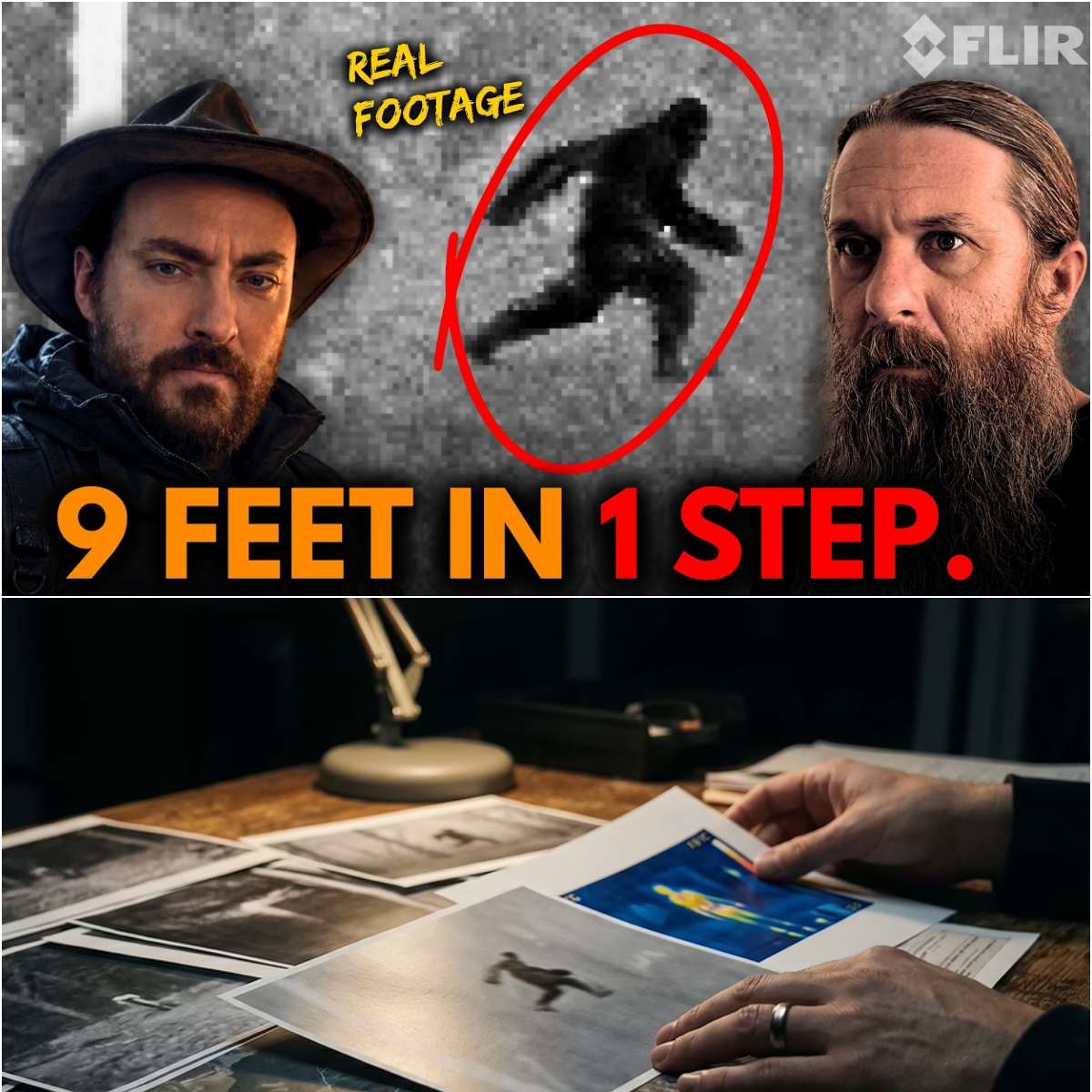
In the darkness of a rain-soaked Florida forest, a thermal camera captured a large black shape stepping from behind a tree, crossing an impossible distance, and disappearing back into the swamp. The men holding the camera panicked. One fled. The other could barely see where he was running.
Fourteen years later, the footage remains one of the most debated pieces of alleged Bigfoot evidence ever recorded.
Not because it is perfectly clear.
Not because it proves anything.
But because of everything surrounding it.
The thermal image captured by father and son investigators Stacy Brown Sr. and Stacy Brown Jr. on a humid night in northern Florida in 2012 exists within a landscape already crowded with strange reports: unexplained vocalizations, massive footprints, objects thrown from the darkness, eyewitness encounters, and newspaper accounts dating back to the nineteenth century.
In the dense forests and river swamps surrounding the Apalachicola Basin, residents have long described something that should not exist.
They call it the Skunk Ape.
Into the Swamp
The evening of May 8, 2012, was hardly ideal for a wilderness expedition.
Rain had moved through northern Florida. The woods were wet, humid, and nearly empty. Thick vegetation covered much of the terrain, and darkness settled heavily beneath the trees.
Stacy Brown Jr. had spent years interested in reports of Bigfoot. His father, Stacy Brown Sr., remained far more skeptical.
The outing was intended to be little more than a nighttime excursion.
They brought a thermal camera, camping supplies, and enough equipment to spend several hours in the woods near the campground area of Torreya State Park.
At first, the evening seemed ordinary.
A campfire burned.
Food cooked.
Music played.
Then they heard knocking sounds.
The phenomenon known as “wood knocks” has become deeply associated with Sasquatch reports across North America. Witnesses often describe loud sounds resembling tree trunks struck together or heavy blows against wood.
Brown Sr. initially dismissed the noises.
Wind.
Falling limbs.
Normal forest sounds.
But according to both men, the knocks continued.
Then came what they described as growls.
The atmosphere changed.
What had been a camping trip gradually became an investigation.
The men reduced the light around their camp and moved deeper into the forest.
Neither could have anticipated what would happen next.
The Darkness Problem
The Florida wilderness presents challenges often overlooked by people viewing the footage online.
Unlike open mountain terrain in the Pacific Northwest, the forests surrounding the Apalachicola River Basin can become nearly impenetrable after dark. Dense palmetto growth, fallen trees, vines, and uneven terrain make movement difficult even during daylight.
At night, visibility can become nearly nonexistent.
The Browns were using a thermal imaging device to navigate.
Because of the weather conditions, Brown Sr. switched the unit into black-hot mode, where heat signatures appear dark against lighter backgrounds. Moisture and humidity made standard thermal viewing difficult.
The camera effectively became their eyes.
Without it, they were nearly blind.
As they moved farther from camp, both men later reported hearing movement around them.
Not in a single direction.
On both sides.
The sensation gradually shifted from tracking something to being tracked themselves.
Such perceptions are common in wilderness environments. Darkness amplifies sound. Limited visibility heightens awareness. Human beings naturally become more alert when unable to identify surrounding noises.
But then Brown Sr. saw something.
Initially, he believed it was an animal.
A raccoon.
Perhaps something clinging to a tree.
The thermal image showed what appeared to be small heat signatures near a trunk ahead.
He stepped forward.
His foot struck a palmetto plant.
The loud crack echoed through the woods.
And then, according to Brown Sr., the figure emerged.
The Two Seconds That Changed Everything
The footage itself lasts only moments.
A dark figure appears near a tree, moves rapidly across an opening, and disappears behind another tree.
For believers, those seconds represent some of the strongest modern evidence for Sasquatch.
For skeptics, they remain inconclusive.
What makes the footage unusual is not simply the image itself but the reactions immediately surrounding it.
Brown Sr. later described experiencing overwhelming fear.
He believed the figure had been watching him.
He believed it could see him in complete darkness.
And he believed it knew exactly where they were.
His response was immediate.
Leave.
Get out.
Go now.
What stands out to many investigators is that Brown Jr. could not initially see what his father had seen. He followed behind while Brown Sr. operated the thermal device.
When the thermal unit suddenly failed, the situation deteriorated rapidly.
The men later described themselves as effectively blind.
The figure, whatever it was, appeared capable of moving through the woods effortlessly.
They were not.
The recorded audio captures confusion, fear, and urgency.
Years later, Brown Sr. admitted that he lied to his son about replacing the batteries.
He claimed there were no replacements.
In reality, he simply wanted to leave.
That detail has become important to supporters of the case because it portrays fear rather than confidence.
He was not acting like a man trying to create a monster story.
He was acting like a man who wanted to go home.
A Skeptic Confronts the Unknown
Perhaps the most compelling witness in the entire case is not the son who already believed.
It is the father who did not.
Brown Sr. repeatedly attempted to find ordinary explanations.
After reviewing the footage, he reportedly accused his son of staging the encounter.
Maybe a friend had been hiding in the woods.
Maybe someone had played a prank.
The problem was practical.
The terrain itself.
The woods were thick.
The night was nearly black.
There were no flashlights illuminating the area.
Who would volunteer to run through dense Florida wilderness in darkness, without light, during heavy rain?
Even supporters of the footage acknowledge that none of these questions prove the existence of Bigfoot.
But they complicate the hoax explanation.
The emotional reaction of Brown Sr. also differs from many sensationalized monster stories.
He did not seek fame.
He did not describe himself as brave.
He repeatedly emphasized fear, confusion, and disbelief.
The footage forced him to consider something he did not want to believe.
The Investigation
The video eventually reached experienced Sasquatch researchers, including Cliff Barackman.
Barackman had spent years investigating alleged Bigfoot evidence and had encountered numerous hoaxes, misidentifications, and false claims.
Rather than simply watching the footage online, he traveled to the location.
He interviewed the witnesses.
He walked the terrain.
He measured distances.
He attempted to reconstruct the event.
This field investigation became one reason the footage gained credibility among many Bigfoot researchers.
According to Barackman’s analysis, the figure displayed several unusual characteristics.
The arms appeared long.
The shoulders seemed unusually broad.
The head appeared projected forward.
The stride appeared extremely large.
Measurements taken at the site suggested that the distance between trees crossed by the figure exceeded nine feet.
If accurate, the movement would require an extraordinarily long stride.
Some estimates placed the figure near eight feet tall, although exact measurements remain highly debated.
Other researchers remain unconvinced.
Thermal imagery lacks detail.
Perspective can distort size.
Distance estimates can be difficult.
The limitations of the technology itself make certainty impossible.
Yet even critics often acknowledge that the footage deserves more attention than many alleged Bigfoot videos.
It is not easily dismissed.
The Florida Bigfoot
The Pacific Northwest dominates the American imagination when it comes to Bigfoot.
Washington.
Oregon.
Northern California.
But Florida possesses its own version of the legend.
The Skunk Ape.
Descriptions generally involve a large, hairy, upright creature reportedly inhabiting swamps and forests throughout the state.
Witnesses frequently describe strong odors, unusual vocalizations, and large footprints.
Unlike the towering mountain forests associated with traditional Sasquatch reports, Florida’s environment consists largely of wetlands, river basins, and dense vegetation.
The conditions provide concealment.
They also produce countless opportunities for misidentification.
Black bears, feral animals, and ordinary wildlife can create unusual experiences.
Yet reports have persisted for decades.
And not only in one location.
The Other Witnesses
One of the strongest arguments made by supporters of the Brown footage is that it does not exist in isolation.
Several years after the encounter, other witnesses reported unusual experiences in the same region.
David Lowery captured thermal footage of an upright figure.
Other investigators described strange vocalizations.
Groups conducting nighttime expeditions reported howls, knocks, and unexplained sounds.
Some witnesses described objects thrown from the darkness.
Others reported growls at close range.
The details vary.
The themes often repeat.
Something large.
Something upright.
Something aware of human presence.
Critics argue that publicity itself can generate additional reports. Once a location becomes associated with mystery, witnesses may interpret ordinary events differently.
Psychology plays an undeniable role.
Expectation influences perception.
Nevertheless, the volume of reports from northern Florida has continued.
The Wild Man of Ocheesee Pond
Long before television documentaries, internet forums, or reality shows, newspapers reported a strange figure in the swamps of northern Florida.
In 1884, newspapers described what became known as the Ocheesee Pond Wild Man.
According to reports, local residents had encountered a hairy figure living near the marshes.
Descriptions mentioned unusual hair growth and behavior.
The figure reportedly moved through swamp areas and was eventually captured.
Some authorities suspected mental illness.
Others believed the man had escaped from an institution.
Accounts varied.
But one detail stands out.
The reports predate modern Bigfoot culture by nearly a century.
Supporters of the Skunk Ape theory point to these historical accounts as evidence that similar descriptions have existed in the region for generations.
Skeptics argue that nineteenth-century America frequently reported wild men, hermits, and misunderstood individuals.
The truth remains uncertain.
Yet the story contributes to the larger mystery.
Why the Footage Endures
Thousands of alleged Bigfoot videos exist.
Most disappear quickly.
The Brown footage remains.
Why?
Partly because it avoids common problems.
There are no dramatic close-ups.
No perfectly centered monster.
No theatrical behavior.
The figure appears briefly and leaves.
The witnesses sound frightened.
The environment appears genuine.
The investigation was extensive.
None of this proves that the subject is an unknown primate.
But it gives the footage durability.
It survives criticism.
It invites debate.
It refuses to disappear.
The Problem of Evidence
Bigfoot occupies a strange position in American culture.
It is simultaneously a joke, a legend, and a scientific question.
The evidence remains frustrating.
Witness testimony.
Footprints.
Audio recordings.
Photographs.
Thermal images.
Hair samples.
Each category contains examples that believers find persuasive and skeptics find insufficient.
Science demands repeatability.
Biology demands physical evidence.
A large unknown primate population would seemingly leave behind bodies, bones, or genetic material.
None has been conclusively presented.
Yet witnesses continue reporting encounters.
And some witnesses are difficult to dismiss.
Hunters.
Police officers.
Military personnel.
Experienced outdoorsmen.
People familiar with wildlife.
Many describe encounters that profoundly affected them.
Whether those experiences involve unknown animals, psychological phenomena, mistaken identification, or something else remains unresolved.
The Forest Still Keeps Its Secrets
The thermal figure in northern Florida remains exactly what it was on the night it was recorded.
A shape.
A movement.
A few seconds of uncertainty.
Perhaps it was a person.
Perhaps an animal.
Perhaps a misunderstanding created by darkness and fear.
Or perhaps it was something that science has not yet recognized.
The forests surrounding the Apalachicola Basin remain vast and difficult to explore. The swamps still flood. The trees still stand. The sounds of the night still carry through the darkness.
And occasionally, someone hears a knock.
Someone hears a growl.
Someone believes they are no longer alone.
The Brown footage does not prove the existence of Bigfoot.
Even many supporters acknowledge that.
What it does prove is something simpler.
On one rainy night in northern Florida, two men entered the woods expecting to hear strange sounds.
They left believing they had encountered something they could not explain.
More than a decade later, the rest of us are still trying to explain it.