United States MUST Destroy these 20 Animals At ALL Cost
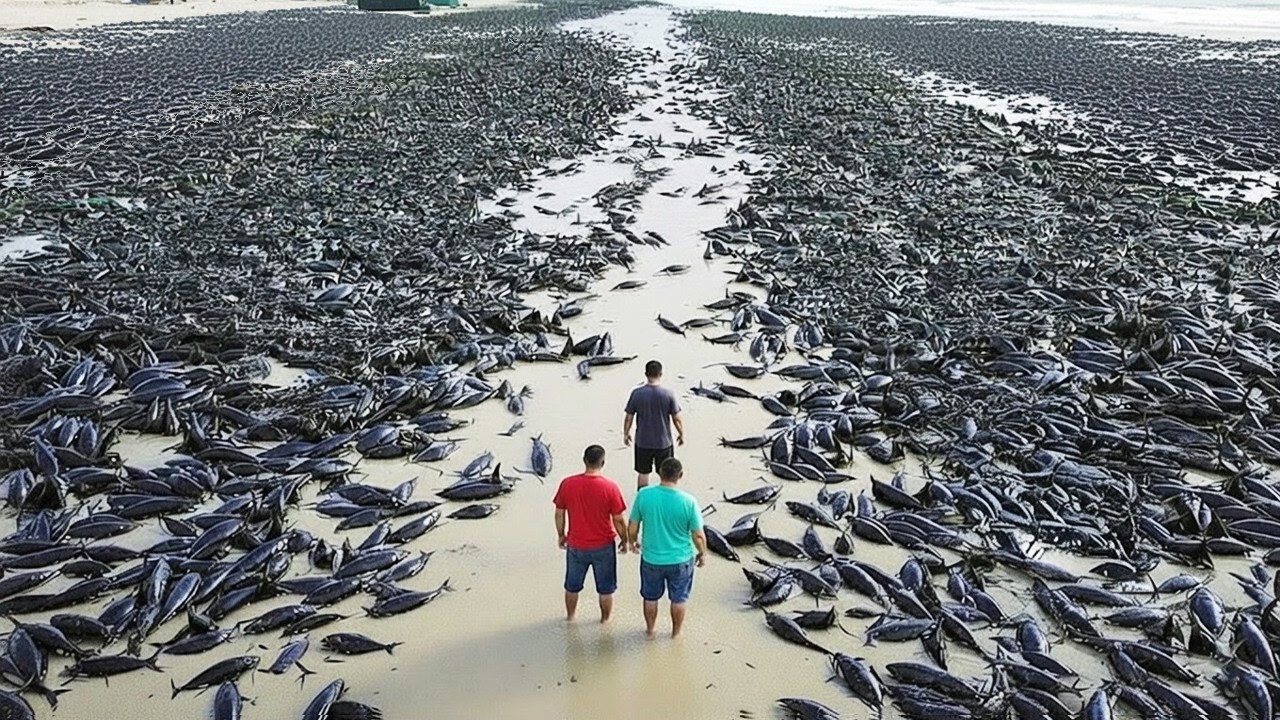
The Animal Invasions Destroying Entire Nations: When Nature’s Most Dangerous Invaders Arrive
The disaster rarely begins with an explosion, a war, or a natural catastrophe.
Sometimes it begins with a handful of rabbits released for hunting. A pet snake abandoned in a swamp. A few toads imported to save a crop. A cat left behind by settlers. At first, nobody notices. Then the numbers start growing. Native animals disappear. Crops fail. Forests fall silent. Rivers change. Entire ecosystems begin to unravel.
Across the world, countries are fighting a hidden war against invasive species—animals that arrive in places where they do not belong and transform entire landscapes. Unlike storms or earthquakes, these invasions do not end after a few days. They spread year after year, generation after generation, often becoming impossible to stop.
Some have destroyed industries worth billions. Others have pushed native species into extinction. A few have altered ecosystems so completely that scientists may never restore what was lost.
What makes these invasions truly frightening is that nearly all of them started with human decisions that seemed harmless at the time.
This is the story of the animal invaders that conquered entire nations.
The Rabbit Apocalypse
Few animals appear less threatening than a rabbit.
Small, soft, and seemingly defenseless, rabbits have become symbols of innocence in popular culture. Yet in Australia and New Zealand, they created one of the most destructive biological invasions in history.
European rabbits were introduced during the nineteenth century by settlers seeking familiar game animals and a reliable source of food. Initially, their numbers remained manageable. Then reality changed.
Australia offered vast grasslands, favorable weather, and, most importantly, very few natural predators capable of controlling rabbit populations. The animals reproduced with astonishing speed. A single breeding pair could produce dozens of offspring in a year. Those offspring soon began reproducing as well.
Within decades, the invasion exploded.
Rabbits spread across enormous portions of the Australian continent, consuming vegetation faster than it could recover. Native plants that had evolved over thousands of years suddenly faced millions of hungry mouths. Grasslands became barren. Shrubs disappeared. Young trees never reached maturity.
The consequences reached far beyond the plants themselves.
As vegetation vanished, soil became exposed to wind and rain. Massive erosion followed. Habitats that sheltered native birds and mammals collapsed. Species that depended on dense ground cover suddenly found themselves exposed to predators.
Farmers suffered enormous losses. Fields were stripped bare. Livestock competed with rabbits for already limited food supplies. Governments spent fortunes building fences, distributing poison, and organizing hunting campaigns.
Yet the rabbits kept coming.
The invasion became so severe that Australia eventually resorted to biological warfare, introducing diseases specifically designed to reduce rabbit numbers. Even then, complete control proved impossible.
Today, rabbits remain one of the most expensive and destructive invasive species ever introduced to a continent.
The Giant Snakes That Conquered Florida
The Florida Everglades once belonged to alligators, wading birds, raccoons, and countless native species.
Now another predator rules much of the landscape.
Burmese pythons arrived in the United States through the exotic pet trade. Originally native to Southeast Asia, these snakes became popular among reptile enthusiasts. Many owners eventually discovered that a cute juvenile snake could grow into a massive predator over twenty feet long.
Some snakes escaped captivity.
Others were intentionally released.
The result was ecological disaster.
The Everglades provided everything a python could want: warm temperatures, abundant water, dense vegetation, and almost no natural enemies capable of controlling adult snakes.
Their population exploded.
Unlike many predators, Burmese pythons are remarkably adaptable. They can consume mammals, birds, reptiles, and even large prey such as deer. Hidden beneath water, concealed in vegetation, or coiled inside burrows, they became nearly impossible to detect.
Scientists began noticing a disturbing trend.
Animals that were once common became increasingly rare.
Raccoons disappeared from some areas. Opossums nearly vanished. Rabbit populations crashed. In certain regions, mammal numbers declined by more than ninety percent.
The impact rippled throughout the food web.
Predators lost prey. Plants lost animals that dispersed seeds. Entire ecological relationships that had existed for centuries began breaking apart.
The invasion continues today, with wildlife agencies spending enormous resources attempting to locate and remove the snakes before they spread further.
The Birds That Took Over a Continent
In 1890, a group of enthusiasts released several European starlings into New York City’s Central Park.
Their goal sounds almost unbelievable today.
They wanted North America to contain every bird mentioned in the works of William Shakespeare.
What happened next became one of history’s greatest ecological mistakes.
The released birds adapted perfectly to their new environment. They reproduced rapidly, expanded outward, and eventually spread across nearly the entire continent.
Today, their population exceeds 200 million.
Starlings are aggressive competitors. They seize nesting cavities that native birds need for reproduction. They travel in enormous flocks capable of consuming massive quantities of food in a short period of time.
Their swirling aerial formations are visually spectacular.
Their ecological impact is far less beautiful.
Across farms and orchards, starlings destroy crops. In forests and urban environments, they outcompete native birds for nesting sites. Entire local ecosystems shift as their numbers grow.
Attempts to control them have produced only limited success.
The invasion that began with a literary experiment became a permanent feature of North American wildlife.
The Fish That Walk
Most fish are limited by one simple rule.
They must remain in water.
Snakehead fish ignore that rule.
Originally native to Asia, snakeheads were introduced into various regions through the aquarium trade and aquaculture operations. Once released into natural waterways, they quickly demonstrated why they are considered one of the world’s most dangerous invasive fish.
Snakeheads are formidable predators. They consume fish, amphibians, crustaceans, and virtually any smaller animal they can catch.
But their most extraordinary ability is their capacity to breathe air.
Specialized organs allow them to survive in oxygen-poor water where many native species struggle. Under certain conditions, they can even move across land to reach new bodies of water.
This ability transforms rivers, ponds, and lakes into stepping stones for invasion.
As snakeheads spread, native fish populations often decline dramatically. Food webs become disrupted. Smaller species disappear. Local ecosystems can shift in ways scientists struggle to predict.
For conservationists, the greatest challenge is simple: an animal that can move beyond the boundaries of water is extraordinarily difficult to contain.
Silver Carp: The Flying Menace
When silver carp were introduced into North America during the 1970s, they were viewed as a practical solution.
Fish farmers wanted a natural way to control algae growth.
Instead, they created another ecological crisis.
Flooding allowed silver carp to escape into major river systems, particularly within the Mississippi River Basin. There they found ideal conditions for reproduction.
Their numbers exploded.
Unlike many invasive predators, silver carp attack the ecosystem from the bottom of the food chain. They consume enormous quantities of plankton—the microscopic organisms that sustain countless aquatic species.
By monopolizing this resource, silver carp starve native fish.
Entire fisheries suffer. Commercial catches decline. Recreational fishing becomes less productive.
Then there is the behavior that made them famous.
When startled by boat engines, silver carp launch themselves from the water with astonishing force. Some leap several feet into the air, striking boaters and causing injuries.
For many river communities, the invasion is both an ecological and public safety problem.
Australia’s Toxic Nightmare
No invasive species better demonstrates unintended consequences than the cane toad.
In 1935, Australia imported cane toads from the Americas to combat beetles damaging sugarcane crops.
The strategy failed almost immediately.
The beetles lived high on sugarcane plants where the toads could not reach them.
Instead of controlling pests, the toads escaped into the wild.
What followed was catastrophic.
Cane toads possess powerful toxins at every stage of life. Eggs are poisonous. Tadpoles are poisonous. Adult toads are poisonous.
Native predators had never encountered such defenses.
Snakes, lizards, crocodiles, marsupials, and other animals often died after attempting to eat a single toad.
As predators disappeared, ecological balance shifted dramatically. Insect populations changed. Food chains weakened. Entire regions experienced cascading environmental effects.
Meanwhile, the toads continued expanding across Australia.
Millions became billions.
Decades later, the invasion remains one of the most infamous examples of biological control gone horribly wrong.
The Rodent Empire
Long before airplanes connected continents, rats and mice were already traveling the world.
They hid aboard ships.
They consumed stored grain.
They waited.
When vessels reached new ports, rodents disembarked and established new colonies.
Many island ecosystems proved especially vulnerable.
Birds that evolved without mammalian predators often nested on the ground. Their eggs and chicks became easy targets.
Entire seabird colonies disappeared.
Native reptiles suffered similar losses. Insects declined. Ecological relationships that had developed over millions of years collapsed within decades.
The problem extended beyond wildlife.
Rodents destroyed crops, contaminated food supplies, and spread disease. Their extraordinary reproductive capacity ensured that even intensive control efforts rarely achieved permanent success.
For many islands around the world, rodent eradication has become one of conservation’s most urgent priorities.
Wild Pigs: Ecological Bulldozers
Wild pigs do not merely occupy ecosystems.
They physically reshape them.
Descended from domestic pigs and Eurasian wild boar, feral populations have spread across numerous countries. Their powerful snouts act like living excavation equipment.
As they search for food, pigs tear apart soil, uproot plants, and destroy habitats.
The damage can be astonishing.
Forests become churned landscapes. Wetlands suffer erosion. Water quality declines as sediment enters rivers and streams.
Ground-nesting birds lose eggs and chicks. Small animals are crushed or consumed. Invasive plants often exploit disturbed soil, accelerating ecological decline.
Unlike many invasive species, wild pigs combine intelligence, adaptability, and high reproductive rates.
These traits make them exceptionally difficult to control.
Once established, populations can expand rapidly, leaving destruction in their wake.
Guam’s Silent Extinction
Perhaps no invasive predator demonstrates ecological devastation more clearly than the brown tree snake on Guam.
The snake likely arrived after World War II hidden in military cargo.
The island’s wildlife had no experience with such a predator.
The results were catastrophic.
Bird populations collapsed. Species vanished. Forests that once echoed with birdsong became eerily quiet.
Scientists observed unexpected consequences.
Without birds dispersing seeds, plant communities changed. Insect populations increased. Ecological processes that depended on birds began breaking down.
The snakes also invaded human infrastructure.
Climbing power lines and electrical equipment, they caused frequent blackouts across the island.
An invasive species had become both an environmental and economic threat.
The Predator Next Door
Of all invasive animals, feral cats may be the most familiar.
That familiarity makes their impact easy to overlook.
Domestic cats accompanied humans around the world. Many escaped or were abandoned, eventually establishing wild populations.
In ecosystems that evolved without feline predators, the consequences proved devastating.
Cats are efficient hunters.
They pursue birds, reptiles, mammals, and insects. They hunt during both day and night. Even when well-fed, they often continue killing.
In Australia alone, feral cats are responsible for billions of wildlife deaths every year.
Multiple native species have been driven to extinction.
On islands, the impact can be even more severe. Entire bird colonies have disappeared after cats became established.
Because cats are beloved pets, controlling feral populations often becomes politically and emotionally controversial.
Yet conservationists increasingly recognize them as one of the world’s most destructive invasive predators.
The Common Pattern Behind Every Invasion
Although these invasions involve different animals on different continents, they all share the same story.
Humans moved a species beyond its natural range.
The species encountered an ecosystem unprepared for its arrival.
Natural controls were absent.
Population growth accelerated.
The environment changed.
Native species suffered.
What begins as a small introduction eventually becomes a transformation of entire landscapes.
The lesson is both simple and unsettling.
Nature operates through balances developed over thousands or even millions of years. When a new species enters that system, those balances can collapse with astonishing speed.
The most dangerous invaders are not always the largest, fastest, or most aggressive animals.
Sometimes they are rabbits.
Sometimes they are birds.
Sometimes they are cats.
And sometimes they are creatures so ordinary that nobody notices the danger until the damage has already been done.
By then, an invasion is no longer a possibility.
It is a new reality.