SHOCKING Truth About Sicily DISASTER Revealed – Criminal Investigation Reveals Everything
The landslide that struck Sicily in January is now the deadliest landslide event in modern Italian history by volume.
An estimated 350 million cubic meters of earth have moved — roughly one and a half times the mass unleashed in the 1963 Vajont Dam disaster, which killed 1,910 people.
More than 2,000 residents have been permanently displaced.
Entire neighborhoods will never be rebuilt.
A criminal investigation is underway.
And for the second time in three weeks, Prime Minister Giorgia Meloni returned to the town of Niscemi to announce €150 million in emergency funding.
But one detail tells the deeper story.
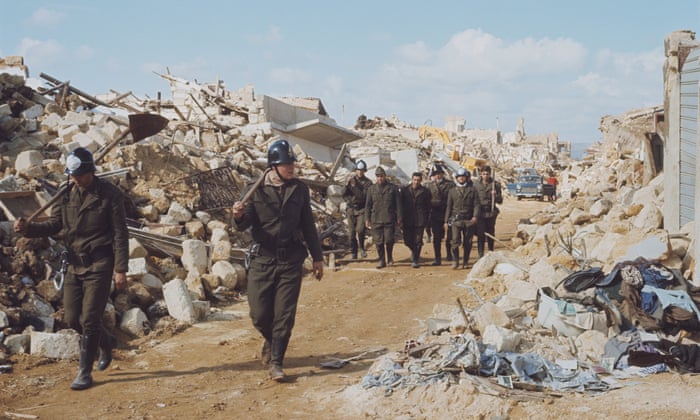
The Cross That Fell
In the Sante Croci district stood a stone cross carved into rock and mounted on marble.
It had been erected after the town’s last major landslide in 1997, when a church was destroyed. For nearly three decades, the cross symbolized survival.
After January 25, 2026, it stood just meters from a newly formed abyss — photographed by every national news crew, framed as a symbol of resistance.
On February 9, the ground beneath it collapsed.
The cross fell into the void.
Six days later, police recovered it from the ravine using a robotic unit. It was shattered into pieces.
The symbol endured.
The land beneath it did not.
How the Collapse Accelerated
The timeline moved fast.
January 16 — A first landslide destroyed Provincial Road 12. Thirty-five families were evacuated.
January 18–21 — Cyclone Harry struck southern Sicily, dumping what amounted to an entire year’s rainfall in just 72 hours.
January 25, 1:00 p.m. — On a quiet Sunday afternoon, a second landslide ripped open a four-kilometer gash along the western and southern edge of town. Five hundred residents fled with whatever they could carry.
January 26 — Italy’s Council of Ministers declared a state of emergency and allocated €100 million across three devastated regions.
But the ground did not stop moving.
On January 28, Prime Minister Meloni arrived by helicopter. Civil Protection Chief Fabio Ciciliano delivered a verdict no one wanted to hear:
Homes on the edge of the landslide could never be occupied again. Residents would be permanently relocated.
The next day, Ciciliano revealed the scale: approximately 350 million cubic meters of material had shifted.
For comparison, the 1963 Vajont slide displaced 263 million cubic meters.
Technically, this was nearly 1.5 times larger by volume.

A Plateau Built to Fail
Niscemi lies in the province of Caltanissetta in south-central Sicily, about 25 kilometers inland from the coastal city of Gela. Its 25,000 residents live atop a plateau roughly 330 meters above sea level, overlooking fertile plains and the Mediterranean beyond.
That plateau is the problem.
It rests on layers of clay and sand — sedimentary deposits that remain stable when dry but transform into a viscous, structureless mass when saturated. Beneath the town, slopes descend toward the Maroglio River Valley, carved by centuries of erosion.
Gravity has been pulling at Niscemi for generations.
Provincial Roads 10 and 12 — the town’s primary connections to the regional road network — are destroyed.
Only Provincial Road 11 remains.
Twenty-five thousand people. One road in or out.
A Known Risk
What makes this disaster fundamentally different from a single storm is this:
Niscemi was already classified as R4 — Italy’s highest hydrogeological risk level.
That designation existed before Cyclone Harry.
It existed before January 2026.
It had existed for years.
Professor Giovanna Pappalardo of the University of Catania warned that the situation mirrors 1997, but with more severe characteristics. The landslide front now stretches over five kilometers and directly threatens homes facing the slope.
After the 1997 disaster, prosecutors investigated. Every defendant was acquitted. Stabilization plans were divided into phases.
Phases two and three received funding only in December 2025 — 28 years later.
Mayor Massimiliano Conti revealed that every year on the anniversary of the 1997 slide, he wrote letters to the president of the republic, the prime minister, the regional president, and department heads urging action.
Another fact compounds the crisis:
Of the 46 hydrogeological projects funded across Sicily under Italy’s national recovery plan, not one concerned Niscemi.
For nine years, no municipal administration submitted stabilization proposals to the commissioner structure.
Climate-intensified rainfall struck terrain already geologically fragile and politically neglected.
The outcome was not random.
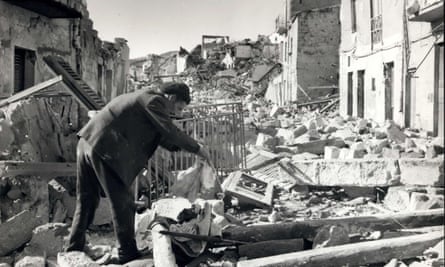
The Human Toll
More than 2,000 residents have now been evacuated — quadruple the original 500.
The risk zone extends 25 kilometers. An absolute building ban has been imposed by Sicily’s basin authority. Hundreds of buildings have been declared unsafe.
Damage from Cyclone Harry across the island is estimated at €2 billion.
Orange groves, olive groves, farms, and gardens that sustained families for generations now lie buried beneath debris.
In Sante Croci, Francesca Aparo was in bed with a fever when the January 25 slide struck. She had survived this before. In 1997, her father’s home was destroyed. The family rebuilt near the Belvedere overlooking the plains.
Now her house stands near the new landslide front.
For the second time in her life, the ground is taking everything.
A Criminal Investigation
Salvatore Vella, chief prosecutor of Gela, has opened a criminal investigation into negligent disaster and damage.
On February 12, three professors from the University of Palermo — specialists in applied geology, structural geology, and geomorphology — conducted the first formal judicial inspection of the landslide front, alongside magistrates and police.
Investigators are reviewing satellite imagery from the Italian Space Agency. Witness hearings will follow.
“No one will be spared scrutiny,” Vella said.
The inquiry will determine whether stabilization efforts after 1997 were inadequate, delayed, or mismanaged — and whether construction or planning decisions worsened the instability.
Rebuilding on Moving Ground
On February 16, Prime Minister Meloni returned to Niscemi.
Wearing a civil protection helmet, she toured the landslide zone, met displaced families, and announced €150 million dedicated specifically to the town. The funds will support demolitions, safety measures, and property acquisition for relocation.
A government decree will appoint Ciciliano as extraordinary commissioner for reconstruction.
Meloni described Niscemi as “the most closely monitored municipality in Europe.”
But she offered no timeline.
The boundaries of the red zone may still expand. Additional rainfall could reactivate movement. Universities in Catania, Enna, Rome, and Florence are analyzing ground deformation using satellite and geophysical data.
The earth beneath Niscemi has not finished speaking.
How do you rebuild a town on ground that is still sliding?
How do you tell 2,000 residents that the homes their grandparents built — the streets where they grew up, the Mediterranean horizon from their kitchen windows — will be erased by decree?
If a town long classified at the highest possible geological risk received none of the funded stabilization projects in its region, how many other communities across Italy are waiting for gravity to make the decision for them?