Doctor Died For 85 Minutes—Then His Wife Prayed… And Miracle Happened
My name is Dr. Sean George.
And in 2008, I died.
Dr. Sean was a highly qualified general physician who tragically had a sudden cardiac arrest. It was like a scene from a movie. There was a huge amount of tension and a corpse.
Seeing that body was very, very hard.
When someone’s clinically dead, all it takes is 20 minutes for the brain to irreversibly die.
He was clinically dead for well over an hour. I announced to the room that Sean was dead.
I thought I have lost my best friend.
She knelt by the bed and prayed.
God, I need a miracle.
It’s an extraordinary story.
I have never heard of that happening.
It’s unbelievable.
Absolutely couldn’t believe it.
I’ve never seen this before in my life.
No one’s ever heard a story or anything like it.
There’s not just conjecture, there is proof. Sean was dead.
I haven’t seen many things that I would call a miracle. In fact, I don’t think I’ve seen anything I’d call a miracle except for this.
I think people often expect miracle claims to come from the uneducated or unqualified. So what’s your profession?
I’m a Professor of Emergency Medicine.
Senior Consultant Physician.
A Staff Nephrologist.
A Paediatrician.
Paramedic.
Senior Medical Officer.
I was doing all the forensic work in the whole district.
[Interviewer] And what would you say to people who expect claims like these to come from a religious bias?
This is not something that was happening in a religious sort of closed bubble. People from all walks of life can give evidence about what they saw.
I’m not religious.
I’m a Hindu.
I’m a practical, clinical scientist, a humanist rather than driven by any faith. I’m not trying to manufacture the story or embellish it in any way at all. This is just the facts.
[Interviewer] Before we start, I wanna be really clear. Would you call this a miracle
You can’t explain apart from miracle.
I can certainly say that, that was one miracle I’ve seen.
Yeah, this is a miracle.
Oh yes, I really do believe that is a miracle.
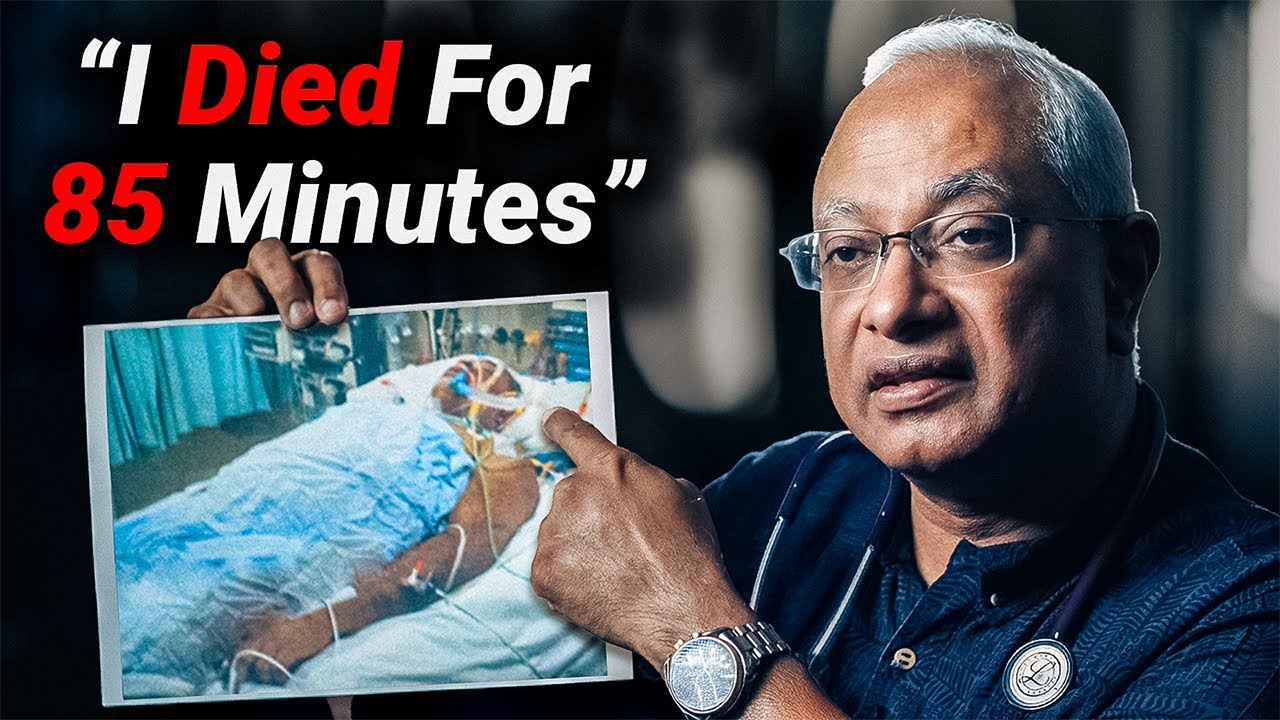
My name is Dr. Sean George. I work as a Consultant Physician, and Head of Department of Internal Medicine at Kalgoorlie Hospital.
Dr. Sean is quite a remarkable human being. He’s always maintained some of the highest professional standards.
Very knowledgeable. More importantly, I think he connects to his patients, so that’s important.
He’s part of the community. Australia, we live in two different worlds. The white fellows over there and we over here. But people like Sean have crossed over.
Sean and me, we have a very special relationship. We are best friends more than a husband and wife.
We’ve been married for the last 27 years. We have a son. His name is Michael, he’s 21. So I got that right?
Yeah (laughing).
Something I look towards in my dad to aspire to be is to put God first in my life as he does. My mom is the most kindhearted person I know. They’re such busy people, but they always have time for each other as well.
I think the most special thing for us is the morning quiet time that we have together, where we read the Bible and spend time praying together before we start the day, and that’s wonderful.
[Interviewer] And Sherry, you’re also a doctor?
I work at the emergency department at the hospital in Kalgoorlie.
It’s actually really good that both of us are doctors because we come across life and death almost on a daily basis. And that’s when we can really extend a loving hand to each other and support one another.
(door creaking)
(dramatic music)
[Interviewer] Dr. George, 16 years ago, an event happened to you that would change your life forever. Tell me what happened that day.
It seemed like a very normal day to me. It was the 24th of October, 2008. We normally do about five diabetes clinics a year to Esperance, which is about 400 kilometres along the coast. And on Friday morning, I was returning home, and that’s when everything happened.
We started our journey at about 9:30 in the morning. It was not too long into the journey that I began to experience discomfort in my chest. It was not a pain, but it was just a slight discomfort. And I thought, “Oh, it must be something that I ate.” So I continued to drive. My intern had actually never driven in Australia. I had driven almost 350 kilometres. I began to actually feel a bit of nausea. So I decided to actually stop the car on the side of the road.
That’s the first time I was telling my intern that I had discomfort in the chest. Now, an intern is a newly graduated doctor, and that’s the first job they’re doing as a doctor. So the moment I actually told her that I had discomfort in my chest, she almost became white. And we are in the middle of nowhere in the outback, there’s nothing around to help. So I said, “Could you just check my pulse?” Because that’s about the only thing that she could probably do in the middle of nowhere. In a situation like this, if you’re having a heart attack, sometimes your pulse rate will be very high. So she checked my pulse and it seemed fairly normal.
I was not convinced at this stage that it was indigestion. I thought there’s something much more sinister, so I decided to get out of the car and I wanted to call my wife, Sherry.
I had gone to my friend’s house to do some studying, and that’s when Sean called.
And I told her, “Look, Sherry, I’m having a bit of discomfort in my chest. I’m not feeling that great. We are about 80 kilometres from Kalgoorlie, and I’m just about to turn into Kambalda.”
And I remember asking him, “Do you have chest pain?” And he said—
I don’t feel too bad, but I do have the discomfort. I’m feeling a bit of nausea.
So I said, “Oh, do you think you’ll be able to drive up to the hospital?” And he said—
Yeah, I think I can definitely drive. And she said, “Okay, I’ll inform your colleague, Dr. Pravin Shetty,” who is the consultant who works with me. And so she said—
I will see you at the hospital. Why don’t you come straight there? And that was the plan.
I hopped back into the car and I turned into Kambalda, and I started to drive down that road. But while I was traveling on that road, I really felt a deep conviction in my heart that I need to actually get into the clinic at Kambalda. Now, Kambalda is a small mining town and there’s a small family practice or general practice in that town. It was about one o’clock in the afternoon. Unfortunately, the doctor had actually gone for lunch.
So as I stepped into the clinic, there was the receptionist and the nurse and I explained to them who I am, and could I please have an ECG done? And they said, “Yep, no problem, come with us.” And they actually did an ECG for me. And they actually handed the ECG over to me. Now, that’s very unusual because normally, as a patient, the doctor will read the ECG, but because the doctor was out to lunch, they handed me the ECG because I was both the doctor and the patient.
And if you look at this ECG, you’ll see that in lead two, lead three and AVF, there’s what we call an ST segment elevation. What it really means is that I was having a heart attack in the inferior wall of my heart. Now, you can imagine, I was looking at my own ECG. I said, “Oh my God, I’m having a heart attack.” That might seem really strange, but remember, I’m a doctor and I know exactly what that means.
At this stage, I was getting very anxious, and that’s the honest truth ’cause I was not looking at someone else’s ECG, I was looking at mine. Basically at that stage, I started to actually have quite a lot of chest pain. And I told the nursing staff, “Can you please call the doctor who is at lunch and ask him to come because I need help.”
When he saw me, he said, “Sean, you’re only 39 years old. There’s no way that you’re having a heart attack. You’re probably having indigestion.” I know that he was actually trying to calm me down because at that stage, I was really getting stressed out and the pain was getting more and more.
So when the doctor actually came, he said, “Let’s go to the next room and let me do another ECG for you.” And he took me to the next room. And it so happened that that was the resuscitation room. I saw that right next to the bed, there was the resuscitation trolley, and on top of the trolley was the defibrillator machine. So I laid down on the bed there, experiencing quite a lot of chest pain at this time, and they were actually hooking me up to the monitor. And they gave me a shot of morphine. And still, the pain was actually quite severe.
I hadn’t heard from him for a while. So I just thought, “I’ll find out how he’s going.” And I called him and the intern actually picked up the phone and I said, “Can I talk to Sean?” And she said, “Oh, can you call back a little later?” And I said, “No, I wanna speak to him now.” And I got the call and he said—
Sherry, I’m actually in Kambalda Health Centre now. I have actually done an ECG, and I’m having a heart attack.
A heart attack. And I just couldn’t believe what I heard.
She was obviously quite shocked by that. And I said, “Look, they will bring me from the clinic by ambulance. I won’t be driving anymore. Whatever you do, don’t try and drive to Kambalda. Don’t worry about me. Everything will be fine.”
So then here I was, I didn’t know what to do. So I just rushed to the hospital to find Dr. Shetty, to tell him that Sean was gonna come because he wasn’t well.
As I was laying down on the bed, I noticed that my pain was getting worse. I looked at the heart monitor, and I noticed that my pulse rate was going up, my blood pressure was actually going up. And I was thinking to myself, “That’s not good.” And that was the last thing that I actually remember seeing.
[Interviewer] So Dr. George was working for you at the time? How’d you get the news?
I received a phone call from Kambalda. I was told that he’d had a cardiac arrest. That was quite concerning to me obviously ’cause I didn’t wanna lose my friend, neither did I want to lose my Head of Medicine. So I went down to the emergency department. Dr. Steve Dunjey was working there.
He said, “Sean’s had an arrest and CPR is in progress. Will you go down there?” I really argued. I had a job to do at the hospital, and I just felt like it was a waste of time. I said, “I dunno where Kambalda is.” I said, “I don’t have a car.” He said, “We can lend you a Country Health car, and someone to drive with you down there.”
I think he was quite dubious about being any use at all because Kambalda was about 60K, so it would take at least half an hour to get there.
I was the most reluctant person you’ve ever seen. I just said, “This is a waste of time. He’s either gonna survive or he’s not, and my presence at his resuscitation is not gonna make any difference. When I get there in 45 or 50 minutes, he’ll be dead or alive, and I’ve got no ability to impact on the outcome. I think he’ll be dead.” And he said, “Will you please as a favour, please just go down. He’s the Head of Medicine.”
And he agreed to go, so I was very pleased about that.
So I jumped into a car with a colleague, Dr. Reddy, and we travelled down the road. I did not break the speed limit. I didn’t think there was any point. Because we are so familiar with this, I knew what the outcome was gonna be. I thought I did.
What I was told by the doctors who were there on the day was that I actually had a seizure, and that was it, I was in cardiac arrest. So the doctor and my intern, immediately along with the nursing staff, started to do CPR until they could actually connect me to the defibrillator.
While my resuscitation was actually happening in Kambalda, Sherry actually received a phone call.
Sherry, Sean’s wife, was with me, and Ben Ansell was a good friend of both me and Sean.
Dr. Shetty got the call, and he was so stunned. I think he didn’t know what to say.
I got a call saying that—
[Speaker 1] We’ve got Dr. Sean George here, and he’s had a cardiac arrest, and we tried to resuscitate him, and we haven’t been successful so far.
I remember him saying, “What?” And he kept saying, “What?” And then he just said, “Sherry, Sean’s arrested.”
Sherry got obviously very upset. And then we said, “Okay, we should drive down.”
It didn’t make any sense to me because I’d spoken to Sean a few minutes ago. I didn’t realize that it was that serious.
I was shocked to actually find out that this person was my boss, Sean, so that was the shock. And then we got together, I was the driver, and we headed off 50 kilometres away to Kambalda.
So when they actually connected me to the defibrillator, they noticed that I was in a shockable rhythm, which was ventricular fibrillation.
When a person’s got a heart and they initially go into cardiac arrest, the most common rhythm we see is something called ventricular fibrillation. It’s chaotic electrical activity.
What you need to understand is when someone’s clinically dead, they can still be in ventricular fibrillation because ventricular fibrillation means that there is no blood going out of the heart to the rest of the body. All the heart is actually doing is shaking, it’s not pumping. So clinical death is not necessarily always a flat line as you’d see in the movie. It could be ventricular fibrillation, it could be pulseless ventricular tachycardia, or it could be a flat line. And sometimes, there might just be a slight waveform, what we call a pulseless electrical activity. All of these scenarios means the person is actually dead.
So the whole purpose of a defibrillator is to try and shock the heart so that you can bring the patient back to life and restore the normal rhythm of the heart. Now, in the normal protocol of doing advanced life support or CPR, you don’t just keep shocking a patient. You deliver a shock, and then you do two minutes of CPR. The machine analyses the rhythm and tells you whether a shock should be delivered. And usually, people may give one, two, or even three shocks in the hope that people would come back to life. And sometimes, you even give more.
And I actually have the actual log of the defibrillator here. And you can see here the first shock was given at 13:44. Then you see the second shock at 13:46. And in between this time, they were actually doing two minutes of CPR.
The brain has a requirement for a lot of oxygen, a lot of glucose. And because when you’re getting CPR, you’re not getting the right amount of blood flowing through, cells start to die. As cells die, the chance of recovery goes down, and the chance of recovery with a significant neurologic impediment starts to go up.
If a person is clinically dead, all it takes is four minutes for the brain to actually begin to die. And by about 20 minutes, it is irreversibly dead. As quickly as you can get the heart to start again, the better.
[Interviewer] As a paramedic, what did you see when you arrived on the scene?
When we arrived, Dr. George was obviously on the table. He’d had a few rounds of defibrillation to try and shock his heart back. Generally people, when they come round, they generally come around after the first few shocks. That’s when you normally get the good outcome.
And then the third shock, the fourth shock.
Just wasn’t wanting to get back into that normal rhythm. It’s just frustrating. You’re just like, “Come on, come on,” you know?
And it doesn’t end there. The fifth, the sixth.
I remember being in the car and hearing the whole conversation between the intern and Dr. Shetty. And Dr. Shetty was trying to guide her through the whole thing.
The seventh.
It was like, no, this person, no, no, he’s not gonna make it.
The doctors kept calling saying that, “We have tried, we have tried.” I said, “Keep trying, keep trying. We are on our way.”
[Sean] Eighth, ninth.
I was driving wondering, “How fast do I drive? What are we getting there for? What’s gonna happen when we arrive there?”
[Sean] 10.
The time’s just going on, and I can hear Dr. Shetty saying, “Oh, so that many shocks are over, and there’s no response?”
[Sean] 11, 12.
In my mind, I was thinking, “Oh my God, what am I going to do?”
13 shocks were given over a period of 48 minutes. But after 48 minutes, when the machine actually analysed the rhythm, it did not actually recommend a shock because from the state of ventricular fibrillation, I progressed into a flat line.
(cardiac monitor beeping)
(dramatic music)
He was on the flat line. You’re not gonna survive this.
We call that flat line, in medical terms, asystole.
Asystole means there was not a skerrick of activity. His heart wasn’t moving, it was just a dead heart.
I’m a doctor. I know there’s nothing left. Time’s going on, it’s more than half an hour. And by the time we get to Kambalda, it’ll be at least an hour before we reach there, and Sean’s been dead for one hour, and nothing’s gonna happen. The biggest thing in my mind is how am I going to tell my child that he’s lost his father?
Sherry was really distraught. I had almost nothing to reassure her with. Things all looked bad.
I felt like I was all by myself because I didn’t know what to do at that stage.
When Dr. Steve Dunjey arrived in Kambalda, the resuscitation had already gone on for well over an hour.
The entrance was into a crowded room, where there were two paramedics taking turns to do CPR, an entirely lifeless body, a monitor that showed a flat line trace, which means there’s just no electrical activity in the heart. It was like a scene from a movie. There was a huge amount of tension, and a corpse.
[Interviewer] You received a call from your dad that changed everything.
I vividly remember the day. While doing the shopping, one SMS came. It was from Sherry. The message was, “Please call back immediately.”
So I was already in the car going to Kambalda when he called. And I said that Sean had arrested.
First when she said, “Sean is arrested,” I thought the police has arrested him. Then suddenly I thought, probably he might have over sped or some rash driving, police has arrested him. So I told her, “Go and get a lawyer and get the bail for him.”
And he asked, “What do you mean Sean’s arrested? Did the police arrest him?” And I thought to myself, “What are you saying?” And here I am trying to, it’s a serious matter, but my dad thought that it was the police.
Then she told me, “No dad, it is cardiac arrest. I’m going to get his body from the hospital.”
Even today, I can hear my dad cry. It was such a loud cry. And he said, “No, that can’t happen, that can’t happen.” I was crying myself, and I was trying to hold myself all together because I was in the car with other people.
And Sherry’s next to me on the phone to her father saying, “Here’s what’s happened. He’s too young to die. What will I do?”
“What should I do?” That was a shocking moment. So just imagine a daughter asking her father, what should she do when she’s going to collect her husband’s body. It was a real shock to me. I didn’t know how to answer. So I prayed to God, “What answer should I give?” I was crying and I told her, “You don’t worry. God is in control of all situations. You go and pray.”
“I want you to go there and pray.” And I thought to myself, “You can’t understand. I’m telling you he’s dead. I’m gonna collect a dead body.” But then I thought to myself, “Oh, after all, he’s a godly man, and he has said to go and pray, so there’s no harm.” I didn’t have faith, but I thought in my mind, “Oh, okay, that’s a good thought. No harm in praying and to see what will happen.”
God gave me the courage to tell that to her.
And I really thank God that he gave me that advice. I don’t know deep down whether I would’ve done it myself. I didn’t have the faith to believe that God would do it for me. I know God can, but would I have done it on my own? I don’t know whether I would have.
[Interviewer] Professor Dunjey, it’s been over an hour. Nothing is working. What do you do?
I announced to the room that Sean was dead, and I said, “We’re gonna make a last couple of attempts. This is it.”
After this, everyone agrees, all the doctors there, everyone’s sort of, “Yeah, look, there’s not more we can do about this.”
If you’ve ever been in a resuscitation situation, you have to discuss that with everybody who is there. And my intern, she was really, really upset. Now, she knew that Sherry was actually on her way to the clinic at Kambalda.
One of the junior doctors said, “His wife’s coming. Can we hang on till she gets here?” I was actually a bit reluctant. I didn’t think there was any point in continuing things.
They decided that they would try another two cycles of CPR, then they would actually completely stop the resuscitation.
At this stage, Dr. George’s wife appeared.
When we reached Kambalda, I was in such a bad state. I felt that I had no strength to even get out of the car.
When Sherry actually walked into the clinic, the doctors were standing back except the doctor who was giving me some oxygen. Everybody else stood back. And the cardiac monitor was just a flat line.
(cardiac monitor beeping)
She’s a doctor as well, and obviously, with the profession, she understands the ramifications of what’s in front of her.
And I walked into the clinic and I saw Sean lying there. He was white. Seeing that body was very, very hard.
Sherry arrived, spoke to Sherry.
He held my hand and he said, “Sherry, I’m sorry, but Sean’s gone. You can go and say goodbye.”
Remember, I was dead for an hour and 20 odd minutes by this time. So my body was actually cold.
I remember going and holding his hand, and it was so cold. And I thought, “I have lost my best friend.”
(cardiac monitor beeping)
While she was there holding my hand, she remembered what her father told her in the car.
I remembered what my dad said, “Just go and pray.”
(melancholy music)
Sherry knelt by the bed and prayed.
She was teary, and she was saying her prayers.
So I just held his hand and I said, “God, he’s only 39. I’m 38, we have a 10-year-old boy. I need a miracle.”
I heard a gasp, but almost simultaneous with that was this extra added sound.
(cardiac monitor beeping)
And then the next thing I know, there was so much of confusion, so much of noise. And I thought to myself, “I’m just imagining because that’s what I would love to happen to me.”
And then everybody became very excited. And we start continuing the CPR.
I opened my eyes, and then everybody was like, “Move, move, move!”
She was asked to move aside. And initially, she was confused. Was she hearing this in her mind, or did my heartbeat actually come back?
And when I heard all that noise and all that commotion, then I looked up at the monitor, and then I realized that Sean’s heartbeat had come back. And when I heard the monitor with the beep, I just thought, “Oh, that’s something very special.”
His heart started pumping. I said, “Whoa, that’s amazing.”
It was an amazing feeling to see the pulse coming back, to see the monitor showing its pulse back. So it’s hard to describe.
I turned around and his heart was beating very irregularly in a rhythm we call atrial fibrillation.
Obviously, now they couldn’t send me to the morgue. And so they started to actually work on me again.
He began to have pink froth boil up the tube. And I started giving really enormous doses of adrenaline to keep his heart going.
[Interviewer] And were you hopeful at that stage?
To be honest with you, for doctors in my position, often that’s just a problem. The heartbeat’s back. You’ve got temporarily some kind of activity, but you pretty much know the writing’s on the wall. It’s not gonna go anywhere. I said to Sherry, “We need to get him back to Kalgoorlie. He’s probably gonna die.”
They decided that they should transport me from Kambalda Clinic to Kalgoorlie Hospital.
The commotion was about, let’s get things going, transport, organize a police escort, get cold fluid and cold packs on him. Let’s cool him down.
We jumped into the ambulance, we trundled up the road back to Kalgoorlie, me in the backseat, constantly bolusing large bolus of adrenaline, pink froth boiling out his tube.
Me, Dr. Shetty and Dr. Ansell left in the cars, and Sean came by ambulance. And even on the way back, I was talking to Dr. Shetty and I was saying, “I really don’t know what’s gonna happen ahead.”
When I finally arrived at Kalgoorlie Hospital from Kambalda almost like a dead body, I was told that a lot of my friends, colleagues, nursing staff, they all came down to the emergency department and actually said goodbye to me.
Everyone who was anyone in the health department in the Goldfields was in the emergency department that afternoon. They wanted to be there as Sean was taken out to sort of pay their respects. So they’ve wheeled him out.
I see them push dad on the stretcher, and he just had a lot of machines hooked up to him, and it was just pretty scary ’cause at that age, I didn’t really understand what this all meant.
And it’s almost like a guard of honour of all these people lined up along the sides of the corridor as Sean’s slowly brought through. I had seen that once before in my work where there was an underground explosion, and it struck me that that’s sort of what was happening here. They were saying goodbye. Well, I suppose we all were ’cause nobody expected him to live. Nobody expected him to survive or recover.
Michael is somebody who loves Legos. And I remember him telling me—
In my simplistic understanding of things, I just said to mom, I was like, “Mom, don’t worry. God’s gonna put the pieces together. You know, He can fix anything.” And so yeah, that was my belief at the time.
At that stage, he was alive, but really sick. His heart was struggling.
Now, Kalgoorlie is a regional hospital. Ultimately, I would have had to be shipped to the big hospital in Perth. But something really strange happened. There was a massive hailstorm. Because of this hailstorm, they could not fly me to Perth.
It was going to be some time before the RFDS could take him to Perth.
Because Kalgoorlie is a regional hospital, we can’t actually look at the artery supplying the heart, put in a stent if it’s required. The best that we can do is a clot-busting drug.
I remember Dr. Dunjey coming back and asking—
I said to Sherry, “I’m gonna give him some thrombolysis. It’ll probably kill him. This is a clot-busting drug.” I figured that that was the best thing I could do in the circumstance. But there’s pretty good evidence that if you use thrombolysis in this circumstance, it’s boom or bust.
And I remember telling him, “God has done a miracle. I believe Sean will live. Let’s just go ahead and do it.”
She was confident that something amazing was gonna happen. And I felt like it was my job to dampen her enthusiasm ’cause I was confident it wasn’t gonna be a good outcome.
[Interviewer] And when you gave him the clot-busting drug, what was the outcome?
He got a fabulous, strong heartbeat back. Big lines put in, a central line, an arterial line. Basically, took him out to the airport and flew him down to Perth. And I was completely confident when he got in the plane, he wasn’t gonna survive. For patients who have been arrested for a really long period of time, the other organs in their body don’t work anymore. Very often, their gut is dead. They have a brain that is swelling every hour, getting more and more swollen and crushing itself. These guys tend to die in less than 24 hours.
Finally, we got to the hospital, and Sean was taken to the cath lab.
They did an angiogram, and they actually found that I had a block in my right coronary artery. And they put in a piece of plumbing, we call it a stent. And finally, it was in the early hours of Saturday morning that I was moved to the ICU at Royal Perth Hospital. Most likely, medically speaking, I was brain dead.
[Interviewer] And what evidence was there that you were most likely brain dead?
This is a picture showing my kidney functions.
I’m a Kidney Doctor, so I see people with kidney problems and his kidneys had shut down completely.
Because the blood supply to all my organs was cut off for such a long time, I actually developed kidney failure.
Any insult that’s bad enough to shut down your kidneys is almost certainly gonna shut down your brain as well.
The liver also got damaged. You can see.
His oxygen concentration was low enough to cause significant damage to his liver and his kidneys. They’re very durable organs. They do a lot better than people’s brains do. A person’s brain starts to die really fast.
You don’t need to be a doctor to know how bad this actually looks. And if you look at this machine here, this is the machine that was actually doing the breathing for me because, just remember, I’m supposed to be brain dead. My kidneys had failed, my liver had failed, I should have had no brain function.
I see that his liver is not working, his kidney is not working.
Remember being both a doctor and the wife was a very difficult balance at that time.
The doctor mind in me says, “Well, his brain should be affected too.”
Every day, I would come and see him and talk to his wife. But in my heart, I just thought, this is an awful tragedy. There is a man who has got an irreversible brain injury after a very prolonged hour and 20 minutes resuscitation.
Medically speaking, this is horrible because his brain should be 100% dead. I thought to myself, “I hope I don’t have to make the choice one day of having to say let’s turn off the ventilator because he’s going to be a vegetable.” And how am I going to deal with that situation was going through my mind.
There I was in Perth all by myself, didn’t know anyone. And as I was going with Sean, I saw Dr. Christine and Geoffrey Stokes waiting there because they had heard what had happened, and it was so nice to see somebody that I knew.
In the Bible, it talks about raising the dead, you know? And I’m expecting, you know?
Geoffrey actually anointed Sean’s head with oil and prayed.
Uses oil, whatever oil was around. Sometimes it’s butter or margarine out the fridge, or olive oil, whatever oil, doesn’t matter. And he will pray. And then he would touch them usually on their forehead. You were saying like it’s done.
Yeah, just laid hands and just believed it.
Everyone in our church knew about it. Everyone was praying. The other churches in Kalgoorlie, they knew about this Christian doctor too. But it was more than that. Sean, and Sherry, and Michael, they’re very well known, very well respected people all over the world. And there were people praying and calling out to God all over the world.
The other reason I want you to look at this picture is this is what Sherry was actually looking at on Sunday morning, the 26th of October, 2008, when she actually got a phone call.
I got a call from my aunt in India to tell me that a lady had been praying. And she had said that that night before I went to bed, that Sean would open his eyes.
On this particular day before Sherry goes to sleep, I would open my eyes. Now, you tell me, if you were actually looking at this picture, would you believe that?
I thought to myself, “My aunt is not medical. She has no clue. Sean’s so sick.” But I just believed the message that she told me. And I thought, “Okay, tonight before I go to sleep, if Sean will open his eyes, that would be great.”
On that evening, one of my colleagues, Dr. Christine Jeffries-Stokes, she came to visit.
Dr. Christine was there, and Christine was actually talking to Sean.
It’s our normal practice with children who are in that situation, and I’m a Paediatrician, is to talk to them about normal things. And so I started talking to him about just normal stuff, what the weather was like, what we were doing, how we were there.
And she then noticed that there was some flicker in my eyes and she actually asked me—
“Sean, are you there?” And his eyelids fluttered again. And I said, “Sean—”
“Sean, if you’re there, squeeze my hand.” And apparently, I squeezed her hand. And then she actually shouted loud.
“If you can hear me, open your eyes.”
[Sean] “Open your eyes.”
And in a moment, he just opened his eyes for just like a few seconds. And I saw that. And then I remembered what that lady had said that before I sleep on Sunday, Sean would open his eyes, and that had happened.
I think we cried. We both cried. Yeah, it was exciting and almost unbelievable.
The next day, I started to actually move my hands and my legs, which means that I actually had brain function.
On Monday, they started to wean him off.
And by Wednesday, they were actually able to take the tube out of my throat and I began to breathe on my own, which means that my brain was functioning. But it’s what happened next that shocked everyone.
I’ve rarely been as shocked. It was, yeah. Do you want me to finish the rest of the story?
[Interviewer] Yeah, yeah.
So I rang up ICU and I spoke to a friend of mine and said, “I’m just calling about Sean, how’s he going?” And he said, “Well, he’s pretty sick.” And the fact that there was such tremendous damage done to his liver and kidneys led to my next question, which was, “What’s his brain like?” And he said, “It’s pretty good.” I said, “How do you know?” He said, “Well, we’ve just extubated him.” I said, “Really?” Because I was so certain they were gonna pull a plug. And they said, “Yeah.” He said, “Did you wanna hear what his first words were?” And I said, “Yeah.”
The absolutely amazing thing, and I’ve never seen this before in my life, eyes open.
I opened my eyes, I looked around.
And then indicated that he was ready to be extubated. And as the tube came out, made perfect sense.
And I said, “What am I doing here?” And in fact, when the nurse came, I said, “Oh, can I have a look at my ECG and my ABG?” And she nearly collapsed.
Apparently when the tube came out, his first words were, “What do my arterial blood gases look like?” Which was just extraordinary.
And that’s such a Sean thing, so medical.
Somebody told me, the first thing he said when the tube was out was, “Show me my charts.” And I thought, “Yes, that’s Sean.” (chuckling) He’d wanna be in charge of that.
My brain was 100% normal, which is just medically impossible.
It was amazing just to see that from Friday to somebody who was dead, to Wednesday, somebody who was talking like nothing happened. Again, I just wanted to pinch myself and see was it real.
I couldn’t believe it. To hear that they’d extubated him, and the story just kept on getting better. You’ve extubated him, and he’s talking, and his brain’s normal, it was just, wow, wow, wow.
I got a call from Sean, “Hey Pravin, how are you?,” he said, and I was just shocked.
The fact that he was conscious. Well, that was reasonably remarkable. But the fact that he was talking and making sense, oh yeah, now that’s a miracle. And the fact that his personality was there, oh yes, I really do believe that is a miracle.
We couldn’t believe it, absolutely couldn’t believe it. And I went up to see him and he was as sharp as he ever was.
(laughing) Yeah, back from the dead. Praise the Lord (laughing).
Sean was discharged on the 13th day, and I didn’t think we would come home so quickly.
And people who actually came to visit me, they asked the doctor, “So where’s Dr. George?” And they said, “Miracle man has left the hospital.”
In two to three weeks, he was doing things on his own. It was just amazing.
To make not just a good recovery, but an instantaneous full recovery was quite jaw dropping.
In less than two months, he was back to work.
A few weeks later after rehab, everything, he walked into the hospital back in Kalgoorlie.
The fact that he went back and did his full duties as the head of a medical department of a large base hospital, now that is a miracle. I have never heard of that happening before.
It’s unprecedented, and I’ve told this story at international meetings in Japan and other places overseas, complete with rhythm strips, and the room goes quiet because no one’s ever heard a story or anything like it, it’s amazing.
I’m very happy to say that this was an extraordinary and he likes the word miracle, and I like the word miracle ’cause it fits so nicely with his intrinsic faith. And I can certainly say that, that was one miracle I’ve seen.
Medical science can’t explain apart from miracle.
Yeah, this is a miracle.
One of the most extraordinary things about this story is that you are a doctor who is completely familiar, in fact, a leader in your field when it comes to these phenomena.
One of the biggest advantages of this actually having happened to a doctor, I had that unique advantage of being able to understand what actually happened, piece the story together, collect the evidence, put that evidence out there so that people can see it for themselves.
Even though it’s 11 years down the track, every time I think about it, I get quite emotional because God answered my prayer, even though I didn’t have the faith, and He is God. The thing I remember is that there was an overwhelming sense of pessimism from every single person involved, except for Sherry. She had great faith.
It’s very different when it happens to you. And you know that God answered your prayer. It gives me great faith. It’s not that I’m anybody special, but God really heard my cry, and I think He blessed me. I feel really privileged because He answered my prayer.
[Interviewer] What’s your message?
I really hope that people will think about their life very seriously. You have one life, or most people have one life to live. I was given another chance, but my encouragement to you would be, please consider what you’re doing with your life. The most important decision that you can ever make is about where you will spend eternity. Can I humbly request, choose life. Choose life with God. I think that’s the message I’d like to say.
I think for me, the most important thing is, okay, I’ve experienced a miracle and everybody thinks, oh, life’s beautiful after that. But life is hard, and there are difficult moments in life, but we have as a family chosen to live for God, and that’s my desire for everyone to know God and to follow Him because there is an eternity, and we want you all to be in heaven with God.
Father, I just wanna pray that those who are actually listening to my story, and the second life that You’ve given me, that it would result in them having a second chance in their life, and that they will spend eternity with You. Amen.