3 Search & Rescue Officers Who Saw Something Inhuman
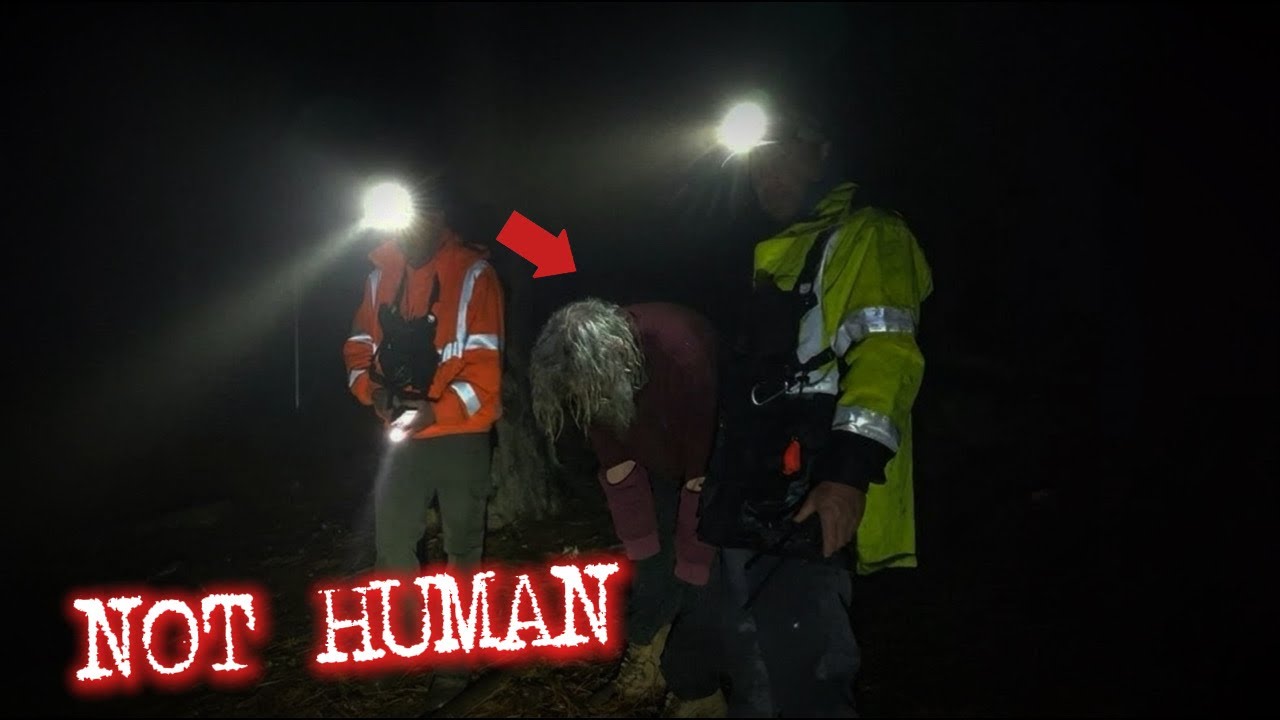
Most people believe search and rescue exists to find the missing.
The people who spend years doing the job often learn something more complicated.
Sometimes a search is not about finding someone. Sometimes it is about deciding which discoveries become part of the official record—and which ones quietly disappear.
That distinction sits at the center of three unsettling accounts shared by veteran search-and-rescue personnel. In each case, trained professionals encountered something that did not fit any field manual, any operational guideline, or any explanation they had ever been taught. More disturbing still, each claims that the response came from somewhere outside normal protocol.
Missing reports were altered. Evidence vanished. Radio transmissions were never logged. Entire sections of terrain appeared to exist outside the systems designed to map them.
And in the final account, a twenty-year SAR veteran describes an unwritten boundary deep in the wilderness—a place where Forest Service radios fall silent and another agency allegedly takes control.
He calls it the Three-Mile Rule.
Officially, it does not exist.
Unofficially, he says everyone who works those regions long enough learns not to cross it.
Whether these stories are misunderstood events, folklore born from difficult terrain, or something stranger, they all revolve around the same unsettling question:
What happens when experienced rescuers discover something their training never prepared them to find?
The Search Grid That Wasn’t on the Map
For six years, Brennan had worked as a volunteer search-and-rescue leader in the Cascades.
He knew the terrain. He knew the procedures. Most importantly, he trusted his equipment.
That trust began to crack on October 14, 2022.
The mission seemed straightforward. A solo climber named Petra, twenty-nine years old and experienced in alpine conditions, had failed to return from a route she had completed before. Her emergency beacon had transmitted a single signal at 6:17 a.m.
Then nothing.
No battery warnings.
No malfunction notices.
Just silence.
When Brennan received his assigned search grid, he entered the coordinates into his GPS unit.
The coordinates were accepted.
The map wasn’t.
Where terrain data should have appeared, there was only a blank space.
No contour lines.
No elevation information.
No topographical detail at all.
To Brennan, it looked as though a piece of the mountain had simply been erased.
He reported the issue before deployment.
The explanation he received was simple: a mapping update delay. Nothing unusual. Continue using the physical terrain descriptions provided in the briefing packet.
So he did.
Hours later, he reached Petra’s last known area.
What he found there made even less sense.
At the edge of a small clearing sat a climbing pack on top of a flat stump.
Not discarded.
Not dropped during an emergency.
Packed.
Every strap secured.
Every buckle fastened.
The lid closed.
Attached to the outside was Petra’s identification wallet.
Not hidden inside.
Not lost nearby.
Clipped prominently where anyone approaching would immediately see it.
The arrangement struck Brennan as deeply wrong.
Experienced climbers do not abandon packed gear for no reason.
And they certainly do not leave identification attached as if preparing someone else to recover it.
The scene looked less like an accident and more like a deliberate handoff.
As if the owner knew she would never carry it again.
Brennan radioed the discovery.
The response came within thirty seconds.
But according to him, the voice wasn’t his normal base coordinator.
It was someone else.
Calm.
Measured.
Almost rehearsed.
The instruction was immediate.
Ignore the gear.
Proceed to Grid B.
Brennan refused.
He explained that he was standing beside the missing climber’s belongings and intended to document the find.
The response that followed has stayed with him ever since.
“Brennan, you are currently in a non-documented zone. Leave the gear and return to base.”
A non-documented zone.
In six years of SAR operations, Brennan had never heard the phrase.
He had never seen it in training materials.
He had never encountered it in any official operational manual.
Yet the voice delivered it as though it were a perfectly ordinary instruction.
Before leaving, Brennan photographed the bag with his personal phone.
When he returned to base and reviewed the incident logs later, something was missing.
His radio report wasn’t there.
Neither was the response.
According to official records, the conversation never happened.
Petra’s case remains unresolved.
The photograph remains on Brennan’s phone.
And somewhere in the Cascades, there is allegedly a search grid that appears on deployment paperwork but not on a map.
The Cave Where the Dog Refused to Follow
Search dogs are among the most reliable tools in wilderness rescue.
Their senses routinely outperform human technology.
Handlers learn to trust them.
Sometimes more than they trust themselves.
Kalin learned that lesson in a way she never expected.
On September 7, 2020, she was searching for a six-year-old boy named Elliot in Arkansas’ Ozark National Forest.
The child had been missing for two days.
Her dog, Bear, had tracked confidently for nearly three hours.
Everything about his behavior suggested the scent trail was strong.
Then they reached a cave.
Bear stopped.
Not hesitated.
Not slowed down.
Stopped.
He sat at the entrance and began to whimper.
Kalin had worked with him for four years.
She had never heard that sound during a search.
It wasn’t fear.
It wasn’t confusion.
It wasn’t standard alert behavior.
It sounded almost like distress.
She issued the forward command.
Nothing.
Again.
Nothing.
The dog had made a decision.
Then she heard it.
A child’s voice.
Deep inside the cave.
Calling for his mother.
The voice sounded exactly like what rescuers expected from a frightened six-year-old who had been missing for days.
Weak.
Exhausted.
Desperate.
The kind of sound designed to trigger immediate action.
Leaving Bear behind, Kalin entered the cave alone.
The passage narrowed before opening into a small chamber approximately twenty meters inside.
She swept her headlamp across the room.
No child.
No footprints.
No sign anyone had been there recently.
Only a radio.
A search-and-rescue radio.
Powered on.
Sitting in the center of the chamber.
And the voice was coming from its speaker.
Elliot’s voice.
Calling for his mother.
Again and again.
The radio was the same model used by her own unit.
Same design.
Same frequency system.
Same equipment.
She stood frozen for several seconds.
Listening.
Trying to understand what she was hearing.
Eventually she picked it up and carried it back to the surface.
What happened next unsettled her even more.
Her supervisor was already waiting outside.
Before she could explain anything, he informed her that Elliot had been found.
Ten miles away.
Two hours earlier.
Safe and alive.
Kalin immediately asked why nobody had informed her during the search.
His answer was simple.
“Your radio wasn’t on.”
Except it was.
The transmission indicator remained active.
The device had been operating the entire time.
The supervisor took both radios.
The one from the cave and Kalin’s own.
She later filed a report.
The report received a case number.
Weeks later, when she requested a copy, she was informed that the case number did not exist.
Not archived.
Not restricted.
Nonexistent.
The official record contained no trace of what she had found.
Yet one detail continued to bother her.
Bear had refused to enter.
The radio had been waiting inside.
And somehow it was broadcasting the voice of a child who had already been rescued.
The Three-Mile Rule
Veteran SAR coordinator Victor spent two decades working wilderness incidents.
By the time he encountered the phenomenon he calls the Three-Mile Rule, he had learned something many newcomers eventually discover.
The wilderness operates according to rules that never appear on maps.
The Three-Mile Rule is one of them.
Officially, it does not exist.
Unofficially, he claims nearly every experienced coordinator in certain regions knows about it.
According to Victor, there are areas deep in national forests where crossing an invisible perimeter changes everything.
Radio communications stop.
Not with static.
Not through interference.
Silence.
A complete clearing of the frequency.
Then something else happens.
Another group arrives.
Who they are remains unclear.
How they operate remains unclear.
But Victor insists they appear whenever incidents occur inside certain zones.
His most memorable experience occurred during a search for a missing day hiker named Gerald.
Gerald had entered a section of forest that reportedly contained one of these boundaries.
A search team located him approximately forty meters inside the perimeter.
He was alive.
Uninjured.
Sitting on a flat rock.
Waving slowly at something invisible in front of him.
Not at the rescuers.
Not toward the trail.
Toward empty air.
Victor instructed the team to hold position and maintain observation.
Eleven minutes later, a vehicle appeared.
According to the team, the trail was too narrow to accommodate any vehicle.
Yet one arrived anyway.
Black.
Unmarked.
Two individuals emerged wearing gray uniforms.
No visible insignia.
No obvious equipment.
Most strikingly, they showed no uncertainty.
No searching.
No scanning.
No effort to locate the missing man.
They walked directly toward him.
As if they already knew where he was.
Within moments they led Gerald into the trees.
Visual contact was lost.
Several hours later Gerald reappeared at the trailhead.
Physically unharmed.
Mentally confused.
He remembered nothing between the afternoon and his return that evening.
Within days he seemed normal again.
Victor filed no report.
According to him, there was no point.
The event fit an unwritten pattern that experienced personnel had learned not to question.
The Three-Mile Rule.
A boundary no map acknowledges.
A protocol no manual describes.
A line beyond which responsibility changes hands.
The Pattern Beneath the Stories
Taken individually, each account sounds impossible.
A search grid absent from maps.
A radio broadcasting a rescued child’s voice.
An invisible perimeter patrolled by unidentified personnel.
Skeptics will point out obvious possibilities.
Memory errors.
Miscommunication.
Faulty equipment.
Exaggeration.
And they may be right.
Extraordinary claims require extraordinary evidence.
None of these stories provide that evidence.
But what makes them intriguing is not any single event.
It is the pattern.
Each account features missing records.
Missing documentation.
Missing explanations.
In every story, someone reports an anomaly.
In every story, the official record either omits it or cannot later be found.
And in every story, experienced professionals insist the most unusual part was not what they encountered.
It was how quickly the system seemed prepared to erase it.
Whether that reflects bureaucracy, coincidence, or something more mysterious depends entirely on the reader.
The Real Lessons Hidden in the Mystery
Regardless of how one interprets these stories, they point toward practical realities that matter far more than speculation.
People disappear in wilderness areas every year.
Weather changes rapidly.
Navigation errors happen easily.
Communication systems fail.
The backcountry remains unforgiving even without any mystery attached to it.
That is why search-and-rescue professionals consistently emphasize a few essential practices.
Always leave a detailed trip plan before entering remote terrain.
Include your route, intended campsites, emergency contacts, and expected return time.
Carry a personal locator beacon whenever possible.
Unlike cell phones, PLBs communicate directly with rescue satellites and can function in areas without reception.
Pay attention to environmental cues.
If experienced search dogs refuse a trail or behave unusually, handlers treat that information seriously.
And perhaps most importantly, trust your instincts when something feels wrong.
The wilderness is vast enough to contain mysteries without adding new ones.
Most dangers are ordinary.
Exposure.
Falls.
Weather.
Disorientation.
Yet the stories that endure are rarely about those hazards.
They are about moments when experienced people encounter something they cannot explain.
Moments that remain lodged in memory long after the official reports are filed.
Moments that leave behind questions instead of answers.
Perhaps that is why stories like these continue to circulate among rangers, rescuers, and backcountry veterans.
Not because they prove anything extraordinary.
But because they remind us that even in an age of satellites, GPS mapping, thermal imaging, and instant communication, there are still places where certainty becomes surprisingly fragile.
And sometimes the most unsettling part of a search is not what remains missing.
It is what was found—and quietly left out of the report.