SHE WAS CAUGHT READING THE BIBLE—THEN A MIRACLE HAPPENED
She Was Caught Reading the Bible—Then a Miracle Happened
Part 1
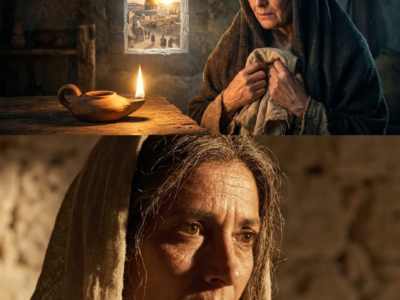
She was caught reading the Bible at 2:17 in the morning, beneath a flickering laundry-room light in a youth shelter in Queens, New York, where the washing machines shook like tired engines and the dryers smelled of bleach, wet socks, and old fear. Her name was Maya Carter. She was seventeen years old, Black, quiet, thin from forgetting meals when grief sat too heavily in her stomach, and invisible in the way some children become invisible after adults have passed them from office to office, clipboard to clipboard, case file to case file. The shelter called itself Harbor House, though it was six blocks from water and had never felt like a harbor to anyone who slept there. It was a place for girls who had nowhere safer to go: foster runaways, trafficking survivors, children from families broken by drugs, prison, eviction, or the kind of silence that sounds polite until somebody starts bleeding inside it.
Maya had found the Bible in the donation closet three weeks earlier, wedged between a cracked hair dryer and a box of winter hats. It was small, navy blue, with a broken zipper and someone’s name written inside the cover in silver marker: Clara M. The pages smelled like basement dust and hand lotion. She did not know why she kept it. She had not grown up especially religious. Her grandmother in Ohio had taken her to church when she was small, before the stroke, before the house was sold, before Maya’s mother disappeared into a string of motel rooms and missed court dates. Maya remembered hymns more than doctrine. She remembered women in white gloves. She remembered her grandmother’s hand pressing gently on her shoulder whenever the pastor said something hard, as if to say, do not run from this part, baby. But by seventeen, Maya had learned that remembering soft things only made hard things sharper.
That night, she was reading Matthew by the washing machines because the dorm room lights were out and because she could not sleep after another girl, Leila, had screamed herself awake for the third night in a row. The shelter staff said Leila had trauma. Everyone in Harbor House had trauma. The word was used so often it had become almost useless, like saying a house was wet while the roof was still missing. Maya opened the Bible to a passage she had underlined with a stolen pencil: “Come to me, all you who are weary and burdened, and I will give you rest.” She read it again and again, not because she understood it fully, but because the word rest sounded impossible enough to be holy.
Then the laundry-room door opened.
Ms. Denise Carter stood in the doorway, night supervisor, strict ponytail, hard shoes, keys on a ring big enough to sound like a jailer’s music. She was not cruel by nature, but she had worked too long in places where softness got exploited and suspicion felt like protection. Her eyes dropped to the Bible in Maya’s hands. For a moment, neither of them spoke.
“Maya,” she said finally, “what are you doing?”
Maya closed the Bible halfway, as if caught stealing. “Reading.”
“You’re supposed to be in bed.”
“I couldn’t sleep.”
Ms. Carter stepped into the laundry room. “Where did you get that?”
“Donation closet.”
“You know personal religious materials aren’t supposed to be circulated without staff approval.”
“It was in a box with hats.”
“That’s not approval.”
Maya’s throat tightened. “I wasn’t bothering anybody.”
The words came out too small, and that made her angry at herself. She was always too quiet at the wrong moments. Ms. Carter reached out. “Give it to me.”
Maya held the Bible closer. “Why?”
“Because this shelter has girls from different backgrounds. We don’t need religious conflict in the dorms.”
“I’m not fighting anybody.”
“It starts small.”
“So does hope,” Maya said before she could stop herself.
Ms. Carter’s face changed—not softened, exactly, but struck. Then the hardness returned. “Give me the book.”
From the hallway, someone laughed. Two girls had woken and were watching from the door. One whispered, “Maya got caught with Jesus.” The other snickered. A third voice said, “Maybe Jesus can get us better mattresses.” The laughter moved down the hall, not vicious enough to be called bullying in an incident report, but enough to make Maya’s face burn.
She handed the Bible over.
Ms. Carter tucked it under her arm and pointed toward the hall. “Bed. Now.”
Maya walked past the girls with her eyes down. She did not cry until she reached the dorm bathroom and locked herself in the last stall. Rain tapped against the small frosted window. Somewhere far below, a truck rolled over wet pavement. She pressed her palms together, not because she knew how to pray, but because her hands needed somewhere to put the shaking.
“If You’re real,” she whispered, hating how desperate she sounded, “please don’t let them take the only thing that made tonight less dark.”
At 2:41, the power flickered.
At 2:43, every alarm in Harbor House went off.
And at 2:44, water began pouring through the ceiling of the third-floor hallway like the building itself had finally started crying.
Part 2
The first explanation was a broken pipe, because broken pipes are easier to understand than timing. Harbor House was old, like most buildings that housed children nobody powerful wanted to see. It had been a school once, then a municipal office, then vacant, then renovated cheaply into a youth shelter by a nonprofit with a beautiful mission statement and a maintenance budget made mostly of wishes. The roof leaked. The basement flooded. The stairwell windows rattled in winter. The girls joked that the building had asthma because the radiators coughed all night. Everyone knew it was tired. Nobody knew how close tired was to breaking.
When the alarms screamed, girls spilled into the hallway barefoot, confused, half-asleep, some crying, some cursing, some grabbing phones, some freezing exactly where they stood. Water fell from the ceiling tiles near the east stairwell. Not dripping. Falling. A sprinkler pipe had burst above the third floor, but that was not the worst of it. The water ran into electrical panels that should have been sealed and were not. Lights popped. Smoke curled from a junction box. The east stairwell went dark. The emergency exit signs flickered, died, came back red, then died again.
Ms. Carter ran from the staff office with a flashlight and the confiscated Bible still under one arm. She shouted for everyone to line up, but girls in panic do not become orderly because someone uses an adult voice. Leila screamed. Two younger girls tried to run toward the east stairs. Maya, standing near the dorm doorway, saw smoke pushing under the stairwell door and moved before thinking.
“Not that way!” she shouted.
Nobody listened.
She ran forward and blocked the door with both arms. One girl shoved her. “Move!”
“There’s smoke!”
“The other stairs are locked after midnight!”
Maya looked toward Ms. Carter. “Are the west stairs open?”
Ms. Carter’s face went blank. That was the problem. The west stairs were supposed to be alarmed but accessible. But last week, after girls had been sneaking out, maintenance installed a temporary latch. Temporary, in places like Harbor House, meant until tragedy made it permanent in court records.
Ms. Carter swore under her breath and threw her keys to Maya. “Blue key. West stairwell.”
Maya caught them badly, dropped them, grabbed them from the wet floor, and ran. The hallway lights flickered again. Water soaked her socks. Behind her, girls shouted. The west stair door was at the end of the corridor near the laundry room. She reached it, jammed the blue key into the lock, and felt nothing turn.
Wrong key.
Her hands shook harder. She tried another. Then another. From behind her, Ms. Carter yelled, “Hurry!” Smoke was now visible above the east door. The alarm sound blurred everything. Maya wanted to scream back that she was trying. Then she saw the little silver tag on one key: W-ST. She shoved it into the lock, twisted, and the door opened so suddenly she nearly fell.
Cold air rushed up the stairwell.
“Here!” she shouted. “This way!”
Girls began moving. Some ran. Some stumbled. Maya stood by the door, counting without knowing why. One, two, three, four. Leila came shaking, eyes wild. Maya grabbed her hand and pulled. Ms. Carter guided the younger girls into the stairwell, still holding the Bible under her arm like a forgotten piece of evidence. But when the first group reached the second-floor landing, a new problem appeared. Water was pouring down the west stairwell from above, and below, the ground-floor exit was blocked by a security gate that had failed during the power surge.
The girls were trapped between smoke and steel.
Ms. Carter called 911, but the line kept cutting. Cell service inside the old building was weak even on normal days. The fire alarm had automatically alerted the department, but nobody knew how long help would take. Rain had already flooded nearby streets. Sirens sounded far away, then close, then lost in the storm.
Maya looked through the stairwell bars at the second-floor corridor. “What’s down there?”
“Offices,” Ms. Carter said. “Counseling rooms. Storage.”
“Windows?”
“Bars.”
Of course.
The building that claimed to protect girls had also been designed to keep them contained.
Then Maya remembered something. The laundry-room window. The old delivery chute beside it. A rusted metal hatch behind the dryers that led to the rear service alley. The girls joked about it because rats sometimes came through there. Maintenance had covered it with a rolling cart, but it was not locked from the inside.
She turned to Ms. Carter. “The laundry chute.”
“What?”
“Behind the dryers. It goes to the alley.”
“That chute is too small.”
“For adults,” Maya said. “Not for all of us.”
Ms. Carter stared at her.
The Bible slipped from under her arm and fell open on the wet landing. Maya looked down. The page had opened to Isaiah. The words were small, blurred by water drops, but one line stood clear under the flashlight beam:
When you pass through the waters, I will be with you.
For one second, all the noise seemed to pull back.
Maya lifted her eyes.
“This way,” she said.
And this time, everyone followed.
Part 3
New York firefighters later said the laundry chute saved lives, but that was not exactly true. The chute was only metal. It had been there for decades, ignored, rusted, ugly, half-blocked by lint and old pipes. What saved lives was a girl remembering a way out that nobody in authority had included in the emergency plan because nobody had thought to ask the girls how the building really worked. Maya knew the chute because she folded sheets there. She knew which dryer rolled if you kicked the wheel. She knew the back alley gate stuck unless lifted first. She knew the old service stairs behind the pantry led down to the kitchen door. She knew the building not as a floor plan, but as a body she had moved through while invisible.
She led the first group back through the hallway, away from the west stairwell and toward the laundry room. Smoke had thickened near the ceiling. Water ran under the machines. The alarms kept screaming. Ms. Carter used her flashlight while Maya and two older girls shoved the rolling cart away from the chute hatch. It screeched across the floor. Behind it, the metal hatch was rusted orange and warped at the edges.
“It won’t open,” one girl said.
Maya grabbed the handle and pulled. Nothing. She pulled again. Pain shot through her fingers. Leila, still shaking, stepped forward and pulled with her. Then another girl. Then another. The hatch screamed open like something waking angry.
Cold air entered from below.
The chute angled downward into darkness.
The youngest girl, a twelve-year-old named Sofia, began crying. “I can’t.”
Maya knelt. “You can.”
“It’s dark.”
“I know.”
“What if I get stuck?”
“Then I come get you.”
“You promise?”
Maya felt fear like a hand around her throat. She had no right to promise. She promised anyway. “I promise.”
They lowered Sofia first, wrapped in a bedsheet to protect her arms from rust. Ms. Carter guided from above while another staff member, Mr. Alvarez, who had finally reached them from the second floor, ran down through a staff-only service stair to meet the girls in the alley. Sofia slid, screamed, landed, then shouted up, “I’m okay!” The sound of her voice changed the room. Fear became movement.
One by one, the smaller girls went down. Then the medium girls. Then the ones who insisted they were too old to fit but did. Maya counted again. Fifteen. Sixteen. Seventeen. Leila refused to go without Maya. Maya shoved her gently. “Go before I drag you.” Leila went.
Smoke entered the laundry room.
Ms. Carter coughed hard. “Maya, now.”
“You first.”
“No.”
Maya looked at her, and in that moment, the anger about the Bible, the humiliation, the laughter, all of it burned through the fear. “You took my book,” she said. “You’re not taking my exit too.”
Ms. Carter blinked, then laughed once, shocked by the absurdity of being scolded during a fire. She climbed into the chute with difficulty, scraping her arm, and disappeared downward. Maya waited until she heard Ms. Carter shouting from below. Then she turned to the laundry room.
The Bible was still on the floor near the doorway, wet but not lost.
She grabbed it.
That delay almost killed her.
A burst of heat rolled down the hall as something electrical ignited near the staff office. The lights went black. Maya dropped to the floor, coughing, Bible pressed against her chest. She crawled toward the chute, but the laundry room had become a different place in the dark. The machines were shadows. Water hid the floor. Smoke erased distance. Her hand hit the open hatch. She tried to climb in, but the chute edge burned hot against her arm.
Then she heard a voice.
Not loud. Not outside. Not like thunder. A calm voice, close enough to be inside her breath.
Low, baby. Lower.
It sounded like her grandmother.
Maya dropped flat. A wave of heat passed above her. She crawled not into the chute, but under the folding table beside it, where the air was slightly clearer. From there, she saw something she had missed: a lower access panel beneath the chute, open just enough to reveal a crawlspace used for venting. Smaller than the chute, but safer, not hot, sloping toward the same service alley.
She pulled the panel open and slid inside.
The Bible scraped under her chest. Metal tore her shirt. Something cut her shoulder. She crawled through blackness so tight she could not lift her head. Behind her, the laundry room cracked with heat. Ahead, she heard rain and voices.
Then hands grabbed her wrists.
Ms. Carter and Mr. Alvarez pulled her into the alley as firefighters reached the rear gate.
Maya came out covered in soot, water, blood, and lint, clutching the Bible so hard her fingers had locked around it.
All twenty-eight girls from the third floor were alive.
Not untouched.
Not unafraid.
Alive.
And when Ms. Carter tried to take the Bible gently to dry it, Maya shook her head.
“No,” she rasped.
Ms. Carter nodded, tears cutting clean lines down her smoke-dark face.
“No,” she said. “That’s yours.”
Part 4
Los Angeles found the story by morning, and by afternoon people were already ruining it. The first viral clip showed Maya being carried from the alley, Bible clutched to her chest, rain falling around her, firefighters moving behind her like figures in a painting. Someone added music. Someone wrote, Girl Caught Reading Bible Saves Shelter from Fire. Someone else wrote, They Tried to Take Her Bible—Then God Opened an Escape Route. A Christian influencer called it proof that “secular shelters hate Jesus.” A political page blamed city regulations. Another blamed religion for distracting from safety failures. A local news anchor called Maya “the Bible girl.” She hated that instantly.
Naomi Reyes saw the clip in a Burbank editing room at 6:12 a.m. She had been working on a film about neglected youth facilities in America—New York shelters, Ohio foster homes, Los Angeles transitional housing, Florida group homes—and she recognized Harbor House from an old inspection file. She booked the next flight to New York before the second wave of headlines formed.
By the time Naomi reached Queens, Harbor House had been evacuated, the girls relocated, and the nonprofit’s executive director had issued a statement praising “quick staff action and faith-inspired courage,” which managed to sound respectful while avoiding the phrase unsafe building. Naomi disliked the statement immediately. Faith-inspired courage had not caused the electrical panels to fail. Prayer had not installed the illegal latch on the west stairwell. A miracle had happened, perhaps, but miracles should not be used to cover maintenance negligence.
Maya was at a temporary youth facility in Brooklyn, refusing interviews. Ms. Carter was there too, her arm bandaged, her face hollow from replaying the night. Naomi met her first.
“I took the Bible from her,” Ms. Carter said before Naomi asked anything.
“Why?”
“Policy.”
“Was it a good policy?”
Ms. Carter looked away. “It was easier than discernment.”
That line stayed.
She explained that Harbor House had girls from Christian, Muslim, Jewish, atheist, and uncertain backgrounds. Staff feared religious conflict, coercion, manipulation, trauma triggers. Some caution was valid. But over time, caution had become control. Approved spiritual care required forms, scheduled visits, designated rooms, staff oversight. A girl reading quietly at night did not fit the policy. So Ms. Carter enforced the rule instead of seeing the child.
“I thought I was preventing harm,” she said. “But I did not ask why she needed the book.”
Naomi asked if she believed the Bible saved them.
Ms. Carter took a long breath. “The chute saved us. Maya saved us. Firefighters saved us. But when that page opened to ‘when you pass through the waters,’ I felt something break in me. I had spent years managing girls. That night I saw one lead us.”
Maya agreed to speak only after Naomi promised three things: no hero music, no calling her Bible girl, and no filming the other girls without consent. Naomi accepted all three. They met in a counseling room with bad art on the walls. Maya wore a borrowed sweatshirt, her shoulder bandaged, the navy Bible on the table between them, pages swollen from water.
“Did you hear God?” Naomi asked.
Maya stared at the Bible.
“I heard my grandma.”
“Do you think it was her?”
“I don’t know.”
“Do you think it was Jesus?”
Maya was quiet for a long time.
“I think Jesus knew I would listen if He sounded like somebody who had loved me before.”
That became the heart of Naomi’s film.
The miracle was not only the escape.
The miracle was that a girl who had been treated as a risk became the one everyone followed.
Part 5
Ohio entered the story through Clara M., the name written inside the Bible. Naomi traced it to Mercy Ridge, Ohio, where Maya’s grandmother, Clara Monroe, had once lived, prayed, organized food drives, and written letters to foster agencies that never answered quickly enough. Ruth Bell knew her. Of course Ruth knew her. Ruth was eighty, ran the Mercy Ridge food pantry, and seemed to have known every woman in Ohio who had ever made a casserole with moral force.
When Naomi brought a photo of the Bible inscription, Ruth sat down.
“Clara gave that Bible away years ago,” she said. “After Maya was taken into care.”
“To whom?”
“To a church donation drive. We were sending coats and books to shelters in New York.”
Naomi felt the room tilt. “So the Bible Maya found in Queens came from her own grandmother?”
Ruth nodded slowly. “Looks like that book found its way home before anyone else did.”
Maya came to Ohio two weeks later for the funeral of a distant aunt and to rest away from reporters. She did not expect the pantry women to recognize her. They did. They remembered her as a little girl asleep under the folding table while Clara packed food boxes. Ruth hugged her without asking too many questions, which was the rarest form of mercy.
The Mercy Ridge chapter of the story became less about fire and more about inheritance. Clara had written notes in the Bible margins. Beside the passage in Matthew about the weary, she had written: For Maya when the world gets loud. Beside Isaiah’s water verse: Baby, God does not promise no water. He promises company. Beside Psalm 27: If fear knocks, let faith answer slow.
Maya read those notes sitting in the pantry office, crying so quietly Ruth pretended not to notice.
“Why didn’t anyone give this to me?” Maya asked.
Ruth’s face hardened. “Because systems move paper better than love.”
That line became Part Five’s center.
In Mercy Ridge, Maya met other girls who had aged out of care, boys who had slept in cars, foster parents who had tried and failed, caseworkers drowning in impossible caseloads, pastors who meant well and disappeared after Christmas gift drives. The fire in Queens had exposed more than a bad shelter policy. It exposed how easily children in care lose their own history. Grandmother’s Bible in a donation closet. Medical records in one city. School records in another. Siblings separated. Photos lost. Faith treated as a risk unless attached to an approved program. Identity scattered like laundry no one claimed.
Maya began speaking—not publicly at first, but to youth groups and foster-care volunteers. She told them, “Don’t just give kids stuff. Give them their stories. A coat helps. A Bible helped me. But what I needed was somebody to tell me it had my grandmother’s name in it.”
Ruth created a program called Story Boxes. Every child connected to Mercy Ridge’s foster network would have a box containing photos, letters, medical information, school memories, family stories when safe, spiritual materials when wanted, and names of people who had loved them before the system renamed them placement. Some agencies resisted. Ruth said resistance was proof the program was needed.
When Naomi filmed the first Story Box being packed, Maya placed her grandmother’s copied Bible notes inside a folder for another girl.
“This is not magic,” Maya said.
Then she touched the navy Bible.
“But sometimes God uses paper because people keep losing children.”
Part 6
Los Angeles became the testing ground because Los Angeles had more youth shelters than the public liked to imagine and more cameras than anyone needed. Naomi screened early footage for shelter directors, social workers, former foster youth, pastors, imams, rabbis, child psychologists, and legal advocates. The room expected an inspirational rescue story. Naomi gave them a film about policy, memory, faith, neglect, and a laundry chute.
The title was The Book in the Laundry Room.
Some executives hated it. Ruth loved it. “Any title with laundry is honest,” she said.
Part Six followed the national response. Christian groups sent thousands of Bibles to shelters after seeing Maya’s story. Some shipments were thoughtful. Many were not. Boxes arrived without asking what youth actually needed, without trauma-informed guidance, without interfaith sensitivity, without storage space, without relationships. One shelter director in Los Angeles said, “We got six hundred Bibles and zero socks.” Maya heard that and winced.
“People learned the wrong lesson,” she said.
So she helped create a better one. With Naomi, Ms. Carter, Ruth, and a coalition of chaplains from different faiths, Maya developed a simple principle: access without coercion, care without erasure. Shelters should not ban quiet personal faith. They should not force it either. Youth should have access to spiritual resources they request—Bible, Quran, Torah portions, prayer beads, journals, meditation materials, clergy contacts, or nothing at all. Staff should be trained to distinguish support from pressure. Most importantly, no child’s faith, grief, or family memory should be confiscated for administrative convenience.
In Los Angeles, Maya visited a shelter where a Muslim girl named Amina had been afraid to ask for a prayer rug because staff seemed uncomfortable with religion. Maya told the director, “If my Bible mattered, her prayer rug matters.” That line angered some viewers later, but Maya refused to retract it. “Jesus did not save me so I could become selfish about comfort,” she said.
The miracle had made her generous, not tribal.
That was how Naomi knew it was real.
Then came the legal investigation. Harbor House had failed multiple safety standards: blocked emergency access, faulty electrical protection, improper stairwell latch, inadequate overnight staffing, and poor evacuation training. The Bible story had gone viral, but the building story became evidence. Ms. Carter testified honestly. “A child led us through an exit staff had not been trained to use,” she said. “That should humble every adult responsible.”
The nonprofit lost its contract. The building was shut down. Several city policies changed. Religious-material rules were rewritten across youth facilities, but so were emergency planning requirements. The final report included a sentence Naomi highlighted in the film:
Youth residents often possess practical knowledge of facility conditions not captured in formal safety plans.
Maya read that sentence and laughed bitterly.
“That means ask the girls where the exits are,” she said.
Yes.
That was exactly what it meant.
Part 7
The documentary premiered in New York one year after the fire, inside a renovated community theater not far from Harbor House. Naomi refused a red carpet. Maya refused a stage entrance. Ms. Carter sat beside her, not as villain, not as hero, but as a woman who had failed, learned, and stayed. Ruth came from Ohio wearing a blue hat that made her look like someone’s grandmother and everyone’s supervisor. Girls from Harbor House attended if they wanted. Some did. Some did not. No one was pressured.
The film opened with the laundry-room light flickering over Maya’s Bible. Then the door opening. Ms. Carter’s voice. The laughter in the hall. Maya’s whispered prayer. The alarms. The water. The keys. The chute. The page from Isaiah. The crawlspace. The alley. Then Ohio. Clara’s notes. Story Boxes. Los Angeles shelters. Amina’s prayer rug. The investigation. The policy changes. The miracle widening into responsibility.
When the lights came up, nobody clapped at first.
Then Leila, the girl who had screamed herself awake the night of the fire, stood. She had not spoken publicly before. She looked at Maya and said, “I thought you were just quiet. I didn’t know quiet could lead.”
Maya cried then. Not prettily. Honestly.
Ms. Carter spoke next. “I took the Bible because I saw risk before I saw need. I will regret that. But I also saw God use the girl I underestimated to save the room. I do not understand grace if it does not include being corrected by the child you failed.”
Ruth leaned into the microphone afterward. “Good. Now everybody go ask a young person what adults keep missing.”
The audience laughed, but many actually did.
The film spread. Churches watched it. Shelters watched it. Foster agencies watched it. Some argued about religion in public care. Good. The argument needed to happen. But the best responses were practical. Shelters created spiritual access shelves. Staff received training. Youth councils reviewed emergency plans. Story Boxes spread from Ohio to New York, then Los Angeles, Chicago, Atlanta, and Detroit. A national foster-care organization adopted the phrase memory is a safety need. Maya spoke at their conference and said, “A child who knows where she comes from may also remember where the exits are.”
That became one of the film’s most quoted lines.
The navy Bible was eventually restored by a conservator in New York. Its pages remained wrinkled. Maya insisted they stay that way. “It passed through water,” she said. “Let it look like it.”
She began carrying a different Bible for daily reading and kept Clara’s in a glass box in her room—not as a shrine, but as evidence. Evidence that her grandmother’s love had traveled farther than the system. Evidence that a confiscated book could become a map. Evidence that a miracle does not end when people survive.
It ends only if nobody changes afterward.
Part 8
Years later, people still told the story as if it were simple. A girl was caught reading the Bible. A fire broke out. A verse appeared. A miracle happened. That version was not false, but it was too small. The miracle was larger than the timing, larger than the page opening to Isaiah, larger than the escape through the chute, larger than the voice that sounded like Maya’s grandmother telling her to get low.
The miracle was that adults changed.
Not all of them. Never enough. But some.
New York rewrote shelter policies so personal faith materials could be accessed safely without coercion or confiscation. Emergency drills began including youth feedback. Old buildings were inspected with residents present. Harbor House never reopened in that form. In its place, a smaller, better-run transitional home was created, with youth councils, trauma-informed staff, and a laundry room that became, by Maya’s request, a reading room with shelves for many kinds of books.
Ohio kept Story Boxes. Ruth ran the program until her knees gave out, then ran it from a chair because authority does not require standing. Maya visited Mercy Ridge every summer. She learned more about Clara Monroe each time: the songs she loved, the recipes she ruined, the children she fed, the prayers she wrote in margins. The Bible had returned Maya to a family history nobody had intentionally preserved but God had not allowed to vanish.
Los Angeles kept the policy fight alive. Amina, the girl with the prayer rug, became friends with Maya. They spoke together at shelters about faith access and mutual respect. Some people wanted Maya to say only Bibles mattered. She refused. “If my comfort makes me deny another girl hers, then I did not learn Jesus,” she said. That sentence cost her some invitations and earned her better ones.
Naomi’s documentary, The Book in the Laundry Room, became required viewing in social-work programs, Christian youth ministries, foster-care training, and documentary ethics classes. Naomi taught students that miracle stories are dangerous when they let viewers cry without asking what failed. “If the miracle saves lives,” she said, “your next question is what endangered them.”
Ms. Carter left Harbor House after the investigation and later became a trainer for youth-shelter staff. Her session was called Seeing Need Before Risk. She opened every training by telling the truth: “I took a Bible from a girl who needed comfort. That same girl saved twenty-eight lives. If your policy makes you ignore the child in front of you, your policy needs repentance.”
On the tenth anniversary of the fire, the girls who had survived gathered in Queens. Some came with children of their own. Some came quietly and left early. Some did not come because not every wound wants a ceremony. Maya came with Clara’s Bible, now protected in a simple case. They stood in the renovated laundry-room reading space, where a small plaque on the wall read:
When you pass through the waters, I will be with you.
Below it was another line, chosen by the youth council:
Ask us what we know.
Maya read from Matthew, the weary and burdened passage she had been reading when she was caught. Then Amina read a prayer for shelter. Leila read a poem. Ms. Carter read the names of everyone who escaped. Ruth, too old to travel, appeared by video from Ohio and said, “If anybody starts acting inspirational without doing maintenance, call me.”
Everyone laughed.
Then Maya closed the Bible and looked around the room.
“I used to think the miracle was that God saved us from the fire,” she said. “I still believe that. But now I think He also saved something from the fire—my grandmother’s words, my own voice, the truth that girls like us are not just problems to manage. We are witnesses. Sometimes we know where the exits are. Sometimes we are carrying the map adults tried to take.”
Outside, Queens moved in rain and traffic. Somewhere in Ohio, a Story Box was being packed for another child. Somewhere in Los Angeles, a shelter worker unlocked a cabinet and handed a girl the prayer book she had requested. Somewhere, a staff member asked a teenager, “What helps you feel less alone at night?” and waited long enough for the real answer.
She was caught reading the Bible.
Then a miracle happened.
But the miracle did not end in the alley.
It kept moving through every adult who finally learned that hope in a child’s hands is not contraband.
Sometimes it is the way out.