Otherworldly Beings Caught On Camera That Defy Explanation
Otherworldly Beings Caught On Camera That Defy Explanation
The modern camera was built to capture truth, but it has instead become the premier architect of myth. In an era where nearly every human being carries a high-definition lens in their pocket, the world should, theoretically, be stripped of its shadows—leaving no room for the cryptids, extraterrestrials, and spectral figures that once haunted the fringes of folklore. Yet, the internet tells a vastly different story. Rather than killing the paranormal, the explosion of digital recording has democratized it, transforming grainy security feeds, shaky trail cams, and frantic cell phone uploads into a global currency of high strangeness. When the mundane familiarities of a backyard or a forest trail are suddenly punctured by an inexplicable shape, humanity’s deepest existential questions are instantly projected onto a few seconds of pixelated chaos.
The Infamous Pioneers of the Close Encounter
Long before algorithms dictated viral sensations, the architecture of a modern alien encounter was built on deeply personal, often agonizing testimonies. These early accounts laid the groundwork for how the public consumes anomalies, establishing a narrative arc that moves from domestic tranquility to unimaginable terror, and finally, to the cold wall of official skepticism.
In October 1996, Jonathan Reed, a psychologist from Seattle, Washington, set out for a routine walk with his golden retriever near a wooded area at the edge of town. The quiet afternoon shattered when his dog reacted aggressively to an unseen presence, sprinting deep into the trees. Following the barks, Reed entered a clearing to discover his dog attacking a small humanoid figure, roughly the size of a twelve-year-old child. According to Reed, the being wore a seamless, tight black suit and moved with an unstable, vibrating shimmer that defied focus.
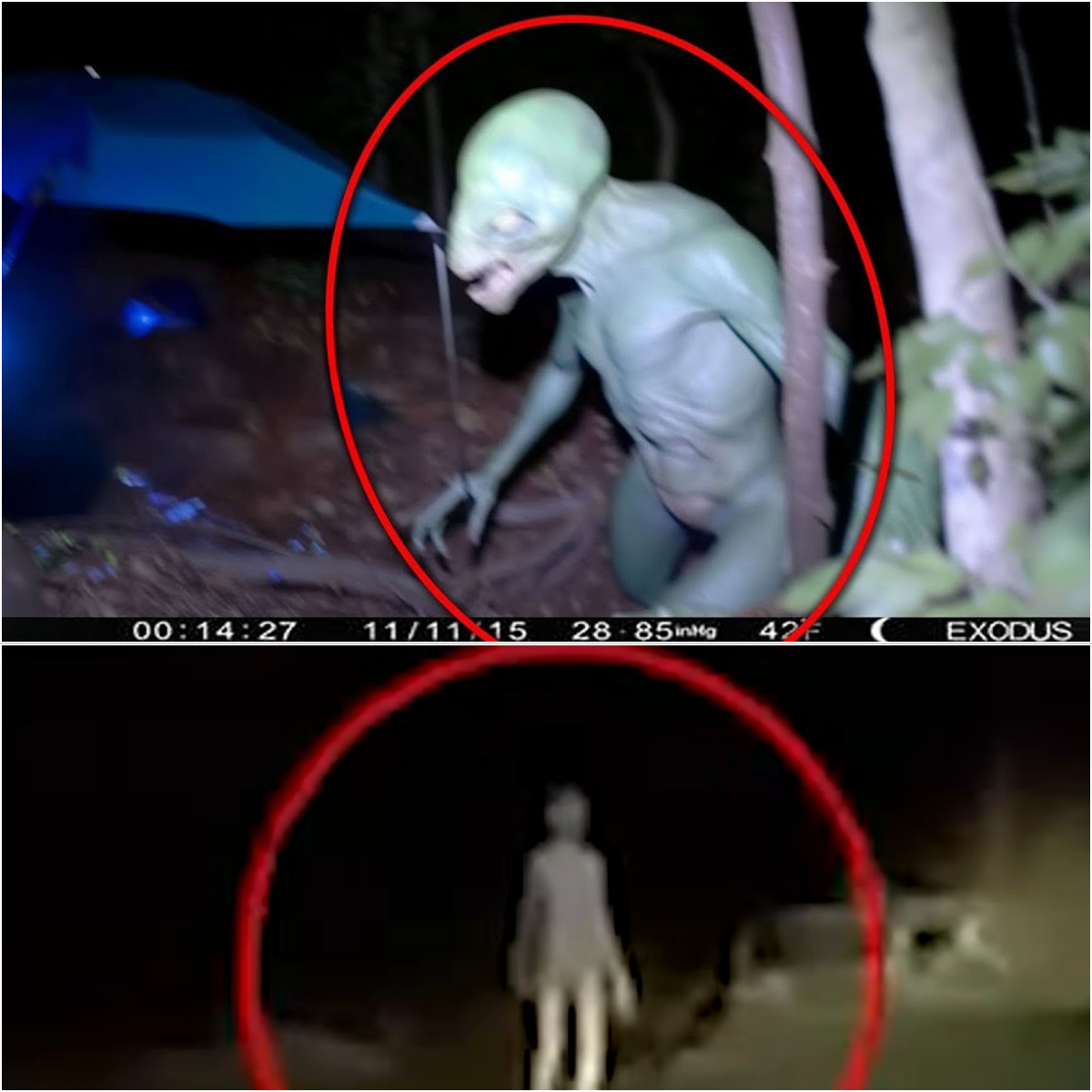
The encounter turned lethal within seconds. Reed claimed the figure attacked his dog with such force that the animal was instantly killed, its remains bizarrely turning to white ash. Terrified, Reed struck the creature in the head with a large stick, knocking it motionless. Nearby, a low humming sound drew him further into the brush, where he discovered and photographed an obsidian, saucer-like object hovering just above the forest floor. Driven by a mix of shock and scientific curiosity, Reed wrapped the creature’s body, brought it home, and stored it in his freezer, eventually filming what he claimed was an amateur autopsy.
The aftermath of Reed’s discovery followed a pattern familiar to the ufological community: the sudden appearance of unmarked white vans outside his home, a ransacked house, and the complete disappearance of the physical evidence. Though critics widely dismissed the account as an elaborate hoax, citing a lack of verifiable physical material, Reed spent years maintaining the validity of his footage at conferences and on late-night radio shows, embodying the classic archetype of the lone witness burdened by an impossible truth.
A decade earlier, across the Atlantic, an equally compelling encounter occurred on the foggy moorlands of West Yorkshire, England. On December 1st, 1987, Philip Spencer, a retired police officer, embarked on a morning walk across Ilkley Moor, armed with a camera and a compass. Through the dense mist, Spencer spotted a small, dark green figure, barely four feet tall, with an elongated head and spindly arms. As he approached, the creature raised its arm in a stark gesture—interpreted by Spencer as a warning to stay back.
Spencer snapped a single photograph before chasing the creature into the fog, only to witness a dual-saucer craft rise silently from the moor and vanish into the sky with a low hum. When he returned to town, Spencer realized his compass had become completely demagnetized, and two hours of his life had vanished from the clock.
ILKLEY MOOR ENCOUNTER METRICS (DECEMBER 1, 1987)
===================================================
Witness: Retired Police Officer (Philip Spencer)
Physical Evidence Evaluated:
  - Single Photograph (Kodak Lab found no tampering)
  - Compass Anomaly (Completely demagnetized)
  - Chronological Discrepancy (2 hours missing time)
The Ilkley Moor case became a cornerstone of British UFO research because the underlying film showed no immediate signs of digital manipulation according to Kodak technicians of the era. Decades later, the case took an even darker turn under regressive hypnotherapy, where Spencer’s memories shifted from a brief sighting to a terrifying abduction narrative involving paralysis, medical examinations, and an invasive procedure inside the craft. The blurry image of the “Ilkley Moor Alien” remains an iconic, unresolved relic of pre-digital anomaly capture.
The Cold War of Digital Hoaxes: From Siberia to Quebec
As the internet matured, the geographic center of paranormal media shifted from traditional Western hotspots to the vast, isolated expanses of eastern Europe and northern Canada. The snow-covered wilderness became the perfect canvas for a new wave of visceral, shocking footage.
In April 2011, a video emerged from the frozen forests of Siberia, Russia, that sent shockwaves through global media. Two local men filmed what appeared to be the frozen, mangled corpse of an extraterrestrial lying near a tree stump. The entity possessed a classic “Grey” physiology: an oversized skull, immense dark eyes, and fragile, thin limbs, with a portion of its leg seemingly severed. The upload gained millions of views within days, fueled by local rumors of a UFO crash that had been deliberately covered up by Russian authorities weeks prior.
The global fascination was short-lived. Russian police tracked down the creators, two young men from Irkutsk, who confessed that the “alien” was an elaborate prop constructed from crumpled bread crumbs and covered in chicken skin. Despite the official exposure of the hoax, the imagery had already taken root in the digital landscape, demonstrating how easily primal curiosity can be manipulated by rudimentary practical effects.
A remarkably similar, yet far more elusive case occurred in 1992 near River Rouge in Quebec, Canada. A group of snowmobilers reportedly discovered a small, naked, gray-skinned entity frozen solid in a remote snowbank. Rather than touching it directly, they used a wire and a stick to hoist the stiff body, capturing the discovery on film. When they returned the following day, the corpse was gone, presumably taken by local predators or clean-up crews.
The footage remained hidden for over fifteen years, locked away on the advice of a prominent Canadian ufologist who warned the men that going public would destroy their personal lives. When it finally surfaced on YouTube in 2008, it racked up millions of views across various mirrors. The original uploaders vanished from the platform, leaving a trail of deleted accounts and an unresolved debate about whether the Quebec frozen alien was a masterful piece of practical effects or a genuine historical anomaly.
Declassified Realities: The Lake Huron Shootdown
While civilian footage is constantly plagued by questions of authenticity, the paradigm shifts dramatically when the source of the media is the United States military. The line between fringe conspiracy and national security blurred permanently in early 2023, during a series of unprecedented aerial engagements over North American airspace.
In February 2023, the U.S. military scrambled F-16 fighter jets to intercept a mysterious radar anomaly flying at 20,000 feet over Lake Huron, directly along the international border between Michigan and Canada. Deemed a hazard to civil aviation, the object was targeted and destroyed by a Sidewinder missile. For years, the Pentagon maintained a strict lock on the visual data, classifying the media under a network of national security protocols.
Following a massive declassification wave, the official infrared cockpit footage was released to the public, documenting the exact moment of the engagement. The target, initially described by officials as an octagonal structure with dangling strings, is seen being locked onto by the fighter’s targeting systems. Upon missile impact, the object disintegrates in what military analysts termed a “radial displacement pattern”—a violent, symmetrical explosion.
PENTAGON DECLASSIFIED ENGAGEMENT LOG
===================================================
Date: February 2023
Interceptor: F-16 Falcon
Weapon Deployed: AIM-9X Sidewinder Missile
Target Altitude: 20,000 Feet
Location: Lake Huron (US-Canada Border)
Target Morphology: Octagonal, dangling structural elements
While contemporary federal reports concluded the object was likely a rogue commercial or weather balloon, the leaked cockpit audio tells a far more ambiguous story. In the seconds leading up to the launch, a pilot can be heard clearly stating:
“I wouldn’t really call it a balloon… I don’t know what… I can see it outside with my eyes.”
The disparity between the pilots’ real-time observations and the subsequent bureaucratic explanations fed a growing public skepticism, proving that even declassified official data can deepen, rather than resolve, a modern mystery.
Backyards and Treelines: The Terror of the Domestic Anomaly
The true horror of the anomalous video does not live in high-altitude military engagements or distant Siberian forests; it lives in the sudden invasion of domestic spaces. When a creature is caught lurking just beyond the reach of a back porch light, the familiar boundaries of suburban safety are completely erased.
In Morehead, Kentucky, a security clip from 2022 captured a lanky, pale, heavily hunched humanoid figure creeping through the dense brush of a private garden. The creature moved with an unnatural, halting gait that instantly triggered a viral debate across paranormal forums. Skeptics immediately analyzed the lighting, noting that if the clip had been filmed using standard infrared night-vision, a human actor wearing a black bodysuit would actually appear dark, whereas this entity glowed with a uniform, chalky whiteness.
The case took a technical turn when viewers noticed the frame was floating slightly, a characteristic impossible for a fixed-mount home security camera. A local paranormal research firm solved the riddle by pointing out a subtle reflection in the glass of the monitor: the video was a cell phone recording of a playback screen, a common practice that inherently degrades the original resolution and leaves the true nature of the Morehead creature forever obscured.
A similar chilling intrusion was captured in Denver, Colorado, by a resident named Stan Roman in 2003. After experiencing weeks of unsettling sensations that something was watching his home at night, Roman positioned a camcorder facing his window. The resulting footage became a legendary piece of digital folklore: a pale, hairless humanoid head slowly rises into the frame, its large, dark eyes peering directly through the glass before smoothly dropping back into the shadows. The “Denver Window Peeper” was subjected to rigorous frame-by-frame analysis at public ufology symposiums, standing as one of the most visceral depictions of home invasion by the unknown ever recorded.
Further into the wilderness, trail cameras left in the woods for months at a time frequently return images that defy zoological classification. In Dubina, a rural patch of Fayette County, Texas, property owner Michael Deml had been monitoring local wildlife for over a decade. He knew the precise visual signatures of coyotes, bobcats, and raccoons under infrared light.
One night, his camera captured a completely alien form: a spindly, furless, quadrupedal entity crouching low in the dirt. It possessed the vague proportions of a medium-sized dog but featured a skeletal, elongated bone structure that prompted widespread internet theories ranging from a mangy coyote to a legendary chupacabra or skinwalker.
TRAIL CAM ANOMALY LOG: FAYETTE COUNTY, TX
===================================================
Monitoring Period: 10 Years
Standard Fauna: Coyotes, Bobcats, Feral Hogs, Raccoons
Anomalous Capture: Quadrupedal, completely hairless, spindly bone structure
Visual Artifacts: Low-resolution compression, high-contrast IR flash
Similar night-vision footage emerged from an isolated forest in Oregon, six miles from the nearest city, where a homeowner investigating strange nocturnal noises filmed a pale, hairless figure crouching deep within the dense Pacific Northwest undergrowth. The creature’s sudden, sharp reaction to the camera’s infrared illuminator provided a terrifying climax to a clip that continues to serve as a benchmark for amateur cryptid hunting.
Misidentifications and the Power of the Practical Joke
For every video that eludes explanation, there is a case where the veil is completely lifted, exposing the mundane, human mechanics behind a terrifying image. These exposures are vital, offering a masterclass in how easily our visual systems can be deceived by context and intent.
In May 2007, the agricultural community of Metepec, Mexico, became the epicenter of an international media storm. A local rancher named Mario Lopez claimed to have discovered a tiny, screaming, hairless humanoid creature trapped in an animal trap inside his barn. Out of sheer panic, the rancher submerged the trap in water, drowning the entity. The mummified carcass was subsequently sold to prominent Mexican investigative journalists, who presented it to the world as definitive proof of an extraterrestrial specimen or an undiscovered interdimensional being.
The carcass underwent comprehensive medical evaluations, including MRI scans and DNA sequencing, which initially baffled researchers due to the complex degradation of the tissue.
METEPEC SPECIMEN ANALYSIS MATRIX
===================================================
Initial Claims: Extraterrestrial infant, interdimensional entity
Diagnostic Testing: MRI Scans, Tissue Biopsies, DNA Sequencing
Final Forensic Verdict: 100% Saimiri sciureus (Squirrel Monkey)
Modifications: Surgical skin removal, tail alteration, desiccation
The mystery unraveled when forensic investigators and a confession from the rancher’s nephew revealed the truth: the specimen was a dead squirrel monkey. The nephew, a taxidermy enthusiast, had meticulously removed the animal’s fur and ears, altered its facial structure, and placed it in the barn as a cruel prank. The Metepec alien remains a cautionary tale about the lengths to which individuals will go to manufacture proof of the impossible.
High Strangeness in the Global Landscape: From Australia to Brazil
The phenomenon of the caught-on-camera anomaly is completely unconstrained by borders, appearing in various forms across every continent, with each culture applying its own vocabulary to the bizarre images captured on film.
In 2022, following days of torrential rainfall and devastating flash floods in Sydney, Australia, a jogger named Harry Hayes stumbled upon a deeply unsettling object resting on the concrete. It was a tiny, translucent, fleshy mass that bore a striking resemblance to a developing embryo, yet featured a singular, bulbous nodule that looked like a solitary eye.
Hayes uploaded a high-definition video of the object to Instagram, where it quickly caught the attention of the global scientific community. Biologists, zoologists, and marine veterinarians argued for weeks over the footage, pitching theories that ranged from a misplaced flying possum embryo to a mutated shark fetus washed inland by the storm surge. The inability of leading academics to reach a consensus left the “Sydney Mystery Blob” occupying a permanent space in the digital archive of unclassifiable biology.
Meanwhile, on the highway systems of Jharkhand, India, a group of nighttime motorcyclists captured a chilling video that highlighted the intersection of ancient folklore and modern digital media. Their headlights illuminated a pale, exceptionally tall, and emaciated figure walking with a rigid, mechanical gait along the shoulder of a dark road. As the bikers slowed down, the entity turned its elongated head toward the lens, its eyes momentarily catching the light with an eerie, yellowish tapetum lucidum reflection. To the local community, the figure was instantly recognizable as a modern iteration of a traditional spirit or a visitation by an off-world entity, illustrating how the desolate spaces of our highways continue to harbor the unknown.
No location, however, matches the historical density of high strangeness found in Brazil. The Amazonian region near Manaus has long been monitored by international ufologists due to its incredible biodiversity and a history of official military investigations into aerial phenomena, such as the declassified Operation Prato in the late 1970s. In 2011, two British tourists filming children in the Amazonian jungle accidentally captured a striking figure in the background foliage: a classic Grey alien form, complete with a bulbous cranium and oversized black eyes, standing next to a mysterious glowing blue orb of light.
More recently, in early 2024, social media was flooded with frantic footage from Ilha do Mel, an island off the coast of southeastern Brazil. Onlookers captured two towering humanoid figures standing on the crest of an inaccessible hill. Local hikers noted that the surrounding vegetation, which consistently grows to a height of six feet, barely reached the knees of the entities, leading to estimates that the figures stood over ten feet tall.
Translations of the onlookers’ panicked commentary reveal the raw emotion that powers these videos:
“It’s too big to be a person… Look at the way it moves… It came down the cliff so fast.”
The Endless Search for the Absolute Truth
We are left living in a digital panopticon where every anomalous video occupies an unstable space between definitive proof and digital forgery. The internet has created an ecosystem where the grainy noise of a camera sensor can look like a shimmering alien suit, and a skinned monkey can deceive world-renowned researchers for a decade.
Yet, the collective obsession with these clips never fades. Whether it is an old photograph from a foggy English moor, a declassified infrared video from a military jet, or a terrifying glimpse of a pale face looking through a kitchen window, these clips serve a vital human purpose. They remind us that despite our immense technological progress, our mapping of the globe, and our scientific categorization of life, we still desperately want to look out into the dark woods behind our homes and find something looking back.