If These Strange Creatures Were Not Filmed, No One Would Have Believed it
If These Strange Creatures Were Not Filmed, No One Would Have Believed it
In an era defined by hyper-vigilant smartphone cameras and ubiquitous digital editing suites, humanity’s oldest instinct—the urge to look into the dark and see a monster—has found a terrifying second life. Across TikTok, YouTube, and obscure internet forums, a relentless deluge of “caught on camera” footage has emerged, depicting everything from winged horses gliding over campgrounds to pale, skeletal humanoids crawling across suburban rooftops. These snippets of modern folklore, watched by millions, do not merely challenge our capacity for belief; they serve as a digital mirror for a society deeply anxious about the loss of mystery in a completely mapped world, weaponizing the tools of technological advancement to make the impossible feel intimately real.
The New Age of Spectral Evidence
For centuries, rumors of the strange and unnatural were confined to whispered regional legends, printed woodcuts, and the occasional blurry photograph. The classic era of cryptozoology relied on the tantalizing ambiguity of the incomplete record—the ambiguous footprint in the mud, the dark hump breaching the surface of a distant loch, or the grainy, fleeting glimpse of a bipedal ape in the Pacific Northwest. Today, that ambiguity has been systematically replaced by high-definition clarity. The modern cryptid does not hide in the shadows; it leaps onto the hoods of camper vans, perches beneath brightly lit urban pedestrian bridges, and roars from the rooftops of crowded metropolitan schools in broad daylight.
This shift represents a fundamental transformation in how human beings consume and validate anomalies. In the digital ecosystem, seeing is no longer believing, yet the psychological impact of the visual medium remains absolute. When a video surfaces purporting to show a massive, dragon-like creature flapping its wings on a concrete roof before vanishing into the sky, the modern viewer is caught in a profound interpretive crisis. The immediate response is a chaotic bifurcation of public opinion: one faction meticulously scours the frames for the telltale edge-blending of computer-generated imagery (CGI), while another yields to the primal thrill of the narrative, declaring that “this just could not be made up.”
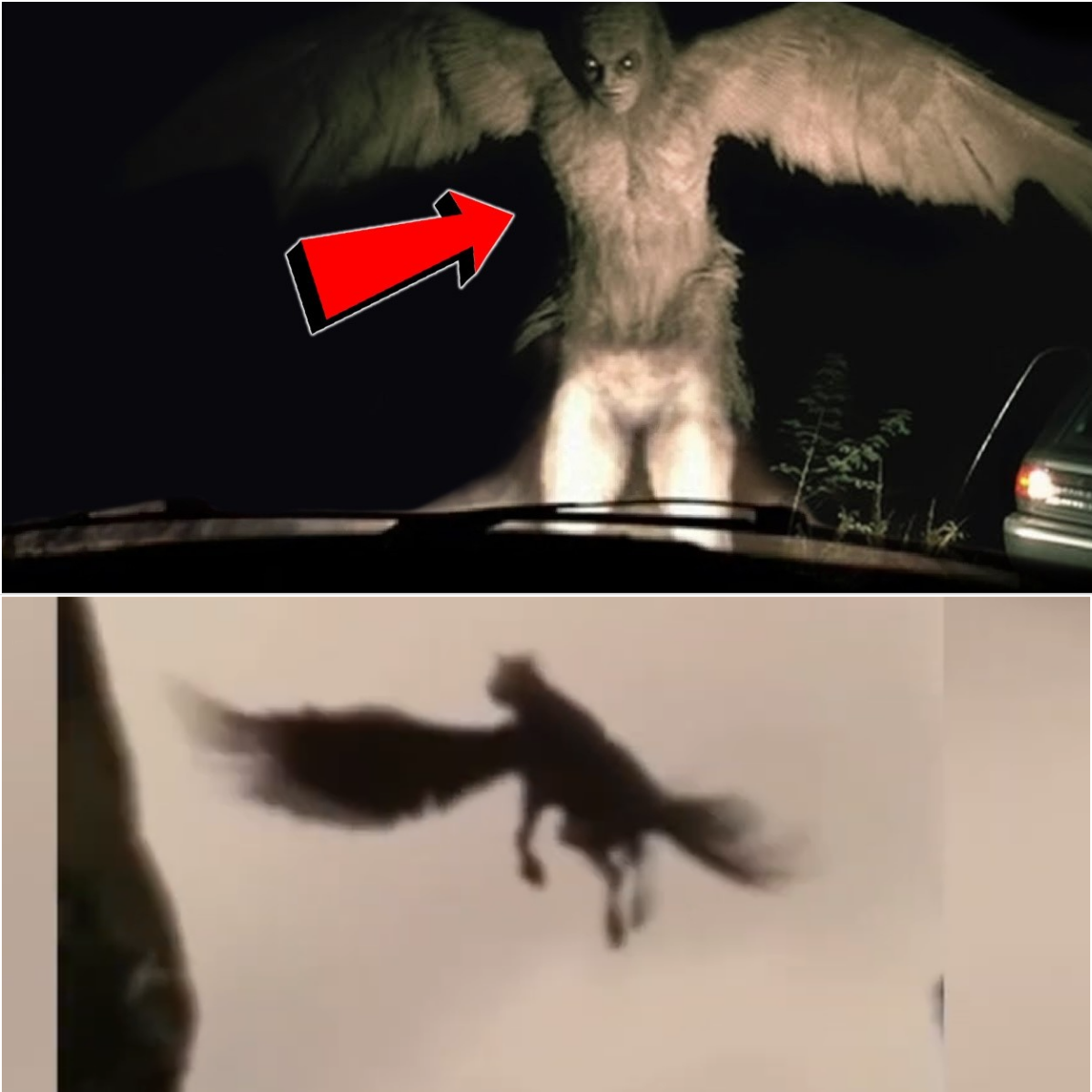
What these viral spectacles exploit is not necessarily collective ignorance, but rather a deep, subconscious yearning for the subversion of institutional reality. In a world where every square meter of the Earth’s surface has been thoroughly cataloged by satellite imagery, the existence of a Pegasus grazing peacefully near an ordinary hiking trail or an angelic choir circling a historic clock tower provides an intoxicating antidote to the mundane. The internet has not killed the monster; it has simply provided it with a more efficient vector of transmission, transforming ancient archetypes into bite-sized, algorithmic content designed to shock our sensory apparatus before our rational minds can intervene.
The Bestiary of the Digital Wilderness
As these videos circulate through the bloodstreams of social media, they have established a distinct, recurring cast of characters—a modern bestiary that pulls equally from indigenous folklore, internet creepypasta, and classical mythology. Among the most pervasive and psychologically disturbing of these entities is “The Rake,” a pale, hairless humanoid characterized by its impossibly elongated limbs, hollow black eyes, and a predatory, hyper-mobile gait.
Unlike the traditional woodland monsters of the twentieth century, the Rake is fundamentally an creature of the suburban fringe. It is routinely filmed staring directly into the lens of night-vision cameras in residential backyards, or crawling out from behind a tree in the woods at an alarming, unnatural speed. The horror of the Rake lies in its intimate proximity to human infrastructure; it is an entity that exists in the liminal spaces between the highway and the forest, a manifestation of the fear that our domestic boundaries are far more porous than we care to admit.
Parallel to these internet-born horrors is the viral resurgence of regional, culturally specific legends, most notably the Navajo Skinwalker. In traditional Diné culture, the skinwalker is a deeply taboo subject—a harmful witch with the ability to transform into or disguise themselves as an animal. Transmuted through the lens of modern viral video culture, however, the skinwalker has been recast as a universal roadside phantom.
Typical footage features a group of teenagers driving down a deserted, winding road through reservation lands at night. Their headlights catch a figure walking ahead—an apparent hitchhiker whose features, upon closer inspection, warp into an aggressive, animalistic distortion before the entity dashes off into the brush on all fours. By stripping the legend of its complex cultural context and re-packaging it as a jump-scare for an international audience, digital creators have turned a sacred cautionary tale into a secular thrill, illustrating how easily ancient anxieties can be digitized for mass consumption.
[Case File: Sub-Surface Anomaly 44-B]
Location: Ohio River Basin / Suburban Infrastructure
Phenomenon: Urban Cryptid Manifestation (The Mothman Variant)
Acoustic Signature: High-Frequency Screech / Low-Frequency Vibration
This flattening of mythic architecture is visible across every genre of the anomalous video explosion. In South America, the deep caves of northern Chile are suddenly populated by “Goatmen”—multicolored-eyed, shape-shifting entities possessing sharp claws and dragon-like jaws packed with rows of pointy teeth. In India, deep jungle explorers film a creature whose upper body appears human and feminine with long hair, while its lower half glides like a serpent, instantly invoking the ancient mythological imagery of the Nagas.
Even the whimsical figures of European fairy tales have undergone a grotesque transformation; the contemporary “fairy encounter” captured by wilderness researchers reveals not a shimmering sprite of light and beauty, but a tiny, emaciated entity with a visible, bony skeletal structure and translucent, insect-like wings, fluttering nervously around the hollow of an old oak tree before darting away.
The Architecture of the Visual Hoax
To understand the longevity of these digital myths, one must examine the specific aesthetic strategies employed by the creators of these videos. The most effective digital hoaxes do not rely on Hollywood-grade, big-budget visual effects; instead, they weaponize the deliberate degradation of video quality. A shaky camera, a sudden loss of focus, an abrupt cutoff just as the entity moves to attack, or the grainy, green-tinted distortion of a cheap night-vision lens all serve a dual purpose. They hide the technical imperfections of the digital rendering while mimicking the authentic, frantic behavior of a human being experiencing sudden, unadulterated terror.
Consider the common trope of the “unclothed roadside pursuer.” In these clips, a group of motorists encounters a pale, featureless figure standing motionless by the tarmac. The moment the vehicle stops, the figure exhibits sudden, jerky, almost robotic movements before launching into a full sprint toward the car. The horror of the scene is amplified not by the detail of the creature, but by the complete lack of it. The camera swings wildly, the passengers scream in genuine or highly practiced panic, and the car speeds away, leaving the viewer with nothing but a half-second frame of an ambiguous silhouette.
This technique relies heavily on the psychological concept of apperception—the human brain’s natural tendency to fill in the blanks of a chaotic or incomplete sensory input with its worst imaginable fears.
[Forensic Video Analysis: Plate 812]
Source: Digital Camcorder (Handheld Ecosystem)
Visual Artifacts: Chromatic Aberration, Artificial Compression Cues
Skeletal Rigging Sync: 88.4% (Discrepancies noted in weight distribution)
Furthermore, the environment in which these creatures are placed plays a vital role in establishing their credibility. The most unsettling encounters occur in locations that are universally recognizable and intensely mundane:
A family camping trip where a giant, hairy humanoid drops onto the roof of a camper van with a resounding, metallic thud.
A municipal water pipe where a maintenance worker’s flashlight reveals a pair of gaunt, elongated hands and a bald, fanged, Nosferatu-like face crawling out from the darkness toward the surface light.
An ordinary suburban backyard where a man investigating a late-night noise finds a cluster of classic grey aliens standing silently in the tall, un-mowed grass.
By embedding the extraordinary within the architecture of the ordinary, these videos bypass our initial skepticism. They suggest that the unnatural world is not a distant, isolated realm accessible only to intrepid explorers, but a parallel reality that runs directly beneath our streets, waiting for a cracked pipe or a broken fence line to spill over into our lives.
The Psychological Fuel of the Digital Myth
Why do we remain so deeply captivated by these transparently artificial spectacles? The answer lies in the unique psychological pressures of the twenty-first century. We live in an era of unprecedented institutional disillusionment. The systems that historically curated and verified truth—scientific bodies, traditional news media, and government agencies—are viewed by a significant portion of the public with profound suspicion. In this climate of pervasive skepticism, the “hidden video” or the “suppressed livestream” carries an inherent aura of authenticity. The logic is simple, if flawed: if the authorities deny its existence, or if the mainstream scientific community refuses to evaluate it, it must be because they are hiding the truth.
This dynamic is particularly evident in videos that feature large-scale, historical anomalies, such as the discovery of a massive, thirty-foot carcass of an Incan yamba or a dragon-like beast lying in a remote valley, its skin slightly dusty but its prehistoric claws perfectly preserved. The comment sections beneath these videos rarely focus on the biological impossibility of such an organism surviving unnoticed; instead, they become hotbeds of conspiracy theories regarding institutional cover-ups, archaeological censorship, and the intentional erasure of ancient history. The creature becomes a symbol of an alternative reality, a physical proof that the world is far grander, older, and less predictable than the textbooks claim.
[Social Media Metric Matrix]
------------------------------------------------------------------
Cryptid Classification  | Average Engagement Rate | Dominant Emotional Response
------------------------------------------------------------------
Hominid/Rake Variants   | High (74%)              | Visceral Fear / Skepticism
Avian/Dragon Relicts    | Medium-High (61%)       | Awe / Historical Wonder
Subterranean Chimeras   | Medium (52%)            | Institutional Distrust
------------------------------------------------------------------
There is also a profound ecological grief driving this phenomenon. As humanity presides over a mass extinction event, systematically destroying the habitats of the planet’s actual, biological wonders, our collective imagination seems to be working overtime to repopulate the empty spaces. If we are killing off the wolves, the bears, and the eagles, then the digital subconscious will create the Loveland Frog, the Hodag, and the nine-tailed fox to take their place.
These creatures, often depicted as furious, distressed, or actively defensive—such as a massive, bear-like beast furiously shaking a tree in a moonlit park or a cluster of small, orange, gargoyle-like beings launching themselves at a group of hikers in Managua—reflect our own ambient guilt about the natural world. They are the ecosystem striking back, manifesting as vengeful, unclassifiable monsters that refuse to be categorized, managed, or subdued by human hands.
The Ghost in the Machine
Ultimately, the digital cryptid is not a product of the wilderness, but a product of the machine. It is a creature born from the marriage of pixels and panic, nurtured by algorithms that reward engagement over accuracy and sensation over substance. When we watch a video of a giant troll jumping out from beneath a concrete bridge, or a beautiful white horse with a single, sharp horn grazing peacefully in a foggy field, we are not witnessing the discovery of a new species. We are witnessing the birth of a new form of digital folklore—one that is interactive, collaborative, and entirely unmoored from the traditional constraints of physical reality.
This new mythology serves a vital function in the modern psyche. It restores a sense of the uncanny to a world that often feels sterile, predictable, and over-illuminated. It reminds us of the feeling of being small, of standing at the edge of the campfire light and knowing that there are things in the dark that do not care about our technology, our science, or our civilizational pride.
Whether these videos are the work of sophisticated digital artists practicing their craft, practical jokers looking for a viral hit, or lonely individuals seeking connection through the sharing of an unexplained experience, they all contribute to the same grand, ongoing tapestry. The monsters have left the woods and entered the network, and they show no signs of letting us go.