Indonesia CRACKS OPEN? — Triple Eruption + New Fault Pressure TRIGGER “Ring of Fire” Countdown!
Indonesia — March 2026. Three of the nation’s most dangerous volcanoes are erupting at the same time, triggering concern among volcanologists and disaster authorities across Southeast Asia. Experts say the simultaneous activity could signal rising stress along the Pacific Ring of Fire, one of the most volatile tectonic regions on Earth.
The eruptions involve three powerful volcanoes across the Indonesian archipelago:
Mount Semeru in Java
Mount Marapi in Sumatra
Mount Ibu in the Maluku Islands
Though separated by hundreds of miles, the nearly simultaneous eruptions are raising questions about whether Indonesia’s volcanic systems may be reacting to shared tectonic stress beneath the region.
Mount Semeru Sends Ash 15,000 Feet Into the Sky
On the island of Java, Mount Semeru — the tallest volcano on the island — has erupted repeatedly in recent days, blasting ash clouds up to 15,000 feet (4,600 meters) into the atmosphere.
The eruptions have prompted warnings from the Darwin Volcanic Ash Advisory Centre, which tracks dangerous ash clouds that can threaten aircraft engines.
Beyond aviation hazards, scientists are closely monitoring a growing lava dome near the summit. Lava dome collapses can unleash pyroclastic flows, superheated avalanches of gas, ash, and rock that can travel at hundreds of kilometers per hour.
A similar collapse in 2021 caused deadly flows that destroyed villages and killed dozens of residents around the volcano.
Mount Marapi Eruption Turns Deadly
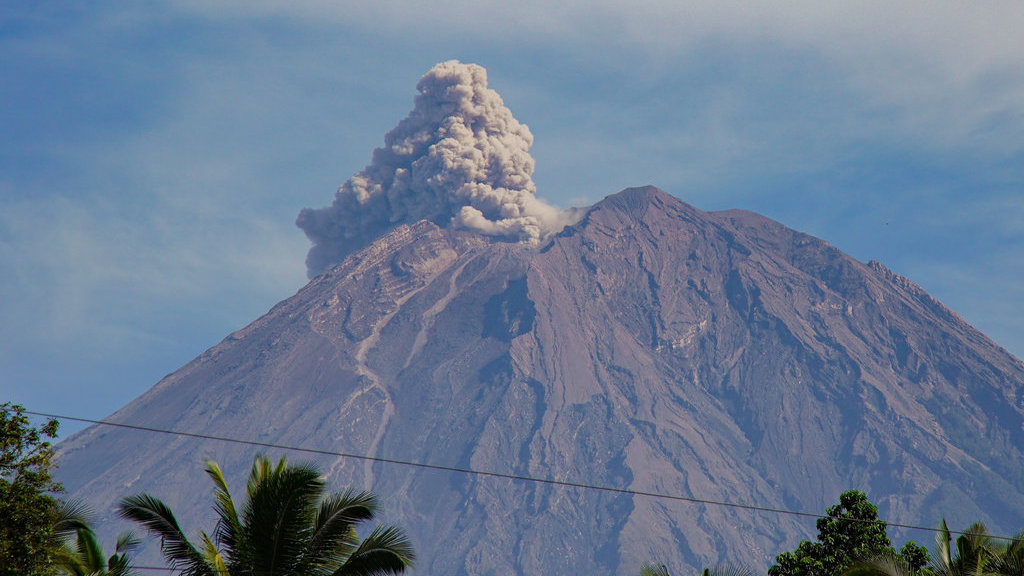
Meanwhile in western Indonesia, Mount Marapi has entered a new phase of explosive activity.
On March 3, the volcano erupted violently, sending ash columns 1,500 meters into the sky and ejecting volcanic debris across surrounding slopes.
Authorities raised the volcano’s alert level to Level 3, just below the highest emergency warning.
The volcano has already proven deadly. In December 2025, a sudden eruption trapped hikers on its slopes, killing 11 people.
Officials say the mountain remains unstable, with continued explosions indicating magma movement beneath the surface.
Mount Ibu Erupting Up to 15 Times in a Week
Further east in the Maluku Islands, Mount Ibu on Halmahera has been erupting at an alarming frequency.
In the past week alone, the volcano has erupted more than 15 times, launching ash plumes up to 7,000 feet high.
Unlike the larger eruptions at Semeru and Marapi, Ibu’s activity is characterized by continuous explosive bursts, suggesting an open volcanic conduit allowing magma and gas to escape frequently.
Scientists say this pattern indicates a highly pressurized system beneath the volcano.
A Nation Built on the Ring of Fire
Indonesia sits along the Pacific Ring of Fire, a massive arc of tectonic plate boundaries stretching around the Pacific Ocean.
The country lies where the Indo-Australian Plate is forced beneath the Eurasian Plate — a process known as subduction.
This tectonic collision generates intense geological activity, making Indonesia home to 127 active volcanoes, more than any other nation on Earth.
Historically, eruptions occurred frequently but usually independently, with one volcano erupting while others remained quiet.
The current situation appears different.
Scientists Investigate “Stress Transfer” Between Volcanoes
Volcanologists are now closely examining the concept of stress transfer, a process where seismic or volcanic activity in one region shifts underground pressure to another part of the tectonic system.
In simple terms, one eruption may trigger changes elsewhere along the same plate boundary.
Researchers believe the eruption at Mount Marapi may have redistributed stress along the Sunda Arc, potentially influencing volcanic systems farther east.
That stress could be affecting both Mount Semeru in Java and Mount Ibu in eastern Indonesia.
While scientists caution that volcanoes do not always directly trigger one another, the current pattern is unusual enough to warrant increased monitoring.
Millions Living in the Shadow of Volcanoes
The danger is not just geological — it is deeply human.
Millions of Indonesians live within reach of active volcanoes. Communities face multiple hazards including:
Ash fall contaminating water supplies and crops
Pyroclastic flows capable of destroying entire villages
Lahars, fast-moving volcanic mudflows triggered by rain
Emergency authorities remain on standby in several provinces, ready to evacuate residents if activity escalates.
Aviation and Global Travel Risks
Volcanic ash clouds also threaten international aviation.
Fine ash particles can melt inside jet engines, causing sudden engine failure.
The aviation industry learned this lesson during the 2010 eruption of Eyjafjallajökull, which grounded more than 100,000 flights across Europe and cost airlines billions of dollars.
With multiple volcanoes erupting in one of the world’s busiest air travel corridors, aviation authorities are monitoring Indonesian airspace closely.
What Happens Next?
Scientists say three possible scenarios could unfold:
1. Stabilization:
The eruptions gradually release pressure, allowing volcanic systems to return to normal activity levels.
2. Prolonged unrest:
Indonesia could enter a period of years or decades of increased volcanic activity.
3. A larger geological event:
Some researchers warn that continued stress could eventually trigger a much larger eruption or a major earthquake along the Sunda megathrust.
A Warning From the Planet
Indonesia’s triple eruption is a reminder of the immense geological forces shaping the planet.
Volcanoes once thought to behave independently may actually be connected through vast tectonic systems deep beneath the Earth’s crust.
For scientists studying the Ring of Fire, the current activity is more than just a series of eruptions — it may be a signal that the entire region is entering a new phase of geological unrest.