Victor Davis Hanson: “Something BIG is Happening in the West…”
Victor Davis Hanson: “Something BIG is Happening in the West…”
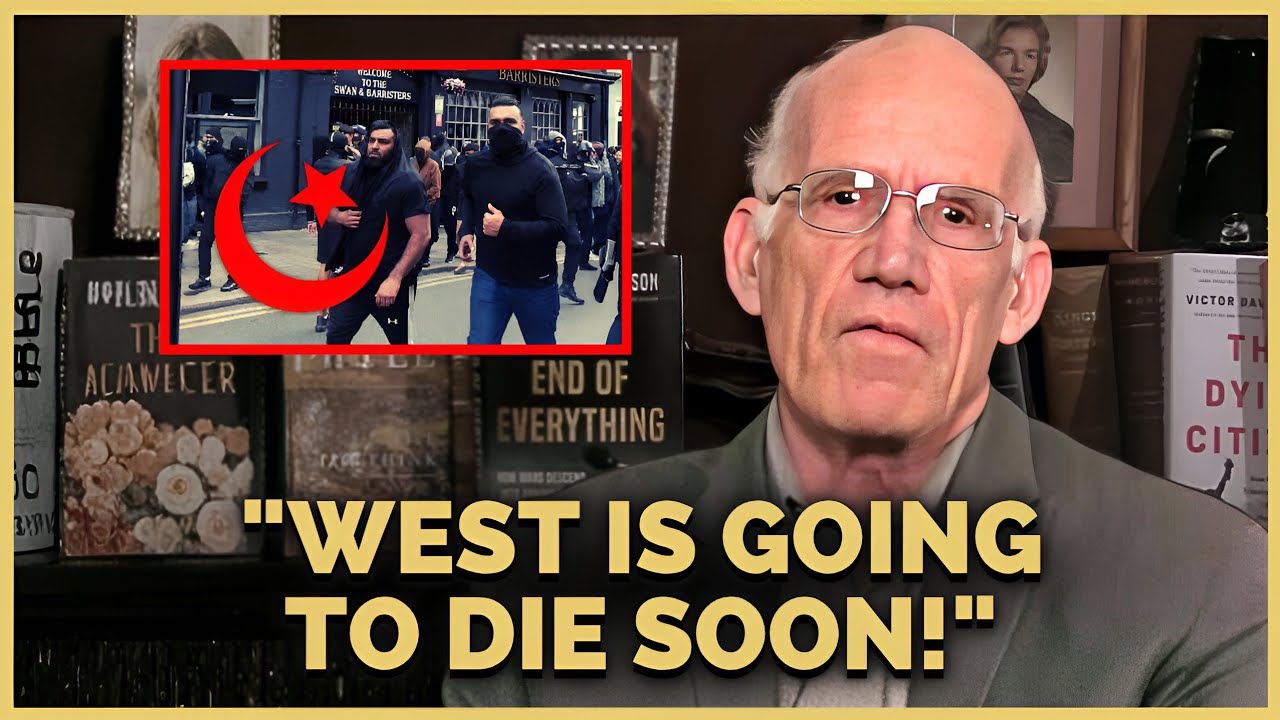
A recent online video discussion featuring political commentator Victor Davis Hanson has reignited intense debate across digital platforms about the future of Western civilization. The conversation, which centers on immigration policy, meritocracy, DEI (Diversity, Equity, and Inclusion) frameworks, and cultural identity, has been widely circulated and heavily debated.
The video does not present new policy announcements or institutional changes. Instead, it reflects a broader ideological conversation already unfolding across the United States, the United Kingdom, and parts of Europe. At its core, the discussion raises questions about social cohesion, institutional trust, demographic change, and the role of merit in modern governance systems.
While supporters view the arguments as a necessary critique of current political trends, critics argue that such framing oversimplifies complex social realities and risks deepening polarization.
The Central Theme: Decline of Trust in Western Institutions
A key idea presented in the discussion is the perception that Western societies are experiencing a decline in confidence toward their own historical institutions, traditions, and cultural identity.
This argument suggests that when societies adopt a posture of self-criticism or institutional apology, they may unintentionally weaken the perceived legitimacy of their own systems. According to this viewpoint, such a dynamic can influence how both citizens and newcomers perceive authority, governance, and cultural expectations.
Sociologists have long studied the relationship between institutional legitimacy and social cohesion. When trust in institutions declines, it can lead to fragmentation, competing value systems, and political polarization.
However, academic interpretations of these trends vary widely. Some scholars argue that increased diversity and multicultural policy frameworks strengthen societies in the long term, while others suggest they introduce new governance challenges that must be carefully managed.
Immigration as a Structural and Political Issue
Immigration remains one of the most significant and debated policy issues across Western democracies. Countries such as Canada, the United States, France, Germany, Sweden, and the United Kingdom have all experienced large-scale migration flows in recent decades.
The video reflects concerns held by some segments of the population regarding:
Cultural integration and assimilation
Economic impact of immigration
Pressure on housing and public services
Social cohesion and national identity
At the same time, many economists and policymakers emphasize the positive contributions of immigration, including:
Addressing labor shortages
Supporting aging populations
Driving economic growth
Enhancing cultural diversity
This divergence in interpretation illustrates a broader reality: immigration is not a single-issue topic, but a complex intersection of economics, politics, and identity.
The Concept of Meritocracy: Ideal vs. Reality
One of the central arguments in the discussion revolves around the concept of meritocracy—the idea that social and professional advancement should be determined by ability, effort, and performance rather than identity or background.
Meritocracy is widely regarded as a foundational principle in modern liberal democracies. It underpins education systems, employment structures, and professional advancement in many Western countries.
However, critics of contemporary systems argue that merit-based frameworks are increasingly influenced by:
Policy interventions aimed at correcting historical inequalities
Institutional diversity initiatives
Social equity programs
Affirmative action policies
Supporters of these programs argue that they help address systemic imbalances and ensure broader access to opportunity. Critics argue that they may, in some cases, dilute strict merit-based selection.
The tension between these perspectives represents one of the most important ongoing debates in modern governance: how to balance fairness, representation, and performance.
DEI Policies and Their Role in Institutional Change
Diversity, Equity, and Inclusion (DEI) programs have become central to institutional policy in education, government, and corporate environments across the Western world.
Proponents argue that DEI frameworks:
Improve representation of historically marginalized groups
Encourage inclusive workplace environments
Reduce structural inequality
Strengthen social cohesion in diverse societies
Critics, however, argue that DEI initiatives can sometimes:
Shift focus away from merit-based evaluation
Introduce bureaucratic complexity
Create tension between competing fairness definitions
Become politically polarizing within institutions
Advertisements
The video reflects the latter perspective, framing DEI policies as a contributing factor to perceived institutional imbalance. However, academic research on DEI outcomes remains mixed, with studies showing both positive and contested results depending on implementation.
The Debate Over Cultural Integration
A recurring theme in the discussion is the idea of cultural integration versus cultural fragmentation. This reflects long-standing debates in political science about whether immigrant populations should assimilate into host cultures or maintain distinct cultural identities within multicultural societies.
Historically, Western nations have taken different approaches:
The United States has often promoted a “melting pot” model
Canada has adopted a multiculturalism framework
France emphasizes republican assimilation
The UK has used a hybrid approach over time
Each model carries strengths and challenges. Assimilation models may encourage stronger shared identity but risk cultural erasure concerns. Multicultural models promote diversity but may raise questions about social cohesion.
The tension between these models continues to shape political discourse across Europe and North America.
Rising Political Polarization in Digital Media
One of the most significant aspects of the viral video is not the content itself, but the way it has spread online. Digital platforms amplify emotionally charged political content, often removing context and encouraging rapid reaction.
This contributes to:
Echo chambers
Ideological reinforcement
Fragmented information ecosystems
Increased mistrust between political groups
Media researchers have noted that algorithm-driven engagement systems tend to prioritize content that provokes strong emotional responses, whether positive or negative. As a result, complex policy discussions are often reduced to short, highly charged clips.
The video in question has followed this pattern, becoming a symbolic reference point in broader ideological debates rather than a standalone policy discussion.
Historical Context: Western Societies and Periods of Change
Historically, Western societies have gone through multiple phases of demographic, cultural, and political transformation. From post-war reconstruction to globalization and digitalization, each era has introduced new challenges and opportunities.
Current debates about immigration, identity, and institutional trust can be seen as part of this broader historical pattern. Societies frequently experience tension when rapid change intersects with established cultural frameworks.
Political historians often emphasize that such periods of transition are not unusual. What changes is the scale and speed of communication, particularly in the digital age.
Academic Perspectives: Competing Interpretations
Scholars analyzing contemporary Western political discourse often fall into several broad schools of thought:
-
Liberal institutional perspective
Emphasizes inclusion, diversity, and global integration
Views demographic change as beneficial and necessary
Conservative institutional perspective
Emphasizes cultural continuity and national identity
Focuses on assimilation and social cohesion
Critical theory perspective
Examines power structures and historical inequality
Focuses on systemic reform and redistribution
The video aligns more closely with the second perspective, though it reflects broader themes present in all three frameworks.
The Role of Emotional Language in Political Discourse
A notable feature of the discussion is its emotionally charged language. Political communication researchers note that emotional framing often plays a significant role in shaping audience perception.
Emotional narratives can:
Increase engagement
Strengthen message retention
Polarize interpretation
Reduce analytical distance
This does not necessarily invalidate the concerns being expressed, but it does highlight the importance of distinguishing between emotional framing and empirical analysis.
Conclusion: A Reflection of a Larger Societal Debate
The viral video featuring Victor Davis Hanson’s commentary is not an isolated phenomenon. It is part of a much larger global conversation about immigration, identity, governance, and the future of Western institutions.
At its core, the debate reflects a fundamental question facing modern democracies:
How can societies balance openness, fairness, and diversity with cohesion, stability, and shared identity?
There is no single answer that satisfies all perspectives. What is clear, however, is that these debates are becoming increasingly central to political life across Europe and North America.
As digital media continues to amplify such discussions, the challenge for policymakers, institutions, and citizens alike will be to ensure that complex issues are not reduced to simplistic narratives, and that disagreement does not replace dialogue.
The conversation is far from over—and in many ways, it has only just begun.