The Burj Khalifa Paradox: What the World’s Tallest Tower Reveals About Dubai’s Uncertain Future
For decades, the Burj Khalifa was the most powerful symbol of what human ambition could build. A tower so tall it pierced the clouds. A structure so extreme that engineers had to invent new rules just to make it stand.
When it opened in 2010, the world stopped and stared. It was not just a building. It was a statement. Dubai was telling the world: “We are the future.”
But something has changed.
Today, if you look past the marketing, past the fireworks on New Year’s Eve, past the drone footage that floods your social media feed, you start to see a different picture. Office floors sitting empty. Residential units with no tenants. A tower that was built to house a new kind of global elite—and is now struggling to fill itself.
The Burj Khalifa is not just a story about architecture. It is a story about what happens when a city bets everything on an idea—and then the idea starts to cost more than anyone planned.
Let’s start not with the fall, but with what made this tower feel inevitable.
Part One: The Bet
In the early 2000s, Dubai was doing something that had never been done at this scale in modern history. It was building a city from scratch. Not renovating. Not expanding. Building.
The desert was the canvas, and money was the only rule. The leadership of the UAE had a clear vision: take oil wealth, convert it into infrastructure, and use that infrastructure to attract the world. Tourists. Businesses. Wealthy residents. Global events.
The logic was elegant. Oil runs out. Real estate and tourism do not.
The Burj Khalifa was the crown jewel of that plan. Originally called Burj Dubai during construction, it was renamed after the president of Abu Dhabi, Sheikh Khalifa bin Zayed, following a financial bailout in 2009—a detail that tells you more about Dubai’s economic story than most press releases ever will.
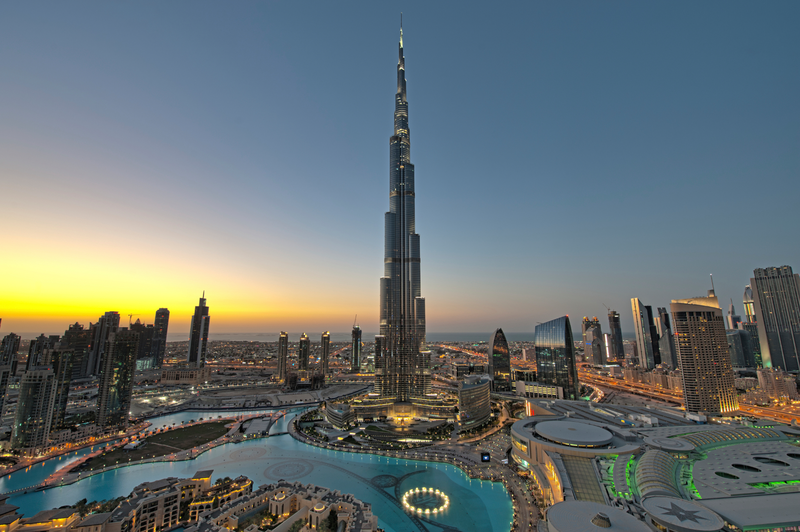
The tower stands at 828 metres. It has 163 floors. It contains offices, residences, a hotel, observation decks, and restaurants. When it opened on 4 January 2010, more than 1 million people attended the launch event. The fireworks display was the largest ever staged in the world at that point.
This was not a building opening. It was a coronation.
And for a while, it worked exactly as intended. The Burj Khalifa became the most photographed building on the planet. The observation deck was booking out months in advance. The Armani Hotel inside the tower was pulling some of the wealthiest travellers in the world. The residential floors—officially known as Burj Khalifa Residences—were selling at prices that made London and New York developers nervous.
But here is the thing about symbols: they need a story behind them to stay powerful. And the story behind the Burj Khalifa has been getting harder to tell.
Part Two: The First Crack
The first crack appeared before the building even opened.
That 2009 bailout was not a footnote. It was a warning. Dubai had borrowed massively to fund its expansion, and when the global financial crisis hit, the cracks in the model became visible almost overnight. Abu Dhabi stepped in with a $25 billion lifeline.
The name change on the building was not a tribute. It was a receipt. Dubai owed a debt, and the rename was part of how that debt was acknowledged.
But the real estate market bounced back. Investors returned. The tower filled up again, and for most of the 2010s, the Burj Khalifa maintained its status as the ultimate address in one of the world’s fastest-growing cities.
So what happened next? Because something clearly did.
Part Three: Three Buildings, Three Problems
To understand the current situation, you have to understand how the Burj Khalifa is actually divided. The building has three distinct components: commercial office space, residential units, and hospitality/observation deck operations. Each tells a different part of the same story.
The Office Space: Prestige Without Practicality
At its peak, the commercial floors of the Burj Khalifa attracted major multinational companies who wanted a prestigious address in the Middle East. The rent was eye-watering by any standard. But for the right kind of company, being in the world’s tallest tower was a marketing decision as much as a business one.
The problem is that the definition of “the right kind of company” has changed dramatically over the last decade.
Dubai built so much office space so fast that supply massively outpaced demand. Not just in the Burj Khalifa—across the entire city. By the mid-2010s, Dubai had one of the highest commercial vacancy rates of any major global business hub. And the Burj Khalifa, despite its iconic status, was not immune.
Companies discovered that being in the tallest tower in the world looked impressive in a press release but came with premium costs that simply did not justify themselves when cheaper, newer, more practical alternatives were available just twenty minutes away in Business Bay or DIFC.
By the early 2020s, independent reports and real estate analysts were estimating commercial occupancy in the Burj Khalifa at somewhere between 50 and 60%. In a city with a $40 billion tourism and hospitality sector, the world’s most famous building was sitting half-empty during business hours.
The Residences: A Tale of Two Buyers
The residential story is where it gets even more complicated.
The Burj Khalifa residences were marketed from the beginning as the most exclusive address in Dubai. The apartments range from studio units to massive penthouses. When they first launched, demand was extraordinary. Buyers came from Europe, Russia, India, and East Asia. For a certain kind of wealthy global citizen in the 2000s, owning a unit in the Burj Khalifa was the equivalent of owning a piece of history.
The prices reflected that. And then they kept rising. And then they kept rising some more.
What happened to demand? It split.
On one side, the ultra-wealthy—the buyers who could genuinely afford the tower’s top-tier units—increasingly found alternatives that offered more privacy, more space, and more lifestyle amenities for similar or lower prices. Palm Jumeirah villas. Private compounds in Emirates Hills. New ultra-luxury developments in Dubai Hills. The Burj Khalifa offered prestige, but prestige alone, it turns out, does not fill a building.
On the other side, the aspirational buyers—professionals and entrepreneurs who stretched their finances to get a foothold in the tower—were now feeling the full weight of Dubai’s rising cost of living. Service charges. Maintenance fees. Community charges. On top of some of the highest residential rents in the city.
The math was getting harder and harder to justify, especially as other parts of Dubai were offering genuine luxury at a fraction of the price.
The result? A growing number of units sitting empty or cycling through short-term rental platforms. Not occupied. Not invested in. Just parked. Assets on a spreadsheet, not homes in a living city.
The Vertical Limbo
Here is a detail that almost nobody talks about, but which captures the situation perfectly.
The Burj Khalifa has a problem with its own vertical geography. The most desirable floors—the highest residential units, the penthouses—have always attracted a certain kind of buyer. The problem is that those buyers increasingly want something else: a full-service private residence, dedicated staff, a different kind of exclusivity.
A tower, even the world’s tallest, is still a tower. You share elevators. You share lobbies. You share the brand with hundreds of other units. For the ultra-wealthy—the segment that Dubai has been aggressively courting with its Golden Visa programme and ten-year residency visas—the Burj Khalifa represents a certain era. A flashy era. An era when height was the ultimate luxury.
That era is being replaced by something quieter. Something more curated. And the building cannot update its bones.
The floors in the middle of the tower—below the residential peak, above the hotel—sit in a kind of limbo. Too high to be practical offices for most companies. Too embedded in a mixed-use tower to attract the privacy-conscious ultra-wealthy. Too expensive for the cost-conscious professional class.
So they sit. Floor after floor. Some of them dark.
Part Four: The Tourism Mirage
The observation deck is still busy. The tourism angle still works because the Burj Khalifa remains one of the most visited landmarks on Earth. The selfie economy is real. Millions of people still pay to ride the elevators to the top and look out over a city that genuinely is extraordinary.
That part of the building generates revenue. It is not in crisis.
But observation decks do not make a city. And tourism, as Dubai is also discovering, is starting to shift.
International visitor numbers to Dubai have continued to grow on paper, but the profile of those visitors is changing. The high-spending tourist—the European or American visitor who would drop significant money on a week in the city—is becoming relatively rarer. What is growing is a different kind of visitor: budget travellers, stopover tourists, regional visitors from markets that, while large in volume, do not carry the same average spend.
Dubai’s airports are busier than ever. Dubai’s luxury hotel sector is a different story.
The Armani Hotel inside the Burj Khalifa—one of the world’s most prestigious hotel addresses—has faced its own pressures. Occupancy rates for ultra-luxury hotels across Dubai dropped noticeably between 2022 and 2024 as global travel patterns reshuffled. Visitors who once would have defaulted to Dubai as a luxury destination began reconsidering other cities:
Riyadh, which is building aggressively.
Abu Dhabi, which has expanded its cultural and entertainment offerings.
Even Doha, freshly powered by World Cup infrastructure and a more curated approach to tourism.
Dubai used to have no real regional competition for the luxury tourist dollar. That is no longer true. And the Burj Khalifa, as the face of Dubai’s luxury proposition, reflects every shift in that market.
Part Five: The Cost-of-Living Reckoning
Now, here is where this story connects to something much bigger. Because the Burj Khalifa is not just a building. It is a mirror.
What you see in the Burj Khalifa today, you see across Dubai’s premium real estate sector. A city that built for a version of the future that has not arrived in the way it was supposed to. A city that attracted the world with one set of promises—low taxes, high glamour, no limits—and is now discovering that those promises come with conditions. Conditions that are getting harder to meet.
Dubai’s cost of living has risen sharply over the last five years. The city consistently ranks among the ten most expensive in the world for expatriates. Rents across the city increased by more than 20% in some areas in a single year. Inflation in food, utilities, and services has eaten into the financial cushion that used to make Dubai attractive to middle- and upper-middle-class expats.
The calculation that used to read “lower taxes = higher savings” is now being revised by thousands of people who moved here and are finding the numbers no longer add up.
And when people leave—when the expats leave, when the businesses consolidate, when the tenants do not renew—the buildings feel it first. The Burj Khalifa feels it.
Part Six: The New Competition
Dubai used to have no real regional competition for the luxury tourist dollar. That is no longer true.
Riyadh is building aggressively, with giga-projects designed to pull the same global elite that Dubai once had to itself.
Abu Dhabi has expanded its cultural and entertainment offerings, from the Louvre to the upcoming Guggenheim, creating a more curated alternative to Dubai’s spectacle-driven model.
Doha, freshly powered by World Cup infrastructure, offers a quieter, more contained luxury experience that appeals to travellers who found Dubai overwhelming.
The Burj Khalifa, as the face of Dubai’s luxury proposition, reflects every shift in that market. When the competition steals the high-end traveller, the building’s occupancy feels it.
Part Seven: What the Empty Floors Mean
The story of the Burj Khalifa is really the story of a very specific economic bet. The bet was: build something so extreme, so unprecedented, so spectacular that the world has no choice but to pay attention.
And for a time, that bet paid off magnificently. The tower worked. It made Dubai famous in a way that no amount of advertising could have achieved. It attracted investment. It attracted people. It changed the geography of global ambition.
But spectacle has a half-life.
The world’s tallest building in 2010 is still the world’s tallest building in 2025. But the emotional charge of that fact has changed. It has become familiar. It has become background.
The cities that are generating excitement now are not the ones with the tallest towers. They are the ones with the most interesting ideas, the most livable infrastructure, the most coherent vision of what daily life can feel like.
Dubai built a monument. What it is still figuring out is how to build a city that people want to actually live in long-term—not just visit, not just park money in, but genuinely inhabit as a home.
The Burj Khalifa half-empty is not a symbol of failure. It is something more nuanced and, in some ways, more interesting. It is a symbol of transition.
Part Eight: The Crossroads
Dubai is at a crossroads between what it was designed to be—a city of spectacle, of superlatives, of tallest and biggest and most expensive—and what it needs to become to survive the next thirty years: a city with livable costs, a city with economic depth beyond construction and tourism, a city that can retain people not because there is no tax, but because there is genuine quality of life.
The Burj Khalifa’s empty floors are waiting for that city to arrive.
Whether Dubai gets there in time is the real question. Because right now, for the first time in the tower’s short history, the building that was supposed to prove that anything is possible is proving something slightly different: that even the most extraordinary things need substance beneath the spectacle to stay standing.
Not just in steel and concrete. But in the economy, the culture, and the daily lives of the people who are supposed to call it home.