These Scary Videos Are Going Viral Right Now
These Scary Videos Are Going Viral Right Now
Late at night, when the rest of the house is quiet, the glow of a smartphone screen transforms from a mundane utility into a portal to an older, stranger world. Across TikTok, Reddit, and YouTube, millions of Americans are bypassing traditional media to consume a relentless stream of unedited, low-resolution terror: a pale, elongated figure unfolding from the shadows of a forest road; a home security camera capturing a toddler’s swing pumping violently in the dead calm of an empty park; a door slowly clicking open as a dark, faceless silhouette slips into an unsuspecting home. These viral snippets—often lasting only a few frantic seconds before cutting to black—are the ghost stories of the digital age, a decentralized folklore built on shaky cameras, ring-light reflections, and the deep, unsettling suspicion that our highly mapped, hyper-rational reality is beginning to fray at the edges.
The Architecture of Digital Uncanny
For the modern urban and suburban resident, the world has largely been stripped of its physical mysteries. Every street corner is logged on satellite maps, every neighborhood is illuminated by municipal grids, and the wilderness has been safely partitioned into state parks and vacation rentals. Yet, the runaway success of viral horror compilation channels reveals that our appetite for the unknown hasn’t vanished; it has simply migrated to the digital commons.
This phenomenon operates on a concept that video essayists and cultural critics call the “digital uncanny.” Unlike the highly produced jump-scares of Hollywood cinema, which announce their artificiality through crisp sound design and cinematic lighting, the new wave of internet dread thrives on ordinary, low-fidelity aesthetics. It utilizes the visual language of everyday life: the green tint of a baby monitor, the grainy resolution of a doorbell camera, or the erratic panning of a teenager’s smartphone during a midnight walk.
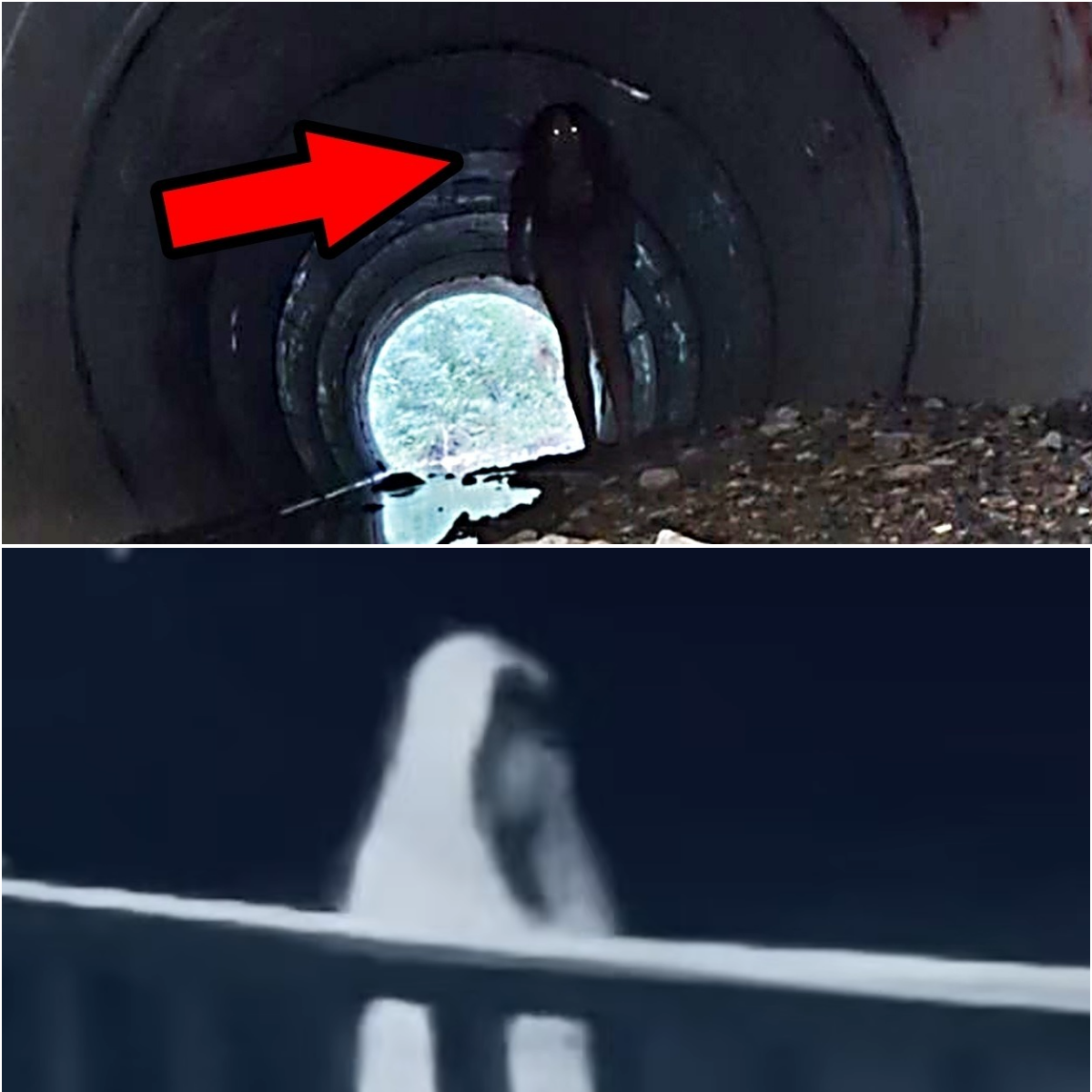
When a video opens with a mundane scene—a student staring at a textured ceiling, a motorist driving down a desolate stretch of road, or a dancer practicing a routine in her new apartment—the viewer’s guard is completely down. The terror is accidental, caught on the margins of a life that looks exactly like our own. When that student’s ceiling seems to manifest a pair of wide, unblinking eyes, or when the dancer’s door swings open to reveal a trespassing figure who vanishes before police arrive, the boundaries between the safe and the supernatural dissolve. The medium itself—the very technology we use to secure our homes and document our lives—becomes the vector for the haunting.
The Appalachian Gothic and the Threat of the “Not-Quite-Human”
Among the most pervasive subgenres of this digital folklore is the resurgence of regional horror, specifically centered around the Appalachian mountains. For generations, this densely forested, geologically ancient mountain range has bred its own isolationist myths. But in the era of short-form video, these legends have mutated into a viral survival guide for the wilderness.
The warnings shared across forums like Reddit and TikTok are specific, uniform, and deeply eerie: If you hear your name called from the woods, no you didn’t. If you hear an animal screaming like a woman, don’t look. Keep your curtains drawn after dark.
[Mundane Suburban Setting] ---> [Low-Fi Digital Capture (Ring/TikTok)] ---> [The Glitch / Anomaly]
               ^                                                                       |
               |                                                                       v
       [Viewer Comfort] <------------------------------------------------- [Primordial Dread]
The terror of these videos lies in the concept of the “glitch in nature”—the idea of an entity that mimics human behavior but gets the execution entirely wrong. Videos frequently capture pale, hairless humanoids crouching at the edges of headlights or scaling the roofs of remote cabins. Anglers and hikers film figures that move at impossible speeds on all fours, their limbs bending at unnatural angles.
To the internet generation, these creatures are rarely referred to by traditional folkloric terms; instead, they are labeled as “Skinwalkers” or “The Rake”—internet-native cryptids born from creepypasta forums and collective digital brainstorming. The popularity of these videos points to a profound discomfort with the wilderness. In a society that has paved over the natural world, the deep woods are no longer viewed merely as an ecosystem, but as a hostile, sentient entity that produces aberrations specifically designed to mock and prey upon human psychology.
The Palimpsest of the Suburbs
The horror does not remain confined to the deep woods, however. One of the most conceptually unsettling ideas floating through the viral ether is the concept of the environmental palimpsest. Historically, a palimpsest refers to an ancient manuscript where the original text was scraped off so the parchment could be reused, yet faint traces of the original writing remain visible underneath.
In modern architectural horror, this manifests as the discovery of hidden history beneath the manicured lawns of suburban America. Viral clips document homeowners pulling back old carpets to find trapdoors, or digging up back gardens only to discover forgotten, subterranean concrete bunkers complete with empty, rusted cages and deep, bricked-off shafts.
“There is a distinct, claustrophobic dread in realizing that your home—the ultimate symbol of personal safety and financial stability—is merely a thin, temporary crust built over a history you do not understand.”
When a camera descends into one of these hidden spaces, catching the echo of a dripping pipe or the silhouette of an unexplained object left behind decades ago, it taps into a systemic American anxiety. We live in a young country built rapidly over forgotten battlefields, displaced settlements, and industrial dumping grounds. The viral fascination with hidden rooms and subterranean voids is an acknowledgment of this architectural guilt. It is the fear that the past is never truly dead, and that the spaces we inhabit are haunted not by spirits, but by the physical remnants of whatever came before us.
Pareidolia and the Desperate Search for Meaning
Philosophically, this era of internet dread raises a fundamental question about human psychology in the digital age: Why are we so desperate to believe?
A significant portion of these viral phenomena can be explained by pareidolia—the evolutionary wiring of the human brain to detect faces and patterns in random data. For our ancestors, mistaking a shadow for a predator was a survival mechanism; mistaking a predator for a shadow was fatal. Today, that same evolutionary programming causes us to see ghostly countenances in the wood grain of a door, or a demonic face in the pixelated glare of a television screen.
Yet, when science offers these rational explanations, the digital community often rejects them. When a clip surfaces of an accordion slowly expanding and contracting on its own in an empty room, or a security camera shows a dog’s collar being violently jerked backward by an unseen force, the comment sections become battlegrounds. Skeptics point out fishing lines, digital artifacts, and clever editing tricks. But the videos continue to rack up millions of views, shared by users who want—with a near-religious fervor—the footage to be genuine.
This collective willingness to embrace the supernatural is not a sign of mass ignorance; rather, it is a psychological defense mechanism against a hyper-rationalized, hyper-monetized world. We live in an era where algorithmic transparency, data tracking, and scientific consensus have mapped out almost every aspect of human existence. The world has been disenchanted. By elevating a grainy video of a “ghost” or a “glitch in the matrix” to viral status, the internet community is engaged in a collective act of re-enchantment.
We watch these videos because the alternative is far more terrifying: a world completely devoid of mystery, where everything can be explained by a line of code, an engineering report, or a marketing metric. We want the shadows to be alive. We want the water to be deep. We watch the pales figures in the dark not because we hope they will hurt us, but because we desperately need to know that there is still something out there that defies our understanding, waiting just beyond the reach of our headlights.