Why Scientists Fear Opening the Tomb of Qin Shi Huang: A 2,000-Year-Old Mystery Filled With Deadly Secrets
Why Scientists Fear Opening the Tomb of Qin Shi Huang: A 2,000-Year-Old Mystery Filled With Deadly Secrets

Why has one of the greatest archaeological treasures in human history remained untouched for over two millennia? The tomb of Qin Shi Huang, the first emperor of a unified China, continues to be sealed, not because it is forgotten—but because it may be too dangerous to open. Despite decades of discovery around it, the emperor’s actual burial chamber remains one of the world’s most mysterious and feared archaeological sites.
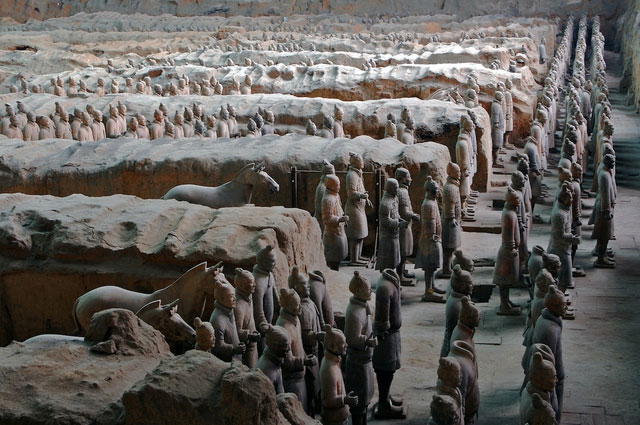
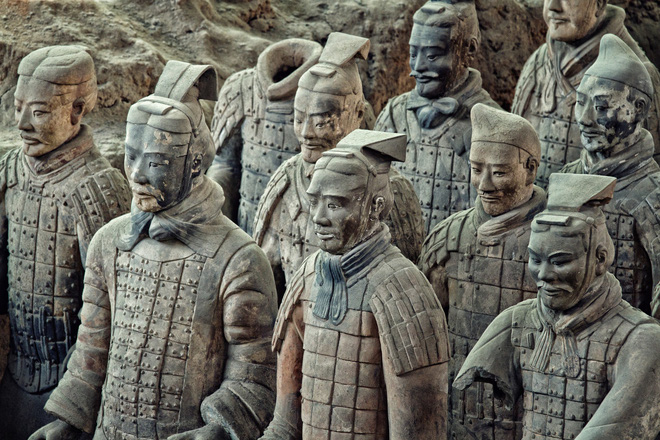
The story began in 1974, when farmers in China’s Shaanxi Province accidentally uncovered fragments of clay figures while digging a well. This discovery led to the world-famous Terracotta Army: thousands of life-sized warriors, horses, and attendants buried in vast pits to protect the emperor in the afterlife. These figures revealed only a fraction of a much larger complex that still lies beneath the ground.
While archaeologists have excavated much of the surrounding necropolis, the central tomb of Qin Shi Huang himself has never been opened. Experts remain cautious, warning that any attempt to enter the burial chamber could permanently damage fragile structures and destroy priceless historical evidence that has survived intact for more than 2,000 years.
One major concern is the risk of irreversible destruction. History offers a cautionary tale: the excavation of Troy in the 19th century by Heinrich Schliemann, which, due to rushed methods, ended up destroying significant layers of the very civilization he sought to uncover. Modern archaeologists fear repeating such irreversible mistakes in China’s most sensitive archaeological site.
To avoid this, scientists have proposed non-invasive technologies to explore the tomb’s interior without opening it. One promising method involves muons—subatomic particles from cosmic rays capable of passing through solid rock, effectively creating a kind of natural “X-ray” of the structure. However, such advanced techniques have not yet been fully implemented on the tomb.
Beyond preservation concerns, ancient records suggest something even more alarming: deadly traps inside the tomb. According to historical accounts by the historian Sima Qian, the burial chamber was engineered with crossbows and mechanical arrows designed to kill intruders. He also described a vast underground system of rivers made of liquid mercury, symbolizing China’s great waterways.
Modern science has added weight to these ancient claims. Studies conducted around the site have detected unusually high levels of mercury in the soil, supporting the idea that toxic mercury vapors may still be present. Researchers warn that even if mechanical traps have long decayed, the chemical danger alone could pose serious risks to anyone attempting entry.
Today, the tomb remains sealed, carefully guarded and untouched. Yet it is far from forgotten. For scientists and archaeologists, it represents both an irresistible historical treasure and a profound scientific challenge. One day, with advances in technology, humanity may finally unlock the secrets of Qin Shi Huang’s resting place—but for now, the emperor continues to sleep undisturbed beneath the earth.