Maria Voltorta’s Chilling Prophecy Is Unfolding?
In a cramped and dimly lit bedroom in the Italian town of Vireio, a woman lay motionless.
She had not walked in nearly a decade, her body broken by a random act of violence years prior.
But on Good Friday in 1943, something shifted in the heavy silence of that room.
Maria Vtor picked up a pen and without a single nap, a single reference book or a single preliminary draft, she began to write.
What she produced would eventually become one of the most controversial and scrutinized religious texts of the modern age.
Skeptics called it a feat of monumental imagination or a psychological anomaly.
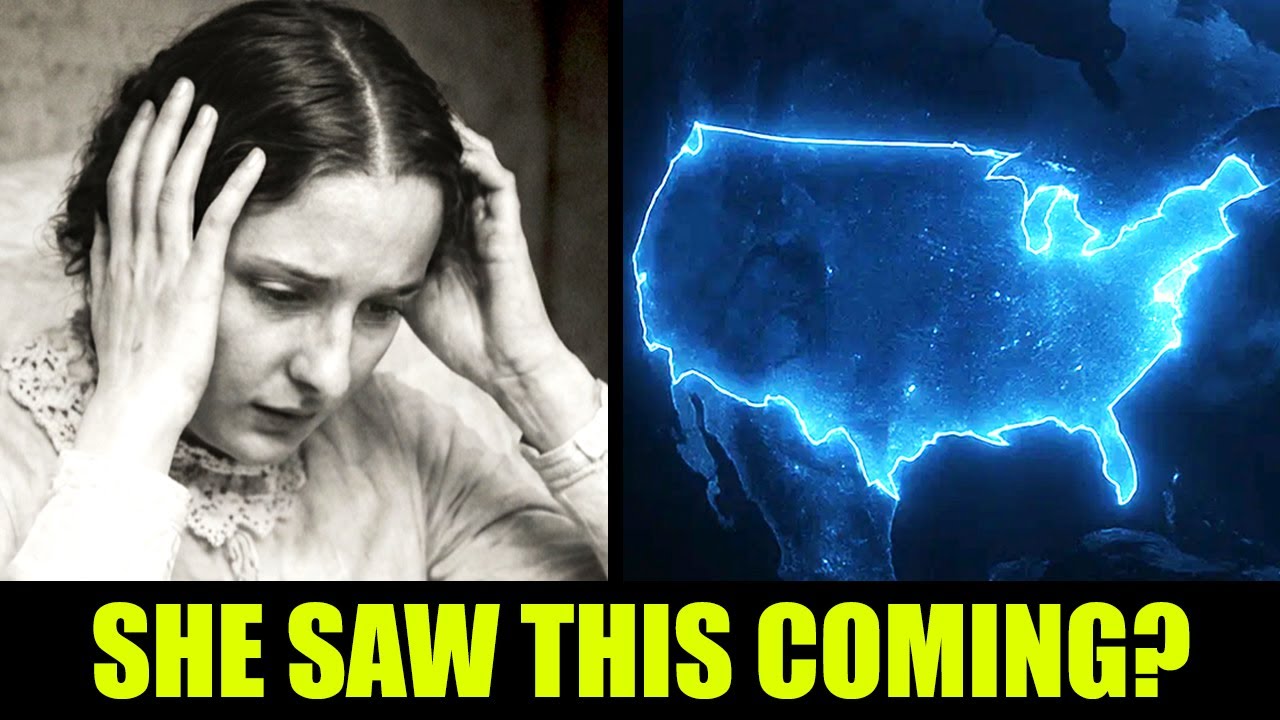
Yet, as the years passed, a strange pattern began to emerge.
Some researchers and readers began noticing details in her writing that they considered unusually precise.
She described ancient topography and celestial alignments in ways that later scholars would find intriguing.
But Maria’s work was not just a window into the past.
Hidden within those 15,000 pages were reflections on the future.
She wrote about periods of spiritual darkness, moral upheaval, and times of intense transition that some readers today interpret as relevant to our own era.
If you have ever heard of this extraordinary woman or are discovering her story for the first time, feel free to share your thoughts below.
It’s fascinating to see how many people are familiar with her life and writings.
To understand the weight of her prophecies, we first have to understand the woman who saw it all from a bed she could never leave.
Maria’s story does not begin with a miracle, but with a tragedy.
In 1920, while walking with her mother, a troubled young man struck Maria in the back with an iron bar.
The injury became the beginning of her long physical decline.
By 1934, she was permanently bedridden.
to the world.
She was a tragedy, a life cut short, a woman sidelined by history.
In reality, the isolation of that room became a kind of crucible.
It stripped away the noise of the world, leaving her mind a blank canvas for what was to come.
She was not a theologian.
She was not a scholar.
She often described herself simply as a pen.
And when she said a voice began speaking to her in the spring of 1943, she did not hesitate.
She wrote in notebooks while sitting up in bed, her handwriting steady and rapid.
According to those who studied her manuscripts, she rarely crossed out a word and did not rely on reference books while writing.
It was, as she described it, like watching a film unfold before her eyes and recording what she saw.
The sheer volume was staggering.
Millions of words reconstructing the life of Christ and the Virgin Mary in remarkable narrative detail.
For many readers, the scale of the work alone was extraordinary.
Yet, even in those early years of writing, the tone of her reflections began to shift toward themes of spiritual struggle and moral urgency.
While she was documenting scenes from the past, she also wrote about what she believed were insights regarding the future.
In her notebooks, she described what she called a long period of preparation, a century that would test faith, identity, and the moral direction of humanity.
Writing during the air raids of World War II, she reflected on conflict not only as a military reality, but as a deeper spiritual struggle unfolding within society.
She described a world that, in her view, would one day feel very different from the one she knew.
She wrote about a generation shaped by rapid technological advancement, yet at risk of losing a sense of interior depth and spiritual grounding.
She hinted at what she described as a specific sifting of the wheat from the chaff that in her understanding would reach its climax as the world approached the 2,000-year anniversary of the redemption.
Even then, as she lay paralyzed, she believed her work would be hidden, set aside, and eventually rediscovered by a generation she saw as standing at a critical moment in history.
She was known by some as a victim soul, but she also saw herself as a messenger carrying a warning she felt was meant for future readers.
She wrote about a generation that would face a great vacuum of spirit, a void that in her view could be filled by influences she described as precursors to something far more ancient and spiritually dangerous.
As we peel back the layers of her life, we find a woman who believed her suffering was a bridge.
A bridge intended to carry what she understood as truth from a world at war in 1943 to a world she associated symbolically with the mid twin 20s.
The world saw a paralyzed woman in a small Italian town.
But if you look closer at the ink on those pages, many readers see a woman holding a torch offering guidance toward a period that she believed would carry unusual spiritual weight for the future.
As the notebooks of Maria Voltora began to circulate outside her bedroom, the atmosphere in the Vatican shifted from curiosity to intense scrutiny.
This was a manuscript that contained more words than the entire Bible.
And it was being produced by a woman who had never stepped foot in a seminary.
The drama that followed was not just about a book.
It became a debate over how to interpret and handle writings that Maria Voltora claimed were significant for the spiritual life of the future church.
In 1948, a pivotal moment occurred when Pope Pius I 12th granted a private audience to three priests representing Maria Voltora.
After spending considerable time personally reading the volumes, Pope Pius I 12th reportedly expressed support for allowing the work to be published as it was, noting that those who read it could form their own understanding.
For her supporters, this was seen as a significant moment of encouragement from the highest level of the church.
However, discussions within the holy office continued, reflecting the complexity and sensitivity surrounding private revelations.
Some church officials expressed concern about how Maria Vtor’s detailed visions would be received and interpreted.
They questioned how a lay woman paralyzed and isolated could produce such an extensive narrative about the life of Christ.
In 1959 following the death of Pope Pius I 12th and during the pontificate of Pope John I 23rd.
The work was placed on the index of forbidden books which at the time was a disciplinary measure used for various theological and pastoral reasons.
This decision surprised many of her readers and limited the circulation of the manuscript for a period.
The official Vatican newspaper described the text critically, referring to it as pious fantasy, reflecting the caution with which the work was being approached.
While church authorities were evaluating and restricting the publication of the writings, Maria Vtor continued recording reflections in her private notebooks.
In these writings, she described what she understood as a coming spiritual winter within the church, a period she believed would involve confusion and internal struggle when faith would be tested and many believers might experience uncertainty.
She used symbolic language such as the smoke of Satan and a great apostasy to describe what she perceived as a widespread weakening of conviction and clarity.
She interpreted the restrictions placed on her work as part of a broader spiritual trial.
In her view, humanity was entering what she called a great vacuum, a period marked by moral ambiguity and shifting priorities.
She wrote that as future generations approached years, she symbolically connected to 2026, there could be a noticeable silence or hesitation around supernatural themes within public discourse.
She described the precursors in spiritual and metaphorical terms, presenting them as influences or errors that could lead people away from the need for a savior.
Despite the ban, the work did not disappear.
St.
Padre Peio, the well-known capacin frier and stigmatist, was among those who expressed appreciation for Maria Voltor’s writings.
He reportedly told some of his spiritual children that reading her work felt like drinking from a pure mountain stream.
When the index of forbidden books was abolished in 1966 during the pontificate of Pope Paul V 6th, the formal restrictions were no longer in place.
Though the earlier controversy continued to shape how the work was perceived, for many of her readers, this seemed to align with what Maria Volto herself believed would happen, that her writings would pass through periods of obscurity before being reconsidered by later generations.
As people reflect on her story today, some interpret the Vatican’s caution as part of the broader discernment process that often surrounds private revelations.
Questions have been raised about why the notebooks were restricted for a time and supporters suggest it may relate to the weighty themes she addressed.
Maria Voltor wrote about what she called a century of preparation that would culminate in a period of intense sifting.
She suggested that the years leading toward the middle of the 2020s could involve what she described symbolically as a global unmasking, a time when hidden motives and deeper truths would become more visible within society.
She wrote that by the time humanity approached years, she associated with 2026, what she termed the measure of iniquity would be nearing its limit, which she understood as a spiritual tipping point rather than a specific predictive event.
In her reflections, she described a world experiencing profound internal disorder, and she used symbolic language to suggest that social and moral instability could eventually have visible consequences.
For her supporters, the earlier restrictions on her writings are sometimes seen as part of the broader tension that often surrounds controversial spiritual texts.
They argue that the work was set aside not because it was proven false, but because it raised difficult theological and pastoral questions.
To understand why Maria Voltora continues to attract attention, many readers move beyond the controversy and focus on the historical and descriptive elements of her work.
If it were simply a devotional novel, critics argue there would likely be noticeable errors such as historical anacronisms or geographical inconsistencies.
Yet supporters maintain that her writings contain a level of descriptive detail that they consider unusual, which has fueled decades of discussion and research.
Consider the sheer scale of the information.
In her notebooks, she describes the climate, the flora, and the complex irrigation systems of ancient Palestine.
She names villages that, according to some researchers, were not widely documented in popular reference materials available in the 1940s.
One of the most frequently cited examples involves the ancient town of Corazin.
For centuries, scholars had a general idea of its location, but Maria Voltor described its layout, its black basalt rocks, and architectural features in notable detail.
Supporters point out that later excavations revealed similarities between her descriptions and the archaeological findings.
Over time, certain scholars and independent researchers began studying her work more closely.
A French physicist, Gene Francois Lava, spent more than 25 years analyzing her writings.
In his published research, he argued that many of her geographical and historical descriptions correspond with known data.
He examined her references to weather patterns, suggesting that her accounts of rainstorms and seasonal variations are consistent with historical climate studies of the Mediterranean region.
He also compared her mentions of rainfall frequency with modern meteorological records, concluding that the parallels were statistically significant in his view.
Another area often discussed by her supporters is the astronomical detail found in her texts.
In several passages, Maria Voltora describes the position of the stars and phases of the moon during events in the life of Christ.
Researchers such as Emilio Matrixiani and Liberato Dicaro have analyzed these descriptions using astronomical software.
In their studies, they reported correlations between her accounts and reconstructed celestial configurations for the years commonly associated with the crucifixion, including 30 Anodyini and 33 Anodini.
She also described what she called a lunar rainbow near Mount Herman.
And some researchers have suggested that such a phenomenon would require very specific atmospheric and astronomical conditions.
Some supporters argue that it would have been extremely difficult for a paralyzed woman in 1943 without access to advanced astronomical tools to independently calculate details such as the retrograde motion of Mars or the precise phase of the moon as seen from a specific location in Judia 20 centuries earlier.
For these readers, the perceived level of detail gives the work a sense of realism that goes beyond ordinary devotional writing.
Because of this, many who study her writings feel that the historical and astronomical correlations invite deeper reflection.
Maria Voltor herself claimed she was experiencing a continuous vision.
She described it as being present within the scene, sensing the heat of the sun and even the dust in the air.
As her work progressed, her reflections began to include themes that she understood as prophetic.
Speaking about the conclusion of an age and the spiritual condition of future generations, she wrote that these detailed portrayals of the past were meant in her view to strengthen the faith of people living in a time marked by intellectual confidence and spiritual uncertainty.
She spoke about an era in which humanity would achieve extraordinary scientific progress yet still experience a sense of inner emptiness.
She warned of what she described as a disruption of the natural order using symbolic language to suggest that moral and spiritual imbalance could have broader consequences.
This is where some readers see a connection to years she associated symbolically with 2026.
Rather than presenting a precise prediction, she described what she called a contagion of error, a period of confusion and moral testing.
For those who believe her historical descriptions demonstrate unusual detail, her reflections on the present era are often read with heightened interest.
Supporters suggest that if her accounts of ancient places such as Corazin show notable parallels with later discoveries, then her spiritual interpretations of modern times are also worth examining thoughtfully.
As the visions of the past concluded, Maria Voltotta’s notebooks began to take on a different tone.
It was no longer only the serene light of Galilee.
It was her reflection on what she understood as the shadow of the future.
She began to describe a period she called the era of the precursors.
According to what she believed she was receiving in dictation.
This was not a single event but a gradual unfolding of consequences.
She wrote that before any visible upheaval in the physical world.
There would first be an interior crisis within humanity.
She described what she called the great vacuum.
In her writings, this represented a psychological and spiritual condition rather than a specific historical event.
She envisioned a future which some readers associate with aspects of the modern world in which humanity would reach remarkable intellectual and technological advancement, yet struggle with a deep sense of inner emptiness.
She described people surrounding themselves with comforts, screens, and increasingly sophisticated machines while neglecting their interior lives.
In her symbolic language, she suggested that such a void could give rise to confusion and instability if left unressed.
Maria Voltor wrote about what she referred to as a pre- Antichrist era, using traditional Christian terminology to describe a period of spiritual tension.
She spoke of a generation that in her view might distance itself from its creator and she used metaphorical language to suggest that moral imbalance could be reflected in environmental disruption.
She described ecological imbalances and unusual weather patterns as symbols of internal discord.
To her events such as hurricanes or droughts carried spiritual meaning, representing the earth responding to the condition of humanity’s heart.
Another recurring theme in her 1940s writings is what she called the contagion of error.
She described a time when truth would become increasingly contested and subjective.
She envisioned a cultural climate in which widely accepted assumptions would be challenged and confusion would spread.
She warned that what she termed intellectual pride could prevent people from recognizing deeper spiritual questions.
In her view, people might interpret scientific, social, and moral changes purely through material explanations without considering spiritual dimensions.
She also wrote extensively about what she believed would be the role of the church during what she called the era of the precursors.
In her language, she spoke of a great apostasy, which she understood as a widespread weakening of faith.
Not necessarily because churches would disappear, but because conviction within them might fade.
She used the expression that many stars in the heavens would go out as a metaphor for spiritual leaders losing clarity, leading to confusion among believers.
In her symbolic framework, this internal struggle would mark the height of the period she described.
Why do some readers connect this to 2026? Because Maria Voltor wrote about what she termed a century of preparation that she believed began in the early 20th century and would lead into a period of intense purification.
She did not frame this as the end of the world, but as what she called the end of an age, a transitional phase rather than a final destruction.
She suggested that as humanity moved into the middle of the 2020s, there could be a greater unveiling of social and spiritual tensions that had been building for decades.
For many readers, her words function more as a call to reflection than as a fixed prediction.
She wrote that her experiences were meant to offer guidance to people living in times of uncertainty.
Her emphasis was not on fear but on preparation and interior strength.
She described what she called a small remnant meaning individuals who would remain faithful and grounded even during confusion.
In her view, years such as 2026 symbolized not catastrophe but a decisive moment of moral and spiritual clarity.
The shadows she described from her bed in Vireio reflected what she believed were the deeper struggles of humanity.
When readers today consider themes such as spiritual emptiness or global tension, some feel that her decades old notebooks resonate in new ways.
Others view them purely as symbolic religious literature.
Either way, her writings continue to invite discussion rather than serve as a literal forecast of current events.
As the spiritual vacuum Maria Volto described is interpreted by some readers as reaching its capacity, the visions in her notebooks take on a more symbolic and dramatic tone.
She began to speak of what she called the three-fold shaking.
This was her way of describing a profound transition into what she understood as a new era.
Rather than predicting a single catastrophic event, she presented it as a period of deep transformation affecting what she described as three pillars of human security.
The earth, the nations, and the soul.
In her writings, she suggested that the earth itself would appear restless as humanity approached years.
She symbolically associated with 2026.
She used vivid imagery to describe geological disturbances and environmental instability.
In her spiritual interpretation, she wrote that when humanity ignores what she called the voice of the spirit, it may instead be confronted with the louder realities of the natural world.
Her references to fire, water, and earth moving beyond familiar boundaries were presented in theological language, reflecting her belief that moral and spiritual imbalance could be mirrored in environmental tension.
She did not frame this as vengeance, but as consequence within a spiritual worldview.
The second shaking in her terminology involved the nations.
She described a period of political and financial uncertainty, using dramatic language to portray confusion and instability.
Her references to leaders speaking of peace while preparing for conflict reflect longstanding biblical imagery rather than specific modern predictions.
She also wrote about economic fragility and what she called deception within systems of power, though her descriptions were symbolic and theological in tone.
When she mentioned the possibility of new forms of global coordination arising during times of crisis, she framed it within her broader spiritual narrative about the human search for security.
She suggested that as humanity moved closer to years, she associated with 2026.
What she termed an unmasking would feel more complete.
In her symbolic framework, this represented increased clarity about moral and spiritual choices rather than a specific political event.
She wrote that what she described as the traditional powers of the West could experience a period of decline, not necessarily through external conflict, but through what she perceived as internal moral weakening.
In her symbolic language, she spoke of a coldness settling over the hearts of those in positions of authority, leading to impersonal systems where human beings risk being reduced to numbers.
She referred to this metaphorically as the reign of the precursors, a stage in her spiritual narrative that prepares the way for a future figure.
She described in apocalyptic imagery drawn from Christian tradition.
However, she placed particular emphasis on what she called the third shaking, the shaking of the soul.
In her writings, this referred to a widespread sense of anxiety and uncertainty that she believed would characterize certain periods of history.
She suggested that during times of visible social and political instability, many people might feel unmed or spiritually disoriented.
In her theological framework, she interpreted this as evidence of a weakened spiritual foundation rather than as a medical or psychological diagnosis.
Her references to diseases of the spirit were metaphorical expressions describing feelings of inner dread, confusion, or exhaustion.
She wrote that this shaking of the soul would confront individuals with deeper moral and spiritual questions.
When she referenced the middle of the 2020s, including 2026, she presented it symbolically as a decisive period of reflection rather than as a fixed apocalyptic deadline.
In her imagery, the narrow gate represented a moment of personal choice, an invitation for individuals to examine their convictions and values rather than eliminating all middle ground in a literal sense.
She framed it as a time when clarity of belief would become more important to those navigating uncertainty.
She suggested that certain years would serve in her symbolic framework to challenge what she described as the spiritual complacency of previous generations.
when some readers compare her writings to aspects of the modern world such as environmental instability, geopolitical tension, or rising discussions around mental and emotional well-being.
They sometimes feel that her three-fold shaking imagery resonates metaphorically with present realities.
Maria Voltor wrote these reflections from her bed in 1943, interpreting her era as part of what she called a long period of preparation.
In her spiritual understanding, history unfolds through moments of disruption that ultimately refine what is lasting and meaningful.
To understand why 2026 is sometimes highlighted by her readers, it is helpful to look at her concept of what she described as a 2,000year cycle.
Maria Voltarta presented history as unfolding in large symbolic epochs.
She described a first era from creation to the flood, a second from the flood to the birth of Christ, and a third era which she called the age of grace extending from the redemption onward based on traditional Christian dating.
The crucifixion is commonly associated with 33 anodini.
Applying her symbolic 2000-year framework to that date leads some interpreters to consider the early 2030s as spiritually significant within her narrative.
However, Maria Vtor described what she called a sifting period that in her view would precede any major spiritual transition.
She referred to this phase as the hour of the harvest.
Some readers associate the middle of the 2020s, including 2026, with the beginning of that reflective period.
Though her language was theological and symbolic rather than a precise chronological prediction, Maria Voltora described this period using the metaphor of a spiritual pressure cooker.
In her writings, she suggested that as humanity approached what she understood symbolically, as the 2,000-year mark of the sacrifice of Christ, moral and spiritual tensions would intensify.
She believed the 20th century marked the beginning of what she called a final century of preparation, a time for reflection and discernment.
When she referenced 2026, she framed it within her spiritual narrative, as a meaningful threshold rather than as a precise, externally verifiable turning point.
One of the more reflective themes she recorded involves what she called the great silence.
She described a period in which heaven might seem distant or quiet, interpreting this as a spiritual test of perseverance.
In her view, some people in the years she associated with the mid2020s might question faith more openly or view ancient prophecies as symbolic myths.
She presented this silence as a way of revealing the depth of individual conviction.
Those whose faith depended on visible signs might struggle while those grounded in interior belief would grow stronger.
She also wrote about what she described as a sign of the cross in the sky.
Rather than emphasizing a physical phenomenon, her description focused on an interior experience, a moment of personal clarity in which individuals would confront their own conscience.
When she referenced 2026 in this context, it appeared within her symbolic framework as a time of heightened introspection rather than a guaranteed global event.
In her imagery, the sifting was not imposed by force, but emerged from personal choices and moral awareness.
Maria Voltoa spoke strongly about 2026 within her theological narrative, presenting it as a year that symbolized greater contrast between light and shadow.
However, her language was metaphorical, describing spiritual clarity rather than a literal division of humanity into opposing camps.
The contrast she envisioned was primarily interior, referring to the sharpening of personal convictions rather than an external separation enforced by circumstance.
She wrote that in her view, waiting until years she associated with 2026 to begin spiritual reflection could make the process feel more overwhelming.
In her symbolic framework, she described a perceived acceleration of historical change using dramatic language to suggest that developments might feel compressed as if years of transformation were unfolding in much shorter spans of time.
She presented this sense of acceleration as one of the signs she connected to what she called the close of the age of grace.
When readers observe the rapid pace of technological and social change today, some interpret her reflections as resonating metaphorically with modern experience.
Within her theological narrative, she described 2026 as a threshold, symbolizing an intensified stage within her 2,000-year cycle concept.
She did not frame it as a fixed apocalyptic deadline, but as a moment of heightened spiritual significance in her worldview.
For her, this period was not meant to inspire fear, but awareness and personal awakening.
She used imagery of a closing door to represent the end of one era and the gradual emergence of another, which she described as leading toward renewal and peace.
In the seventh section of her notebooks, Maria Vtora introduced what she called the supreme pride.
This was her reflection on a future in which humanity might become excessively confident in its own intellectual and technological achievements.
She envisioned a world where technology could risk becoming more than a tool, potentially taking on symbolic importance that overshadows spiritual awareness.
In her interpretation, this would represent a cultural moment in which human ingenuity is celebrated.
Yet, interior spiritual perception may be diminished.
Maria Voltoter wrote that in her understanding, the modern era could elevate technology to a level of cultural importance that resembles devotion.
She described a society in which people might increasingly look to technological solutions for relief from suffering, sometimes prioritizing innovation over spiritual reflection.
In her symbolic language, she warned that an excessive reliance on devices and systems could contribute to a diminished sense of interior depth.
When she referenced years such as 2026, she framed them as part of a broader spiritual narrative in which digital life and physical life feel deeply interconnected, creating tension for those seeking balance.
She also reflected on what she perceived as the ethical challenges surrounding scientific progress.
In her terminology, she spoke about the manipulation of life and humanity’s desire to reshape biological limits.
She described this as a spiritual test rather than a scientific prediction, using theological imagery to express concern about pride and overconfidence.
When she wrote about humanity attempting to play God, she was drawing on long-standing religious language to emphasize humility.
Her reference to a shaking connected to 2026 appeared within this symbolic framework representing a confrontation between human ambition and moral responsibility.
She introduced what she called the reign of the machine.
This phrase reflected her concern that systems driven purely by logic or efficiency might overlook compassion and spiritual values.
She described a society increasingly measured and quantified where data and structure could overshadow personal connection.
Her use of imagery such as being tracked or judged was metaphorical, expressing anxiety about impersonal systems rather than predicting specific technological outcomes.
She framed this not as inevitable oppression, but as a caution about the potential loss of humanity within complex structures.
She wrote that in her view, technology that is misused or relied upon excessively could eventually expose its own limitations.
Rather than describing an external collapse, she suggested that an overdependence on artificial systems might leave people feeling a deeper hunger for authenticity and meaning.
She referred to what she called the great vacuum as a condition of spiritual emptiness that could arise in a culture shaped by screens and constant stimulation.
When she associated this theme with years such as 2026, she framed it symbolically as a peak moment of reflection within her spiritual narrative rather than as a fixed event on a calendar.
Maria Voltoa emphasized that progress itself was not something to fear.
She wrote that technological advancement could be beneficial when approached with discernment and humility.
In her imagery, she described a group of people who would learn to use the tools of their time responsibly while preserving an interior spiritual life.
When she spoke about 2026 as a battle, she was referring metaphorically to a struggle within human consciousness, a tension between distraction and depth rather than to a literal conflict between nations or systems.
As she developed these themes, she also described what she called a growing tension between humanity and the natural world.
In her theological worldview, she saw the earth as a living creation reflecting spiritual realities.
She used the phrase nature in revolt as symbolic language to describe environmental instability and unpredictability.
Rather than offering a scientific explanation, she interpreted unusual patterns in climate and nature as metaphors for what she believed to be moral and spiritual imbalance within humanity.
In her visions, she described what she called the great anomalies.
She wrote that in years she associated symbolically with the middle of the 2020s.
Natural patterns might appear increasingly unstable.
Using poetic imagery, she spoke of heat during seasons of cold and frost during times traditionally linked with harvest.
She referred to the unreliability of the soil as a metaphor for broader instability in human systems.
Rather than offering scientific forecasts, she interpreted environmental unpredictability through a spiritual lens, describing it as creation reflecting moral and spiritual imbalance.
She also wrote about what she called the voice of the sea, using imagery of rising waters and coastal change to symbolize vulnerability and transition.
In addition to earthly imagery, she described signs in the sun and the moon as part of a celestial symbolism connected to years she associated with 2026.
When she spoke of the sun’s restlessness, she was using theological language to describe heightened natural activity, interpreting such imagery as spiritually meaningful rather than as a technical astronomical prediction.
One of the most symbolic themes she described in relation to 2026 was the obscuring of the light.
She portrayed a time when the sky might appear unfamiliar or dim, not necessarily as a literal violation of physical laws, but as a metaphor for spiritual uncertainty.
In her framework, this period would challenge individuals interiorly.
Those grounded in faith would interpret it as a prelude to renewal while others might experience confusion or fear.
Her emphasis was on interior transformation rather than external catastrophe.
Maria Vtora also wrote that events with spiritual meaning are often interpreted through material explanations.
In her language, she referred to what she called the supreme pride of human reasoning, suggesting that people might rely exclusively on scientific analysis without considering spiritual symbolism.
However, she did not reject science itself.
Rather, she framed the tension as one between purely material interpretation and theological meaning.
When she described 2026 as significant, she presented it within her spiritual narrative as a moment of heightened awareness rather than as a guaranteed global supernatural spectacle.
She encouraged her readers to observe the natural world with attentiveness.
She wrote that in her understanding, nature can reflect deeper spiritual realities.
When she described a hush falling over the animal kingdom before a great shift, she was using poetic imagery rather than issuing a scientific prediction.
For Maria Voltora, what she called the revolt of nature symbolized a wake-up call, an invitation to spiritual reflection before what she referred to as the sifting.
Some readers today draw parallels between her symbolic language and contemporary environmental concerns, while others interpret her descriptions purely as devotional metaphor.
As years she associated with 2026 drew closer within her narrative framework, her focus moved from external imagery to the interior life of the human soul.
She described what she called the great sifting not as an externally imposed judgment but as an inner unveiling.
In her writings, she spoke about a future moment of heightened conscience, a time when individuals would confront their own choices with greater clarity.
This was presented as a spiritual awakening rather than a guaranteed global spectacle.
She explained that the purpose of the sifting in her theological understanding was to restore moral clarity in a world she believed had grown confused about good and evil.
When she referenced 2026, she framed it symbolically as part of this interior process.
Her use of phrases such as divine mercy and surgical strike on the conscience reflected dramatic spiritual imagery rather than literal events.
She described contrasting reactions.
Some experiencing peace and renewal, others experiencing discomfort or conviction, but always within the context of personal spiritual encounter rather than imposed catastrophe.
One of the most discussed and debated aspects of Maria Voltor’s writings is her reference to what is commonly known in Catholic tradition as the three days of darkness.
While similar themes appear in other private revelations, Maria’s descriptions focused strongly on interior transformation.
Rather than emphasizing only a physical darkness, she portrayed a period in which the exterior world would seem to fade in importance so that individuals would be drawn inward to examine their own conscience.
When she referenced years such as 2026, she framed this not as a guaranteed literal blackout, but as a symbolic culmination of what she called the sifting.
In her imagery, the smoke of error being blown away represented clarity emerging from confusion.
She wrote that during such a period, influences she described as the precursors would lose their perceived dominance.
Her references to machines failing and screens going dark were expressed in metaphorical language, emphasizing the limits of material reliance rather than predicting a technological collapse.
In her symbolism, light was represented by the blessed candle of a pure heart and the interior flame of faith.
She clarified that this was not the end of the world, but what she described as the death of the old self, a spiritual renewal rather than a physical annihilation.
Maria Voltora compared the sifting associated with 2026 to a refiner’s fire, drawing on biblical imagery to describe purification.
In her narrative, this process removes what is superficial while preserving what is authentic.
She envisioned a renewed society emerging from such an interior transformation.
Her references to the easing of what she called the great anxiety was symbolic expressions of restored clarity and purpose rather than medical or sociological predictions.
The remnant she mentioned referred to individuals committed to spiritual depth, not to a political or institutional movement.
When she advised readers, “Do not look out the window,” she was speaking metaphorically.
She meant that during times of upheaval or uncertainty, attention should remain focused on inner stability rather than external spectacle.
Her caution against relying solely on news or prevailing theories reflected her emphasis on interior discernment, not a rejection of information or reason.
In her view, those rooted in prayer and reflection would navigate uncertainty with greater peace.
In her writings, Maria Voltora described the sifting as a narrow gate leading toward what she called an era of peace.
In her spiritual understanding, humanity could not enter a renewed age while holding on to what she saw as pride, greed, or spiritual emptiness.
Rather than predicting visible collapse, she used imagery of purification to describe inner transformation.
When some readers look at contemporary tensions or uncertainty, they sometimes interpret her language as resonant with current experience.
Within her narrative, this marked the close of what she termed the century of preparation, symbolizing transition rather than a literal countdown toward a fixed global event.
After what she described as the fire of the sifting and the silence of darkness, her notebooks shift toward hope.
In her later writings, the tone moves from warning to renewal.
She referred to this future period as the era of peace, portraying it as a spiritual springtime in which humanity lives with greater balance.
Some view the historical and astronomical correspondences discussed by her supporters as intriguing research questions.
Others approach her work as devotional literature rich in symbolism.
Whether one sees her as a mystic voice for a particular moment in history or as a writer shaped by her time, the central theme remains interior renewal.
For Maria Voltora, years such as 2026 symbolize transition and reflection rather than something to fear.
Her notebooks, once controversial, are now available for study and discussion.
She invited readers not to panic about the future, but to cultivate steadiness, humility, and hope.
In her language, darkness was never permanent.
It was a passage toward greater clarity.