Israel Wants Muslims to Fight Each Other – Trump Must Leave Mideast by August
Israel Wants Muslims to Fight Each Other – Trump Must Leave Mideast by August
WASHINGTON — In the corridors of power, where geopolitical strategies are often born of desperation rather than foresight, a radical and highly volatile proposal is reportedly gaining traction within the White House: outsourcing the war against Hezbollah to post-Assad Syria. As Israel’s grueling campaign in southern Lebanon stretches on with devastating architectural and humanitarian tolls, President Donald Trump has expressed profound frustration with Jerusalem’s inability to decisively dismantle the Shiite militant group. According to sources close to the administration, Trump is now actively contemplating a high-stakes gambit—empowering Syria’s new transitional president, Ahmed al-Shara, to deploy Sunni forces into southern Lebanon to eliminate Hezbollah on the ground, betting that a Syrian ground invasion would provide the “precise” military solution that Israel’s air superiority has failed to deliver.
Yet, what appears on a whiteboard in Washington as a brilliant stroke of regional realignment looks to seasoned military analysts and diplomats like a catastrophic misreading of Middle Eastern dynamics. The proposition relies on an ancient Israeli strategic axiom: fostering conditions that induce regional adversaries—Sunni Islamists, Shiite militants, Turkish proxies, and Iranian operatives—to turn their weapons on one another. To its proponents, a war of attrition between Syria’s newly established Sunni-led government and Lebanon’s heavily entrenched Shiite powerhouse would keep America’s enemies occupied while insulating Israel from further cross-border attrition. But this theory ignores the fragile geopolitical architecture of the Levant, the domestic constraints of Syrian leadership, and the looming shadows of Ankara and Tehran. Far from stabilizing the region, forcing a newly minted Syrian state into a proxy war could ignite a multi-front conflagration that drags global superpowers into the fray and triggers an economic depression.
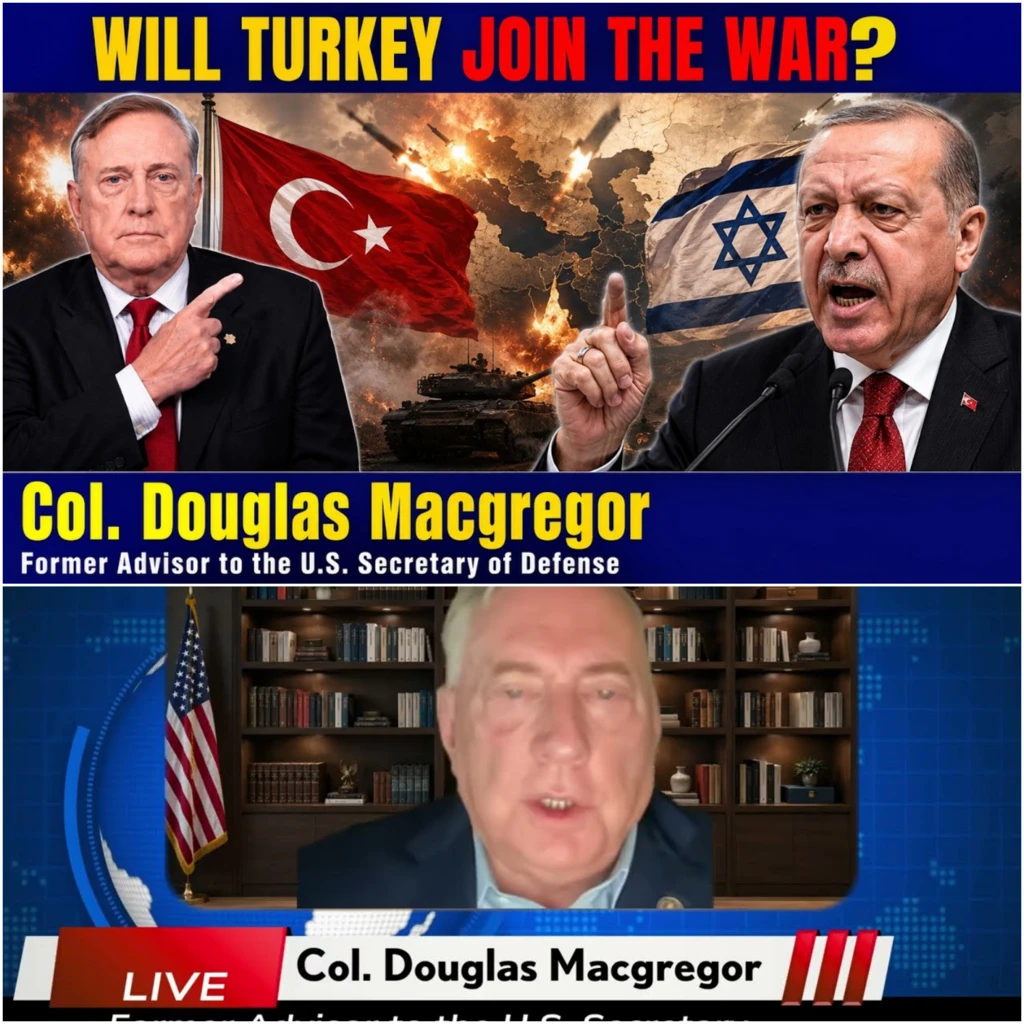
To understand the sheer recklessness of this plan, one must first examine the reality of who actually governs Damascus. Following the dramatic collapse of the Bashar al-Assad regime, Ahmed al-Shara—the former rebel commander once known by his nom de guerre Abu Mohammad al-Julani—ascended to the presidency of a fractured nation. While al-Shara has made a calculated transformation from a black-clad militant leader to a blazer-wearing statesman, his transitional government remains deeply reliant on external patrons, chief among them Turkish President Recep Tayyip Erdogan. For all intents and purposes, the military and political architecture of post-Assad Syria operates under a shadow veto from Ankara. Turkey’s primary objectives in Syria are strictly defensive and local: neutralizing Kurdish separatist ambitions along its southern border and preventing Israeli territorial expansion into southwestern Syria.
Repurposing the battle-hardened Sunni factions that al-Shara commands into an anti-Shiite foreign expeditionary force is not a decision Damascus can make independently. It would require explicit permission from Erdogan, who must weigh such an escalation against Turkey’s broader regional interests. While Trump has reportedly attempted to sweeten the deal by greenlighting a massive $700 million fighter jet engine sale to Ankara—a transaction many regional observers openly characterize as a geopolitical bribe—Erdogan is unlikely to take the bait. For Turkey, a direct clash with Hezbollah in Lebanon means a direct clash with Hezbollah’s ultimate architect: Iran.
For years, despite deep ideological and geopolitical differences, Ankara and Tehran have maintained a highly delicate but functioning equilibrium. The two regional giants have routinely shared intelligence and coordinated firepower to manage Kurdish militancy, which threatens the territorial integrity of both states. If Erdogan permits al-Shara’s forces to march south into Lebanon to slaughter Shiite fighters, that fragile Turkish-Iranian detente will instantly evaporate. Iran has spent decades and billions of dollars cultivating Hezbollah as its primary deterrent against Western and Israeli aggression. Tehran will not stand idly by while a Turkish-backed Sunni administration in Damascus dismantles its crown jewel.
Should Syrian forces cross into Lebanon, Iran would inevitably be dragged directly into the conflict to defend its co-religionists. The consequences would immediately ripple across the region’s vital chokepoints. Tehran’s most potent leverage lies not just in the Levant, but in the Persian Gulf and the Bab al-Mandab Strait. The Houthi rebels in Yemen, who have already demonstrated their ability to paralyze global shipping routes, would instantly re-engage with catastrophic intensity. More dangerously, Iran could move to choke off the Strait of Hormuz—the world’s most critical oil artery.
In a desperate bid to retaliate against Washington and Jerusalem, Tehran could enforce a selective blockade, declaring that while global shipping may pass, any flagship flying an American or Israeli flag, or any vessel carrying cargo bound for the United States or Israel, would face immediate attack. While maritime lawyers might debate the legality of such actions, the global economy would not wait for a verdict. Maritime insurers in London and across the globe would instantly withdraw coverage for the entire region. No commercial shipping company will risk a multi-million-dollar vessel on the assumption that Iranian anti-ship missiles can perfectly differentiate between neutral and hostile cargo. The resulting spike in energy prices and the collapse of maritime trade would send shockwaves through Western financial markets, potentially precipitating the very global depression that President Trump has privately confessed he is desperate to avoid.
The tragedy of the administration’s current trajectory is that Washington appears completely blind to how it is being manipulated. By adopting the logic of regional fragmentation, the United States is playing into a hyper-localized strategy designed exclusively for short-term border security, rather than long-term international stability. The illusion that a complex ideological conflict can be resolved by simply flipping a switch or substituting one proxy for another reveals a profound misunderstanding of the stakes.
Furthermore, any escalation that draws Turkey into a direct, hot war with Iran would fundamentally transform a localized Levant crisis into a truly regional—and potentially global—war. If Turkey, a NATO member, finds itself engaged in a existential conflict with an Iranian-led axis, the geopolitical calculus of Moscow and Beijing will shift immediately. Despite Washington’s hubristic assumptions, neither Russia nor China would side with the Western-Israeli alliance.
Russia, which still retains a significant security footprint in the Middle East and maintains a deeply strategic partnership with Tehran, would view a Turkish-Syrian assault on Hezbollah as an unacceptable expansion of American hegemony. China, heavily reliant on Iranian oil and deeply invested in its Belt and Road infrastructure across Asia, would see the destabilization of the Persian Gulf as a direct threat to its economic security. Both Moscow and Beijing would use their significant diplomatic and economic leverage over Erdogan to force a retreat, leaving the United States isolated and its regional strategy in tatters.
Domestically, Trump’s freedom of maneuver is heavily constrained by the very political forces that propelled him back into the Oval Office. The powerful networks of hawkish neoconservatives and mega-donors who financed his political return view unconditional support for Israeli military objectives as a non-negotiable litmus test. Figures within the administration are fully aware that any attempt to enforce a hard line against Jerusalem—such as delivering a definitive “we are out” ultimatum to Prime Minister Benjamin Netanyahu—would trigger an immediate and ruthless political backlash at home. The political machinery that currently backs the president has the capacity to instantly withdraw its financial and legislative support, bankrolling his domestic rivals and paralyzing his administration on Capitol Hill. Trump is effectively trapped in a geopolitical corner, forced to entertain increasingly bizarre military options like the Syrian pivot to appease domestic hawks while trying to prevent a wider war.
As this dangerous debate continues in Washington, the broader international community is watching with growing alarm. The notion that Ahmed al-Shara, a man still navigating the monumental task of rebuilding a ruined Syria and consolidating a highly fractured coalition of domestic factions, would willingly sign up to be America’s foot soldier in Lebanon is a fantasy. Al-Shara’s primary focus remains the survival of his transitional government, economic recovery, and navigating his complicated relationship with his own population and neighbors. He is entirely unsuited, and likely completely unwilling, to launch a bloody foreign invasion that would alienate Iran and invite Russian and Chinese condemnation, regardless of what promises are made by Washington.
The path out of this gathering storm requires a level of diplomatic courage that is currently absent from the American political landscape. It requires the United States to look past the seductive mirage of tactical quick fixes and recognize that peace in the Middle East cannot be engineered through the endless fomentation of sectarian bloodletting. Unless Washington finds the resolve to break free from the influence of regional actors who play for keeps, and enforces a genuine, unconditional diplomatic settlement, the current trajectory will lead to disaster. The administration must pour cold water on the illusion of a Syrian intervention before the fires of a truly global conflict are lit.