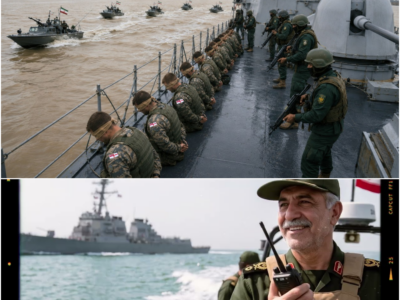
Iran Demands U.S. Exit From Hormuz, Warns It Will Strike Israel With Nuclear Weapons?
Iran Demands U.S. Exit From Hormuz, Warns It Will Strike Israel With Nuclear Weapons?
The clock has suddenly become the most dangerous variable in American foreign policy. As the initial euphoria surrounding the 60-day U.S.–Iran memorandum of understanding gives way to the grueling reality of technical negotiations, a stark mathematical trap has dawned on planners in Washington and Jerusalem alike. With the administration rapidly approaching the late-summer midterms and the inevitable paralysis of the ensuing campaign cycle, the window for executing a permanent strategic pivot in West Asia is closing. It is within this highly compressed timeline that Vice President JD Vance has made a calculated, high-profile entry to the media forefront—a maneuver that signaling peers recognize not merely as routine policy defense, but as the quiet opening salvo of the 2028 presidential campaign.
In a flurry of recent media appearances, Vance has begun artfully positioning himself as the pragmatic custodian of a post-war American strategy. By publicly claiming that the United States holds “all the cards” and wins “either way” in the ongoing negotiations, Vance is attempting to achieve what his principal has so far failed to do: reframe a chaotic, emergency-driven de-escalation as a calculated triumph of American leverage. Yet, behind this veneer of confidence lies a sophisticated domestic calculations. Backed by an aggressive network of Silicon Valley tech-populists and techno-feudalist financiers, Vance is actively constructing an independent political runway. His sponsors look past the immediate horizon, recognizing that the current administration is rapidly running out of time to either cleanly resolve or decisively resume a military campaign in the Persian Gulf.
This ticking clock has fundamentally altered the strategic calculus for Israel. Israeli military planners operate under the agonizing realization that if the current U.S.–Iran diplomatic off-ramp hardens into a permanent framework, the opportunity to draw Washington back into a decisive kinetic confrontation to dismantle Iran’s regional architecture will evaporate entirely. If the administration suffers significant setbacks in the midterms, it will face a domestic impeachment minefield and permanent legislative gridlock, rendering it a lame duck incapable of sustaining a massive foreign war. For Jerusalem, a ticking clock means a closing window of absolute security guarantees.
Compounding this desperation is the stark reality of the diplomatic table itself, where Iranian negotiators are proving utterly unyielding. Operating with the strategic depth provided by full Russian and Chinese diplomatic backing, Tehran has reportedly laid out a rigid, fourteen-point checklist for a final United Nations Security Council resolution. The Iranian demands—ranging from permanent, ironclad sanctions relief and the unfreezing of billions in assets to the ultimate withdrawal of American forces from West Asian bases—are concessions that no American president could conventionally accept without signaling a historic imperial retreat. Yet, Washington’s capacity to reject these terms through a return to open warfare is severely constrained. Decades of overextension have left domestic conventional stockpiles depleted, lacking the immediate tactical missiles, logistical depth, and regional consensus required to wage a multi-front war against an adversary that maintains its finger on a regional trigger.
In this gridlocked theater, the 60-day memorandum of understanding has functioned less as a comprehensive peace plan and more as an emergency logistical shelter for the White House. The deal was meticulously engineered by Pakistani intermediaries, chief among them Field Marshal Asim Munir, who successfully presented the framework to the Oval Office as the only viable off-ramp to avert an immediate global catastrophe. Pakistani diplomats, operating with the explicit oversight and backing of Beijing, utilized their unique channels across the GCC petro-monarchies and Tehran to construct a temporary truce. However, even the chief architects recognize the fragility of the structure; Chinese foreign ministry officials have already warned that while the initial interim agreement has been achieved, the secondary round of deep, structural negotiations will be exponentially more difficult.
The ultimate driver of this sudden diplomatic urgency remains hidden from standard financial headlines, locked within a highly sensitive risk assessment that landed on the president’s desk in mid-June. The report detailed an existential 60-day countdown for the American economy: if the blockade of the Strait of Hormuz remained total and the federal government continued its aggressive drawdowns of the Strategic Petroleum Reserve to suppress $6.00-a-gallon domestic fuel prices, the reserve would hit an absolute operational floor by mid-August. At that point, the global market would instantly suffer a deficit of millions of barrels of oil per day, triggering an immediate systemic implosion of the Western financial architecture at the height of summer.
Faced with a choice between an economic collapse that would vaporize the domestic economy or forcing an unpopular diplomatic detente, the administration chose survival. While hawkish factions argued that the threat of Iranian regional strikes should be met with force, the cold reality of the numbers proved completely decoupled from ideological loyalty. The memorandum of understanding was signed not out of a sudden shift in geopolitical alignment, but out of a desperate need to turn the global oil spigot back on before the bottom of America’s emergency barrel was reached. As Vance systematically distances himself from the old guard’s foreign policy orthodoxy to map out his path to 2028, he inherits a landscape where the illusion of endless American leverage has finally been spent, leaving the empire to negotiate from a position of stark, unvarnished necessity.