This is what happens when you steal someone’s life…
This is what happens when you steal someone’s life…
History is often written by the survivors, but occasionally, the most compelling narratives belong to those who vanished into thin air, leaving behind an empty space that reality rushed to fill in the most unexpected ways. In the dense, socially stratified villages of sixteenth-century France and the brutal, ice-locked expanse of the twentieth-century Alaskan backcountry, two men found themselves entirely isolated by circumstance, facing what appeared to be total erasure. Yet, the choices they made in their final moments of desperation did not merely alter their own fates; they triggered a series of events that exposed the profound fragility of human identity, family bonds, and the razor-thin margin between survival and complete oblivion.
Part I: The Ghost of Artigat
To understand the sheer, claustrophobic isolation that gripped Martin Guerre in the late summer of 1557, one must first understand the rigid tapestry of the rural French society he had abandoned. Born in the Basque country but raised in the small, tightly knit agricultural village of Artigat in southwestern France, Martin’s life had been mapped out for him since childhood. He was married at an exceptionally young age to Bertrande de Rols, a young woman from a wealthy local family. The marriage was intended to merge ancestral lands and secure a legacy. For years, the union was defined by pressure, local scrutiny, and an initial, agonizing period of childlessness that the superstitious villagers blamed on witchcraft.
When Bertrande finally gave birth to a son, the domestic tension seemed to ease, but the structural weight of rural expectation proved too heavy for Martin. In 1548, faced with the severe social and legal consequences of stealing a relatively small quantity of grain from his own father—an act viewed not just as theft, but as an unforgivable betrayal of patriarchal honor—Martin made a radical choice. Rather than face the public humiliation of a village trial and his family’s wrath, he walked out of Artigat, leaving behind his wife, his infant son, and the only world he had ever known.
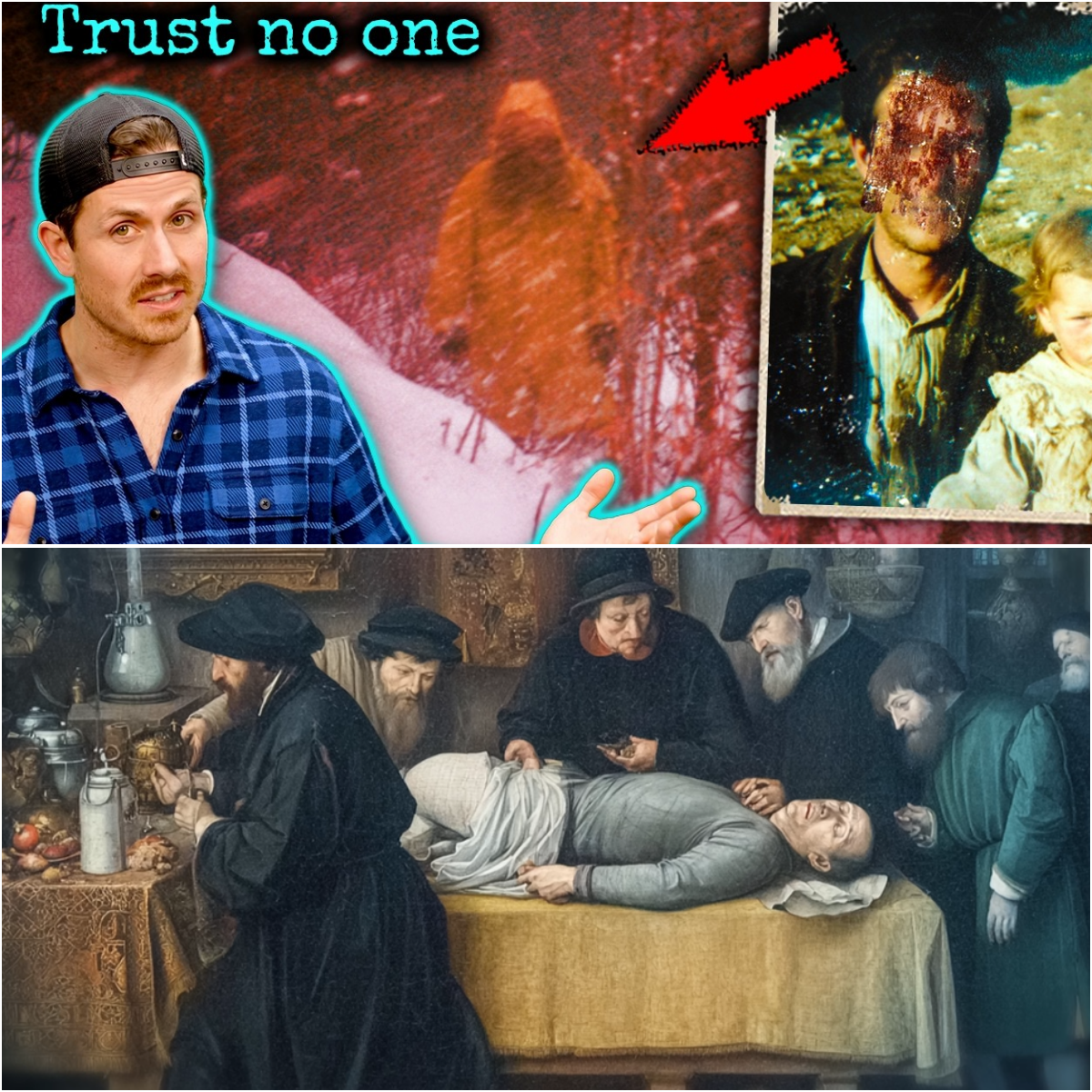
For nearly a decade, Martin Guerre was a ghost. He traveled across the Iberian Peninsula, eventually enlisting as a soldier in the infantry of the Spanish army, caught up in the relentless, bloody Italian Wars that pitted the house of Habsburg against the French crown. It was a life of violent displacement, culminating in the brutal Siege of Saint-Quentin in August of 1557.
[Martin Guerre Flees Artigat (1548)] ---> [Enlists in Spanish Army] ---> [Wounded at Saint-Quentin (1557)]
                                                                                      |
                                                                                      v
[Arnaud du Tilh Studies Martin's Life] <--- [Arnaud Meets Martin in Hospital] <--- [Leg Amputated]
During the chaotic, heavy artillery bombardment of the town, a piece of flying shrapnel tore through Martin’s left leg. In a makeshift, blood-slicked military hospital, surrounded by the groans of dying men and the stench of gangrene, military surgeons amputated his limb. The trauma of the surgery was so severe that his comrades, moving onward with the advancing army, left Saint-Quentin fully convinced that Martin Guerre was dead.
The Architecture of a Stolen Life
But Martin did not die. Instead, he languished for months in the gray limbo of a military convalescent ward, trapped in a deep, spiraling depression that far outweighed the physical agony of his stump. He was a man without a country, fighting for the enemies of his homeland, mutilated, and utterly alone. In his prolonged isolation, Martin found solace in confiding the intricate details of his childhood, his marriage, and his village to a charismatic fellow soldier named Arnaud du Tilh.
Arnaud, nicknamed “Panquette,” was everything Martin was not: articulate, socially malleable, and possesses an extraordinary, near-photographic memory for narrative detail. Crucially, the two men shared a striking physical resemblance—a similarity in height, facial structure, and coloring that their fellow soldiers frequently commented on. As Martin lay bedridden, recounting the geography of Artigat, the personalities of his sisters, the layout of his uncle Pierre’s farm, and the intimate nuances of his marriage to Bertrande, Arnaud was not merely listening out of camaraderie. He was studying. He was compiling an inventory of another man’s existence.
By 1556, while the real Martin Guerre was still learning to walk on a rudimentary wooden prosthetic leg, eventually transferring to a distant monastery for hospice care, Arnaud du Tilh decided to execute one of the most audacious acts of identity theft in human history. Armed with the exhaustive knowledge he had systematically extracted from his wounded friend, Arnaud walked into the village of Artigat and announced himself as the returned Martin Guerre.
“The psychological brilliance of Arnaud’s deception lay in his weaponization of the village’s collective guilt and desire for closure.”
The village had spent eight years operationalizing the absence of Martin. His father had died, leaving behind an unclaimed inheritance. His wife, Bertrande, lived in a structural limbo—neither a recognized widow nor a functional wife, restricted by custom from remarrying or managing her own affairs independently. When Arnaud arrived, presenting a face slightly weathered by war but speaking with flawless accuracy about the intimate details of their shared past, the village chose to believe.
The Court at Toulouse
The deception was so complete that Bertrande welcomed Arnaud into her bed, later testifying that his profound knowledge of their private marital life left her with no doubt as to his identity. For three years, Arnaud lived as Martin Guerre, managing the family estates, fathering two children with Bertrande, and seamlessly integrating into the local economy.
The fabric of the lie only began to fray when Arnaud, displaying a sharp legal acumen that the original, volatile Martin never possessed, launched a series of aggressive lawsuits against Martin’s uncle, Pierre Guerre, demanding a full accounting of the family inheritance. Pierre, furious at the financial assault and harboring a deep, instinctual suspicion of his nephew’s sudden transformation, began a counter-investigation. He discovered rumors of Arnaud du Tilh’s past life as a rogue and a con artist, eventually convincing local authorities to arrest the man living as Martin Guerre on charges of fraud and treason against the family.
[Arnaud Lives as Martin in Artigat] ---> [Pierre Guerre Suspects Fraud] ---> [The Trial at Toulouse (1560)]
                                                                                      ^
                                                                                      |
[The Real Martin Appears on Wooden Leg] ----------------------------------------------+
The subsequent trial in the summer of 1560 became a national obsession, captivating the Parliament of Toulouse. Arnaud defended himself with spectacular brilliance, matching every cross-examination with pinpoint biographical data, confusing the judges to the point where they were on the verge of acquitting him and punishing Pierre for defamation.
Then, on September 12, 1560, the heavy double doors of the Toulouse courtroom swung open.
A man stepped into the chamber, leaning heavily on a cane, his left leg replaced by a crude wooden peg. It was the real Martin Guerre. He had been tracked down at his hospice retreat by an investigator who realized the trial was reaching a critical nexus. The effect on the courtroom was immediate and devastating. As Martin advanced toward the bench, his sisters, his uncle, and finally a weeping Bertrande looked at his face and his missing limb. The collective illusion shattered. The structural details of his face, which Arnaud had mimicked but could not perfectly replicate, paired with the undeniable physical reality of his war injury, left no room for legal ambiguity.
Arnaud du Tilh collapsed into a confession, admitting that he had seized an opportunity presented by a broken man in a distant hospital bed. Four days later, Arnaud was hanged for his crimes on a gallows erected directly in front of Martin Guerre’s ancestral home in Artigat.
Yet, the return of the real Martin did not bring a romantic resolution to the village. Bertrande, deeply traumatized, threw herself at her true husband’s feet, begging for mercy and explaining that she had been blinded by Arnaud’s elaborate artistry. But Martin, hardened by a decade of war, trauma, and abandonment, remained cold. He rejected her pleas, unable to forgive the fact that his family had accepted a phantom into their home, leaving Artigat to pick up the pieces of a life that had been fundamentally altered by an imposter.
Part II: The Whiteout of Eagle
Nearly four centuries later, on the other side of the globe, another man faced his own absolute isolation against an enemy far less malleable than a village court: the merciless, sub-zero winter of the Alaskan interior.
In November of 1940, Irwin Robertson was 84 years old. To the modern mind, the idea of an octogenarian navigating the brutal, unpaved backcountry of Alaska alone seems like madness, but Robertson was a product of a different era. He had arrived in the territory forty years prior, swept up in the frantic, historic Klondike and Alaska gold rushes of the turn of the century. While thousands of starry-eyed prospectors had returned home broke or perished in the mountain passes, Robertson had adapted. He became a fixture of the landscape, an elite woodsman who spent his summers and autumns deep in the high elevations, hunting, trapping, and mining for small veins of gold.
Robertson’s life was divided into two distinct chapters each year. The warm months belonged to his isolated mountain cabin, where he lived off the land. The bitter winter months belonged to the tiny pioneer settlement of Eagle, Alaska—a remote outpost nestled along the Yukon River, near the Canadian border.
In early November, Robertson wrapped up a highly profitable trapping season. His heavy wooden sled was packed tightly with valuable animal furs and essential supplies. He had intended to remain at his mountain cabin for a few more weeks, but the Alaskan climate is famously volatile. Within a matter of hours, the temperature plummeted with a sudden, vicious intensity that signaled the premature arrival of a catastrophic winter storm. Recognizing that he lacked the food and fuel reserves to survive a prolonged freeze in the high country, Robertson packed his sled, informed a few neighboring prospectors of his route, and began the grueling, 100-mile trek toward Eagle.
The Anatomy of the Freeze
For an experienced outdoorsman, a 100-mile journey through the wilderness was routine, but age and geography are a lethal combination. As Robertson pushed his heavily laden sled down a snowy ridge, the physical exertion was immense. His lungs burned in the crystalline air, and beneath his heavy canvas and fur parkas, his body began to generate an immense amount of sweat.
In extreme cold, moisture is a death sentence. It robs the body of its insulation, drawing heat away from the core at an accelerated rate. By midday, as the pale arctic sun began to dip toward the horizon, the ambient temperature dropped far faster than Robertson had calculated. Ice began to form in thick, heavy crusts along his beard and eyelashes. He was caught in a dangerous physiological paradox: he was freezing from the outside while soaked in sweat from the within.
[Robertson Exerts Himself / Sweats] ---> [Temperature Viciously Drops] ---> [Moisture Freezes Under Clothes]
                                                                                      |
                                                                                      v
[Motor Skills Fail / Tinder Wet] <--- [Hands Freeze During Match Strike] <--- [Decides to Make Camp]
Compounding the environmental danger was a psychological one. For hours, Robertson had been acutely aware of a timber wolf pack shadowing his movements through the black spruce trees. In the territorial register of 1940, wolves were viewed not as ecological indicators, but as active, calculating predators. As Robertson’s pace slowed due to exhaustion, the wolves grew noticeably braver, closing the distance between the tree line and the trail.
Realizing that he would not survive the night on the trail, Robertson made the critical decision to halt near a frozen creek and establish an emergency camp. The site was logical: a nearby stand of dead timber provided a ready source of firewood, and the creek—though frozen—offered a small, trickling overflow spout where he could replenish his water supply. He parked his sled, gathered a large pile of dry wood, and prepared to face the most dangerous mechanism of wilderness survival: lighting a fire.
The Last Match
To strike a match in a sub-zero environment requires an individual to make a calculated sacrifice. Robertson had to remove his heavy wolf-skin mittens, exposing his bare, sweat-dampened hands to an ambient temperature that was rapidly approaching minus-forty degrees.
With his teeth, he yanked the mitten from his right hand and reached into his parka for his waterproof match container and a small bundle of dry tinder scraps. His fingers, instantly exposed to the biting cold, began to lose their tactile sensitivity. He took the first match and struck it against the abrasive strip. Nothing. The chemical composition of the match head, altered by the extreme cold and the subtle moisture in the air, failed to ignite.
He struck it again, applying more pressure, but the wood snapped cleanly in half between his stiffening fingers.
[First Match: Snaps] ---> [Second Match: Ignites but Extinguishes Due to Shaking]
                                    |
                                    v
[Third Match: Ignites, Placed on Tinder] ---> [Tinder Fails to Catch (Frozen Moisture)] ---> [Oblivion]
Panic, the great killer of the wilderness, began to set in. Robertson removed his left mitten to achieve maximum dexterity, exposing both hands to the elements. He pulled a second match from the container, braced his shaking arms, and struck it. A brilliant, yellow flare burst to life. But the exposure had already taken its toll. The delicate nerve endings in his hands had seized; his muscles were firing in violent, uncontrollable spasms of shivering. As he attempted to lower the precious flame toward the pile of tinder, his hand shook so violently that the displacement of air extinguished the fire.
Gritting his teeth against the searing pain of profound frostbite, Robertson managed to fumble a third match out of the case. Using the last remnants of his willpower, he scraped it against the box. It ignited. He shielded the tiny flame with his cupped, freezing palms, carefully moving it toward the tinder bundle. He held it there, watching the flame lick against the wood scraps, waiting for the smoke that would signify life.
But the tinder did not catch.
In his haste and exhaustion, Robertson had failed to realize that the fine mist from the nearby trickling creek, combined with the sweat from his own hands, had coated the tinder in an invisible, microscopic layer of frost. The match burned down to his frozen fingertips, producing no heat, no smoke, and no fire. It simply went out.
The Discovery at the Creek
On November 19, 1940, a full week after Irwin Robertson had failed to arrive in the town of Eagle, a search party led by a deputy from the United States Marshal’s Office emerged into a quiet clearing along the frozen creek bed.
The scene they discovered was eerie in its perfection. Robertson’s sled sat neatly parked on the bank, surrounded by his meticulously packed supplies and valuable pelts. A heavy hunting rifle was propped carefully against a nearby spruce tree, completely functional and loaded. A massive stack of unused firewood sat piled next to the sled, and scattered across the snow were several unused matches and pristine pieces of tinder that showed no signs of charring.
[Search Party Discovers Camp] ---> [Rifle, Sled, and Firewood Intact] ---> [Wolf Tracks Encircling Site]
                                                                                   |
                                                                                   v
                                                                     [Body Never Found / Vaporized by the Wild]
The camp was a monument to preparation, yet the man who built it was entirely missing. There were no signs of a struggle, no blood splinters on the snow, and no indications of a medical crisis. The only anomalous data in the clearing was a dense, overlapping ring of wolf tracks that completely encircled the perimeter of the campsite, leading away into the deep, trackless interior of the Alaskan bush.
The deputy concluded that Robertson, incapacitated by the catastrophic failure of his fire and the subsequent onset of hypothermia, had likely succumbed to the cold within hours of his third match going out. In the arctic, when a human being freezes, the brain frequently experiences a phenomenon known as “paradoxical undressing”—a state where the victim feels an illusion of burning heat and strips off their clothing, or “terminal burrowing,” where they hide themselves in small, snow-covered cavities. The wolves had simply done what the winter demanded: they had cleared the clearing, leaving behind an empty sled as the sole testament to forty years of survival.
The Persistent Void
The historical resonance of Martin Guerre and Irwin Robertson lies not in how they lived, but in the terrifying speed with which their environments adapted to their absence. When Martin walked out of Artigat, the village’s desperate need for economic and marital structure allowed a complete stranger to slip into his life, rewriting the memories of his own wife and sisters. When Irwin Robertson’s match went out on the banks of a frozen Alaskan creek, the ancient, automated machinery of the wilderness dismantled his presence within days, leaving his perfectly ordered tools as a meaningless collection of wood and iron. Both stories serve as a stark, historical warning: our identities, our homes, and our security are not permanent structures written in stone; they are fragile agreements, easily disrupted when we step too far into the dark.