When Urban Explorers Encounter Psychotic Stalkers
When Urban Explorers Encounter Psychotic Stalkers
The modern American landscape is quietly folding in on itself. Across the Rust Belt, through post-industrial urban centers, and into the sprawling, neglected margins of rural towns, thousands of structures—once bustling junior high schools, vibrant apartment complexes, and tightly knit neighborhood hubs—now sit in silent, rotting isolation. Yet, as the traditional institutions occupying these spaces have vanished, a new subculture has rushed to fill the void. Equipped with high-definition cameras, flashlights, and an insatiable appetite for digital clout, a generation of “urban explorers” has turned the structural detritus of late-stage Americana into a booming genre of online entertainment. But as the digital footprint of this community expands, the line between casual voyeurism and immediate physical peril is rapidly dissolving, revealing a dark truth: the country’s most vulnerable ruins are far from empty.
The Siren Song of the Ruin
What drives an individual to bypass a padlock, ignore a faded “No Trespassing” sign, and step into the unstable darkness of an abandoned building? To understand the phenomenon of contemporary urban exploration, or “urbex,” one must look to the unique psychological terrain of twenty-first-century America. In an era defined by hyper-curated digital spaces and heavily monitored corporate environments, the decaying, unmanaged ruin represents one of the few remaining frontiers of raw, unfiltered reality.
For the millions of viewers who consume this content on YouTube, TikTok, and streaming platforms, these videos offer a potent mix of historical nostalgia and voyeuristic thrill. There is a haunting, melancholic beauty in watching the slow reclamation of human engineering by nature—vines creeping through broken classroom windows, dust motes dancing in the silent corridors of a forgotten hospital, or a stack of decades-old documents slowly dissolving in a damp basement. It is a form of modern archaeology, a tangible connection to a physical past that feels increasingly distant in an isolated, digitized world.
However, the nature of the medium requires a constant escalation of stakes. As the online marketplace becomes saturated with routine tours of empty warehouses and stripped factories, creators are forced to seek out locations with darker histories, deeper shadows, and greater risks. The quiet preservation of history has largely been supplanted by the pursuit of tension. Today’s viewer does not merely want to see an abandoned building; they want to experience the visceral, heart-pounding uncertainty of what might be lurking around the next corner.
This shift in intent has transformed urban exploration from a niche, quasi-artistic hobby into a high-stakes performance art—one where the structural decay of the building is often the least dangerous element encountered by the explorer.
The Threshold of the Wilderness
While the term “urban exploration” implies a strictly metropolitan setting, the subculture frequently bleeds into the isolated fringes of the American wilderness, where the lack of civil infrastructure amplifies the sense of vulnerability. In these remote areas, the dangers of exploration shift from structural failure to the unpredictable nature of human isolation.
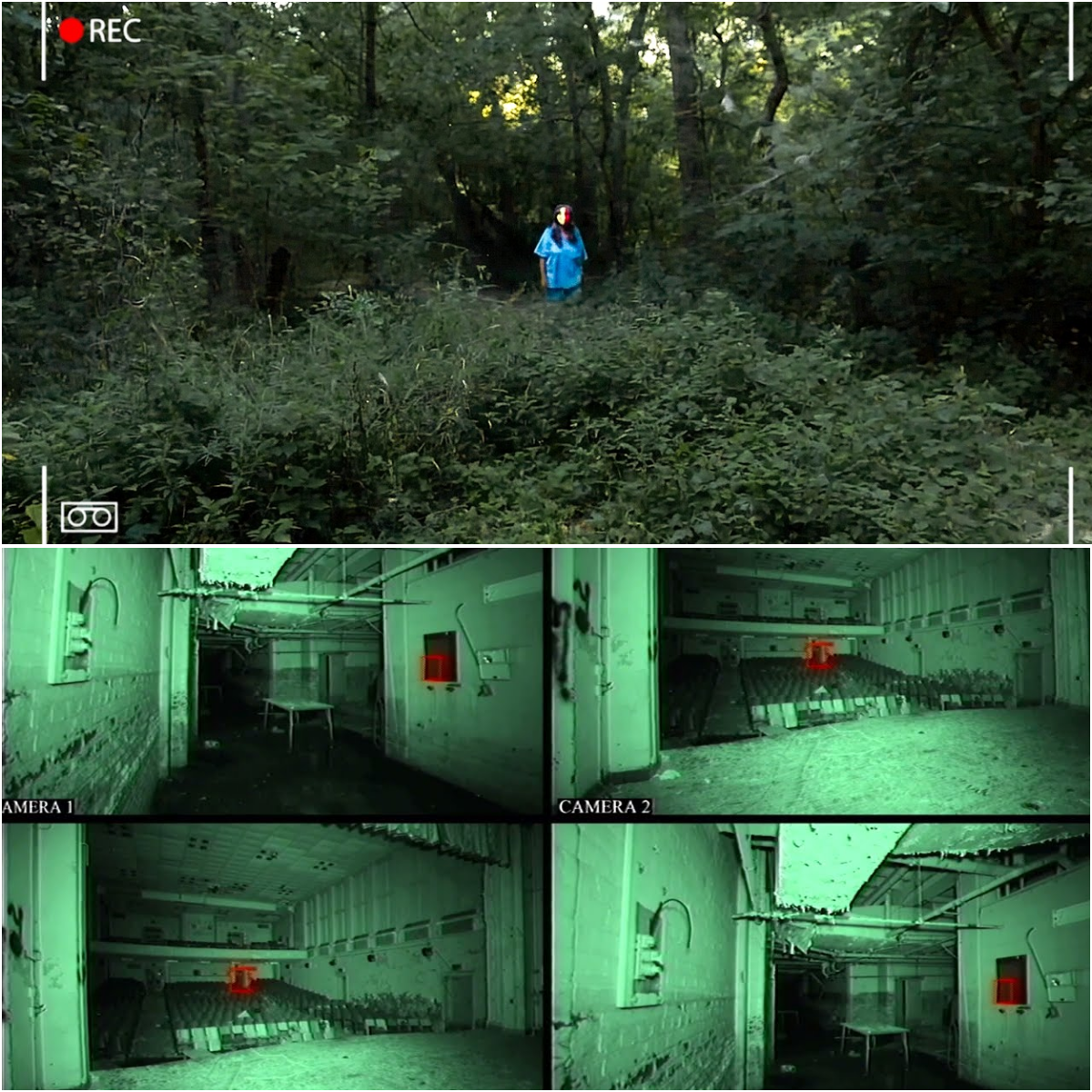
Consider an incident that captured the attention of the online community in late 2022, involving two explorers navigating a dense, overgrown forest track. Far from the safety of the main road, the pair stumbled upon a series of bizarre artifacts left in the brush—including a sealed tube containing a rolled-up poster entirely covered in repeating, stark imagery of owls. To the casual observer, such a find might be dismissed as discarded trash or a localized prank. To the online audience, however, the symbol immediately triggered a cascade of paranoid speculation, tying the artifact to regional cult folklore and esoteric symbolism.
The true danger of the encounter, however, manifested not in esoteric symbols, but in flesh and blood. Moments after discovering the artifacts, the explorers were confronted by an erratic, uncommunicative woman emerging from the tree line. The interaction, captured in breathless real-time footage, quickly devolved from an awkward encounter into a psychological standoff.
“When you see my other two guys,” the woman stated, her voice cutting through the quiet of the woods.
“What?” one of the explorers replied, stepping backward. “Did you see my other two guys?”
“No,” the explorer answered, his hand visibly shaking against the camera grip.
“You’re supposed to go that way,” she insisted, pointing toward a darker, choked section of the path. “Want to meet him?”
The immediate, instinctual refusal of the explorers to follow her directions highlights the baseline survival mechanism that urban exploration routinely tests. As they retreated toward their vehicle, the audio track of their recording captured the distinct, unmistakable sound of heavy rustling and branches snapping in the thick brush surrounding the trail—suggesting that the woman’s mention of “other guys” waiting in the dark was not a delusion, but a literal description of an ambush or a coordinated trap.
When the footage was later analyzed by viewers, many detected the fleeting silhouette of a stationary figure standing amidst the trees near the path, independent of the woman. Whether the incident represented a botched robbery attempt, a regional hazing ritual, or a genuine confrontation with an isolated, hostile group, it underscored a fundamental reality of the wilderness ruin: isolation is a magnet for those who do not wish to be found.
The Echoes of Audubon Junior High
Nowhere are the stakes of this subculture higher than in America’s abandoned inner-city institutions. In February 2024, a prominent independent documentarian known online as Urbex Hill, or Chris, entered the hollowed-out shell of Audubon Junior High School on the east side of Cleveland, Ohio. The building was not merely a casualty of economic decline; it was a fresh monument to localized violence. Just months prior to his visit, the school had been cordoned off by police after the body of a 16-year-old boy, a victim of an unsolved homicide, was discovered immediately outside the structure.
For an explorer like Chris, the school represented the ultimate convergence of urban decay and real-world tension. Yet, as his exploration progressed, the footage revealed an alarming disconnect between the creator’s focus on the aesthetic of the ruin and the tangible signs of active, immediate danger accumulating around him.
Early in the video, Chris passed through a central corridor, his camera sweeping past a white, sectioned partition leaning harmlessly against a wall. When he returned to the same hallway less than an hour later, the partition had been completely repositioned, now deliberately blocking a doorway he had intended to exit through. The implication was immediate, though Chris initially questioned his own memory: someone else was inside the building, actively monitoring his movements and altering the physical layout of the space to direct or restrict his path.
As the exploration continued deeper into the subterranean levels of the school, the environment grew increasingly hostile. The camera captured rooms riddled with fresh bullet holes, the shattered glass of security windows dusting the floor like frost. Chris noted a heavy, pungent odor lingering in the air—not the damp, organic smell of moldering drywall, but the distinct, chemically sweet scent of makeshift cooking and human habitation. Freshly discarded footwear sat in the corner of a locker room; the word “HELP” was freshly scrawled in thick, desperate charcoal across a nearby wall.
The climax of the exploration occurred when Chris followed a literal trail of dried blood splattered across the concrete floor. The trail led directly to a classroom door defaced with a spray-painted “666”—a crude but effective warning. Inside, the floor was stained with a massive, dark pool of what appeared to be organic matter. As Chris leaned down to examine the fluid, debating its authenticity, his flashlight illuminated a cluster of spent brass firearm casings scattered across the floor tiles.
Before he could process the scene, the silence of the school was shattered by a massive, echoing crash from the floor directly above him, followed by the rapid, heavy thud of footsteps. Chris fled the building, his camera capturing only the chaotic sweep of his flashlight against the crumbling walls.
Years later, in 2026, Chris returned to the same school, choosing to live-stream the entire investigation to a global audience—a format that offers no safety net of post-production editing. The live-stream revealed that municipal authorities had since visited the “blood room,” leaving remnants of yellow police line tape behind, though the school itself remained entirely un-secured.
During this second visit, the digital lens captured a fleeting anomaly that the creator missed in real-time: a dark, human silhouette momentarily peering out from a high classroom window looking down into the courtyard. Upon exiting the property after hearing further unexplainable movement within the walls, Chris discovered an unfamiliar, idling vehicle parked in a concealed alleyway adjacent to the school. The school was not an abandoned relic; it was an active, unregulated sanctuary for criminal activity, and the explorer had twice walked directly into the crosshairs of its current occupants.
The Squatter’s Sanctuary
The assumption that an abandoned building is empty is perhaps the most dangerous fallacy of the urbex community. In many cases, these structures are not abandoned by humanity at all; they have simply been repurposed by a segment of the population that has fallen through the cracks of the American social safety net.
In March 2026, a veteran explorer named Jared Coker undertook an investigation of an old, imposing middle school in Detroit, Michigan. The building had been closed since 2009, and unlike many urban ruins, its lower exterior windows and doors were heavily sealed with welded steel plating and thick plywood sheets. To Jared, this intense fortification suggested that the interior would be pristine—a perfectly preserved time capsule free from human interference. After a grueling physical effort, he managed to gain access through a small breakout on a second-story window.
Inside, the environment was startlingly clean. The typical hallmarks of urban decay—shattered liquor bottles, erratic graffiti, and piles of discarded copper wire casing—were entirely absent. The hallways looked as though they had been swept with a broom.
The mystery of the clean school was solved when Jared stepped into the dim light of the gymnasium. There, standing quietly beside a neat arrangement of personal belongings, was a middle-aged man. The ensuing dialogue, preserved on the camera’s audio track, provides a rare, humanizing look at the silent inhabitants of America’s ruins.
“Whoa. Hello,” Jared said, halting in his tracks.
“Yeah. What you doing?” the man asked, his tone firm but remarkably calm.
“Just exploring. Is that okay?”
“It’s really not,” the man replied. “I’m sorry. How’d you get in here?”
“I climbed,” Jared said. “Up top.”
“You just sleep in here?” Jared asked, his curiosity overriding the initial tension.
“This is my body. This is my business,” the man said, maintaining his boundary with quiet dignity. “I’m taking care of myself. So, can you please step out? You already vandalized the place.”
Though Jared had not personally broken the window, the man’s accusation was poignant. To an explorer, the building is a playground, a temporary stage for a digital narrative. To the squatter, the building is a home, a final redoubt against the elements. The man had spent months sealing the cracks, clearing the debris, and maintaining the structural integrity of the gym to create a survivable space. The intrusion of an internet creator with a high-powered camera light was not just an inconvenience; it was a profound violation of privacy and security.
As Jared complied and sought an exit, the man followed him through the darkened hallways to ensure he left the property. The interaction remained non-violent, culminating in the man showing Jared a ground-floor fire door that could be opened from the inside.
“You can go out that door right there,” the man said quietly. “It actually opens.”
Jared’s encounter ended with a handshake and an offer of financial assistance, representing the best-case scenario for an unexpected confrontation in an abandoned space. But the maturity displayed by both parties in that Detroit school is an anomaly in a subculture that frequently brings aggressive, unpredictable forces into sudden, claustrophobic contact.
The Ambush at Parkland Apartments
When multiple individuals occupy a ruin with conflicting intentions, the atmosphere can turn predatory in a matter of seconds. This reality was made terrifyingly clear in October 2022, when a three-man exploration group known as Decaying Ace visited the Parkland Apartment complex in Cleveland.
The Parkland complex was a modern ruin, a massive multi-story concrete structure that had been completely gutted by arson, neglect, and systemic scrapping. The parking garage was littered with the burnt, skeletal remains of automobiles, and the interior of the lobby looked like a war zone. Despite the obvious structural hazards—including compromised concrete flooring and toxic air quality from decades of decaying building materials—the group pushed deep into the interior, climbing a massive, central concrete staircase to reach the upper residential tiers.
The group’s descent into panic began at the fifth-floor landing. One of the explorers, leaning over the central concrete balustrade to capture a dramatic vertical tracking shot of the staircase’s multi-level geometry, froze. At the absolute bottom of the stairwell, looking straight up through the narrow vertical gap between the flights of stairs, was a group of unidentified individuals.
The moment of recognition was instantaneous. The figures at the bottom did not call out, nor did they retreat. Instead, the footage captured the sudden, echoing scuffle of rubber soles on concrete as the group below immediately began a rapid, aggressive sprint up the stairs toward the explorers.
The subsequent three minutes of footage are a masterclass in pure, unedited panic. Trapped on the upper floor of a dark, unfamiliar labyrinth with only one known exit, the explorers were forced to sprint down an alternate, unverified fire stairwell on the opposite side of the complex. The audio track is a chaotic mix of heavy breathing, the frantic clatter of boots on debris, and the muted, terrifying echo of the pursuing group moving parallel to them through the hollow walls of the building.
The explorers breached the ground-floor exit and reached their vehicle without a physical confrontation, but the psychological impact of the chase was evident. They had been hunted through a concrete cage by individuals who moved with total familiarity through the darkness—individuals who knew the layout of the Parkland complex far better than any transient internet creator ever could.
The Cost of the Content
The digital archives of the urbex community are filled with strange, inexplicable artifacts that linger in the minds of viewers long after the video ends. In the aftermath of Chris’s 2026 live-stream of Audubon Junior High, a single image became the focal point of intense online debate: a small, glossy photograph found lying pristine amidst the filth of an upper-floor classroom. The photograph depicted a highly detailed, clinical image of a human fetus—an object entirely disconnected from the historical context of a junior high school.
To some viewers, the image was evidence of a dark, ritualistic subculture operating within the school’s hidden rooms. To others, it was a piece of psychological warfare left behind by a rival group of explorers to intentionally unhinge whoever found it. But the true significance of the photograph lies not in its origin, but in what it reveals about the nature of the subculture itself.
Urban exploration has transformed the real-world tragedies of American decline—unsolved homicides, systemic homelessness, economic abandonment, and urban blight—into a curated aesthetic for mass consumption. The creators who navigate these spaces often treat them as fictional film sets, temporary backdrops for stories designed to harvest views, likes, and revenue.
But the concrete doesn’t lie, and the ruins are not empty sets. Every broken window, every spent casing, every trail of dried blood, and every desperate voice echoing through a hollow corridor is a reminder that these spaces are real, dangerous, and occupied by a segment of society that exists outside the boundaries of mainstream visibility. As long as the internet rewards the pursuit of digital dread, young Americans will continue to push past the padlocks and step into the dark. But as the ruins of the nation continue to grow colder and more isolated, the entities waiting inside them are making it increasingly clear that the price of admission may eventually be paid in more than just views.