Old Footage Resurfaces and Sends Social Media Into Chaos Over Gaza Discussion
Controversial Archival Footage Resurfaces, Igniting Heated Debate Over Historical Narratives and Modern Middle East Discourse
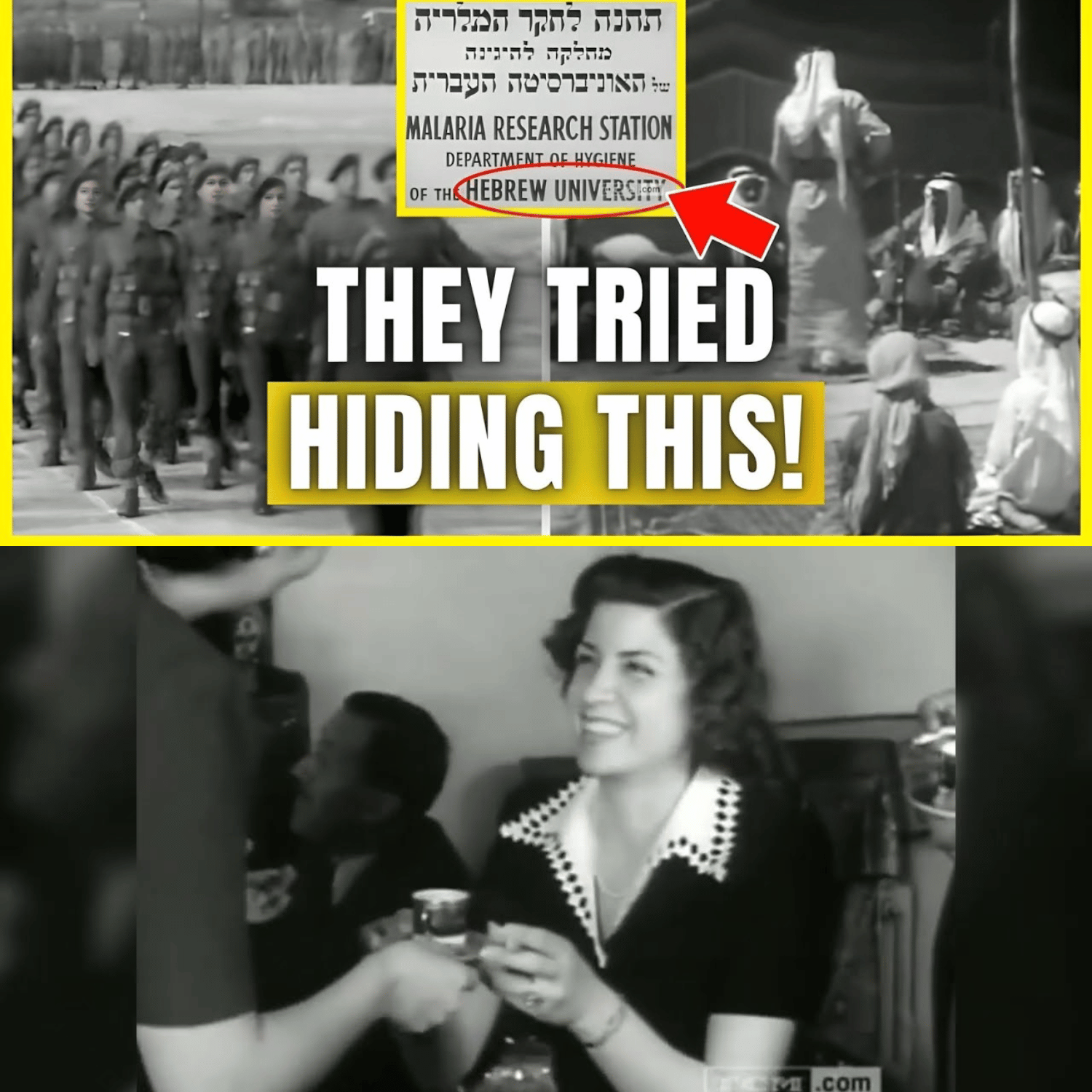
A recently resurfaced archival documentary has gone viral online, drawing intense reactions across social media platforms in the United States and beyond. The footage, originally produced in the mid-20th century, presents a historical overview of events in the region of Mandatory Palestine, now at the center of ongoing global political debate.
As the video circulates widely, viewers are increasingly divided over its interpretation, with some describing it as a valuable historical record and others accusing it of presenting a one-sided or outdated perspective shaped by the political context of its time.
The renewed attention highlights how historical media continues to influence modern discourse, particularly when viewed through the lens of contemporary conflicts and digital-era commentary.
A Look at the Archival Film
The documentary features narration discussing British policy in the region during the early to mid-20th century, including immigration restrictions, population changes, and the development of urban centers such as Tel Aviv.
It also references the geopolitical tensions of the era, describing competing national movements and the growing pressures faced by British administrators governing the territory.
The film presents a narrative consistent with many wartime and post-war productions, where political messaging and historical interpretation were often closely intertwined.
At various points, the footage contrasts rural and urban development, labor migration, and economic interactions between communities living in the region at the time.
Historical Context and Competing Interpretations
Historians emphasize that the period depicted in the documentary was marked by significant upheaval, shaped by British colonial administration, rising nationalist movements, and the aftermath of World War II.
During this era, immigration policies, land ownership disputes, and international diplomacy all contributed to escalating tensions in the region.
Experts note that terminology used in historical footage often reflects the language and assumptions of the period in which it was produced, rather than modern academic or political definitions.
This has become a key point of contention among modern viewers, many of whom interpret the same footage in dramatically different ways depending on their political or cultural perspective.
Viral Reactions in the United States
Once uploaded and circulated on social media, the documentary quickly became the subject of intense commentary in the United States.
Some users argue that the footage supports long-standing historical arguments about migration, governance, and national identity in the Middle East.
Others caution that the narration reflects outdated framing and should be understood within its historical context rather than used as evidence in modern political debates.
The disagreement has fueled a broader online discussion about how archival materials are used in today’s information environment, especially when clips are taken out of their original academic or documentary context.
The Role of Social Media in Historical Reinterpretation
Media analysts say the resurgence of older documentaries on platforms like X (formerly Twitter), YouTube, and TikTok is part of a larger trend where historical footage is repackaged for modern audiences.
In many cases, short clips are detached from their full context, narrated over, or re-edited with commentary that can significantly shift their perceived meaning.
“This creates a situation where history is no longer just studied—it’s constantly reinterpreted in real time,” one media researcher noted.
The result is often polarized discussions that blend historical fact, modern politics, and ideological interpretation.
Academic Concerns Over Oversimplification
Scholars of Middle Eastern history warn that simplified narratives—especially those circulating online—can obscure the complexity of the region’s past.
They stress that the history of Mandatory Palestine involves multiple overlapping communities, colonial policies, economic changes, and international interventions that cannot be reduced to a single narrative.
“The danger is when archival material is used as proof of a modern argument without acknowledging its historical framing,” said one historian specializing in 20th-century geopolitics.
Why the Video Resonates Now
The renewed interest in the documentary reflects broader global tensions and the way historical memory is being used in current political debates.
In the United States, discussions about immigration, national identity, and foreign policy often intersect with interpretations of historical events abroad.
As a result, footage like this becomes more than just historical documentation—it becomes symbolic material in ongoing ideological debates.
Conclusion: History in the Age of Viral Media
The viral spread of this archival documentary underscores a growing challenge in the digital era: the collision between historical record and modern interpretation.
While the footage itself originates from a specific historical and political context, its meaning today is being reshaped by online audiences, influencers, and commentators with differing agendas.
As debate continues, one thing is clear: historical media is no longer confined to archives or classrooms. In the age of social media, it has become part of an active, global conversation—one that is often as divided as the history it seeks to interpret.