Is It Real? The Most Unnerving Bigfoot Footage Ever Captured
Is It Real? The Most Unnerving Bigfoot Footage Ever Captured
The creature walked for less than a minute. More than fifty years later, the world is still arguing over what stepped out of the trees.
Few pieces of film have created more obsession than the footage shot at Bluff Creek in 1967 by Roger Patterson and Bob Gimlin. It is grainy, shaky, brief, and imperfect. It does not show a monster roaring at the camera. It does not show an attack, a chase, or a dramatic confrontation. It shows something far stranger: a large, dark, human-shaped figure walking across a dry creek bed, turning its head once toward the camera, and then disappearing into the forest.
That single head turn became one of the most famous frames in cryptid history.
To believers, the Patterson–Gimlin film remains the strongest visual evidence ever captured of Bigfoot. To skeptics, it is a man in a costume, one of the most successful hoaxes of the twentieth century. To everyone else, it is something more uncomfortable: a clip that should have been solved decades ago, but somehow still refuses to die.
The power of the footage is not in its clarity. In fact, its lack of clarity is part of why it haunts people. If the image were crystal clear, the debate might have ended long ago. If it were obviously fake, it would have faded into folklore. Instead, it lives in the uneasy middle. Clear enough to study. Blurry enough to question. Human enough to recognize. Inhuman enough to disturb.
The story begins in the forests of Northern California, in a place already surrounded by Bigfoot reports. Patterson and Gimlin were riding near Bluff Creek when they claimed they saw a large, hair-covered figure near the creek bed. Patterson grabbed his camera and began filming while the subject moved away. The resulting footage lasted less than a minute, but its impact has lasted for generations.
At first glance, the figure looks almost too familiar. It walks upright. It has arms, legs, shoulders, a head, and a gait that resembles human movement. But then the details begin to bother viewers. The arms appear long. The shoulders look heavy. The head seems set forward with little visible neck. The stride is smooth, powerful, and oddly unhurried. The figure does not run. It does not panic. It simply walks away as if humans are not worth more than one backward glance.
That confidence is part of what makes the footage so unnerving.
A hoaxer, skeptics argue, could have been told to walk steadily and turn at the right moment. A person in a suit could imitate calm. But believers point to the body mechanics. They argue that the figure’s proportions, muscle movement, arm swing, and apparent mass do not look like a person wearing a cheap costume from the 1960s. Some claim to see movement beneath the fur, especially around the thigh, shoulder, and back. Others focus on the way the knees bend, the way the feet seem to plant, or the way the upper body rotates.
Skeptics push back hard. Human perception is easy to fool, especially with old film. Stabilized versions, enhanced frames, and modern analysis can sometimes create the illusion of detail that was not actually visible in the original. Grain becomes texture. Blur becomes muscle. Shadows become anatomy. Once a viewer believes the figure is real, the brain begins building a body from limited information.
That is why the film is so dangerous to certainty.
It gives each side just enough to keep fighting.
For believers, one of the strongest arguments has always been the suit problem. Could someone in 1967 have created a costume good enough to fool viewers for decades? Skeptics say yes. Hollywood monster suits existed. Patterson had been interested in filming Bigfoot-related material before the encounter. A staged scene would not be impossible. Supporters respond that the alleged costume would have needed to match unusual body proportions, move naturally over rough terrain, and show details that many say were beyond ordinary costume work of the era.
The truth is that both sides are arguing not only about the object on film, but about what was technologically and practically possible at the time.
A person in a suit is possible.
A real unknown animal is extraordinary.
But the footage sits between possible and extraordinary in a way that keeps the door open just enough.
The most famous frame, often called Frame 352, captures the moment the figure turns its head toward the camera. That image has become the icon of Bigfoot culture: one arm swinging forward, one leg extended, torso angled, face partly visible, the body caught mid-stride. It is the closest the film comes to looking directly back at us.
That look may be the reason the footage never lost its grip.
If the figure had simply walked away without turning, it might have seemed more like an animal or a distant person. But that one glance gives it awareness. It feels like the subject knows it is being watched. It does not charge. It does not hide immediately. It simply acknowledges the camera, then continues into the trees.
For a creature supposedly trying to avoid humans, the behavior is strange.
For a hoaxer trying to create unforgettable footage, the behavior is perfect.
And that is exactly the problem.
The same detail can support both interpretations.
Over the years, experts, enthusiasts, costume designers, anthropologists, animators, skeptics, and cryptozoologists have picked apart the film. Some have measured stride length. Some have calculated height. Some have compared shoulder width and arm length. Some have studied the terrain. Some have tried to reproduce the walk. Some have created replica suits. Others have argued that no reproduction has fully captured the same unsettling movement.
But the film has never produced the one thing science requires most: a body, bones, verified DNA, or repeatable evidence of a breeding population.
That absence matters.
A video can be compelling, but biology needs more. If Bigfoot is real, it must exist as a population, not one individual in one film. It would need food, territory, reproduction, death, remains, genetic material, and ecological impact. Skeptics argue that after decades of searching, the lack of physical proof is devastating. Believers respond that rare, intelligent, low-density animals in vast forests can remain elusive, and that absence of proof is not proof of absence.
The debate becomes less about one film and more about the limits of evidence.
What kind of evidence is enough?
For a believer, the Patterson–Gimlin film may be the best visual record of an animal science has not accepted. For a skeptic, it is an artifact of human storytelling, a cultural mirror showing how badly people want mystery to survive.
That cultural side is important. The film did not merely document a claim; it helped create modern Bigfoot. Before 1967, stories of wild men, hairy giants, Sasquatch, and mysterious footprints already existed. After the film, Bigfoot had a body. Not a perfect body, but a moving image. People could point to the screen and say, “There. That is what witnesses are seeing.”
From that moment onward, every Bigfoot report existed in the shadow of Bluff Creek.
Trailcam clips, shaky forest videos, distant dark figures, strange howls, and alleged footprints all get compared to “Patty,” the nickname given to the film’s subject. The Patterson–Gimlin figure became the measuring stick. Does the new footage move like Patty? Are the arms as long? Is the posture similar? Does it have the same heavy stride?
That influence is both powerful and suspicious. If the film is real, it gave the world a reference point. If it is fake, it shaped decades of expectation, teaching people what Bigfoot was supposed to look like.
This is one reason skeptics remain so wary. Once an image becomes iconic, people may unconsciously compare later sightings to it. A witness in the woods sees a dark figure and the brain fills in details from the famous film. A blurry clip looks more convincing because it resembles the template people already know. A myth gains a body, and then the body reshapes the myth.
But believers argue that the film became iconic because it captured something real first.
The chicken-and-egg problem cannot be solved easily.
In recent years, the controversy has only intensified. New documentaries, interviews, claimed test footage, and renewed skepticism have stirred old arguments again. Some reports claim evidence has surfaced suggesting the film was staged. Believers reject those claims, sometimes arguing that new debunking efforts rely on uncertain provenance, selective interpretation, or modern manipulation. Skeptics respond that the burden remains on those claiming the footage shows an unknown primate.
The result is a strange modern resurrection of a very old debate.
A film shot in 1967 now lives in the age of AI enhancement, digital stabilization, online forensic breakdowns, and viral documentaries. Every generation gets new tools, but the film still resists final judgment. Technology can sharpen the image, but it cannot travel back to Bluff Creek and touch what walked there.
That is the tragedy of the footage.
The moment happened once.
The evidence is fixed.
The questions keep multiplying.
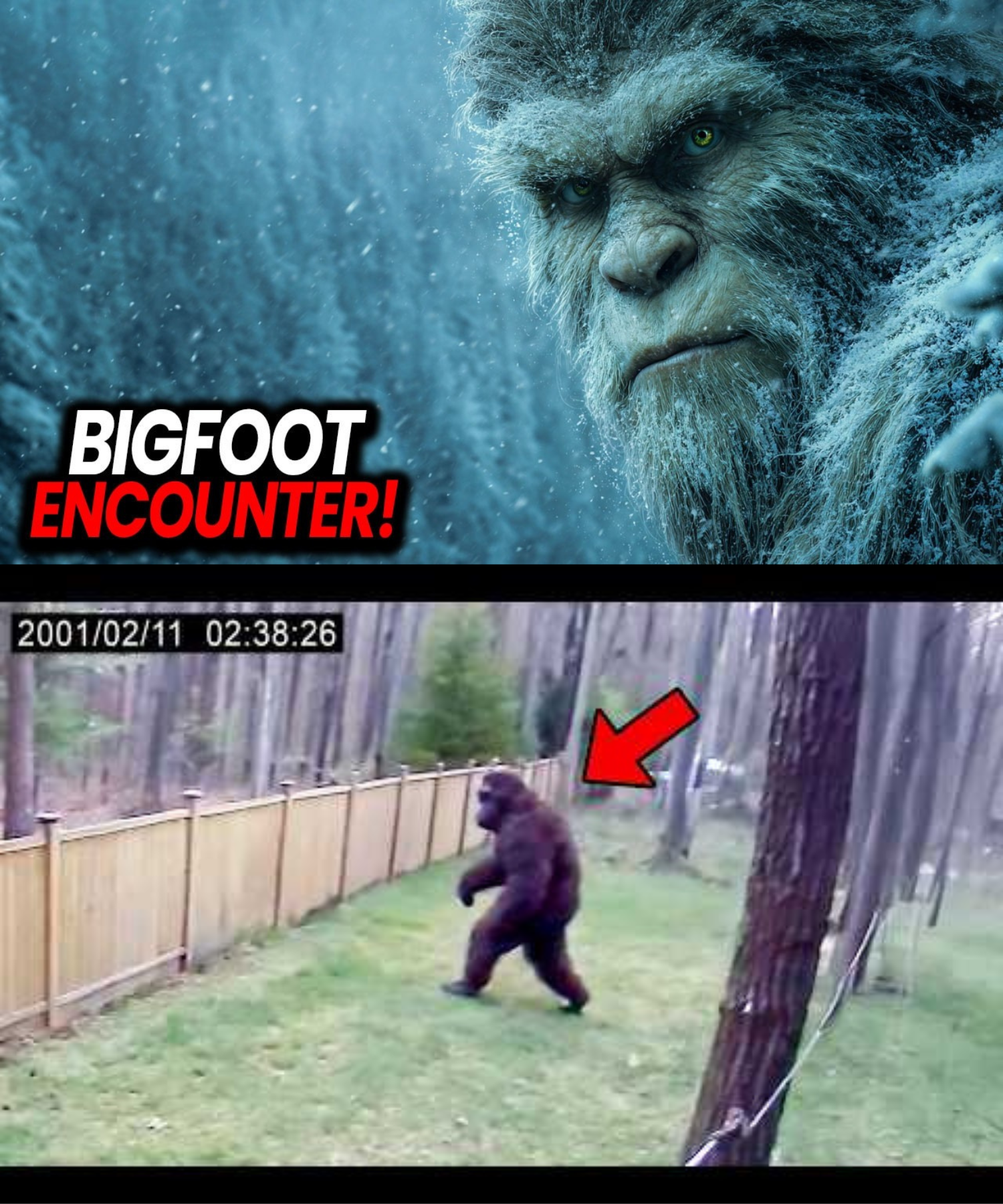
What makes the Patterson–Gimlin film more unnerving than many newer Bigfoot clips is its simplicity. Modern videos often feel staged because people know what a viral clip should look like. The camera lingers too perfectly. The creature appears at just the right moment. The reaction feels performed. The footage arrives with dramatic music, red circles, and captions screaming “PROOF.”
The 1967 film feels different because it is awkward. The camera shakes. The subject is not centered perfectly. The event is brief. There is no explanation inside the footage. No narration. No slow-motion. No instant reaction shot. Just a figure walking through a creek bed, captured by a man scrambling to keep it in frame.
That rawness gives it power.
It also makes it easier for believers to argue it was real and for skeptics to argue the imperfect filming hides a staged performance.
Again, the same feature feeds both sides.
There are also emotional reasons people keep returning to the footage. Bigfoot represents a kind of hope: that the world is not fully mapped, that the forests still hold secrets, that modern life has not explained everything. For some, the creature is a biological possibility. For others, it is almost spiritual—a symbol of wilderness resisting human control.
The Patterson–Gimlin film gives that hope a face.
Or at least a silhouette.
That may be why people react so strongly when someone claims to debunk it. For believers, attacking the film can feel like attacking the last great evidence that mystery remains. For skeptics, defending the film can feel like refusing reality in favor of fantasy. The argument becomes personal because it is not only about anatomy, film grain, or costume design. It is about how people decide what kind of world they live in.
Is the world still wild enough to hide a giant unknown primate?
Or are we looking at a man in a suit because we cannot bear to let the legend go?
The honest answer is that the footage alone cannot settle the matter. It is powerful, but not conclusive. It is strange, but not undeniable. It deserves study, but also caution. The strongest position may be the least satisfying: the Patterson–Gimlin film remains one of the most compelling and controversial pieces of alleged Bigfoot evidence ever recorded, but it has not proven Bigfoot’s existence to mainstream science.
That does not make it worthless.
Some mysteries matter because they reveal the truth.
Others matter because they reveal what truth demands.
The film shows how hard it is to prove something extraordinary from a fleeting encounter. It shows how video can preserve a moment while failing to explain it. It shows how evidence becomes myth when certainty never arrives. It shows how humans argue with images, not only because of what they show, but because of what people need them to mean.
If the footage is fake, it is one of the most influential hoaxes in American folklore.
If it is real, it is one of the most important wildlife films ever captured.
That gap is enormous.
And the film has lived inside that gap for more than half a century.
So is it real?
The answer depends on what standard you require. If you require scientific proof, then no—the film alone is not enough. If you require a deeply unsettling image that has resisted easy explanation, then yes—it remains real in the sense that it continues to disturb, persuade, anger, fascinate, and haunt. The subject walked across that frame, whatever it was. The question is what body belonged to the movement.
A man in a suit?
A misread performance?
A desperate hoax?
A creature science has not yet named?
The footage does not answer.
It only turns its head once, looks back, and walks into the trees.
And maybe that is why it remains the most unnerving Bigfoot footage ever captured. Not because it proves everything, but because after all these years, it still refuses to become nothing.