This Cursed Video Is Circulating Online – Never Watch It
This Cursed Video Is Circulating Online – Never Watch It
There is a distinct, algorithmic chill that settles over the modern internet when a piece of footage refuses to behave according to the laws of physics. It isn’t the slick, theatrical terror of a Hollywood studio, but rather the stark, flat reality of a smartphone or security camera capturing something fundamentally broken. A bedridden patient suddenly standing and hovering millimeters above a linoleum floor; a pair of eyeglasses manifesting out of thin air on a concrete sidewalk; a cloud formation so perfectly, mathematically square that it looks like an unrendered texture in a video game. These viral clips, shared across millions of screens, are no longer just ghost stories—they have become the foundation for a new digital theology, a collective suspicion that our hyper-rational, heavily digitized world is suffering from a massive, systemic glitch.
The Automation of Witnessing
In the early days of internet folklore, ghost stories required human storytellers. They were text-based narratives shared on obscure forums, built on the reliability—or unreliability—of the person typing them. Today, the human witness has been largely phased out, replaced by the passive, unblinking lens of the everyday machine. We have surrounded ourselves with an automated panopticon of home security grids, dashboard cameras, and handheld devices, all designed to log the mundane realities of modern life.
When these machines catch an anomaly, the psychological impact on the viewer is uniquely jarring. A viral video circulating under the curation of online commentators like Breakman illustrates this shift perfectly. A night watchman, unsettled by unexplained noises in an empty facility, leaves his phone recording an empty hallway before going to sleep. The device doesn’t capture a classic cinematic apparition; instead, it logs a long-ailing, bedridden patient walking with a rigid, unnatural gait. In a follow-up clip, as the figure draws closer to the lens, her feet seem to dissolve into the floor tiles, leaving her suspended in a state of impossible levitation next to a detached, asynchronous reflection.
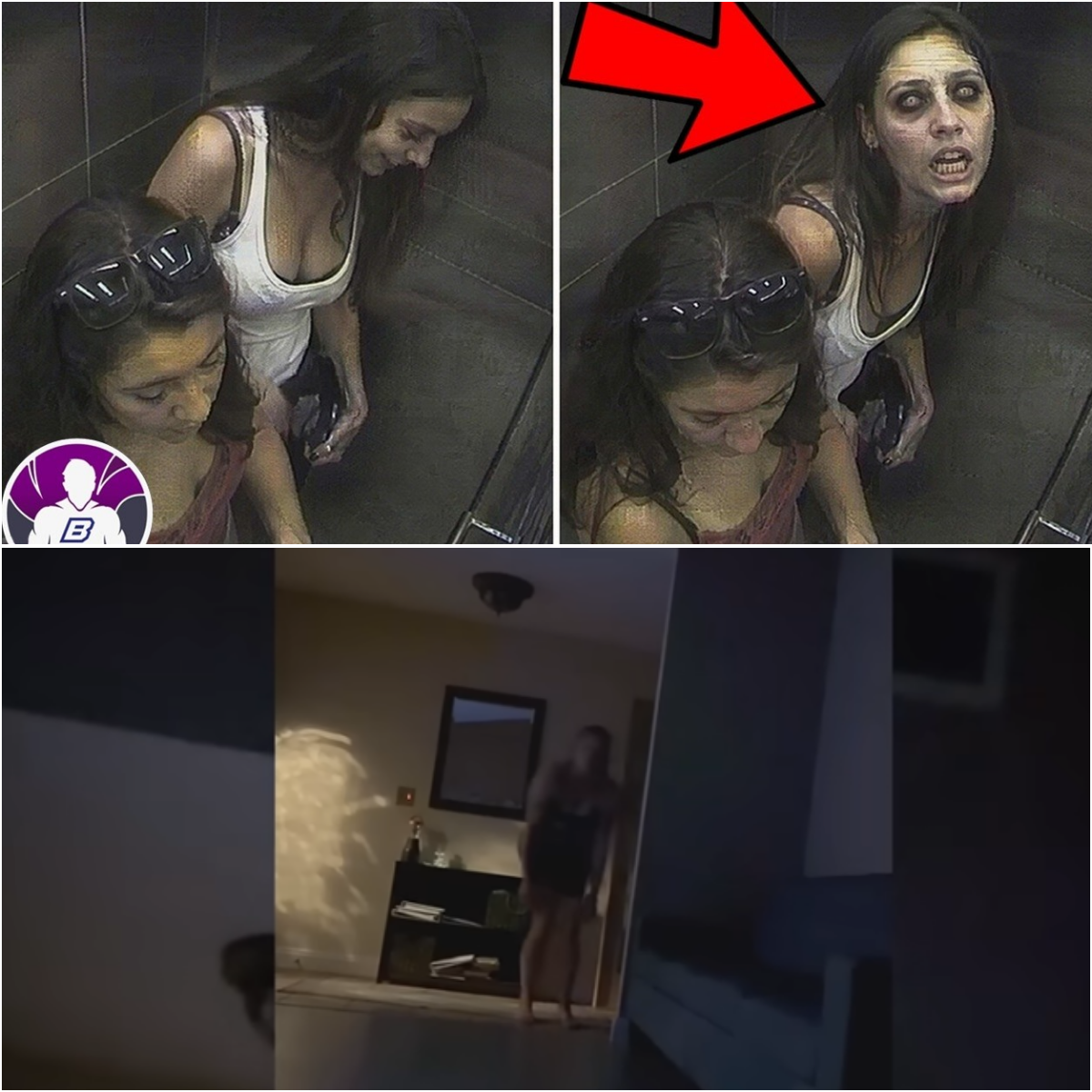
The terror here is rooted in the subversion of our security technology. We buy cameras to reassure ourselves that our physical environment is stable, structured, and empty when it is supposed to be. When the footage returns an anomaly, the brain undergoes a profound crisis of categorization. Because the medium is inherently clinical—devoid of dramatic lighting, orchestral swells, or professional editing—the viewer processes the image not as artifice, but as data. It forces an unsettling conclusion: the machine is not lying, which means reality itself is what has malfunctioned.
The Simulation Theory as Modern Mythology
As these clips propagate through the digital ecosystem, the language used to describe them has shifted away from traditional spiritualism. While older generations spoke of demons, purgatory, and wandering souls, the internet generation increasingly relies on the vocabulary of computer science to articulate the supernatural. The paranormal has been rebranded as a glitch in the simulation.
This framework offers an explanation for the bizarre, small-scale anomalies that frequently capture the public’s imagination. In one widely shared piece of security footage, a common pair of eyeglasses appears to materialize instantly on a public sidewalk, dropping from a completely empty sky without a single pedestrian nearby to lose them. To a traditionalist, it might be dismissed as a camera artifact, a dropped frame, or a bizarre piece of littering. To the digital audience, however, it is viewed as a rendering error.
[Physical Anomaly Captured] ---> [Traditional View: Ghost / Demon]
               |
               v
[Modern Algorithmic View: Reality Render Failure / Simulation Glitch]
This conceptual shift turns the universe into an aging piece of software. The theory suggests that our reality is an ancient, over-taxed program that is beginning to break down under the weight of its own data. When objects teleport, when metallic spheres glide past commercial airliners at impossible velocities, or when oceanic waves behave with the rigid geometry of a computer algorithm, the internet doesn’t see God or Satan; it sees an unstable server. It is a comforting kind of horror for a society completely dependent on technology. If the universe is a simulation, then our existential dread isn’t a terrifying spiritual void—it is simply a software bug waiting for a patch that will never come.
The Unified Field Theory of Anomalies
This transition toward a technological interpretation of the unknown has led to a fascinating convergence in alternative subcultures: the collapsing of the line between the paranormal and the extraterrestrial. For decades, the study of UFOs (now formally designated as Unidentified Anomalous Phenomena, or UAP) and the investigation of hauntings operated in completely separate siloes. One was rooted in hardware, military aviation, and the possibility of interstellar travel; the other was rooted in spiritualism, psychology, and local history.
The internet, however, is rapidly fusing these narratives into a single, unified theory of anomalies. Online investigators are increasingly asking whether ghosts, shadow figures, and military-grade aerial phenomena—like the famous, oblong “Tic Tac” objects tracked by Navy carrier strike groups—are actually manifestations of the exact same hidden mechanism.
Consider the footage pulled from an abandoned estate, where a dark, humanoid shape appears to instantly evaporate into a plume of thick, oily smoke that rolls down a corridor before vanishing completely. In isolation, it is a textbook ghost video. But when viewed alongside desclassified military sensor footage showing glowing spheres remaining entirely stationary against gale-force winds before darting out of frame at hypersonic speeds, the digital community begins to synthesize the data.
The prevailing theory on forums is no longer that the estate is haunted by a nineteenth-century resident, but that both the shadow figure and the Tic Tac UAP are projections from an underlying layer of reality that sits just beyond human perception. They are viewed as distinct expressions of the same unseen architecture, breaking through into our three-dimensional space whenever the barrier between dimensions grows thin.
The Trauma of the Uncanny Body
While mechanical errors and aerial anomalies challenge our intellect, the most visceral terror on the internet remains focused on the distortion of the human form. A major subset of viral horror involves everyday people who suddenly begin to behave like hollowed-out marionettes, their movements devoid of standard human grace or coordination.
This phenomenon is captured vividly in clips where ordinary citizens—often recorded in public spaces or during mundane household tasks—suddenly freeze, their heads tilting at impossible angles, remaining entirely static for hours at a time. The online community frequently categorizes these instances as “mímics” or “possessions,” describing individuals who seem to have suddenly forgotten how to inhabit their own biology, operating as if their physical forms are being piloted by an external, inexperienced intelligence.
This fascination with the uncanny body taps into a profound medical and philosophical anxiety. We are acutely aware of how fragile human consciousness truly is. Neurological conditions, sudden psychological breaks, and deep-seated trauma can transform a loved one into a stranger in a matter of seconds. When the internet watches a video of a person acting like a broken doll, it is experiencing a primal aversion to the loss of autonomy. The horror doesn’t stem from the fear of an external monster; it stems from the realization that our own minds and bodies can be turned into an unfamiliar, hostile environment.
The Contagion of the Cursed Video
Perhaps the most meta-textual aspect of this digital folklore is the return of the “cursed object” myth, updated for the fiber-optic age. Comment sections are frequently filled with warnings from users claiming that certain videos possess a strange, physical weight—that watching them induces sudden headaches, nausea, or a deep, visceral revulsion in the pit of the stomach.
This is a brilliant modern adaptation of the gothic curse. In traditional literature, a haunted book or a cursed relic could only afflict the person holding it in a dark library. In 2026, a cursed video can be distributed to three million people simultaneously via a single recommendation algorithm. The viral ecosystem transforms the viewer from a passive observer into an active participant in the haunting.
[Uploader Records Anomaly] ---> [Algorithm Distributes Video] ---> [Mass Viewer Physical Response]
               ^                                                                |
               |                                                                v
               +-------------------- [Digital Campground Lore Re-enforced] -----+
When a content creator warns their audience to mute the audio or skip ahead if they feel a sudden wave of illness, they are practicing a form of digital ritualism. It elevates the video from mere entertainment to a hazardous material. Whether the physical symptoms are real—induced by low-frequency audio tracking, optical patterns, or pure psychosomatic suggestion—or completely fabricated, the result is identical: the media ceases to be a flat image on a piece of glass. It becomes something that can reach through the screen and leave a physical mark on the observer.
Pareidolia and the Human Demand for a Sentient Universe
Ultimately, the flood of videos showing blinking statues, shifting shadows, and faces hidden in everyday architecture reveals a deep, societal rejection of a dead universe. In a famous clip captured in Puerto Rico, a woman records a close-up video of a religious sculpture, only for the camera to seemingly catch the stone eyelids of the statue shifting their gaze directly toward the lens.
Skeptics will always point to the obvious explanations: compression artifacts, low-resolution rendering, shifting shadows, or the classic tricks of pareidolia. The human eye is an incredibly complex organ, but it is easily deceived by low-light conditions and pixelated video compression. Our brains are hardwired to look for intent, meaning, and life in the inanimate objects around us.
Yet, the millions of people who like, share, and debate these videos are not looking for a lesson in optical engineering. They are looking for a sign that the world is still capable of surprise. We live in an era where the natural world has been heavily cataloged, quantified, and turned into real estate. The sky is filled with commercial satellites; the deep woods are mapped by lidar; our homes are monitored by corporate networks.
In this hyper-managed reality, the “glitch” is the only form of magic we have left. We watch the grainy, terrifying, and obviously flawed dispatches from the digital underground because we desperately need the universe to be larger than our spreadsheets. We want the stone statues to look back at us. We want the empty hallways to hold secrets that science cannot explain. We embrace the digital uncanny not because we want to live in fear, but because we are terrified of living in a world where there is absolutely nothing left to discover in the dark.