Roman “Plaster Burials” Reveal a Forgotten Family Tragedy Frozen in Time
Roman “Plaster Burials” Reveal a Forgotten Family Tragedy Frozen in Time
Archaeologists have uncovered striking new evidence of a rare Roman burial practice that preserved the exact shape and posture of the dead — almost as if frozen in time. In an extraordinary discovery first unveiled at the York Festival of Ideas on June 3, researchers from the University of York revealed how ancient Romans poured a form of liquid plaster into burial coffins, completely encasing the bodies and allowing the compound to harden. Once the organic material decayed, a hollow cast remained, perfectly preserving the original form of the deceased — a haunting and intimate glimpse into lives lived nearly 2,000 years ago.
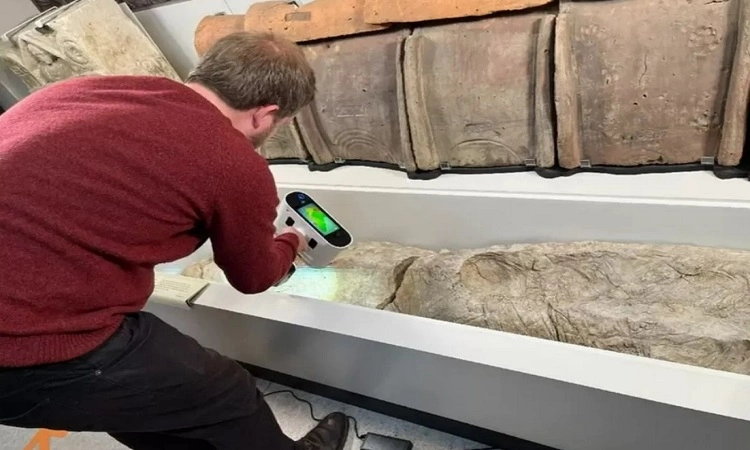
These plaster burials aren’t unique to one place; archaeologists have found examples across Europe and North Africa, with at least 45 recorded cases in Britain alone. What makes this latest find especially remarkable is what the scans revealed: beneath what was believed to be a typical single burial now stands evidence of a family tragedy — two adults and a newborn child buried together, their forms forever preserved in the hardened plaster. Using advanced 3D scanning, researchers could finally visualize distinct body shapes and positions that are impossible to discern with the naked eye.
Professor Maureen Carroll, head of Roman archaeology at the University of York, explained that while the outlines of the individuals were once visible, the new digital scans brought clarity to details long obscured — from body posture to the possible arrangement of wrappings or clothing. These plaster cast burials provide a rare portal into ancient lives, offering clues about burial customs and even personal life stories that would otherwise be lost to time.
Next, the team plans to conduct more detailed analyses to uncover the age, sex, diet, and potential geographic origins of the family members entombed together. Despite all the insights, one big mystery remains: why did the Romans practice this unusual form of burial? So far, evidence suggests it was not just reserved for the elite, and its cultural or ritual significance continues to perplex experts.
Regardless of its original purpose, this plaster burial practice has become an invaluable resource for archaeologists. As digital archaeologist Patrick Gibbs of Heritage360 noted, advanced scanning technology now allows researchers to extract microscopic details from artifacts that would have been impossible to see otherwise.
Through the blend of ancient burial art and cutting‑edge technology, scientists are piecing together stories from the distant past — not just names and dates, but moments of human tragedy, family bonds, and the silent echoes of lives that would otherwise be forgotten.