Scientists Finally Understood the Sumerian Star Map — And It Changes Everything
Scientists Finally Understood the Sumerian Star Map — And It Changes Everything
For more than a century, the clay disk sat like a broken message from the sky. Then researchers looked again—and realized it might not be only a star map, but a record of how ancient people watched the heavens for disaster.
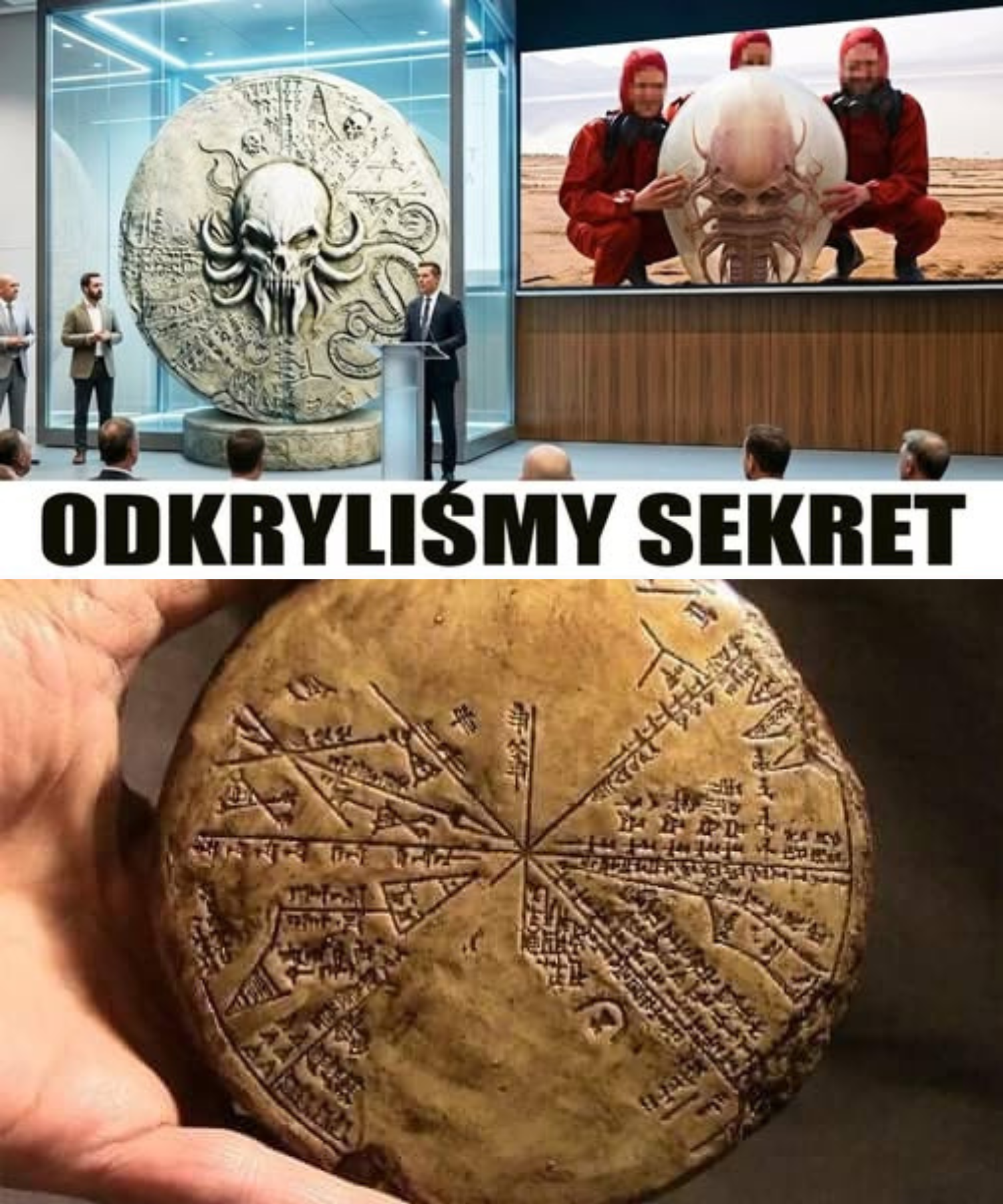
The artifact often called the “Sumerian star map” is one of those ancient objects that seems too strange to belong comfortably in any museum drawer. It is circular, divided into wedge-like sections, marked with cuneiform writing and star symbols, and damaged enough to make every interpretation feel partly like archaeology and partly like decoding a warning after half the page has burned away. To casual viewers, it looks like a prehistoric astronomical chart. To specialists, it is more complicated: a Neo-Assyrian planisphere from the library of Ashurbanipal at Nineveh, preserving a tradition of Mesopotamian sky knowledge far older than the tablet itself.
That distinction matters. Calling it “Sumerian” is dramatic but not perfectly precise. The tablet we have is associated with Assyrian Nineveh, centuries after the earliest Sumerian civilization. Yet Mesopotamian astronomy was built on layers of earlier observation, scribal tradition, and inherited star lore. In that sense, the disk stands at the end of a very old chain: Sumerian, Akkadian, Babylonian, and Assyrian minds all looking upward, recording the night, and believing the sky was not silent.
The object’s museum number is K.8538. Its more famous name is the Nineveh Planisphere. It is not large. It does not glitter. It has no royal portrait, no battle scene, no golden frame. But it may be one of the most haunting pieces of ancient astronomical material ever found.
The surface is divided into eight radial sectors. Within those sectors are cuneiform labels and schematic drawings of stars or constellations. Some modern identifications connect its figures with groups such as Gemini, the Pleiades, and Pegasus. The British Museum’s interpretation places it in the night sky over Nineveh in early January 650 BCE. Other researchers have argued far more dramatically that the tablet may copy a much older Sumerian observation of an asteroid or comet connected to the Köfels landslide in Austria.
That claim is controversial.
But the controversy is exactly why the star map has become famous again.
If the conservative reading is correct, K.8538 is still extraordinary: a rare circular diagram of Mesopotamian astral knowledge, showing how ancient scribes organized the sky before modern astronomy, before telescopes, before digital star charts, before the division between astronomy and astrology became sharp. If the more radical reading is correct, then the tablet may preserve a record of a catastrophic celestial event seen thousands of years ago, turning a museum object into one of humanity’s earliest disaster reports.
Either way, the tablet changes how we think about ancient science.
For too long, people imagined ancient sky watchers as mystical dreamers, staring upward with fear and superstition. That is only half the truth. Yes, Mesopotamian astronomy was deeply religious and omen-based. Eclipses, planetary movements, strange lights, and unusual stars were interpreted as signs from the gods. But that religious framework did not prevent careful observation. In fact, it encouraged it. If the sky carried messages from divine powers, then every star, every wandering planet, every eclipse, every comet-like appearance mattered.
The heavens had to be watched.
Recorded.
Compared.
Preserved.
This is why Mesopotamia became one of the great birthplaces of astronomical tradition. Scribes recorded celestial events with discipline. They developed star lists, omen series, calendars, and mathematical methods. They watched the moon, planets, and fixed stars over generations. Their work eventually shaped later Babylonian astronomy, which influenced Greek astronomy, which flowed into the wider scientific inheritance of the world.
The Nineveh Planisphere belongs to that long inheritance. It is a reminder that the ancient world was not intellectually dark. It was watching.
The most dramatic interpretation of the tablet came from researchers Alan Bond and Mark Hempsell, who argued that the planisphere records an ancient observation of a large object entering the sky in 3123 BCE, possibly connected to the Köfels event in Austria. According to their theory, a Sumerian observer recorded the path of a celestial body so precisely that modern reconstruction could identify the date and trajectory. In this version, the tablet is not just a star map. It is a witness statement from the Bronze Age sky.
The idea is thrilling.
It is also disputed.
Mainstream scholars remain cautious because the tablet is fragmentary, difficult to read, and not universally accepted as a disaster record. Many experts interpret it within the known world of Mesopotamian star diagrams and astro-magical material rather than as a literal record of an asteroid impact. The Köfels event itself is also debated in relation to impact theories. Dramatic claims require strong evidence, and the tablet does not give up its meaning easily.
But even if the asteroid interpretation is not accepted as proven, the fact that such a theory could be seriously proposed tells us something important: ancient astronomical records may preserve more than myth. They may contain observations of real sky events hidden inside symbolic language.
This is where the story becomes fascinating.
Ancient people did not separate categories the way we do. A bright object in the sky could be both a physical event and a divine sign. An eclipse could be astronomy and omen. A meteor could be a rock from space and a message from heaven. A star map could be scientific diagram, ritual object, teaching tool, and cosmic warning at the same time.
Modern readers often want to choose one meaning.
The ancient world often held several at once.
That is why the Nineveh Planisphere is so difficult to understand. It refuses to become merely practical or merely mystical. Its geometry suggests order. Its cuneiform text suggests scholarly interpretation. Its star symbols suggest observation. Its format suggests teaching or ritual use. Its damage leaves gaps large enough for competing theories to survive.
The tablet is not a solved equation.
It is a partially opened door.
Behind that door lies a civilization that treated the sky as urgent. The people of Mesopotamia built cities on river plains where survival depended on cycles: floods, seasons, planting, harvest, royal timing, ritual calendars, and celestial regularity. A disturbed sky meant a disturbed world. A king’s fate might be read in the heavens. A coming disaster might be warned by an eclipse. A strange star might be logged because it could mean famine, war, plague, or divine anger.
To modern people, this sounds superstitious. But underneath it was a serious insight: the world is patterned, and survival depends on reading patterns.
That insight is the root of science.
The same impulse that made a Mesopotamian scribe record celestial omens eventually made later astronomers calculate planetary motion. The desire to know what the sky was doing became stronger than fear. The night became a text. The stars became data. The gods were believed to speak through the heavens, but to hear them, humans had to observe carefully.
The Planisphere captures that moment in human history: when watching the sky was both worship and analysis.
The eight-sector design is especially intriguing. Many later circular astronomical diagrams use twelve divisions, often associated with months or zodiacal structure. K.8538’s eight divisions are unusual, suggesting either a distinct tradition, a specific observational scheme, or a specialized diagram whose purpose is no longer fully understood. That unusual format may be one reason the artifact became fertile ground for bold theories. It does not behave like every other known Mesopotamian diagram.
That makes it dangerous to interpret too confidently.
But it also makes it priceless.
A normal tablet teaches us what was common.
A strange tablet teaches us where the boundaries of knowledge are.
K.8538 may reveal a Mesopotamian method of representing the sky that did not survive widely. It may preserve a snapshot of a particular night. It may connect named constellations with specific positions. It may have been used for teaching, ritual, omen interpretation, or astronomical reference. Or, if the radical theory is partly right, it may encode a memory of something terrifying that crossed the sky and was never forgotten.
The phrase “changes everything” should not mean that all history is suddenly overturned. It means the tablet changes the assumptions many people bring to ancient civilization. It tells us ancient sky watchers were more systematic than stereotypes allow. It shows that astronomical diagrams existed in forms more complex and varied than most casual readers realize. It reminds us that the boundary between science and religion was once porous, and that early observation often grew inside sacred systems rather than outside them.
It also changes how we think about memory.
If the tablet is a Neo-Assyrian copy of older material, then we are looking at knowledge that traveled through centuries. A scribe in Nineveh may have copied or adapted traditions inherited from earlier Mesopotamian scholars. This means the object is not merely a moment. It is a chain. It carries the memory of previous observers, previous teachers, previous archives, previous fears, and previous nights under the stars.
That is the power of clay.
Paper burns. Oral memory fades. Digital files corrupt. But baked clay can sit under ruins for thousands of years and wait.
The Planisphere waited.
Then modern people found it and began arguing over what it meant.
That argument itself is valuable. It proves that ancient texts are not dead. They still challenge us. They still expose our assumptions. One reader sees a star chart. Another sees a cosmic impact record. Another sees an astro-magical diagram. Another sees a teaching device. The truth may include parts of several interpretations, or it may remain beyond full recovery because the cultural setting that made the tablet obvious to its users has vanished.
Imagine placing a modern subway map in the hands of archaeologists ten thousand years from now, after all cities, languages, and transport systems had disappeared. They might identify lines, nodes, colors, and labels. But would they understand commuting? Rush hour? Ticketing? Urban anxiety? The lived world behind the diagram would be missing.
The same is true of the Planisphere.
We have the diagram.
We do not have the room in which it was read.
We do not hear the teacher explaining it.
We do not know whether the scribe treated it as astronomy, omen, ritual, archive, or memory of disaster.
We have the object, but the human context must be reconstructed from fragments.
That is what makes the artifact haunting.
The radical asteroid theory adds another layer of modern fear. We now know Earth is vulnerable to impacts. Meteors enter the atmosphere. Asteroids pass near the planet. The Chelyabinsk meteor in 2013 reminded the world that the sky can still surprise us. If ancient people witnessed a major celestial event, it would have been terrifying beyond words: a fireball crossing the heavens, light brighter than dawn, sound like thunder, dust or shock waves, and perhaps consequences that survivors would interpret as divine judgment.
If a scribe recorded such an event, the record would likely not read like a modern scientific report. It would use the language of stars, gods, omens, directions, and signs. That makes identification difficult but not impossible in principle. The question is whether K.8538 truly preserves that kind of observation or whether modern interpreters are projecting a disaster narrative onto an astral diagram.
That question remains open.
But the debate itself reveals a powerful truth: ancient records may preserve real natural events in symbolic form.
Flood stories may remember regional floods. Eclipse omens may preserve astronomical records. Comet descriptions may hide inside royal warnings. Star maps may preserve the memory of nights that frightened entire communities. Myth and observation often grew together.
The ancient sky was not entertainment.
It was survival.
For Mesopotamian rulers, celestial interpretation had political force. If an eclipse threatened the king, rituals might be performed. If omens suggested danger, priests and scholars were consulted. Astral knowledge belonged to power because power depended on knowing what the gods were saying. This means that star maps were not idle curiosity. They were part of governance, ritual, and cosmic order.
That is another way the Planisphere changes everything. It shows that early science was not always separate from statecraft. Knowledge of the sky helped shape decisions on Earth. Priests, scribes, and scholars were not merely dreamers. They were advisors, record keepers, interpreters, and guardians of cosmic information.
Their work may look strange to us.
But our world does something similar.
Today, governments track satellites, solar storms, meteor threats, climate patterns, missile launches, and astronomical events. We no longer call them omens, but we still treat the sky as a domain of warning. We still build systems to watch what comes from above. We still fear objects we cannot control.
The ancient scribes would understand that fear.
They would simply ask why we stopped calling it sacred.
The Planisphere also reminds us that the history of astronomy did not begin in Greece alone. Greek astronomy was important, but it inherited a great deal from Babylonian and Mesopotamian traditions. The careful observation of celestial cycles in Mesopotamia laid foundations for later mathematical astronomy. Our modern division of the hour into sixty minutes and the circle into 360 degrees still echoes the sexagesimal number system that Mesopotamian scholars used.
In small ways, we still live inside their sky.
Every time we look at a clock, we inherit their number system.
Every time we divide a circle, we inherit part of their mathematical imagination.
Every time we track planets, eclipses, and celestial cycles, we continue a human habit that Mesopotamian scribes helped make durable.
K.8538 sits inside that inheritance, a broken disk linking modern observers to ancient watchers.
The most responsible conclusion is not that scientists have fully solved the Sumerian star map and proven one spectacular claim. The better conclusion is that the Planisphere has become a meeting point between archaeology, astronomy, history of science, and human imagination. It shows that ancient Mesopotamian sky knowledge was sophisticated, symbolic, and still not completely understood. It may preserve a particular night sky. It may belong to astro-magical practice. It may copy older traditions. It may even, in disputed interpretations, point toward a remembered celestial disaster.
What it certainly does is force humility.
We are not the first people to watch the sky carefully.
We are not the first people to fear what might come from above.
We are not the first people to believe the heavens carry meaning.
The ancient star map changes everything because it collapses the distance between their world and ours. A scribe in Nineveh, or perhaps a tradition reaching back even earlier, looked upward and tried to turn the night into a readable pattern. Thousands of years later, we do the same with telescopes, satellites, databases, and simulations.
The tools changed.
The gesture remains.
Human beings look up.
They search for order.
They fear disaster.
They preserve what they see.
And sometimes, a broken clay disk survives long enough to remind us that the sky has always been both beautiful and dangerous.
The Planisphere is not just an artifact.
It is an ancient act of attention.
A warning, perhaps.
A map, certainly.
A mystery, still.
And after all this time, it continues to do what the best ancient objects do: it makes the modern world feel young.