Shocking Times Strange Creatures Were Captured On Camera !
Shocking Times Strange Creatures Were Captured On Camera !
The modern horror story does not begin with a creaking door or a sudden drop in temperature; it begins with an automated smartphone notification at 3:14 AM. Across suburban developments, rural state highways, and isolated campsites, millions of Americans are waking up to discover that their security networks, dashboard cameras, and trail logs are capturing things that standard biology cannot account for. From a pale, unnaturally thin figure staring directly into a backyard lens in Dallas to an amorphous shape slipping between stray dogs on a street in Romania, these viral fragments have bypassed traditional folklore to build a new, hyper-connected mythology. Captured on the very technology meant to provide absolute safety, these digital anomalies have transformed our collective relationship with the unknown, turning the internet into a vast, uncurated repository of human dread.
The Automation of the Uncanny
For generations, human beings controlled the narrative of the supernatural. Ghost stories required an active storyteller—a grandparent whispering around a campfire, a regional historian documenting local eccentricities, or a Hollywood director manipulating shadows on a movie screen. In these contexts, the human element was the filter through which fear was digested.
The digital age has completely dismantled this framework. The most viral, unsettling footage circulating through modern subcultures relies entirely on the absence of human bias. When an automated home security system captures a featureless humanoid with glowing eyes stalking past a parked car, the terror stems from the absolute indifference of the lens. The camera doesn’t gasp, it doesn’t panic, and it doesn’t choose where to look based on fear; it simply logs pixels.
This mechanical neutrality creates a profound psychological rupture. When we view a crisp, high-definition creature in a multi-million-dollar cinema production, our brains immediately recognize the artistry, separating the spectacle from reality. However, when we watch a grainy, 15-second clip from a consumer-grade wildlife tracker, our internal skepticism is fundamentally short-circuited. The frame rate is stuttered, the lighting is overexposed by automated infrared arrays, and the compression artifacts blur the edges of the image.
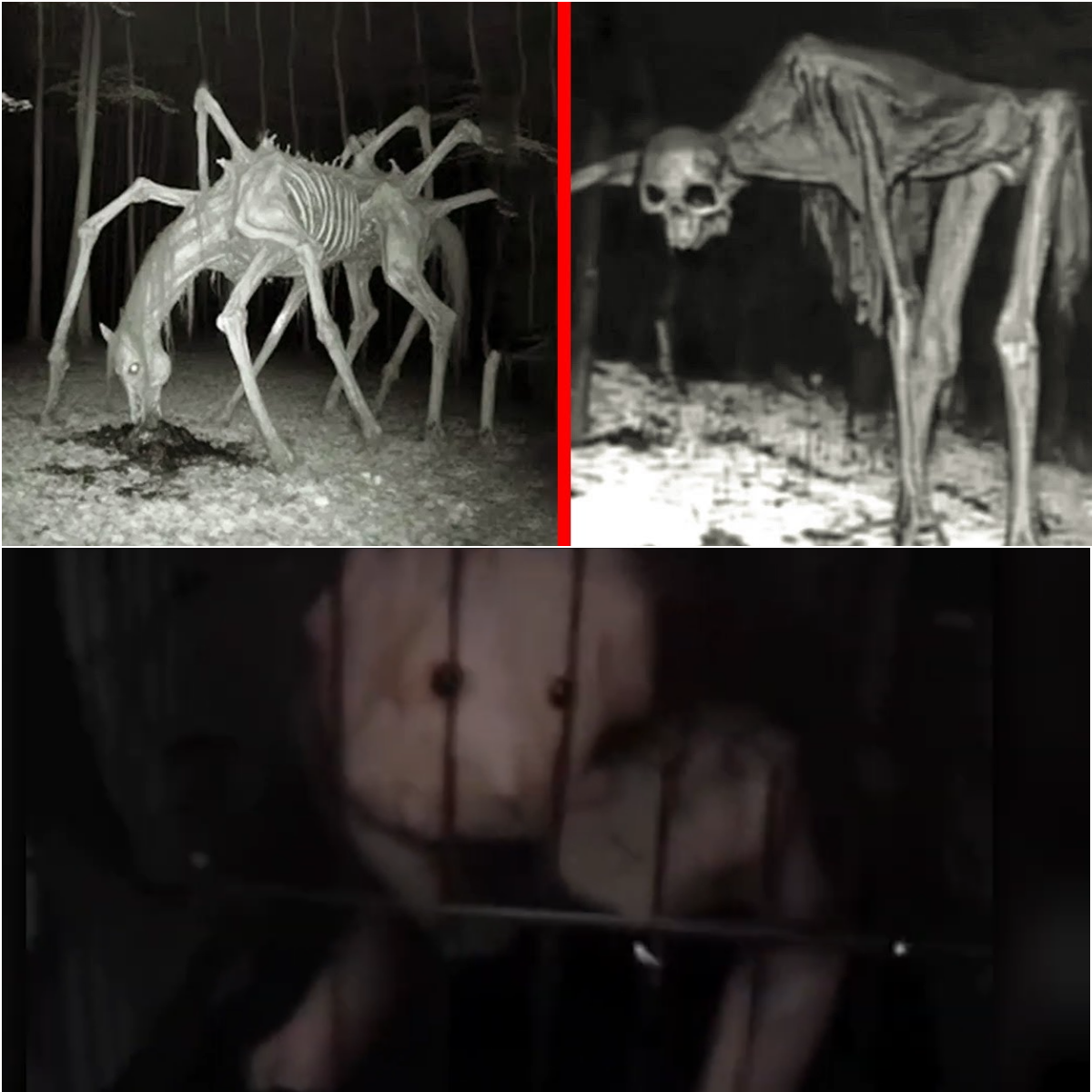
Ironically, these technological limitations are precisely what make the modern cryptid feel authentic. By operating within the visual vocabulary of the mundane—the flat, gray tones of a midnight security feed or the shaky illumination of a dashboard array—these anomalies blend seamlessly into the background of everyday life. They suggest that the world we have painstakingly mapped, monitored, and illuminated remains fundamentally untamed just beyond the reach of our sensor ranges.
The Global Migration of Folklore
As these video snippets travel across algorithms, they strip away the localized boundaries that once kept regional folklore distinct. Historically, monsters belonged to specific landscapes. The Skinwalker was inextricably bound to the cultural and spiritual geography of the American Southwest; the Wendigo occupied the frozen, timbered expanses of the northern forests; and the Chupacabra belonged to the agricultural communities of Puerto Rico and Mexico.
On the internet, however, these names have been detached from their origins and repurposed as universal labels for anything that defies immediate categorization. When a group of friends driving between Austin and Dallas steps into an abandoned house and documents a severely deformed canine pacing inside a rusted cage, the comment sections do not engage in biological speculation. Instead, they instantly tag the creature as a “Skinwalker dog.”
The same phenomenon occurs when a motorist captures a tall, arachnid-like humanoid stepping past stalled traffic at a intersection in Russia, or when a homeowner in Philadelphia documents a stray animal moving with the inverted, skeletal gait of a creature from a nightmare.
This rapid, cross-cultural shorthand reveals how the internet has flattened our collective vocabulary of fear. The complex, nuanced spiritual histories of ancient cultures are systematically distilled into easily searchable keywords. In this new digital taxonomy, a “Skinwalker” is no longer a specific entity from tribal tradition; it is any visual representation of a body that looks almost, but not quite, human. It is the definitive modern manifestation of the uncanny valley, shared globally and instantly across millions of screens.
The Broken Boundaries of Domestic Safety
The psychological weight of these videos is most acute when the anomaly breaches the perimeter of the home. Throughout the twenty-first century, the market for smart-home surveillance has expanded exponentially, driven by a cultural desire for total environmental control. We have ringed our properties with motion sensors, floodlights, and high-definition lenses to construct an absolute barrier between the safety of the interior and the volatility of the outside world.
Yet, these very systems are increasingly functioning as windows into an unsettling reality. Consider the case of a Texas resident who was awakened by a persistent, scratching sound against his exterior siding. Rather than opening the door, he consulted his smartphone to view his backyard security feed. The resulting footage documented a pale, hairless humanoid crouching near his porch steps, its head twisting with a calculated, insect-like precision as it scanned the windows.
In that moment, the technological apparatus designed to provide peace of mind became the vehicle for a profound psychological violation. The wall did not keep the nightmare out; the camera simply forced the homeowner to watch it approach.
This erosion of domestic security is mirrored in reports from rural agricultural communities, where the infrastructure of the farm becomes a stage for the bizarre. In a small village in Thailand, a group of farmers attempting to identify a suspected livestock thief instead documented a dark, elongated anomaly that moved fluidly between the shadows of a goat pen before executing an impossible leap into a nearby river.
Similarly, a livestock owner late at night documented one of his animals standing perfectly upright on its hind legs in the center of a locked barn, its eyes reflecting the camera’s infrared light with an expression that felt completely disconnected from animal intelligence.
When these moments go viral, they resonate deeply with an audience that is increasingly isolated inside climate-controlled, monitored spaces. They serve as an unsettling reminder that our modern insulation is fragile, and that the ancient, unpredictable forces of nature can still manifest on the other side of a double-pane glass window.
Technological Intrusion and Institutional Anxiety
Beyond the domestic sphere, a significant subset of modern digital folklore focuses on the spaces where institutional order collapses. The security cameras of abandoned buildings, locked zoological facilities, and isolated transit corridors frequently capture anomalies that suggest a breakdown of both physical law and bureaucratic control.
A striking example of this subgenre emerged from an abandoned industrial site in Peru. During a routine midnight patrol, a security detail documented a figure dressed in white moving rapidly through a vacant courtyard. As the camera zoomed in, the physical proportions of the individual became violently distorted, revealing a silhouette that appeared entirely headless yet capable of navigating the terrain at an impossible velocity.
In a similar vein, a group of urban explorers navigating a restricted sector of a European zoo documented a hidden, reinforced enclosure containing a humanoid entity whose physical characteristics suggested a radical, artificial alteration of human anatomy.
These narratives tap into a deeply rooted American anxiety regarding clandestine scientific overreach and industrial decay. For decades, popular culture has wrestled with the fear of the “mad scientist” or the escaped laboratory experiment. In the digital age, this anxiety is fed by imagery that looks like leaked corporate data or classified surveillance footage.
When we watch a grainy video of a monkey exhibiting an unnaturally elongated, bio-mechanically distorted arm while foraging near a forest boundary, or a bizarre, multi-limbed “dirt creature” undulating through a campsite in Texas, the internet subculture quickly constructs a narrative of failed containment. The horror is no longer strictly supernatural; it is systemic. The monsters are viewed as the unintended byproducts of our own technological advancement—mutations, escapes, and structural anomalies that the authorities are desperate to keep hidden from the public record.
The Psychology of the Shared Shudder
It is an elementary task for digital forensics experts to dismantle the majority of these videos. They can point to the subtle tells of computer-generated imagery, the clever use of practical prosthetics, the manipulation of video playback speeds, or the simple misidentification of common wildlife suffering from advanced disease. A squirrel acting with a dazed, erratic gait on a picnic table in Minnesota is easily explained by the consumption of fermented fruit; a large, unidentifiable shape in an English national park is highly likely to be a misplaced domestic animal or a trick of forced perspective.
Yet, the systematic debunking of these clips does nothing to slow their circulation or diminish their cultural impact. To focus entirely on whether a video is “real” is to misunderstand why these images possess such an unyielding grip on the public imagination. We do not watch these countdowns because we demand ironclad scientific proof of the paranormal; we watch them because we live in a world that has been thoroughly, systematically disenchanted.
Nearly every corner of the modern globe has been mapped by satellites, cataloged by corporate entities, and broken down into predictable data points. Our behaviors are tracked by algorithms, our cities are illuminated by relentless municipal lighting, and our futures are managed by risk-assessment software. In this hyper-structured environment, the human psyche experiences a form of existential claustrophobia. The boundaries of the map have been reached, and there are no blank spaces left for the imagination to occupy.
The viral cryptid represents a chaotic, vital rebellion against this total predictability. When a viewer watches a piece of footage depicting a towering, antlered entity stepping out from behind a tree line in West Virginia, or a tiny, goblin-like being retreating behind a rock in the Russian wilderness, a primitive part of the brain experiences a profound sense of relief. The video offers a brief, flickering suggestion that our mastery over the environment is an illusion. It hints that the world remains vast, dangerous, and deeply mysterious—that there are still secrets hidden in the woods that cannot be explained away by a spreadsheet or a corporate press release.
The Fireside of the Twentieth-First Century
Ultimately, the digital bestiary functions as the modern equivalent of the traditional folklore circle. The comment sections beneath these video compilations are not merely arenas for debate between skeptics and true believers; they are digital town squares where a highly atomized society comes together to process a shared vulnerability. Strangers from completely different geographic and socioeconomic backgrounds gather to analyze the physics of a shadow, to recount their own unexplainable experiences on dark country roads, and to offer mutual reassurance against the terrors of the night.
We have replaced the ancient stone hearth with the glow of the organic light-emitting diode (OLED) screen, and we have traded the hushed warnings of the tribal elder for the voiceover of an online narrator. The tools used to document our lives have grown unimaginably sophisticated, turning every citizen into a potential archivist of the unknown. Yet, despite all of our progress, our core psychological architecture remains entirely unchanged from that of our ancestors.
We remain a species that is fundamentally afraid of the dark, standing at the edge of an immense, silent forest, holding up our flashlights and our cameras, desperately trying to see what is looking back.