The Mount Of Olives Is Splitting: Is Jesus’ Return Happening Right Now? | The Case For Christ
The Mount Of Olives Is Splitting: Is Jesus’ Return Happening Right Now? | The Case For Christ
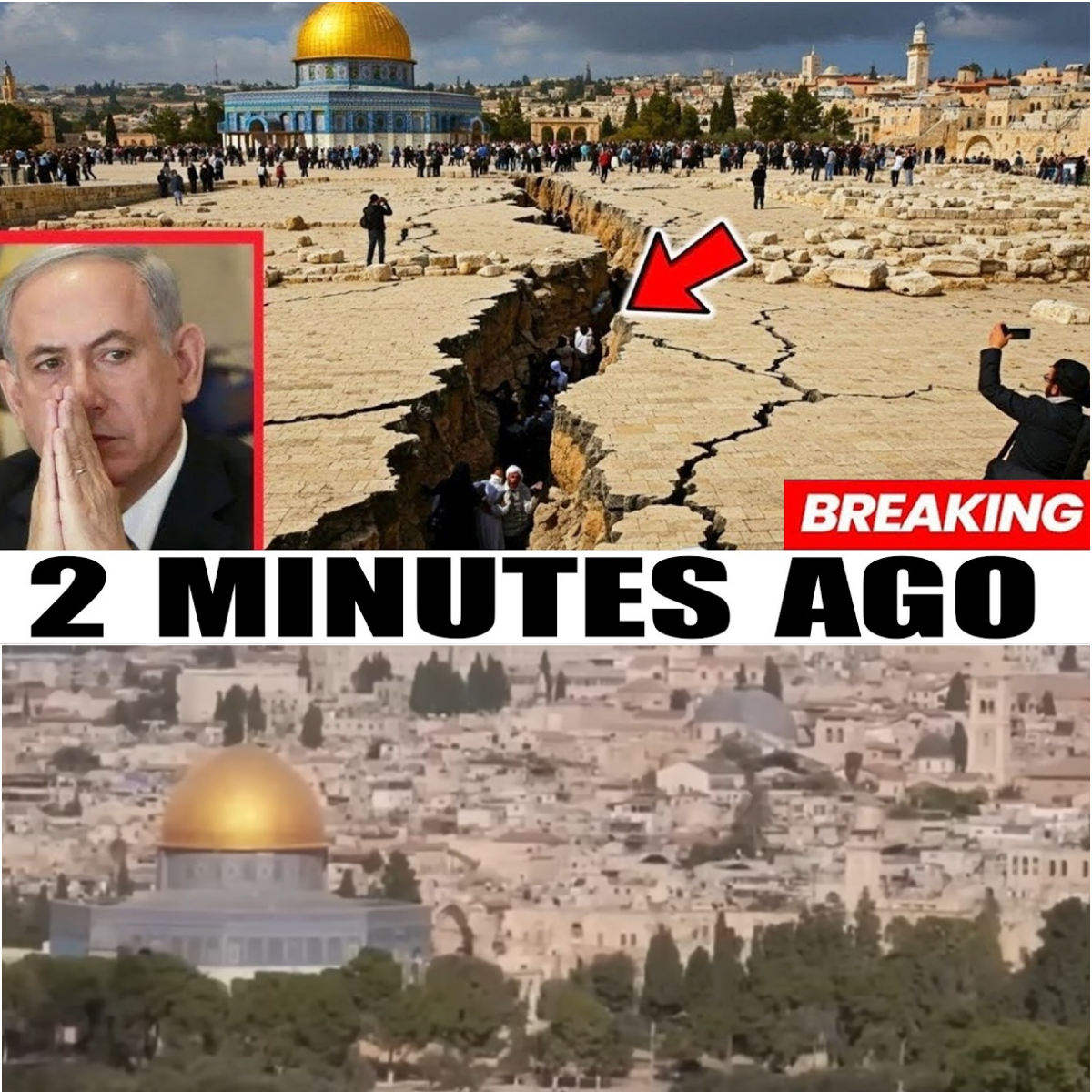
Along the eastern spine of Jerusalem, where the ancient limestone of the Mount of Olives overlooks the Old City, the earth is subtly breaking. For months, reports of widening fissures, localized soil shifting, and structural stress near the historic Eastern Gate have bypassed standard geological journals to ignite a roaring firestorm across global prophetic networks. In an age characterized by compounding global instability, these surface-level fractures are no longer viewed by onlookers as mere byproducts of shifting soil, but as a tangible, physical manifestation of an ancient biblical countdown.
The Geography of Expectation
To understand why a collection of terrestrial cracks in a Middle Eastern hillside can capture the imaginations of millions of people across the American continent, one must understand the unique weight borne by the Mount of Olives. It is arguably the most prophetically heavily leveraged real estate on Earth.
For millennia, this ridge has served as the ultimate backdrop for Jewish, Christian, and Islamic eschatology—the theology of the end of the world. In Jewish tradition, the mountain’s slopes comprise the oldest and most sought-after burial ground in existence, home to an estimated 150,000 graves. The placement is entirely deliberate, driven by the enduring belief that when the Messiah arrives, the resurrection of the dead will commence on this very hillside, with believers rising to face the Eastern Gate of the Temple Mount.
For Christians, the location is inextricably linked to both the deep sorrow and final triumph of Jesus. It is where he wept over Jerusalem, where his sweat fell like drops of blood in the Garden of Gethsemane, and crucially, where he ascended into heaven. The New Testament Book of Acts includes an explicit promise from an angelic visitation: that Jesus would return to Earth in the exact same manner and location from which he departed.
Consequently, when YouTube videos, blog posts, and theological commentary began circulating images of newly formed ground fissures slicing through the mountain’s eastern slope, it did not matter that the cracks were relatively minor in the grand scale of global geology. In the human imagination, every millimeter of shifting dirt on the Mount of Olives is viewed through a magnifying glass of cosmic proportions.
Zechariah’s Fault Line: Where Scripture Meets Science
The current wave of internet speculation and digital sermons centers almost entirely around a specific, arresting passage from the Old Testament. The prophet Zechariah, writing centuries before the common era, penned a vivid description of the catastrophic events signaling the day of the Lord. In Zechariah 14:4, the text states: “And his feet shall stand in that day upon the mount of Olives… and the mount of Olives shall cleave in the midst thereof toward the east and toward the west, and there shall be a very great valley.”
To a literalist interpreter, the sudden appearance of fissures along the eastern slope feels like a slow-motion trigger of this exact verse. The conversation has evolved from a niche theological curiosity into a viral digital movement, with commentators pointing to the cracks as proof that the physical foundation of the mountain is preparing for its prophetic destiny.
Yet beneath this interpretive framework lies an undeniable, concrete scientific reality. The Mount of Olives is not a static monument; it sits directly on top of a highly active tectonic corridor.
Geologists have long documented that Jerusalem lies within the immediate danger zone of the Dead Sea Transform, a major fault line system that constitutes an extension of the Great Rift Valley. This tectonic boundary separates the African and Arabian plates, running from southeastern Africa all the way north into Turkey. The region is characterized by a slow, continuous accumulation of stress as the Arabian plate inches northward past the African plate.
When that accumulated pressure exceeds the friction holding the jagged subterranean rock faces together, the earth snaps. From a purely scientific perspective, the surface fractures and reports of shifting stones around the sealed Golden Gate are the textbook results of plate tectonics, localized erosion, and the natural settling of an urbanized mountain slope that has been built upon, tunneled through, and buried in for over three thousand years.
A History of Shaking
The intersection of science and scripture on the Mount of Olives is far from a modern phenomenon. The lands of the Bible have always been defined by their seismic volatility, a fact that ancient writers incorporated directly into their theological worldview.
The Old Testament explicitly recalls a catastrophic earthquake that shook Judea during the eighth century B.C., during the reign of King Uzziah. The trauma of that specific event was so profound that it was used as a historical marker by the prophets Amos and Zechariah, the latter referencing it as a benchmark for the level of terror to expect during the final judgment.
In recent decades, modern archaeology has vindicated these historical accounts. Excavations throughout Jerusalem, Hazor, and Gezer have uncovered dramatic evidence of this mid-eighth-century earthquake. Archaeologists have documented collapsed masonry walls, leaning foundations, and distinct strata of debris that correspond precisely with the timeline of Uzziah’s reign.
Furthermore, historical records document a long line of devastating earthquakes that have periodically reshaped Jerusalem’s holy topography. A massive quake in 31 B.C. reportedly claimed thousands of lives across Judea. Another major seismic event in 363 A.D. disrupted Roman efforts to rebuild the Jewish Temple, an event that contemporary chroniclers recorded with heavy supernatural overtones. In 749 A.D., the massive Galilee earthquake flattened cities across the region, heavily damaging structures on the Temple Mount itself.
When viewed against this historical backdrop, the current physical instability of the Mount of Olives is simply the continuation of a long, restless geographic story. The earth has shaken there before, and seismologists widely agree that it will inevitably shake violently again.
The Great Digital Apologetics Shift
The viral obsession with the Mount of Olives fractures illustrates a larger, fascinating shift in how modern religious discourse operates in the digital age. In an increasingly secularized Western culture, traditional religious authorities have found themselves losing ground. However, the human desire for a grand narrative—for a sense that history is moving toward a defined purpose rather than drifting aimlessly—remains fiercely potent.
What is happening now on platforms like YouTube, TikTok, and Christian media outlets is a form of empirical faith-building. Rather than asking followers to rely strictly on blind faith or abstract theological concepts, modern commentators are pointing to physical, tangible markers: satellite imagery of the Middle East, geological surveys of the Great Rift Valley, and local engineering reports from Jerusalem.
By aligning the mechanics of modern plate tectonics with the vivid poetry of ancient prophecy, these creators create a compelling synthesis for a skeptical, tech-savvy audience. The argument becomes intuitive: if the secular tools of geology confirm that a massive fault line runs directly through the Mount of Olives, then the ancient prophet Zechariah was describing a literal geological vulnerability that he could not have scientifically understood in the ancient world. To the believer, this is not a coincidence; it is divine design.
This perspective allows the modern observer to look at a chaotic world filled with geopolitical tension, climate anxiety, and institutional collapse, and see an underlying order. The cracks in the earth become signs of structural integrity rather than failure—evidence that a larger, sovereign plan is unfolding precisely on schedule.
The Silent Witness of Faith
Beyond the debates over fault lines and eschatological timelines, the Mount of Olives remains a profound symbol of endurance. It has stood as a silent witness to the rise and fall of empires, the complete destruction and rebuilding of Jerusalem, and the evolution of three global religions.
When the early disciples stood on its peak following the ascension of Jesus, as recorded in the Book of Acts, they were a tiny, fragmented minority facing the overwhelming, hostile power of the Roman Empire. They did not possess grand cathedrals, political influence, or physical security. Yet, according to the biblical narrative, it was from this mountain that they returned to Jerusalem to form a community rooted in prayer, anticipation, and an unshakeable belief in a promised future.
In this sense, the mountain represents the ultimate boundary line between the temporary and the eternal. The graves that cover its limestone face are placed in silent, generational defiance of death, positioned to catch the first light of a long-anticipated dawn.
As the ground beneath Jerusalem continues its slow, tectonic crawl, the true power of the Mount of Olives remains tethered to the human imagination. Whether the current fissures are the quiet precursors to a massive, inevitable regional earthquake or the literal footprint of a prophetic finale, they serve as an urgent cultural reminder. They challenge an anxious world to look up from the fragile, temporary foundations of modern life and consider what, if anything, is truly unshakable.