Something Is DEEPLY Broken Inside India
India’s Superpower Dream Is Cracking Under Structural Failure
India presents two very different stories at once.
On the surface, it is the world’s fourth-largest economy, posting GDP growth between 6% and 8% in recent years. It has successfully landed spacecraft on the Moon, its stock market has reached record highs, and global leaders routinely describe it as the next major engine of the world economy and a democratic counterweight to China.
But beneath these headline numbers lies a much more troubling reality — one defined by jobless growth, a failed manufacturing transition, extreme inequality, and a demographic window that is closing fast.
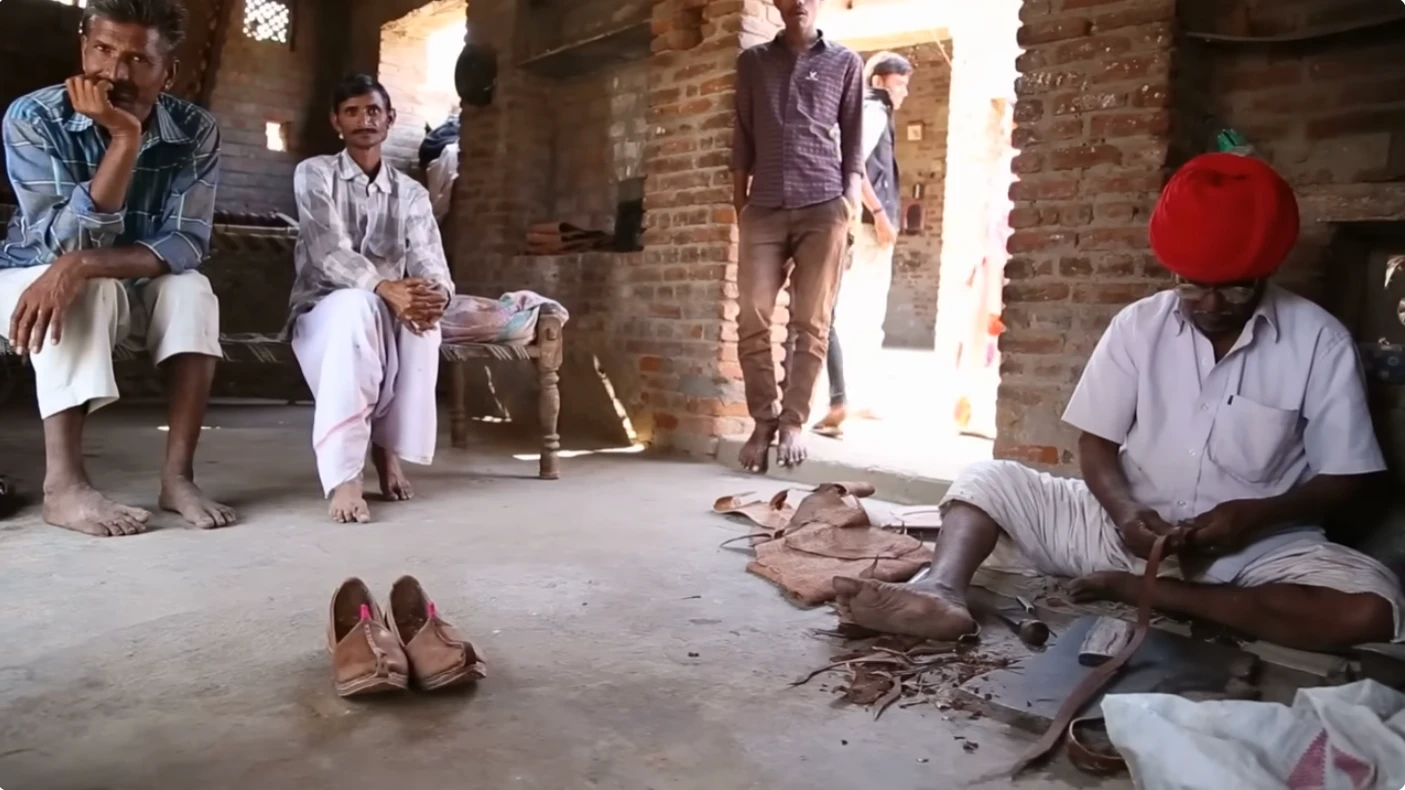
The Jobs Crisis No One Wants to Confront
Every year, between 10 and 12 million young Indians enter the workforce. This is roughly the population of Belgium arriving at the labor market annually. The economy is not creating nearly enough jobs to absorb them.
Independent data from the Centre for Monitoring Indian Economy has consistently shown higher unemployment than official government figures. Youth unemployment (ages 15–29) sits around 14% nationally, with urban youth unemployment closer to 17%. In some states, educated young women face rates exceeding 40%.
This isn’t just about raw unemployment numbers. India suffers from widespread “disguised unemployment,” where multiple people share work that could be done by one because no better opportunities exist. On paper, they may be counted as employed. In reality, they are economically stranded.
The desperation has already spilled into public anger. When the Indian Railways advertised around 35,000 positions in 2022, over 12 million people applied. Similar scenes have played out across other government recruitment drives, with highly educated graduates competing for low-skilled positions.
The Factory That Was Never Built
For decades, the standard path out of mass poverty has been industrialization — moving large numbers of people from low-productivity agriculture into factories. China, South Korea, and Vietnam all followed this model successfully.
India was supposed to do the same. The “Make in India” initiative, launched in 2014, aimed to raise manufacturing’s share of GDP from around 16% to 25%. Instead, manufacturing’s share has actually declined to around 13%.
While companies diversified away from China, many chose Vietnam, Bangladesh, and Mexico over India. Vietnam has overtaken India in several key export sectors despite having a much smaller population.
The reasons are well documented: difficult land acquisition, unreliable power supply, high logistics costs, and outdated labor laws that discourage companies from scaling up. High import tariffs on components have also made it more expensive to assemble many products in India than in competing countries.
As a result, India has largely skipped the mass-employment phase of industrialization and moved straight into a services-led model that primarily benefits the educated urban class.
AI Is Coming for the Services Ladder
For thirty years, India’s IT and services sector has been its greatest economic success story, creating millions of middle-class jobs. Companies like TCS, Infosys, and Wipro became global giants by offering skilled, English-speaking talent at lower costs.
That advantage is now under serious threat from artificial intelligence. Entry-level coding, data processing, and customer support roles — the traditional entry points into India’s services economy — are exactly the kinds of work generative AI can automate.
Major IT firms have already significantly reduced hiring. The sector that lifted millions into the middle class is now shrinking its entry-level opportunities at precisely the moment when millions more young people need them.
Extreme Inequality and a Broken Ladder
While parts of India’s economy have boomed, the gains have been highly concentrated. The top 1% now own over 40% of the country’s wealth. At the same time, the bottom 50% own just 3%.
Roughly 800 million people — nearly 60% of the population — currently receive free food grains from the government. This is presented as welfare, but it also reflects the economy’s inability to generate sufficient employment and income for the majority.
Rural wages have stagnated in real terms for years. Sales of entry-level vehicles and tractors — reliable indicators of rural economic health — have been weak. Even spending on the cheapest everyday items has come under pressure in many rural areas.
Meanwhile, the contrast with the lifestyles of the wealthy has become impossible to ignore, especially with the spread of smartphones and social media.
The Demographic Clock Is Ticking
India’s much-discussed “demographic dividend” — its young population — was supposed to be a major advantage. But a demographic dividend only delivers results if young people receive quality education, healthcare, and, most importantly, jobs.
India is struggling on all three fronts. Large numbers of graduates are poorly prepared for the modern job market. The window to capitalize on this demographic advantage is narrowing. By 2040–2050, India’s population will begin aging rapidly. The country risks growing old before it becomes rich.
Southern states are already aging quickly, while northern states continue to have higher birth rates. This geographic divergence is creating new political and economic tensions that could further complicate national progress.
A System That Rewards Concentration Over Competition
India’s regulatory environment has also contributed to these problems. Complex compliance requirements and slow legal processes make it difficult for mid-sized companies to grow. Many businesses deliberately stay small to avoid regulatory burdens.
At the same time, a small number of large conglomerates have expanded dramatically across multiple sectors. This concentration of economic power, combined with high barriers for smaller players, has limited broad-based job creation.
The Real Question
India is not collapsing. It remains a resilient society with significant strengths in technology, digital infrastructure, and geopolitics. However, resilience alone is not a development strategy.
The combination of jobless growth, a weak manufacturing base, an education system that produces too many unemployable graduates, AI disrupting its main job-creating sector, and extreme inequality represents a set of structural challenges rather than temporary obstacles.
India has roughly two decades of favorable demographics left before aging accelerates. Whether it can use that window to build the factories, skills, and institutions needed for mass employment will determine whether its current trajectory leads to broad prosperity or prolonged stagnation for the majority of its population.
The surface story of rapid growth and rising global influence is real. The deeper story of structural weakness and missed opportunities is equally real. Both need to be understood together.