Unprecedented Discovery in Egypt: 13,000 Ancient Inscribed Pottery Shards Unearthed, Expanding the Largest Ostraca Collection Ever Found
Unprecedented Discovery in Egypt: 13,000 Ancient Inscribed Pottery Shards Unearthed, Expanding the Largest Ostraca Collection Ever Found

Archaeologists have made a spectacular new discovery in Egypt, uncovering approximately 13,000 additional inscribed pottery fragments—known as ostraca—at the ancient site of Athribis in southern Egypt. This remarkable find has boosted the total number of ostraca recovered from the site to around 43,000 pieces, making it the largest collection of its kind ever excavated at a single archaeological location in Egypt, surpassing even the famed archives of Deir el‑Medina.
The joint Egyptian‑German archaeological mission announced the discovery at Athribis, located near the village of Nagaa El‑Sheikh Hamad, about 7 kilometers west of the city of Sohag. In antiquity, Athribis was a thriving urban center on the fertile banks of the Nile, playing a pivotal role in the religious and administrative life of Upper Egypt.
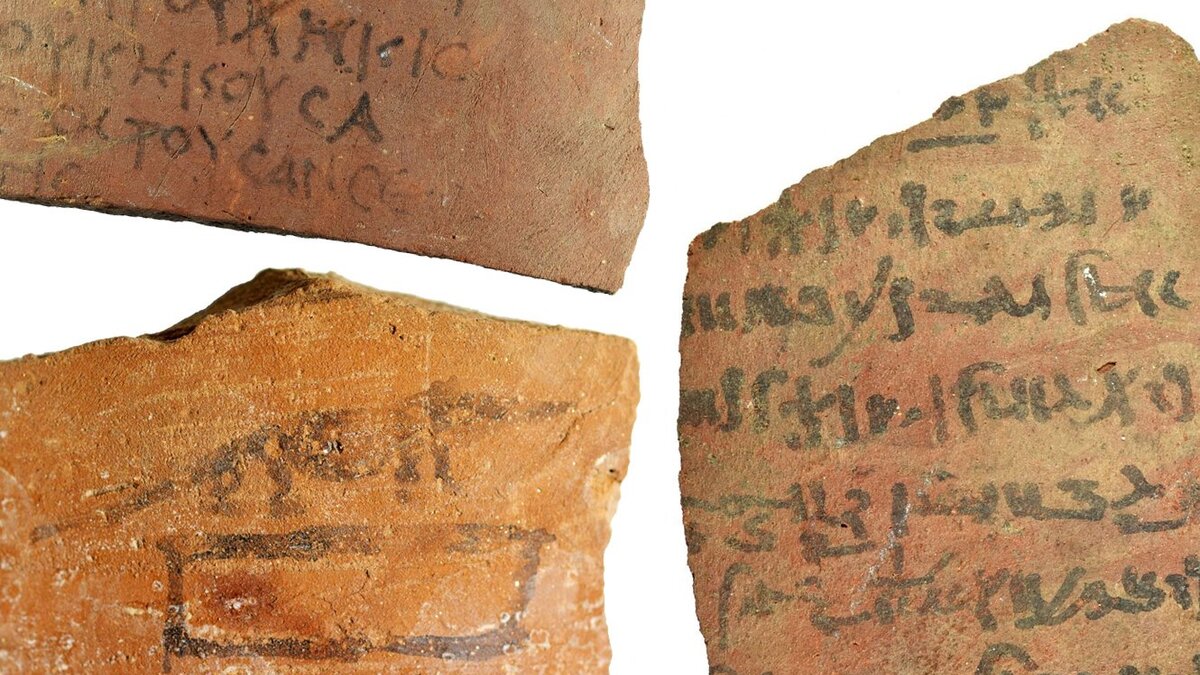
Unlike expensive papyrus, ostraca are broken pottery fragments that ancient scribes reused as writing surfaces. These everyday artifacts contain an astonishing range of texts that offer a vivid window into life in Athribis over more than a millennium. Researchers have documented a variety of records, including tax receipts, delivery orders, accounting logs, administrative lists, and even school writing exercises, illuminating the routines and organization of one of Egypt’s long‑lasting communities.
Beyond mundane records, some ostraca include religious writings—from hymns and prayers to sacrificial inventories for temple offerings. These rare texts are helping scholars reconstruct the spiritual landscape of Athribis and deepen understanding of ancient Egyptian belief systems.
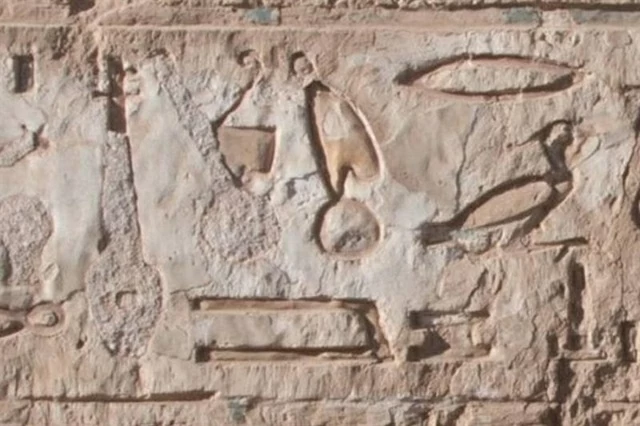
Linguistically, the ostraca are diverse: Demotic script dominates, comprising 60–75% of the inscriptions. Greek follows with 15–30%, and a smaller number are written in Hieratic, Hieroglyphic, Coptic, and Arabic, along with several dozen fragments bearing only illustrations or geometric designs.
A particularly exciting aspect of the discovery is the identification of more than 130 texts related to astrology and celestial observations, primarily in Demotic and Hieratic scripts, making Athribis one of the richest sources of ancient Egyptian astronomical material ever found.
All the ostraca are currently being studied under the Ostraca d’Athribis Project, led by Professor Sandra Lippert of the French National Centre for Scientific Research (CNRS). A team of over a dozen specialists in ancient languages, scripts, and ceramics has been working on the project since the 2018–2019 excavation season, aiming to reveal new insights into the social structures, economy, and religious life of Athribis across different historical periods.
Egypt’s Minister of Tourism and Antiquities, Sherif Fathy, emphasized that this discovery not only significantly enhances our understanding of Egyptian history but also strengthens Egypt’s position as a global center for archaeological research and heritage. Meanwhile, Hisham El‑Leithy, Secretary‑General of the Supreme Council of Antiquities, confirmed that the Athribis ostraca collection now holds a world record for the greatest number of inscribed pottery fragments found at a single site.
Excavation efforts are set to continue in the coming years, with archaeologists hopeful that even more ostraca will emerge from the sands. This extraordinary cache of ancient writings is not just a treasure trove of historical data—it is a living testament to the enduring power and complexity of Egyptian civilization across the ages.