Tensions Rise in China as Mosque Demolitions Spark Global Debate Over Religious Freedom
Mosque Demolitions in China Spark Global Debate Over Religious Freedom and Urban Policy
Reports and footage circulating online showing mosque demolitions and restrictions on public religious activity in parts of China have reignited a global debate about religious freedom, state authority, and cultural preservation. While Chinese officials describe the actions as part of broader urban planning and regulatory enforcement, critics argue the measures are raising serious concerns about the treatment of religious communities.
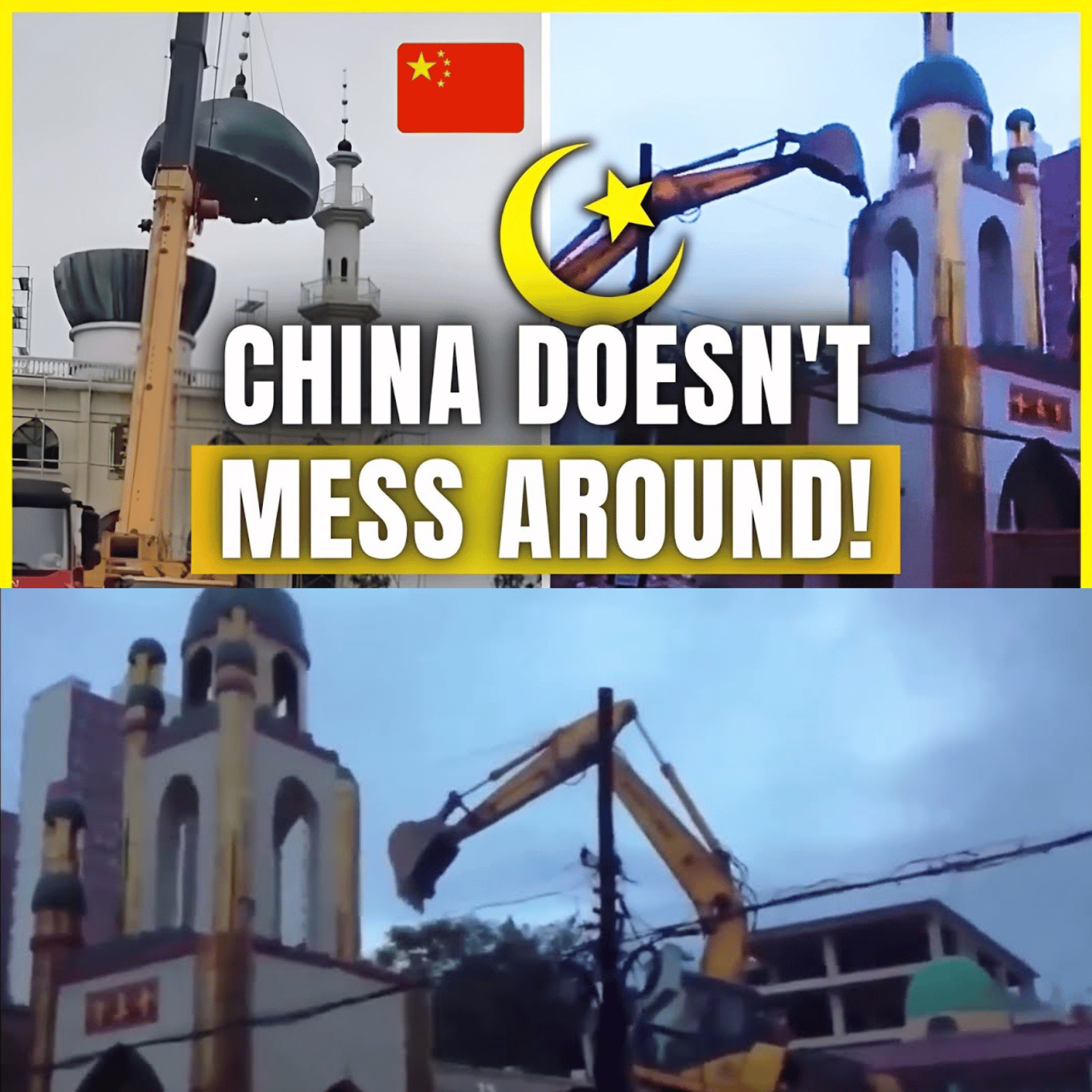
The videos, which have been widely shared on social media platforms, appear to show authorities dismantling mosque structures, removing architectural elements such as domes or minarets, and in some cases restricting public religious practices. The footage has prompted intense discussion internationally, with interpretations varying sharply depending on political and cultural perspective.
Authorities Cite Regulation and Urban Compliance
Chinese authorities have previously stated that religious buildings must comply with national construction codes and zoning regulations. In several regions, officials have implemented policies requiring religious sites to align with standardized architectural guidelines, which some argue are intended to ensure safety, structural consistency, and integration with surrounding urban environments.
In certain cases, local governments have described mosque modifications or removals as part of redevelopment efforts or legal compliance checks. Officials have also emphasized that religious practice is permitted in registered places of worship, but must operate within the framework of national law.
Supporters of these policies argue that they are not directed at any single religion, but rather reflect a broader approach to regulating religious institutions, construction permits, and public space usage in densely populated areas.
Concerns Raised by Human Rights Groups
However, human rights organizations and religious freedom advocates have expressed concern over what they describe as increasing restrictions on Islamic religious expression in some regions of China. Reports from international watchdog groups have documented cases involving the modification or demolition of mosque features, as well as tighter oversight of religious education and community leadership structures.
Critics argue that such measures may disproportionately affect Muslim communities, particularly in regions with significant ethnic minority populations. They claim that architectural changes—such as the removal of domes, Arabic script, or traditional design elements—can be seen as an erosion of cultural identity.
Some advocacy groups have also raised concerns about restrictions on public displays of religious practice, including prayer in open or non-designated spaces, suggesting that enforcement can sometimes be strict and highly visible.
Public Reaction and Viral Footage
The circulation of video clips showing mosque demolitions or enforcement actions has intensified global attention on the issue. In many cases, the footage is shared without full context, leading to competing interpretations online.
Some viewers see the images as evidence of systematic religious suppression, while others argue that they reflect routine enforcement of building codes and public order regulations.
In one widely circulated clip, construction crews appear to be dismantling parts of a religious structure while onlookers observe. Another video shows individuals being asked to stop public religious activity, with authorities intervening in what appears to be a crowded public space.
Because many of these clips originate from social media posts without official verification, analysts caution that context is often missing, including location details, legal background, and administrative justification.
The Broader Context of Religious Regulation in China
China officially recognizes several religions, including Islam, Buddhism, Christianity, Taoism, and others. Religious practice is permitted, but is regulated by state authorities through registration systems and oversight committees.
In recent years, the government has emphasized “sinicization” policies, which aim to align religious practice more closely with Chinese culture and socialist values. Officials argue that this helps ensure national unity and prevents foreign influence in domestic religious affairs.
These policies have been particularly discussed in relation to architecture, education, and religious leadership appointments. While supporters view them as measures of sovereignty and cultural cohesion, critics argue they limit religious autonomy and diversity.
International Response
International reactions to reports of mosque demolitions have been mixed and often politically charged. Some governments and human rights organizations have called for greater transparency and respect for religious freedom, urging China to allow independent observation and dialogue.
Others emphasize the importance of avoiding misinformation and stress that urban redevelopment and regulatory enforcement are common in many countries, though they acknowledge that religious sites require special sensitivity due to their cultural significance.
The Chinese government has repeatedly rejected allegations of religious persecution, stating that citizens enjoy freedom of religion under the law, and that all actions taken are within legal and administrative frameworks.
Social Media Amplification and Narrative Conflicts
As with many geopolitical issues, social media has played a significant role in shaping public perception. Short clips, often lacking context, can rapidly go viral and influence global narratives before official explanations are available.
Experts note that this creates a gap between perception and verified information, where emotionally charged interpretations often dominate online discourse.
This dynamic has made it increasingly difficult to separate documented policy actions from broader ideological narratives, especially when content is shared across multiple languages and platforms.
Conclusion
The ongoing debate over mosque demolitions and religious regulation in China highlights a complex intersection of governance, cultural identity, and religious freedom. While authorities emphasize legality, planning standards, and national cohesion, critics argue that the impact on religious communities warrants closer international attention.
As more footage continues to circulate online, the global conversation remains deeply divided—reflecting not only differing views on China’s policies, but also broader disagreements about the balance between state authority and religious expression in the modern world.
For now, the issue remains unresolved, and scrutiny from international observers is likely to continue as new reports and videos emerge.