Ex-Muslim Has a BRUTAL Message to Islamists Around The World!
Ex-Muslim Has a BRUTAL Message to Islamists Around The World!
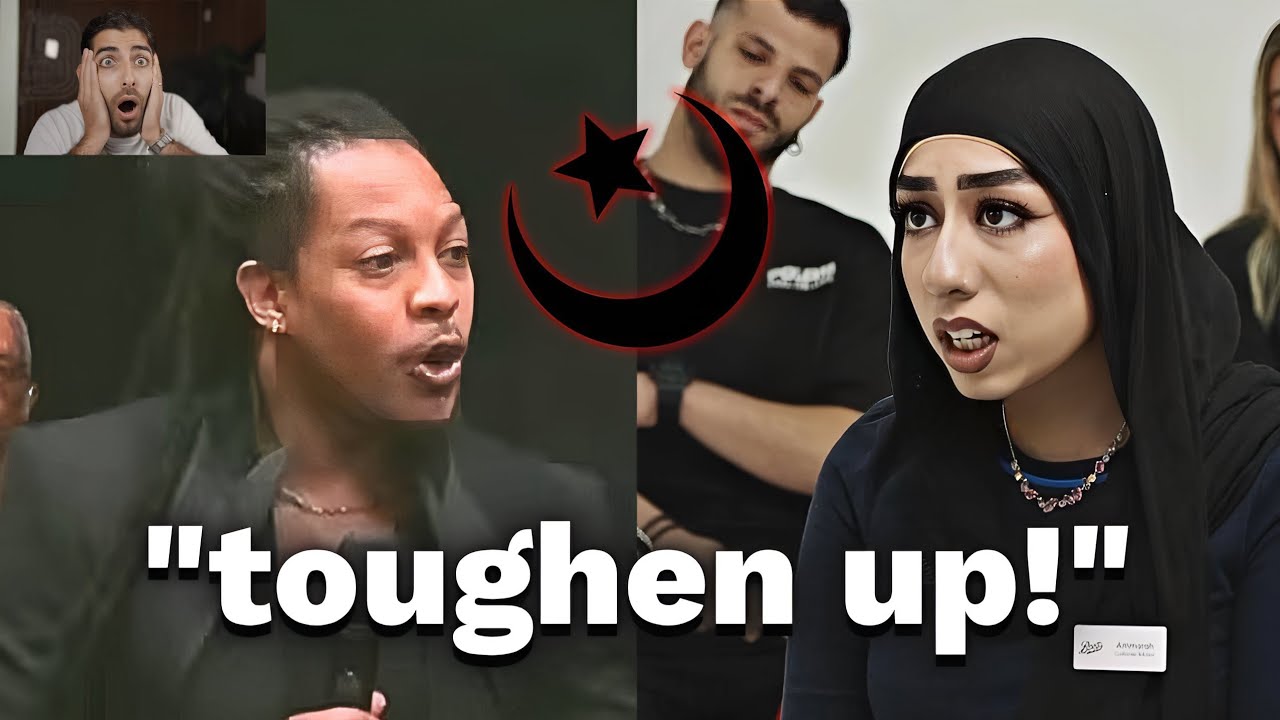
A fiery religious speech circulating online has ignited a wave of intense debate across social media, drawing attention not only for its confrontational tone but also for the deeper anxieties it reflects about immigration, religious identity, political leadership, and the future of Western societies.
The video, amplified by a political and cultural commentary channel, features a speaker who identifies as someone raised around Islam before converting to Christianity. In the speech, he warns Christians that they must become more assertive in defending their faith, their communities, and their political influence. His remarks, delivered to a responsive audience, are dramatic, emotional, and deeply controversial.
At the center of the controversy is a message that mixes personal testimony, religious conviction, political frustration, and sweeping accusations about Islam. The speaker argues that Christians have become too passive, that Western societies have become too tolerant of ideologies they do not understand, and that civic disengagement has created space for social and political forces he believes are hostile to Christianity.
The speech quickly became divisive. Supporters praised it as a bold warning from someone speaking out of personal experience. Critics condemned it as inflammatory rhetoric that unfairly portrays millions of Muslims as a collective threat and risks deepening hostility between religious communities.
The result is a viral moment that has become about far more than one sermon. It has opened a larger discussion about what it means to defend one’s faith in a pluralistic society, where the line falls between criticism of religious ideas and hostility toward religious people, and how fear can shape political language in times of cultural uncertainty.
The speaker begins by presenting himself as someone with personal knowledge of Islam. He says he grew up around it, attended religious schooling, and understands its teachings from the inside. That personal framing is central to the speech’s emotional power. By claiming lived experience, he positions himself not as an outsider attacking another religion, but as a witness warning Christians about something he believes they have failed to recognize.
This framing has helped the video spread among audiences who already feel anxious about religious change, immigration, and the perceived decline of Christian influence in Western countries. For them, the speaker’s background gives his remarks an urgency they might not attach to commentary from a politician or media personality.
But personal experience, while powerful, does not automatically make broad generalizations fair or accurate. That is where the controversy begins.
Throughout the speech, the speaker repeatedly warns that Islam, in his view, is not merely a private faith but a political system that seeks dominance. He points to Europe, the United Kingdom, parts of Africa, and the Middle East as examples of places where he believes Christian communities have declined or come under pressure. He calls on Christians to “defend” their lands, their faith, and their way of life.
Those phrases generated some of the strongest reactions online. Many viewers who supported the speech interpreted them as a call for civic courage, political engagement, and religious confidence. They argued that Christians should not be ashamed of defending their values, voting according to conscience, or speaking openly about concerns involving extremism and religious persecution.
Others heard something far more troubling. To them, the speech crossed from criticism of extremism into demonization of an entire religious community. They warned that language portraying Islam as inherently dangerous can easily fuel suspicion toward ordinary Muslim families, neighbors, students, workers, and citizens who have nothing to do with violence or political extremism.
That distinction matters. Democratic societies allow strong criticism of religious doctrines, political ideologies, and public policies. They also require a moral discipline that avoids turning entire communities into enemies. The problem with viral rhetoric is that it often collapses these distinctions. It compresses complex history into emotional slogans. It rewards certainty over nuance. And it can transform fear into identity.
One of the most sensitive parts of the speech involves New York. The speaker refers to the September 11 attacks and expresses outrage at the idea of a Muslim political figure gaining power in the city. His argument is that Christians and other Western voters have forgotten the trauma of terrorism and are now too willing to place trust in leaders whose faith he associates with that historical wound.
This portion of the speech was especially controversial because it links the actions of terrorists to the religious identity of modern Muslim politicians and communities. Critics argue that such framing is unfair and dangerous. Millions of Muslims around the world, including many in the United States, have condemned terrorism, served in public office, worked in emergency services, joined the military, built businesses, taught in schools, and participated peacefully in civic life.
Supporters of the speaker counter that his comments are not aimed at ordinary individuals but at what he sees as ideological movements. They argue that Western societies should be willing to discuss the political dimensions of religion without immediately shutting down debate. In their view, fear of being labeled intolerant has made politicians, churches, and citizens unwilling to confront difficult questions.
The disagreement reveals a broader problem in public discourse: people often talk past each other. One side hears a warning about civilizational survival. The other hears a dangerous invitation to religious hostility. Both sides claim to be defending freedom, but they define the threat differently.
The speech also criticizes Christians themselves. In fact, much of its force comes not only from attacking Islam but from accusing Christians of weakness, passivity, and political laziness. The speaker argues that Christians have become too tolerant, too quiet, and too unwilling to participate in local government. He urges believers to stop focusing only on national elections and pay attention to mayoral races, county offices, taxes, crime, drugs, homelessness, and local leadership.
This portion of the message resonated even with some viewers who disagreed with the religious framing. The call for civic involvement is not inherently controversial. Communities of every faith and background have the right to organize, vote, advocate, run for office, and participate in public debate. In democratic societies, political participation is not only allowed; it is essential.
The question is what kind of participation is being encouraged.
Advertisements
Civic engagement can strengthen democracy when it is rooted in responsibility, respect, and a commitment to equal rights. It becomes dangerous when it is driven by fear of a religious minority or the belief that one group must “take back” a country from another. That is why the speech has raised concern among interfaith leaders and civil rights observers. They worry that calls for religious courage can become calls for exclusion if they are not carefully framed.
The speaker repeatedly insists that he is not calling for violence. He says Christians should not destroy property or attack others. Instead, he calls for boldness, intellectual arguments, public activism, and political action. That clarification is important. However, critics argue that even nonviolent rhetoric can contribute to hostility when it portrays an entire faith tradition as a poison or a threat to national survival.
Words do not exist in a vacuum. In an age of viral clips, short-form outrage, and algorithm-driven media, emotional speeches can travel far beyond their original audience. A sermon delivered to one community can be repackaged, captioned, edited, and sent into political spaces where its meaning becomes even sharper. Viewers may not hear the speaker’s caveats. They may only hear the fear.
That is what makes this video a case study in modern religious communication. It is not simply about what was said. It is about how it was amplified, interpreted, and weaponized by different audiences.
The commentary surrounding the speech added another layer to the controversy. The host who shared the video praised the speaker as brave and urged viewers to “wake up” before it is too late. He connected the speech to broader concerns about the future of the Western world, civil liberties, free speech, and the fear that Islamic law could one day restrict personal freedoms.
Those arguments are familiar in right-wing and nationalist media spaces, where concerns about immigration, religion, crime, and national identity are often presented as part of one larger cultural conflict. The appeal is emotional and direct: the world you know is disappearing, your leaders are ignoring the danger, and only bold action can prevent irreversible change.
For many people, that message feels clarifying. It gives shape to anxieties they already feel about social change, economic instability, crime, and political distrust. But for others, it feels like fear-based politics that risks turning religious difference into a permanent source of suspicion.
The speech also touches on real issues that deserve serious discussion, including the persecution of Christians in some countries, the treatment of converts, the role of religious law in politics, and the challenges of integration in multicultural societies. These are not imaginary topics. Around the world, religious minorities, including Christians, Muslims, Jews, Hindus, atheists, and others, face discrimination or violence depending on the country and political context.
But serious issues require serious language.
When a speaker takes real examples of persecution and uses them to characterize an entire global religion, the discussion becomes less accurate and more combustible. Islam, like Christianity, contains many schools of thought, national cultures, political movements, reformist voices, conservative traditions, and internal debates. Treating more than a billion people as if they share one political intention erases that complexity.
At the same time, dismissing all concerns about religious extremism as bigotry also fails to address reality. Extremist movements do exist. Some governments do use religious law to restrict freedom. Some converts and minorities do face danger. The challenge is to confront those issues without turning ordinary believers into targets.
That balance is difficult, but it is necessary.
The speaker’s comments about Black communities and Islam also sparked reaction. He argues that Black people should reject Islam and presents historical claims about slavery, religious identity, and deception. These remarks are likely to be especially controversial because they speak directly to communities with complex histories of Christianity, Islam, colonialism, slavery, civil rights, and identity formation.
For some Black Christians, his message may feel like a defense of a faith tradition they believe has been neglected or misunderstood. For Black Muslims, it may feel like an attack on their dignity, history, and religious freedom. For historians, the claims require careful examination rather than emotional repetition. The histories of African Christianity, African Islam, the trans-Saharan slave trade, the Atlantic slave trade, and modern religious movements are complex. They cannot be reduced responsibly to a few lines in a viral sermon.
The broader theme, however, is clear: the speaker believes Christianity must become not only a private belief but a way of life strong enough to shape culture, politics, and public morality. He argues that prayer alone is not enough. In his view, Christians must act, govern, persuade, organize, and defend their values in public.
That message has a long history. Religious communities have often played major roles in public life, from abolitionist movements and civil rights campaigns to charity networks, education, local politics, and social reform. The question is not whether Christians, Muslims, Jews, or members of any faith should participate in public life. They should. The question is whether that participation protects democratic pluralism or seeks dominance over others.
A healthy democracy allows people to bring their deepest convictions into public debate. It also requires that no citizen be treated as less legitimate because of religion, ethnicity, or background. Christians have the right to advocate for Christian values. Muslims have the right to participate fully in civic life. Secular citizens have the right to challenge religious arguments. None of these rights should depend on whether one group feels culturally comfortable with another.
That is the principle being tested by speeches like this one.
The viral reaction shows how many people feel that Western societies are in a moment of identity crisis. Some worry that Christian heritage is being forgotten. Some worry that immigration is changing communities faster than institutions can manage. Some worry that political leaders are ignoring public disorder, crime, addiction, and economic strain. Others worry that minorities are being scapegoated for problems they did not create.
All of these anxieties can exist at the same time.
The danger is when one religious group becomes the symbol for every fear. Once that happens, public debate becomes less about solutions and more about suspicion. Crime, poor governance, social fragmentation, and civic disengagement are real problems. But they are not solved by blaming an entire faith community. They are solved through accountable leadership, fair laws, responsible policing, education, local engagement, and a shared commitment to human dignity.
The speech’s strongest constructive point is its call for people not to sleepwalk through civic life. The speaker urges his audience to know who is running for office, to care about local elections, and to understand that communities are shaped by policies as much as by prayers. That message can be valuable when separated from religious hostility. Citizens should know their local leaders. They should vote. They should attend meetings. They should organize around safety, schools, housing, taxes, and public order.
But civic awakening should not require religious fear.
A Christian can defend faith without dehumanizing Muslims. A Muslim can practice faith without threatening Christians. A secular citizen can oppose religious extremism without attacking religious liberty. A society strong enough to survive disagreement must be able to hold all of those truths together.
The viral speech has therefore become a mirror. To supporters, it reflects courage in a time of denial. To critics, it reflects the normalization of anti-Muslim rhetoric. To many observers, it reflects a society struggling to talk about religion, migration, security, and identity without collapsing into accusation.
What happens next depends less on the speaker himself than on how audiences choose to respond. They can use the video as fuel for resentment, or they can use it as a starting point for harder, more honest conversations. They can ask why so many people feel unheard. They can ask why religious communities fear one another. They can ask how to protect freedom of speech while resisting collective blame. They can ask what it means to defend a tradition without abandoning compassion.
The West does not need less courage. It needs a better definition of courage.
Courage is not only the willingness to speak sharply. It is also the willingness to speak accurately. It is not only the defense of one’s own community. It is also the discipline to avoid bearing false witness against another. It is not only political action. It is moral responsibility.
The speech may continue to circulate because it is emotional, dramatic, and confrontational. But the deeper issue will remain long after the clip fades from social media feeds. Religious communities are living side by side in societies under pressure. Trust is fragile. Fear spreads quickly. Words matter.
If this viral moment proves anything, it is that people are hungry for leadership, clarity, and belonging. The challenge is ensuring that those needs are not answered with suspicion and division, but with truth, courage, and a public life strong enough to protect both conviction and coexistence.