This Is What Diversity And Multiculturalism Offers The West
This Is What Diversity And Multiculturalism Offers The West
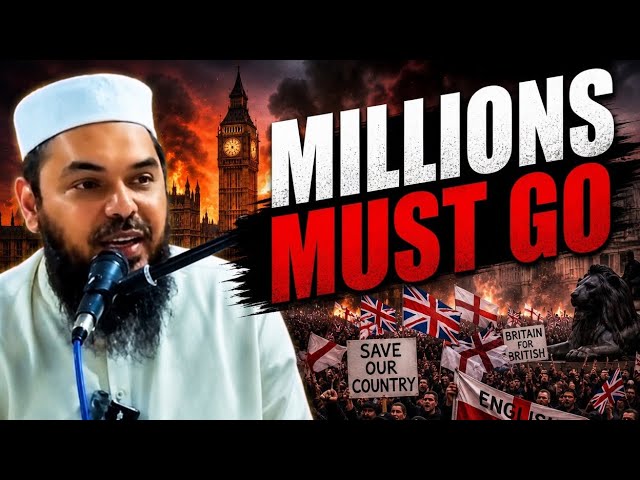
A disturbing online commentary video about street violence, migration, policing, and cultural tension in Britain has triggered a fierce debate across social media, raising difficult questions about public safety, integration, political trust, and the dangerous way viral content can turn individual incidents into sweeping accusations against entire communities.
The video, built around clips that appear to show chaotic confrontations between police officers and members of the public, presents a bleak picture of Britain as a country losing control of its streets. The commentator frames the footage as evidence of a wider collapse across Western societies, arguing that migration, weak policing, political denial, and multicultural policy have combined to create a crisis that governments are unwilling to confront.
The claims are dramatic. The tone is angry. The language, at times, crosses into collective blame and inflammatory generalization. Yet the popularity of the video shows that it has touched a nerve among viewers who feel that crime, disorder, and political silence are being ignored by mainstream institutions.
The central issue is not simply whether one video proves Britain is falling apart. It does not. Nor is the issue whether crime by migrants, religious minorities, or ethnic minorities should be ignored. It should not. The real issue is how democratic societies discuss public safety without turning fear into hatred, and how governments respond to legitimate concerns without allowing extremist narratives to take control of the conversation.
The video begins with footage allegedly showing police officers struggling during street confrontations while bystanders film the incident rather than intervene. The commentator presents the scene as a symbol of social breakdown: officers under pressure, crowds gathering, phones raised, and a sense that authority no longer commands instinctive respect.
For many viewers, this image is powerful because it matches a broader anxiety about public order. Across the United Kingdom and many other Western countries, people have grown frustrated by stories of shoplifting, street violence, antisocial behavior, under-resourced police forces, slow courts, and local communities that feel abandoned. When they see a police officer struggling while a crowd films, they do not interpret it as one isolated scene. They see it as proof of something larger.
That emotional reaction is real. But it is also where the danger begins.
A single video clip rarely shows full context. It may not show what happened before recording began. It may not identify those involved accurately. It may not reveal whether the people shown are citizens, migrants, tourists, suspects, victims, or bystanders. Yet online commentary often turns these uncertain details into sweeping conclusions about race, religion, nationality, or immigration status.
That is what makes the video controversial.
Instead of limiting the discussion to policing, disorder, and specific criminal behavior, the commentator uses the footage to launch a broader attack on migrants, Muslims, Africans, and political leaders who support multiculturalism. He argues that Western governments have deliberately changed the racial and ethnic makeup of their nations and that white Christians are being made into minorities in their own countries.
This kind of framing is inflammatory because it transforms policy debate into demographic panic. Migration becomes not a question of law, labor, asylum, integration, or public services, but a story of replacement and betrayal. Every crime committed by a person from a minority background becomes evidence of a supposed collective threat. Every failure of policing becomes proof that the state has chosen outsiders over citizens.
Such arguments spread quickly because they offer a simple explanation for complicated problems. Crime, housing pressure, failing public services, cultural tension, and political distrust all become part of one grand story: leaders have abandoned their own people.
But reality is more complicated.
The United Kingdom does face serious challenges. Police forces have warned for years about stretched resources. Courts have struggled with backlogs. Local councils face financial pressure. Public trust in government has weakened. Migration has placed strain on housing, schools, healthcare, and community cohesion in some areas, especially where local services were already fragile.
At the same time, migrants and minority communities are not a single group with one behavior, one belief system, or one political agenda. Many migrants work, pay taxes, raise families, serve in public services, run businesses, and contribute to the same communities now being discussed in hostile terms online. Many Muslims, Africans, South Asians, Eastern Europeans, and asylum seekers are themselves victims of crime, poverty, exploitation, and discrimination.
A serious conversation about public order must be able to hold both truths at once: crime must be confronted, and collective blame must be rejected.
The video’s next major theme is terrorism. The commentator points to terrorist attacks in Paris, Brussels, Nice, London, Manchester, and Germany to argue that Western Europe has failed to respond properly to radical Islamist violence. These attacks remain deeply traumatic events in European memory. Families were shattered. Cities were placed under emergency pressure. Security services were forced to adapt to new threats involving both organized networks and lone attackers.
No honest discussion of European security can ignore jihadist terrorism. It is real, and governments have a duty to protect citizens from it.
But the problem arises when terrorism is used to cast suspicion over all Muslims or all migrants. The overwhelming majority of Muslims in Europe are not terrorists. Many have condemned extremist violence, cooperated with authorities, and raised children who consider Europe their home. Some Muslims have themselves been victims of jihadist attacks around the world. Treating an entire religious community as a security threat is not only unjust; it can also make counter-extremism harder by alienating the very communities whose cooperation is needed.
Advertisements
The commentator also includes clips of radical religious speeches and presents them as evidence that Western societies are facing a coordinated ideological threat. This is a more difficult issue because extremist preaching does exist. Some religious figures have promoted violent or anti-democratic ideas. Some online networks glorify militancy. Some activists openly reject integration and celebrate confrontation with Western values.
Governments should take such cases seriously. Hate preaching, recruitment, support for terrorism, and incitement to violence must be investigated and prosecuted where laws are broken. Communities also have a responsibility to challenge extremist voices from within.
But again, responsible analysis requires precision. A radical preacher does not represent every mosque. A criminal suspect does not represent every migrant. A violent clip does not represent every city. When a commentator presents the most extreme examples as proof of an entire population’s nature, he is no longer analyzing a problem. He is building a narrative of fear.
The video then moves to several alleged criminal cases, including a claim about a man accused of targeting a minor and another case involving a child harmed in a public setting. These stories are presented as evidence that the justice system is failing, that suspects are being treated too softly, and that political correctness prevents authorities from naming or confronting offenders.
The public has a right to demand transparency in serious criminal cases. When children are harmed, outrage is natural. When police appear slow, evasive, or overly cautious, trust collapses. In Britain, past scandals involving grooming gangs have already left deep wounds because authorities in some towns failed victims, ignored warning signs, or mishandled cases for years. Those failures deserve scrutiny, accountability, and justice.
But justice is not strengthened by speculation about a suspect’s ethnicity before facts are confirmed. It is not strengthened by assuming guilt based on appearance or nationality. It is not strengthened by using the worst crimes to argue that entire communities must be expelled.
The rule of law requires evidence, due process, and punishment of individuals responsible for crimes. It does not permit collective punishment.
One of the most alarming parts of the commentary is its argument that even “good” migrants may eventually be rejected because the public has grown tired of trying to distinguish peaceful people from criminals. This is presented as a natural reaction from native populations who feel disrespected, unsafe, and overwhelmed.
There is a real warning hidden inside that claim, but not in the way the commentator intends.
When public trust collapses, people do begin to think collectively. They stop believing institutions can sort lawful from unlawful, peaceful from dangerous, integrated from exploitative. They become impatient with nuance. They turn from “remove criminals” to “remove everyone.” That shift is dangerous for any democracy because it replaces justice with exhaustion.
Governments that ignore public concern help create this danger. When officials dismiss every anxiety about crime, migration, or integration as prejudice, they push frustrated citizens toward more extreme voices. When media outlets avoid uncomfortable stories, people assume there is a cover-up. When courts fail to deliver timely justice, people begin to doubt the system itself.
But extremists also exploit that frustration. They use real failures as evidence for false collective accusations. They take individual crimes and convert them into racial or religious indictments. They speak in the language of protection while normalizing contempt.
Both failures feed each other.
The video also turns toward conspiracy, suggesting that migration into Western countries is not simply the result of war, economics, asylum law, labor demand, and political decisions, but part of a hidden plan engineered by powerful interests. In this section, the commentary becomes especially dangerous because it gestures toward antisemitic conspiracy theories, implying that Jewish individuals or organizations are centrally responsible for the diversification of Europe.
Such claims have a long and ugly history. For generations, antisemites have blamed Jews for social change, capitalism, communism, immigration, war, moral decline, and political instability. The details shift from era to era, but the structure remains the same: a complex social transformation is blamed on a hidden Jewish hand.
This kind of conspiracy thinking is not serious political analysis. It is a way of avoiding reality by inventing a single enemy. Migration into Europe has many causes: wars in Syria, Afghanistan, Iraq, and parts of Africa; economic inequality; colonial history; labor shortages; asylum treaties; smuggling networks; European court rulings; national elections; humanitarian activism; employer demand; demographic decline; and political mismanagement. No single group secretly controls all of it.
That does not mean funding networks, NGOs, lobbying groups, or political donors should be exempt from scrutiny. Democracies should ask who funds advocacy, who benefits from policy, who influences governments, and whether laws serve the public interest. But scrutiny must be evidence-based and applied across the board, not aimed at one religious or ethnic group through insinuation.
The commentary’s move from crime clips to demographic panic and then to conspiracy theory shows how quickly online narratives can escalate. A street fight becomes proof of civilizational collapse. A migrant crime case becomes proof that all migrants must leave. A discussion of border policy becomes a claim that hidden forces are destroying the West.
This is why responsible media matters.
A serious article about the same issues would ask hard questions. Are police adequately staffed and protected? Are courts processing cases quickly enough? Are migration systems screening applicants effectively? Are asylum hotels and housing policies sustainable? Are local councils receiving enough funding? Are extremist preachers being monitored properly? Are victims of grooming and exploitation receiving justice? Are integration policies working? Are political leaders being honest about trade-offs?
These questions are legitimate. They do not require racial insults, religious hatred, or conspiracy theories.
The United Kingdom’s situation is particularly sensitive because the country is already under pressure from multiple directions. Immigration has become one of the most important political issues of the decade. The asylum system has faced backlogs. Small boat crossings have generated intense public debate. Housing shortages have worsened. Public services remain strained. Trust in both Conservative and Labour leadership has been damaged by years of political instability.
At the same time, Britain is a deeply diverse country whose economy, healthcare system, universities, transport networks, and cultural life rely heavily on people from many backgrounds. London, Birmingham, Manchester, Leicester, Bradford, and other cities are not temporary experiments in diversity. They are already multicultural realities. The question is no longer whether diversity exists. It does. The question is whether the state can maintain shared rules, public safety, equal citizenship, and social trust within that diversity.
That requires stronger institutions, not weaker ones.
Police must be able to enforce the law without fear or favoritism. Communities must cooperate with investigations. Courts must punish offenders regardless of background. Politicians must speak clearly about crime and integration without demonizing minorities. Media outlets must report uncomfortable facts without sensationalizing them. Religious leaders must reject extremism. Migrant communities must take integration seriously. Native communities must not confuse justice with revenge.
The hard truth is that social cohesion cannot survive if any group believes the rules do not apply equally.
If citizens believe migrants receive special treatment, resentment grows. If minorities believe police and media treat them as permanent suspects, alienation grows. If victims believe authorities hide crimes to protect political narratives, rage grows. If innocent families are blamed for the crimes of strangers, fear grows. A functioning society must prevent all of these things at once.
That is not easy, but it is necessary.
The viral video succeeds because it speaks to a public mood of frustration. Many people feel that something has gone wrong in Western cities. They see disorder, institutional hesitation, and political language that seems disconnected from daily reality. They want someone to say plainly that law-abiding citizens deserve safety and that criminals should face consequences.
That demand is legitimate.
But the video fails when it turns that demand into collective hostility. Public safety should not require hatred of migrants. Border control should not require hatred of Muslims. Anger over grooming scandals should not require contempt for entire ethnic groups. Concern about political influence should not become antisemitic conspiracy.
A country can defend its borders and still defend human dignity. It can deport foreign criminals and still protect lawful migrants. It can investigate extremist networks and still protect religious freedom. It can demand integration and still reject racism. It can honor national culture without treating every outsider as an enemy.
That is the balance Western democracies must recover.
The danger is that if mainstream leaders refuse to speak honestly, the loudest voices will be those who speak recklessly. Silence creates a vacuum, and viral outrage fills it. Every suppressed story becomes proof of cover-up. Every vague police statement becomes evidence of bias. Every unaddressed local problem becomes fuel for national anger.
But honesty must go both ways. It is dishonest to pretend migration has no costs. It is also dishonest to pretend migrants are the source of every problem. It is dishonest to deny extremist threats. It is also dishonest to treat all Muslims as extremists. It is dishonest to ignore grooming-gang failures. It is also dishonest to use those failures to justify collective expulsion.
The West does not need denial, and it does not need dehumanization. It needs disciplined truth.
The street-clash commentary now circulating online is a warning sign. Not because every claim in it is fair or accurate, but because its popularity reveals a deep reservoir of distrust. People are angry at police weakness, judicial delays, political evasiveness, and cultural fragmentation. They want order. They want accountability. They want leaders who do not dismiss them.
If democratic governments want to prevent extremist narratives from growing, they must address the underlying concerns directly. That means better policing, faster courts, transparent crime data, serious integration standards, credible border enforcement, and honest discussion about the limits of public capacity. It also means standing firmly against racism, anti-Muslim hatred, antisemitism, and collective punishment.
A society that cannot enforce the law will lose trust. A society that abandons equal dignity will lose its soul.
The viral video offers anger. The real challenge is building something better than anger: a public order strong enough to protect citizens, a political language honest enough to name problems, and a civic culture decent enough not to turn fear into hatred.
Britain, like much of the West, is facing a test. The test is not only whether it can control its streets. It is whether it can do so without losing the principles that make its streets worth defending.