Deadly Avalanche Disaster Just Happened in the Italian Alps! FULL Evacuation Warning
The Italian Alps are in their deadliest avalanche cycle in more than a decade — unfolding less than 200 kilometers from the Winter Olympics.
In the last 10 days, at least 75 people have died in avalanches across the Alps — roughly three-quarters of a typical full-season toll.
More than 250 people have been airlifted from a single valley.
A passenger train has been knocked off its tracks.
Entire villages have been cut off.
And the danger level has not dropped.
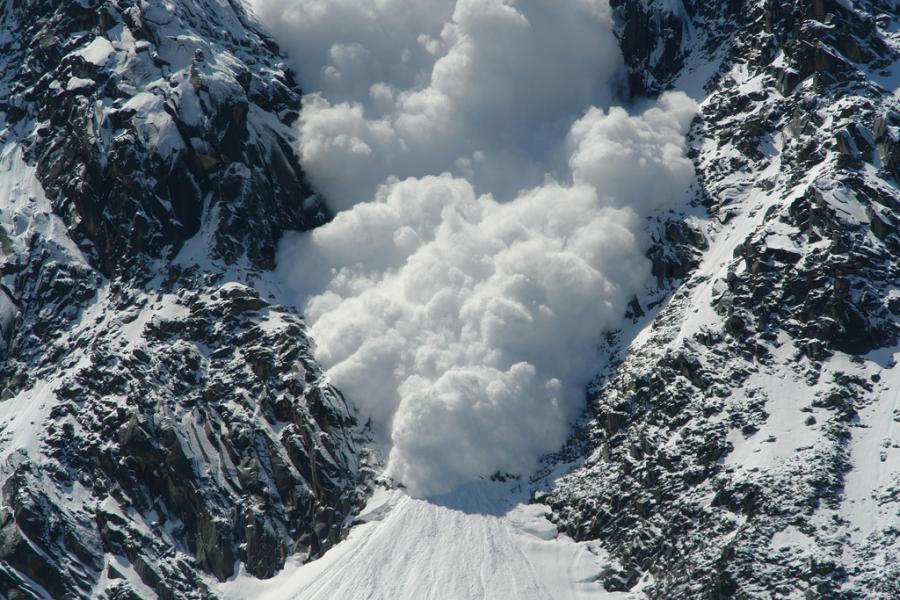
On Tuesday afternoon, skiers waiting at the Zarata chairlift in Valini looked up and saw a wall of white descending from 3,773 meters.
Children tried to ski uphill.
Adults froze.
Within seconds, everyone in view vanished into a cloud of snow.
The footage spread globally within hours.
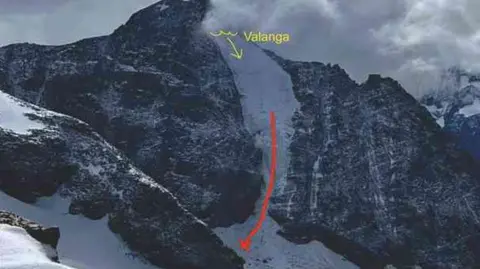
But the more chilling detail came later: just two days earlier, on that same mountainside, three experienced skiers entered a couloir and never returned alive.
A Week That Accelerated
On February 10, Italy’s Mountain Safety Institute, Fondazione Montagna Sicura, warned that the snowpack had entered a critical phase. Snowfall accumulations were forecast to exceed one meter above 1,600 meters.
By February 11, weather stations near Courmayeur recorded 100 centimeters of new snow in 48 hours.
On February 12, the Regional Avalanche Bureau raised the danger to Level 4 of 5 — “strong.” Civil Protection issued an orange alert.
Across the border in France, Chamonix closed all high-altitude ski areas. The massive Paradiski domain — including La Plagne and Les Arcs — shut down completely for the first time in 25 years.
In Tignes, thousands of residents and tourists were ordered to remain indoors overnight.
Then the slopes began to fail.
A Call That Went Silent
On February 13, a 44-year-old hotel worker from Milan was walking above Gressan when the slope released without warning.
He was buried under 1.5 meters of snow.
Before the weight compressed his chest, he dialed emergency services. Dispatchers heard two words before the line went dead.
Rescuers, working with avalanche dogs for three hours in unstable terrain, found him with a core temperature of 27°C.
He survived.
That same day, three skiers in Valdigne did not.
Two were British. One was French. All were caught under a snowpack that had reached Level 5 — the maximum rating on the European danger scale — just 24 hours earlier.
The Geography of Instability
The western Italian Alps — anchored by peaks like Mont Blanc, Grand Paradiso, Grand Combin, and Matterhorn — create a natural wind engine.
Northwesterly winds drive massive volumes of snow over ridgelines, depositing it onto leeward slopes as dense wind slabs.
These slabs form over persistent weak layers — fragile crystalline structures buried weeks earlier during dry spells. When overloaded, fractures can propagate across hundreds of meters.
Federico Catania of Italy’s Alpine Rescue Corps warned that the dangerous points are numerous and often invisible — even to experts. A single skier can trigger catastrophic release.
Olympics, Storms, and Crowds
The danger intensified just as the Milan Cortina Winter Olympics opened on February 6.
Tens of thousands of visitors poured into the Alps during one of the most unstable snow cycles in years.
Fresh powder drew freeriders. Resorts filled. Off-piste routes grew crowded.
Two forces converged:
The mountains were becoming more dangerous.
The mountains were becoming more crowded.
The Couloir Vesses
On Sunday, February 15, around 11 a.m., three experienced French freeriders entered the Couloir Vesses above Courmayeur — one of the most popular off-piste lines at the foot of Mont Blanc.
The avalanche danger was Level 4.
Eyewitnesses saw the release.
Hugo Nouvellon, 31, was found lifeless in the snow.
A second skier died at Parini Hospital in Aosta.
Alexis Rassat, 29, survived burial for 40 minutes before being airlifted to Molinette Hospital in Turin. He died the following day.
Fifteen rescuers, three K-9 units, and two helicopters worked the site.
They were friends from France’s Savoie region.
They knew the mountain.
The mountain did not care.

The System Unravels
The avalanches did not stop.
On February 15, a slide buried Regional Road 24 in the Rhemes Valley, cutting off villages.
On February 16, in Switzerland, an avalanche derailed a passenger train near Goppenstein. Twenty-nine passengers were aboard; five were injured. The critical Lötschberg corridor was shut down.
On February 17, roughly 100 tourists skiing near Cogne found the only road out buried by a massive slide. Helicopters evacuated 250 people from the valley. Thirty spent the night at military barracks in Aosta.
Three dead in one couloir.
Thirteen killed in a single week earlier this month — a record.
Seventy-five deaths across the Alps this winter — against a seasonal average of about 100 — with half the winter still remaining.
Snow depths exceed three meters in upper valleys.
The official Aosta Valley avalanche bulletin on February 18 rated danger at Level 4.
Trend: constant.
More snow is forecast.
The Next Threat
Forecasters warn that a midweek warming trend could introduce meltwater into the buried weak layers — triggering wet-snow avalanches.
These carry more mass.
They travel farther.
They destroy differently.
Authorities are still investigating whether the fatal Couloir Vesses slide was skier-triggered or natural.
Red-zone boundaries in the Rhemes Valley may shift again.
And avalanche professionals know the paradox that comes next.
When danger drops from Level 4 to Level 3 — statistically the most lethal period — skiers return. Slopes look stable. Tracks reappear.
But the persistent weak layers remain hidden beneath the surface.