3 Wilderness Encounters The Government Said Never Happened
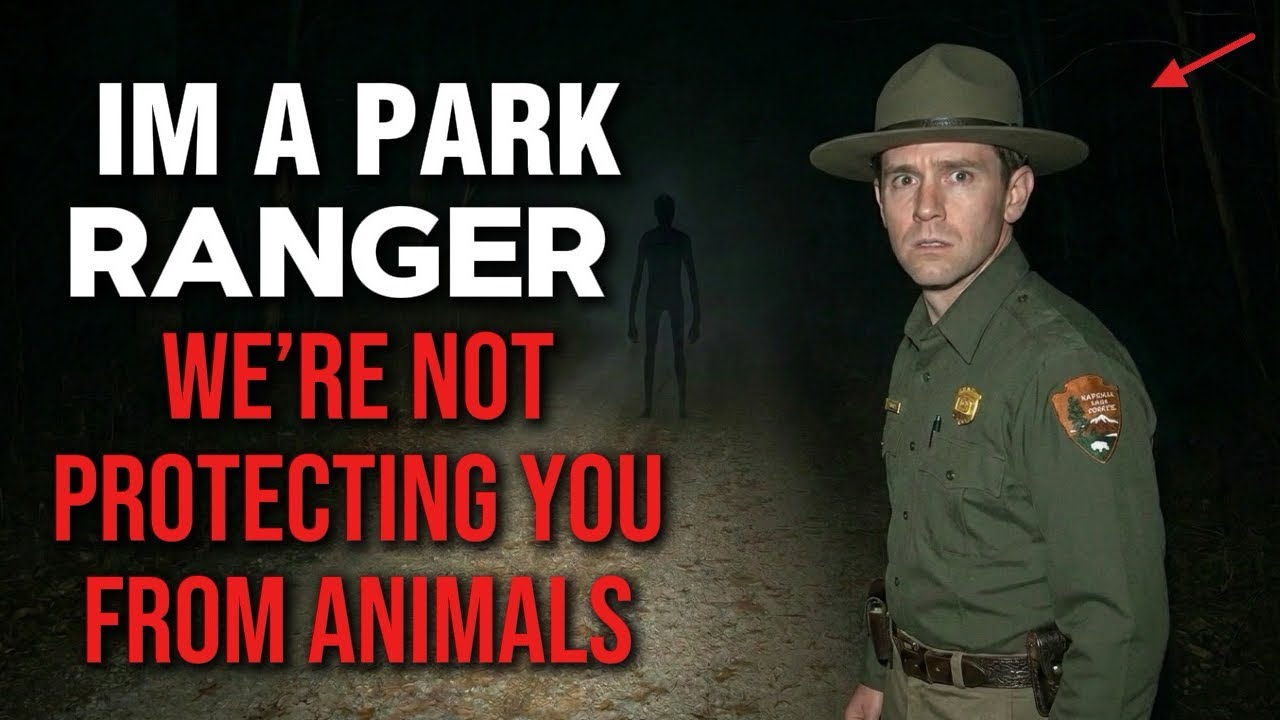
Three Search and Rescue Reports That Were Filed… Then Quietly Erased
Search and rescue is supposed to be about finding people.
The people who do it for years eventually learn something far stranger.
Sometimes the hardest part isn’t what you find in the wilderness. It’s deciding what you’re willing to write down afterward.
Every search-and-rescue volunteer, ranger, surveyor, and backcountry professional understands an unspoken rule: reports are supposed to contain facts. Measurable observations. Coordinates. Evidence. Things that can be explained, documented, and archived.
But what happens when something occurs that doesn’t fit any category available on the form?
What happens when your training tells you one thing, your instincts tell you another, and the official record eventually claims neither happened?
The three accounts you’re about to read come from different people working in different regions under different circumstances. They never met. They worked in separate jurisdictions and filed separate reports.
Yet all three describe the same unsettling experience.
Not a monster.
Not a ghost.
Not even something they can confidently identify.
Instead, each of them encountered an event that seemed to exist briefly in the real world before disappearing from the official one.
A surveyor found evidence outside an isolated cabin that returned night after night.
An experienced Appalachian Trail hiker insists he wasn’t lost, despite what the final report claimed.
A veteran park ranger discovered an illegal camp hidden deep inside a restricted zone—and then heard something on his radio that convinced him to leave immediately.
Each filed documentation.
Each expected their observations to become part of the permanent record.
And each later discovered that parts of their accounts had quietly vanished.
Whether that’s coincidence, bureaucracy, or something else entirely is up to you.
But after hearing their stories, you may find yourself asking a different question.
Not what they encountered.
But why someone decided it shouldn’t be written down.
Account One: The Surveyor and the Visitor Outside the Window
Before describing what happened, the surveyor insists on establishing something important.
She was not inexperienced.
By 2021, she had spent eleven years conducting remote survey work across difficult terrain. She had stayed in isolated cabins, abandoned ranger stations, and temporary field shelters. She understood how old buildings behaved at night.
Wood expands.
Walls settle.
Wind finds gaps.
Structures make noises.
Anyone who spends enough nights alone in the wilderness learns those sounds eventually.
Which is exactly why the noise she heard during her deployment in the Northern Cascades bothered her.
The cabin itself was ordinary.
One room.
A wood stove.
Two windows.
The nearest road was roughly a four-hour hike away.
She was scheduled to spend five days there alone mapping survey points in a remote section of forest.
The first night, she woke sometime after midnight.
At first she couldn’t identify what had disturbed her.
Then she heard it again.
Breathing.
Not from inside the cabin.
Outside.
Directly beneath the east-facing window.
Slow.
Steady.
Deliberate.
She remembers lying motionless inside her sleeping bag, listening.
The sound continued.
Inhale.
Exhale.
Inhale.
Exhale.
Like something standing inches from the glass.
Watching.
She never approached the window.
Not because she was afraid.
At least not consciously.
As she later explained, some part of her had already decided that looking was a bad idea.
After roughly ten minutes, the breathing stopped.
The next morning she found nothing unusual.
No tracks.
No signs of wildlife.
No obvious explanation.
She convinced herself it had been an animal.
A deer perhaps.
Maybe an elk.
The kind of rational explanation anyone would reach for in an isolated forest.
Then it happened again.
The second night.
Same window.
Same rhythm.
This time she checked her watch.
2:14 a.m.
The breathing lasted approximately eight minutes before stopping.
Again she refused to look.
Again she found nothing the next morning.
By the third night, curiosity overcame caution.
When the breathing began, she forced herself out of bed and approached the east window.
Moonlight illuminated the muddy ground outside.
What she saw wasn’t a creature.
It was evidence that one had been there.
Two deep impressions.
Side by side.
Positioned directly beneath the window.
Not boot prints.
Not animal tracks.
Not identifiable footprints at all.
Just compressed sections of mud indicating significant weight had remained stationary for an extended period.
Whatever had been standing there had not merely passed by.
It had lingered.
Long enough to sink into the earth.
Long enough to watch.
The surveyor never slept again that night.
For the remainder of the deployment she kept the wood stove burning and her headlamp illuminated.
When she returned, she filed an incident report.
She included photographs.
She described the impressions.
She documented everything.
Three weeks later, the reviewed report arrived.
The section describing the impressions was gone.
Removed entirely.
The report stated:
No anomalous findings.
She still possesses the original version.
And she still has the photographs.
What troubles her most isn’t the possibility that something stood outside the cabin.
It’s that whatever it was returned three nights in a row.
Same location.
Same time.
Same behavior.
Patient.
Quiet.
Consistent.
As though it already knew she was there.
Account Two: The Hiker Who Says He Wasn’t Lost
The Appalachian Trail attracts people seeking challenge, solitude, and self-reliance.
By August of 2023, this hiker had spent nine years navigating sections of it.
He knew how to read terrain.
He knew how to use maps.
He understood disorientation.
And according to him, what happened during his fourth day on the trail was not disorientation.
It began with a feeling.
Not fear.
Not panic.
Awareness.
A tension at the back of his neck that seemed to arrive before any visible cause.
He kept walking.
Then he heard footsteps.
Behind him.
At first the sounds seemed ordinary.
A branch snapping.
Leaves shifting.
But after several minutes, a pattern emerged.
Every time he stepped, the unseen presence stepped.
Every time he paused, it paused.
Every change in pace was mirrored perfectly.
For three miles.
The realization slowly transformed irritation into unease.
This wasn’t random wildlife movement.
The timing was too precise.
He attempted to break the pattern.
Sudden stops.
Rapid movement.
Slow walking.
The footsteps adapted instantly.
Matching him.
Always remaining behind.
Always remaining unseen.
Eventually, another realization struck him.
The trail had changed.
The terrain looked unfamiliar.
The direction felt wrong.
Yet he couldn’t remember leaving the trail.
No junction.
No turn.
No moment where he had consciously altered course.
He simply wasn’t where he should have been anymore.
Then came the silence.
Every experienced outdoorsman knows forests are rarely truly quiet.
There are always sounds.
Birds.
Wind.
Insects.
Movement.
Suddenly there was nothing.
The absence felt unnatural.
Almost physical.
That was when he became aware of something even worse.
The footsteps were no longer behind him.
They were beside him.
Keeping pace.
Close enough to feel.
Still unseen.
The hiker insists he never looked.
Not because of strategy.
Not because of courage.
Because every instinct in his body told him not to.
He walked forward.
Eventually he found a road.
Then headlights.
Then park rangers.
The official report classified the event as disorientation.
Subject recovered.
No foul play suspected.
Case closed.
Yet several details remain unexplained.
His personal locator beacon remained attached to his belt.
His backpack was untouched.
His food supplies remained intact.
But his radio was missing.
Gone.
He cannot identify when it disappeared.
He cannot remember losing it.
And perhaps most importantly, he insists he was never lost.
Lost people search for direction.
Lost people realize they are confused.
Lost people attempt to correct their mistakes.
He believes something else happened.
He believes he was led.
For nearly forty-eight hours.
In exactly the wrong direction.
Account Three: The Ranger Who Heard His Own Voice
The final account comes from a park ranger with twenty-two years of field experience.
Unlike the first two witnesses, he isn’t anonymous because he’s afraid of ridicule.
He’s anonymous because he’s afraid of losing his pension.
According to him, January 2025 began with a routine assignment.
A perimeter inspection.
Nothing unusual.
The area had been closed to public access for maintenance reasons.
He had inspected the same section twice before without incident.
Approximately two miles inside the restricted boundary, he discovered something unexpected.
A camp.
Not a temporary campsite.
A settlement.
The distinction matters.
Experienced rangers can immediately distinguish between short-term camping and long-term habitation.
This location showed signs of months of occupation.
Structures had been constructed.
Fire pits had been used repeatedly.
Water collection systems had been installed.
Containers had been cached.
Someone had been living there.
Not visiting.
Living.
The ranger immediately reached for his radio.
He intended to notify base.
Before he could transmit, a voice emerged from the speaker.
His voice.
Not similar.
Not close.
His exact voice.
The transmission described his location.
His coordinates.
The route he had taken.
The path he had used to enter the area.
Information he had never transmitted.
Information no one should have known.
He stood frozen in the camp, listening to himself explain where he was in real time.
The ranger doesn’t remember deciding to leave.
He simply did.
Immediately.
Without investigation.
Without hesitation.
What happened next remains the part of the story he rarely tells.
As he walked toward the perimeter, he became overwhelmed by the feeling that he was no longer moving through empty forest.
He saw nothing.
He heard nothing.
Yet every survival instinct developed over twenty-two years insisted something occupied the spaces between the trees.
Watching.
Following.
Waiting.
The ranger never ran.
He intentionally maintained a normal pace.
The pace of someone who had seen nothing unusual.
The pace of someone who was not afraid.
He believes that decision may have saved his life.
Later, he filed a report describing the camp.
He omitted the radio transmission.
He omitted the feeling of being watched.
Weeks later, the report returned.
The camp had supposedly been investigated.
The conclusion was simple:
No evidence of recent occupation found.
The ranger has visited that broader area since then.
But he has never again been assigned to that specific restricted zone.
He still owns the radio.
And according to him, he has never used it in the field again.
The Reports That Came Back Clean
There is a common thread running through all three accounts.
Not creatures.
Not cryptids.
Not supernatural claims.
Records.
In each case, something was documented.
Photographs.
Observations.
Physical evidence.
Witness testimony.
And in each case, the official version that came back seemed smaller than the experience itself.
The surveyor’s report returned without mention of the impressions outside the cabin.
The hiker’s experience became a simple case of disorientation.
The ranger’s settlement apparently never existed.
Could there be reasonable explanations?
Of course.
Reports are edited.
Mistakes happen.
Memory is imperfect.
People interpret events differently.
Yet these stories continue to resonate because they come from individuals accustomed to observation.
People trained to notice details.
People whose professions depend on accurately describing what they see.
And all three describe the same feeling.
Not terror.
Not panic.
Recognition.
The recognition that something happened which the final record failed to capture.
Perhaps that’s the most unsettling possibility of all.
Not that strange things exist in remote places.
But that sometimes the wilderness leaves evidence behind—and by the time the paperwork returns, that evidence has already disappeared.
Somewhere between what was witnessed and what was officially recorded, the story changed.
The question is:
Why?