Stunning Virgin Mary Statues CAUGHT MOVING On Camera?
Across the world, countless churches and chapels hold sacred statues of the Virgin Mary, symbols of faith, love, and comfort for millions.
For centuries, these statues have stood silently, inviting reflection and prayer.
But what if one of them moved? Imagine walking into a quiet church, candles flickering, the air filled with stillness.
Suddenly, a statue’s eyes appear to open.
A gentle shift in expression seems to break through the stone.
As if something far beyond human understanding is reaching out.
Moments like these aren’t just stories whispered in the dark.
They’ve been captured on camera, leaving both believers and skeptics stunned.
Some call it miraculous.

Others suggest optical illusions, tricks of lighting, or even the power of suggestion.
But no matter the explanation, the footage sparks wonder and debate across the globe.
Could these movements be signs of divine presence? Or are they mysteries of science that we’ve yet to fully explain? Number 15, the miraculous moment.
Inside sacred spaces, statues of the Virgin Mary have always been a source of peace and reflection.
For generations, these figures have stood as symbols of compassion and grace, helping people feel a deeper connection with their faith.
But in one extraordinary case, a statue seemed to cross the boundary between stillness and life.
Captured on camera, the footage shows a statue of the Virgin Mary with her eyes closed, her expression calm and serene.
At first, everything appears normal.
But then something changes.
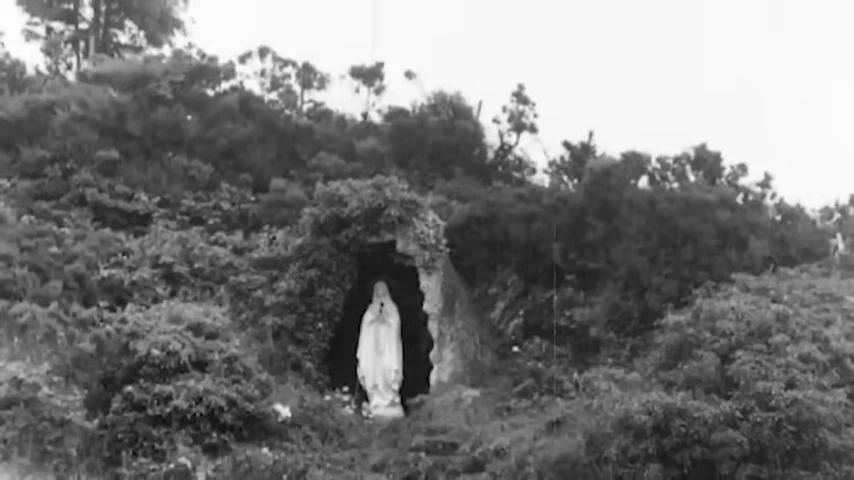
Slowly, almost imperceptibly, the statue’s eyelids seem to open, revealing eyes that look alive, filled with compassion and quiet strength.
Witnesses described the moment as overwhelming.
Some felt chills run down their spines, while others described a deep sense of comfort, as though they were being reminded that they were never truly alone.
The event left many reflecting on the mystery of faith and how sometimes the unexplainable can bring people closer to the divine.
Whether the result of lighting, camera angles, or something truly extraordinary, the footage continues to spark fascination.
For some, it’s a reminder of hope and the possibility of miracles.
For others, it’s an unsolved mystery that science may one day explain.
What’s certain is that moments like this leave us wondering, are we simply witnessing tricks of perception or glimpses of something greater than ourselves? Number 14, the Karachi miracle.
Faith has a unique way of bringing people together even in times of uncertainty.
In the bustling city of Karach, a remarkable tradition began that continues to inspire all to this day.
It started with a small group of devoted Christians who would gather regularly to pray and honor the Virgin Mary.
What made this practice extraordinary was the way it grew welcoming not only fellow Christians but also people of different backgrounds including Hindus and Zerostrians.
This interfaith devotion created a powerful symbol of unity.
Communities that were once separated by differences began to stand together in shared reverence, showing that faith could serve as a bridge rather than a barrier.
Over time, this practice spread throughout the city, and statues of the Virgin Mary were installed in several churches and prayer halls, becoming central points of devotion and reflection.
One particularly fascinating account from Karachi involved a statue of the Virgin Mary that appeared to move during prayer.
Witnesses described seeing the statue’s eyes slowly open and close.
Number 13, Vietnam’s Virgin Mary apparition.
Far from the noise of busy streets, in the quiet countryside of Vietnam, there is a hilltop that many consider sacred.
Here stands a lone statue of the Virgin Mary gazing peacefully across the landscape.
Bathed in the glow of the rising and setting sun, the statue has become a place of pilgrimage for those seeking guidance, healing, and hope.
Over the years, visitors to this site have reported experiences that they describe as unforgettable.
Some claim to have seen the statue’s form glowing in the twilight, while others have spoken of visions and feelings of overwhelming peace.
Stories of miraculous healings and answered prayers have spread, drawing even more people to this humble but powerful location.
For those who make the journey, the atmosphere itself feels transformative.
The gentle rustle of the leaves, the soft mountain breeze, and the statue’s serene presence create a sense of stepping into another world.
One where the boundary between the ordinary and the divine seems to fade away.
Pilgrims often describe leaving with a renewed sense of faith and strength, carrying the memory of their experience long after they return home.
The Vietnam apparition continues to inspire countless visitors, reminding them that hope, healing, and spiritual comfort can be found in even the most unexpected places.
Number 12, the weeping statue of New Mexico.
In New Mexico, at Our Lady of Guadalupe Catholic Church, a statue of the Virgin Mary has become the center of worldwide fascination.
Parishioners noticed something extraordinary.
The statue appeared to shed tears.
What made this even more astonishing was that it wasn’t just a one-time occurrence.
Over the course of several months, the statue was seen weeping multiple times, leaving both visitors and investigators captivated.
The local DOC’s launched an inquiry to better understand the phenomenon.
The bronze statue was carefully examined, and every detail inside and out was inspected.
To the surprise of many, no hidden mechanisms or tricks were found.
In fact, the hollow interior of the statue contained only cobwebs.
Number 11, the yawning statue.
In a quiet chapel in a small village, worshippers gathered as they had countless times before, expecting an ordinary moment of prayer.
But what they saw that day left them speechless.
The intricately carved statue of the Virgin Mary, known for its serene expression, seemed to do something entirely unexpected.
It appeared to yawn.
The statue’s lips slowly parted as though tired or perhaps gently stretching, and this unusual sight left the congregation stunned.
For years, the statue had stood as a comforting presence, a symbol of peace and devotion.
Yet in this moment, the ordinary became extraordinary, sparking wonder and curiosity.
News of the event spread beyond the village, quickly capturing attention far and wide.
Some viewed the yawning statue as a divine sign, a gentle reminder for people to reflect more deeply on their spiritual lives.
Others speculated that there could be natural explanations, perhaps lighting, angles, or the mind’s tendency to perceive movement where none exists.
Regardless of interpretation, the sight of the yawning statue became a lasting memory for all who witnessed it.
For believers, it was a moment of comfort.
For skeptics, it was an intriguing puzzle.
Either way, it served as a reminder of the powerful connection between faith, mystery, and the human imagination.
Number 10, a global sensation.
Around the world, statues are created to honor history, culture, and faith.
Most remain still and silent, admired for their artistry and symbolism.
But every now and then, reports surface of statues appearing to move.
And one such story from Ireland became a global sensation.
At a Maran shrine, a woman named Cathio Mahoney was taking an evening walk with her daughters.
As they paused at a small grotto to say a prayer, one of the girls noticed something unusual.
The statue of the Virgin Mary seemed to shift almost as though it were breathing.
Kathy soon noticed it too and described the experience as both mesmerizing and deeply moving.
Word of the event spread rapidly, drawing visitors from across the globe.
The small town quickly became a hub of activity.
Hotels filled up, restaurants overflowed with guests, and news reporters flocked to cover the story.
Some pilgrims claimed to have seen even more unusual details like subtle facial changes or shapes in the statue’s reflection.
Scientists who later studied the phenomenon suggested that it might have been an optical illusion caused by the lighting around the statue’s crown.
But for those who were there, no explanation could erase the awe they felt in that moment.
The Irish shrine remains a place of pilgrimage to this day, a symbol of how mystery can transform even the smallest of towns into a destination of global wonder.
Number nine, the blinking statue.
In another extraordinary case, a statue of the Virgin Mary, famous for its serene expression, appeared to do something startling.
Witnesses claimed they saw the statue blink as if acknowledging the presence of those praying nearby.
This event was not just spoken about it was captured on video and quickly spread across social media where it ignited both amazement and debate.
For the faithful, the sight of the statue blinking was seen as a powerful sign of comfort and reassurance, a symbol that their prayers were truly being heard.
Many described feeling a deep sense of peace and renewed devotion after watching the footage.
Skeptics, however, offered alternative explanations, ranging from video artifacts to natural effects of light and shadow.
Yet, regardless of interpretation, the blinking statue drew worldwide attention, reminding people of how moments of mystery can spark faith, conversation, and reflection.
Number eight, Mary’s miraculous gaze.
Inside a beloved church known for its peaceful atmosphere, worshippers witnessed something that left them speechless.
A statue of the Virgin Mary, usually calm and still appeared to open its eyes.
For just a moment, the statue’s gaze seemed alive, filling the room with awe and sparking endless discussion.
The moment was captured on video and quickly spread online, captivating millions of viewers around the globe.
For many faithful visitors, this was seen as a deeply comforting sign, a reminder that the Virgin Mary is always watching over those who turn to her for guidance and care.
The event boosted devotion and inspired people to travel long distances just to see the statue for themselves.
Skeptics, however, questioned the footage.
Some suggested the eye movement could be explained by natural causes such as shadows, lighting, or even the way the human brain interprets still objects after long observation.
Yet, even with logical explanations offered, the sense of wonder remained.
As more pilgrims arrived at the church, each brought their own prayers, hopes, and stories, adding to the statue’s growing reputation as a symbol of both faith and mystery.
Whether miracle or illusion, the gaze of Mary continues to spark reflection on the thin line between the spiritual and the physical world.
Number seven, a shocking transformation in Malaysia.
In Malaysia, during a blessing ceremony led by Father Richmond Pereira, something truly unexpected was reported.
A statue of the Virgin Mary appeared to undergo a transformation right before people’s eyes.
Witnesses claimed the statue, originally made of fiberglass, seemed to shift in appearance, even looking as though it had changed material and grown slightly taller.
The unusual event quickly drew attention.
Father Pereira, careful not to jump to conclusions, explained that he would first discuss the occurrence with senior church officials before making any official statement.
Local parishioners, however, were deeply moved.
Crowds gathered at the grotto where the statue stood, praying, singing hymns, and photographing what they believed was a moment unlike any other.
Adding to the atmosphere, water from an ornate feature flowed just behind the statue, creating a scene both serene and captivating.
Visitors described a powerful sense of reverence, with many saying they felt compelled to witness the statue for themselves before the moment passed.
Regardless of one’s perspective, whether seen as miraculous or a remarkable coincidence, the event in Malaysia continues to be remembered as a powerful moment of faith, curiosity, and community.
Number six, the wink that captured hearts.
In a quiet shrine where the atmosphere was filled with reverence, and hushed prayers, something remarkable happened that left worshippers stunned.
A statue of the Virgin Mary long admired for her calm, serene presence appeared to perform a subtle yet incredibly powerful gesture, a gentle wink.
Witnesses described the moment as deeply moving, almost as though the statue was acknowledging their devotion with a human-like response.
Some said they felt chills run down their spine, while others wept, convinced they had just witnessed a personal message from Mary herself.
One believer described it as the moment heaven touched earth, even if just for a second.
The event, captured on video, spread across the internet in record time, racking up views on social media and sparking heated discussions.
For many people of faith, the wink symbolized comfort and reassurance, as if Mary herself was reminding them that prayers are heard even in times of doubt.
On the other hand, skeptics suggested a far more grounded explanation.
Some pointed to lighting tricks shadows falling across the statue’s eyes at just the right angle, while others mentioned how our brains sometimes fill in motion where none exists, especially when staring intently at an unmoving figure.
Still, the power of the moment cannot be denied.
Pilgrims soon began traveling to the shrine, eager to stand in the same space and perhaps catch their own glimpse of the miraculous wink.
Whether divine or illusion, the experience became a story that people would carry with them forever proof of how faith and mystery intertwine in ways science alone may never fully explain.
Number five, the statue that moved in Vietnam.
Across the world, statues of the Virgin Mary stand as symbols of peace, protection, and devotion.
But in Vietnam, one particular statue drew headlines after reports claimed it had physically moved.
Visitors insisted they saw the statue’s head turned slightly, while its cloak appeared to ripple as though caught in a breeze, even though the air around it was perfectly still.
Soon after, a video clip of the event surfaced online, sending shock waves through social media.
Within days, the quiet church became a hub of activity.
Pilgrims traveled for hours, some rearranging their lives just to see the statue firsthand.
Locals noticed a surge in tourism with hotels filling up, and vendors selling candles, rosaries, and keepsakes to visitors hoping to bring home a piece of the miracle.
Believers described the moment as breathtaking.
Some knelt in tears, convinced the movement was a sign of Mary’s active presence and protection over the community.
To them, the statue’s motion was not just a curiosity.
It was a sacred reminder to renew their faith and return to prayer.
Yet, as always, skepticism followed.
Some pointed to the possibility of shadows, camera angles, or even the way phone cameras process motion under flickering light.
Others suggested a more elaborate theory that the statue may have been subtly altered or rigged.
Still, no evidence of tampering was ever found, and those who were present insisted what they saw was real.
Whether it was a miracle or a mystery of perception, the story left its mark.
Even those who doubted found themselves drawn into conversations about faith, wonder, and the ways belief can transform ordinary spaces into sites of extraordinary meaning.
Number four, a divine blink in Sicily.
Sicily with its rich history of faith and devotion became the center of worldwide attention when a church statue of the Virgin Mary was said to have blinked.
The reports began quietly with a few parishioners claiming they saw the statue’s eyes flutter.
But when photos and videos began circulating online, the story exploded.
Crowds soon gathered outside the historic church where centuries of prayer seemed to merge with a brand new mystery.
For many Catholics, the blinking statue was seen as a direct sign of hope in a time when faith can often feel tested.
Some interpreted the blink as Mary’s way of telling them that she was watching over Sicily, offering comfort and protection during difficult times.
The impact went far beyond the island.
Social media amplified the event, drawing spiritual seekers and skeptics alike from around the globe.
Pilgrims arrived in buses, some traveling from neighboring countries just for the chance to stand before the statue and see if the miracle would happen again.
The church, once a quiet sanctuary, transformed into a site of pilgrimage almost overnight.
Skeptics, however, weren’t convinced.
Many pointed out how lighting inside old churches can create unusual visual effects, especially when candles and sunlight interact with stained glass.
Others argued that people often see movement in sacred statues due to heightened emotional states, especially during collective prayer.
Still, for those who witnessed it, the blinking was unforgettable.
Some claimed they felt an overwhelming sense of peace, as though Mary herself was reaching out from beyond stone and marble to remind them of her presence.
Whether real miracle or shared illusion, the blink became a symbol of Sicily’s enduring faith and a story that continues to inspire all along after the first video was uploaded.
Number three, the moving head of a Jesus statue in Spain.
Religious processions in Spain are known for their grandeur and deep spiritual meaning.
But one village witnessed something that turned centuries of tradition into breaking news.
During a festival honoring Christ, a beautifully crafted statue of Jesus was carried through the cobblestone streets surrounded by music, prayer, and candle light.
But suddenly, onlookers gasped.
The statue’s head appeared to shift ever so slightly.
The moment was captured on video and within hours it had spread across the internet.
Believers immediately called it a miracle, interpreting the head’s movement as a sign of Christ’s living presence among his followers.
Some said it gave them renewed faith, while others claimed they felt an overwhelming rush of peace, as if Jesus himself had blessed the crowd.
Theories quickly flooded in.
Skeptics suggested optical illusions caused by shifting light as the statue swayed on the shoulders of its carriers.
Others pointed to possible hidden mechanisms inside the statue, though none were proven.
A few even speculated about the possibility of deliberate tampering, raising the idea that the movement was staged to draw attention and boost devotion.
Regardless of explanations, the event drew massive crowds.
Pilgrims from across Spain traveled to the village, turning a local tradition into a global phenomenon.
Media outlets camped outside, interviewing locals and fueling the debate.
Some religious leaders urged caution, reminding the faithful not to confuse natural occurrences with divine messages, while others embraced the possibility of a miracle.
Perhaps the most intriguing reaction came from those who believed the movement was not divine at all, but rather a warning.
Whispers of possible possession circulated among the crowd, adding a layer of fear and mystery.
While that theory never gained traction, it underscored just how deeply people grapple with the unknown.
Whether miracle, illusion, or something in between, the moving head of the Jesus statue.
Number two, the moving eyes of Jesus.
In June 2015, inside a church in Mexico, something happened that would spark international fascination.
A statue of Jesus placed prominently at the altar appeared to open and shut its eyes during a service.
Worshippers present were stunned, and one quick-thinking attendee managed to capture the moment on video.
What happened next was unlike anything the church had ever experienced.
The footage went viral, captivating millions across the globe.
The video shows the statue’s eyes firmly closed at first, then to the shock of the congregation.
The eyes seemed to flicker open briefly, almost as if acknowledging the crowd before closing again.
For many viewers, this was nothing short of miraculous, interpreted as a direct and powerful sign of Christ’s presence.
Believers described it as a profound reminder of divine protection and a reassurance that faith is alive in the modern world.
But as with all mysteries, not everyone was convinced.
Skeptics immediately raised questions about the footage, suggesting possible explanations ranging from optical illusions caused by flickering light to deliberate video manipulation.
Number one, the Good Friday Miracle.
Our countdown reaches its peak with perhaps the most powerful and symbolic event of all.
During a Good Friday mass in Jaliscoco, Mexico, a day commemorating one of the most solemn moments in Christian tradition, worshippers claimed to witness a crucified Jesus statue move its head.
The scene was charged with reverence as parishioners reflected on the sacrifice of Christ.
Then, in the middle of prayer, the statue’s head appeared to shift slightly.
Gasps filled the church and those in attendance described feeling an overwhelming sense of awe.
Some wept, convinced they had witnessed a miracle.
What do you think? Were these moments true miracles or just clever illusions and tricks of the light? Share your thoughts in the comments below and let’s keep the conversation